John Keiger

John Keiger

John Keiger is a former Research Director at the University of Cambridge and author of the biography of French president Raymond Poincaré

Britain should resist French pressure for a joint defence plan

From our UK edition

On Friday President Emmanuel Macron welcomed Volodymyr Zelensky to the Elysée with great fanfare. The Ukrainian president was in Paris to sign a ten-year bilateral military agreement for France to supply and finance Kiev’s war effort and reconstruction, having already signed similar agreements with Britain and Germany. But behind Macron’s window dressing is France’s acute embarrassment at its low level of military support for Ukraine since the war began nearly two years ago. According to Germany’s highly respected Kiel Institute, cited in Le Monde, France is ranked 15th in terms of its military support for Ukraine. This is way behind the US’s contribution (€43.9 billion – equivalent to nearly £38 billion) which alone totals more than the whole of Europe’s.
France is tiring of Macron’s gimmicks

From our UK edition

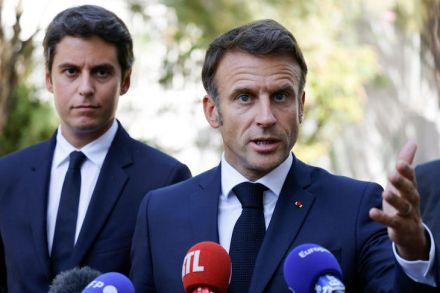
President Emmanuel Macron and his freshly installed Prime Minister, Gabriel Attal, appointed a new French cabinet this week. It is little more than a reshuffle – and unlikely to lead to sunlit uplands for Macron’s beleaguered presidency. Of particular significance are the two centre-right ministers whose appointment testifies to the continuing rightward drift of the Macronist project in search of that elusive parliamentary working majority. At the same time, and despite all denials, policy is also being drawn rightwards towards the agenda set by Marine Le Pen and Jordan Bardella’s Rassemblement National on immigration, crime and policing. But the desired effects of the fresh cabinet are already proving vain (as I wrote earlier this week).

Can ‘mini Macron’ rescue France’s president?

From our UK edition

France's Emmanuel Macron, the Fifth Republic’s youngest president, has just appointed its youngest prime minister, 34-year-old Gabriel Attal. The former socialist turned 2017 Macronista campaigner has had a meteoric rise through government ranks to education minister only six months ago. Attal's remarkable communication skills, ability to think on his feet and interpret what voters wish to hear has made him Macron’s most popular minister. But this is a further desperate roll of the dice for a beleaguered Macron. The French leader has been deprived of a working majority since the 2022 legislative elections and forced to get his legislation by constitutional sleight of hand avoiding parliamentary votes 23 times.

Is Airbus a metaphor for Britain’s relationship with the EU?

From our UK edition

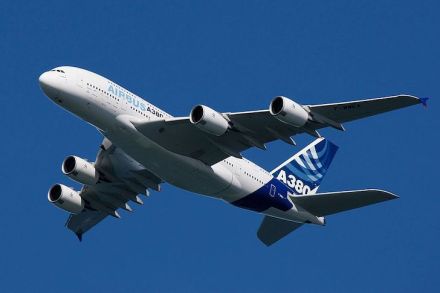
A French member of the board of Airbus – the giant European aircraft and aerospace group – once told me that the French thought of it as their company while the Germans thought it theirs. In reality, both countries own it: the French state owns 11 per cent of Airbus capital, Germany 10.9 per cent and Spain 4.17 per cent, with the remaining shares quoted on Euronext. Assembly of Airbus planes from across Europe takes place in Toulouse, where the company’s operational headquarters are located, but the company’s official registered headquarters are in Leiden, Netherlands. For Brussels, Airbus is a model of European integration and EU strategic autonomy. But the invisible ingredient is the UK.

The French elite have realised that Marine Le Pen might win

From our UK edition

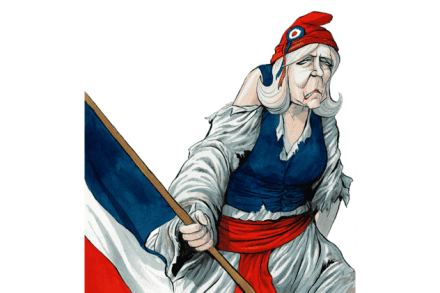
You can tell that French elections are in the air because legal proceedings are being taken against a leading figure of the French right. So it was with François Fillon of the Républicain party, a key contender in the 2017 presidential elections, whose hopes of winning were dashed during the campaign by legal investigation into alleged misuse of parliamentary funds, subsequently ending his political career. So it is now with Marine Le Pen of the Rassemblement National, as France gears up for the 9 June 2024 European parliament elections, for which her party is the clear front-runner.

Could the world go to war again?

From our UK edition

Armistice Day is an appropriate moment to reflect on why democracies triumphed in the two world wars that blighted the twentieth century. The simple answer is because – however much they hesitated – they believed in what they stood for and were able to will their victory. As the French philosopher, future Resistance member and champion of post-war liberal democratic values, Raymond Aron, wrote in June 1939: ‘I believe in the final victory of the democracies, but on the one condition, that they should want it.’ So Britain could mobilise its population for war to an extent unequalled by totalitarian states, without using totalitarian methods.

Why is France so fascinated by the royals?

From our UK edition

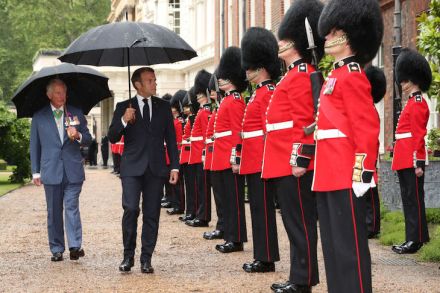
As King Charles’ state visit to France begins, it is clear that France is not as republican as it claims. The death of Queen Elizabeth II in September 2022 gave way to an outpouring of French national grief. Speaking for his people, President Emmanuel Macron tweeted: ‘Her death leaves us with a sense of emptiness’. On 19 September, seven million viewers watched the state funeral live on six French television channels, an audience share of 66.7 per cent.  One might of course say that it was Queen Elizabeth’s exceptional qualities as a human being, her unfailing devotion to duty, that were being acknowledged rather than her status as monarch.

How Africa fell out of love with France

From our UK edition

On Wednesday last week, a new Gabonese military junta installed itself, having ousted President Ali Bongo, whose family have ruled the country since 1967. Just two days earlier, the French President Emmanuel Macron gave a speech to his ambassadors in which he spoke of an ‘epidemic of putschs’ in what was formerly France’s greatest sphere of post-colonial influence. Although most of these states have been independent for decades, Paris kept them firmly in the French orbit There have now been six coups d’état in francophone sub-Saharan Africa in three years – Mali, Chad, Guinea, Burkina Faso, Niger and now the small but wealthy nation of Gabon.

There is not much for Macron to celebrate on this Bastille Day

From our UK edition

In January this year, Prime Minister Rishi Sunak outlined his five priorities for Britain against a hazy timetable. Meanwhile in France, after months of parliamentary opposition, strikes and demonstrations against his pension reforms, President Macron’s legislation gained assent by a constitutional sleight of hand. To appease the country’s heightened state of tension in May, Macron pledged to return France to stability and order within ‘one hundred days’. ‘We have before us 100 days of pacification, of unity, of ambition and action in the service of France’. That period expires on 14 July. An audit of either leader’s achievements to date has its challenges, especially given the recent most violent and widespread riots in France since 1968.

The French riots threaten the state’s very existence

From our UK edition

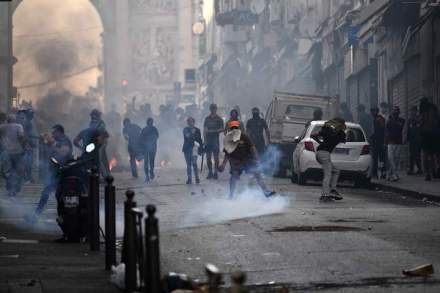
How dangerous are riots to the very existence of the French state? Most commentators avoid the question and concentrate on causes. The more whimsical attribute cause to that clichéd French historical reflex of insurrection; the sociologists to poverty and discrimination in the banlieues (suburbs); the far-left to French institutional racism and right-wing policies; conservative politicians to excess immigration, the ghettoization of France and the state’s retreat from enforcing law and order. But a growing chorus now evokes an unmentionable potential consequence: civil war. Of most concern is that those voices include groups with first-hand knowledge of the state of the country: the police, the army, domestic intelligence.

Will Macron be forced to break his pledge and raise taxes?

From our UK edition

The inevitable is at last beginning to dawn on Emmanuel Macron. The extravagant spending spree initiated after the violent and year-long 2018 ‘gilets jaunes’ protests will have to be reversed. With the coffers empty, France is not only at the mercy of international finance, she is now highly vulnerable to the next social or political crisis Overgenerous Covid and energy subsidies are expected to push the budget deficit to 4.9 per cent of GDP with the French debt to GDP ratio at 114 per cent, the largest absolute debt pile in the EU and one of the largest in the world. Unlike Italy’s debt, most of France’s is foreign-owned, so that she is far more vulnerable to the ‘kindness of strangers’. France already has some of the highest taxation rates in the OECD.

Did France invent cricket?

From our UK edition

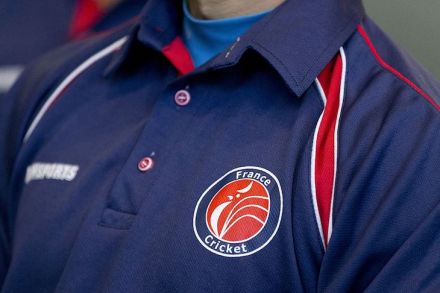
As the First Ashes Test begins at Edgbaston it is fitting to recall England’s oldest cricket adversary: France. The Marylebone Cricket Club’s (MCC) first ever international tour was scheduled for France in the summer of 1789. Owing to local difficulties the tour did not go ahead. The match was eventually rescheduled for the bicentennial of the French Revolution with France beating the MCC by seven wickets. In the space of a fortnight, we have witnessed Prime Minister Rishi Sunak meeting with president Biden in Washington to announce ambitiously that Britain would lead on setting up international norms on Artificial Intelligence (AI).

How Keir Starmer could walk into the EU’s trap

From our UK edition

Sir Keir Starmer and the Labour front bench are increasingly candid about their plans to ‘recalibrate’ Britain’s relationship with the EU within 18 months of entering Downing Street. Trade barriers with the EU would be lowered, regular EU-UK summits would be held at permanent official and ministerial level, a return to the Dublin Agreement on migration would be negotiated. They would also sign a UK-EU security pact. The Labour leader insists he is not promising to return the UK to the single market or the customs union.

Macron’s muddled foreign policy

From our UK edition

Even the French reports of President Macron’s state visit to China last week were unflattering. The highly choreographed ceremonies with Xi Jinping – redolent of foreign emissaries paying homage to Chinese emperors – produced nothing on Ukraine, nothing on Taiwan. The only tangible outcome was Beijing graciously extending for another four years the loan of two giant pandas to France’s Beauval zoo. Macron’s performance in China and his notion of European strategic autonomy gives the impression he has been played by Xi From Putin to Xi, Macron has set out to be cleverer than all. Convinced of his own intelligence and persuasive powers he defies reality in believing that experienced autocrats can be charmed by face-to-face visits, long phone calls and bonhomie.

Macron’s France is at a turning point

From our UK edition

France is confronted by a serious social crisis, morphing into a grave political crisis, which could become a regime crisis.   To be fair, political instability did not begin with Emmanuel Macron. It has been growing since 2000 when the presidential mandate was cut from seven to five years, rendering it coterminous with parliamentary elections and reducing the President of the Republic to little more than a super prime minister. But Macron has made things worse.   Now at only the beginning of his second term he survives with a hung parliament, obliged to get his flagship pension legislation by executive order for fear of defeat.  Where will this lead France in the next four years?

Could the markets force Macron to back down on pension reforms?

From our UK edition

Is Emmanuel Macron reaching his Liz Truss moment when financial markets finally determine his future? On 20 March Moody’s ratings agency strode into France’s explosive pensions reform turmoil. While keeping France’s rating at Aa2 ‘stable’ it nevertheless warned that President Macron’s constitutional sleight of hand denying the National Assembly a vote on the bill risked undermining future macro-economic reforms for the four remaining years of his mandate.  Two days later, citing political tension and social unrest, Fitch Ratings warned that the government’s ability to reduce high public debt will be constrained. Uncertainty surrounding the debt trajectory is reflected in the negative outlook on France’s ‘AA’ rating.

Is Macron dreaming of Aukus becoming Fraukus?

From our UK edition

When silhouetted against the symbolism – as French media proudly insist – of King Charles choosing France for his first state visit at month’s end, this weekend is very much an Anglo-French affair. On Friday, Rishi Sunak and seven ministers visited Paris – a first for five frosty years – for a Franco-British summit with president Macron and relevant ministers on everything from energy policy, immigration, defence and security to Ukraine and the Asia-Pacific. Saturday saw France slaughter England at rugby in the worst ever defeat at Twickenham. More awkwardly for France and Macron, this is also the weekend of further revelations about next stages in the Aukus deal.

Macron’s France is a tinderbox

From our UK edition

On 22 March 1968 the slow burn that would eventually flare into France’s ‘May ‘68’ began. The radical student movement known as ‘22 March’, with Daniel Cohn-Bendit (Dany le Rouge) at its heart, was unaware its actions on this day would lead to riots and the eventual paralysis of the French state after workers joined them. History does not repeat itself, it echoes. Even then, echoes from the past do not necessarily produce the same effects, no matter how many revolutions France has known. Nevertheless, 55 years later on this 7 March, France will be paralysed by widespread rolling strikes and demonstrations against President Macron’s proposed legislation to extend the retirement age from 62 to 64 years.

Is Macron really saying the France-Afrique is finished?

From our UK edition

On 2 March in Gabon, West Africa, President Macron declared that ‘the days of France-Afrique are over’.  Since the early nineteenth century the African continent has emblazoned France’s aspiration to international power status. Like any empire it provided natural resources. It also provided manpower. Unlike other imperial powers with surplus domestic populations to deploy, France’s demography was stagnant at 40 million from the 1840s until the 1940s. Africa provided troops for her armies (tirailleurs sénégalais) to compete with Germany’s demography and growing forces. Even after the troubled decolonisation in the 1960s Africa continued to provide cheap labour to a thriving French domestic industry.

Europe’s centre of gravity is shifting towards Poland

From our UK edition

The President of the United States of America flies into Poland this month. Not to Germany or France or even the UK. There is great symbolism in this gesture, which goes further than Washington merely showing solidarity to the front-line states in Russia’s war against Ukraine. It is emblematic of a trend which has seen Europe’s geopolitical fulcrum shift eastwards. Russia’s war against Ukraine has exposed the impotence of the western-European establishment Once upon a time Europe’s centre of gravity was west of the Elbe. This was underlined by the reality of the Cold War, by economic might, by western Europe’s military ascendancy reinforced by the United States’ physical presence, and by the western focus on European integration.