John Connolly

John Connolly

John Connolly is News Editor of The Spectator

Why is a former French colony joining the Commonwealth?

From our UK edition

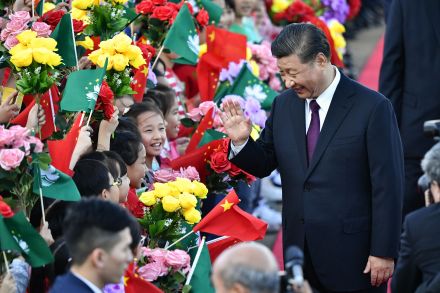
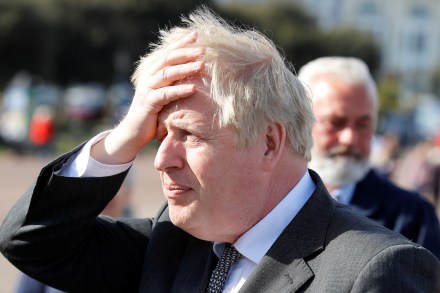
When Boris Johnson flew to Rwanda with Prince Charles for a key Commonwealth summit last weekend, the trip ended up being overshadowed by a bubbling feud between the two men over Britain’s Rwanda asylum scheme, which Charles has privately opposed. For the Commonwealth the focus on the spat was a shame, as it had some welcome news to announce that was arguably far more significant for Britain than the two men’s personal beef. On 25 June it was officially declared that two new countries, Gabon and Togo, were joining the Commonwealth. For those who have been prophesising the death of an antiquated and creaking Commonwealth for years, it was a reminder of the organisation’s continued relevance in Africa.
Katy Balls, John Connolly and Gus Carter

From our UK edition

17 min listen

On this week's episode: Katy Balls reads her article on the cadets gunning for the Tory leadership. (00:52)John Connolly reads his investigation into the new warehouse ghettos where Britain is sending migrants. (06:36) Gus Carter reads his piece on why he's not getting invited to any dinner parties. (12:05)Presented by Angus Colwell.Produced by Angus Colwell and Sam Holmes.

The danger of putting migrants in warehouse ghettos

From our UK edition

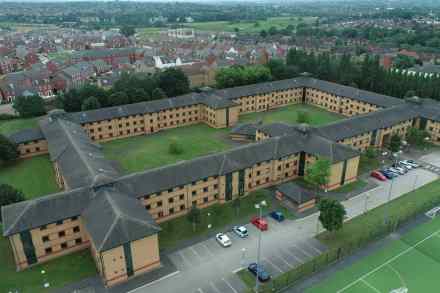
So far the UK has managed to avoid the kind of clashes between asylum seekers and local residents that blight other European countries. Our workforce is now 19 per cent immigrant – an even higher percentage than America’s. But this relative harmony might soon be threatened. Since 2018 the processing backlog for asylum seekers has grown to a staggering size, thanks to the Home Office’s failures, Covid lockdowns and, to a lesser degree, a recent rise in the number of Channel crossings. The existing accommodation stock is overflowing – with 37,000 migrants being put up in hotels at a cost of £4 million a day. The Home Office needs an urgent solution, but the one it has found is far from ideal.

Red Wall Tories hit out at cost of net zero

From our UK edition

One of the government’s flagship priorities this parliament has been its pledge for Britain to reach ‘net zero’ carbon emissions by 2050, with the commitment taking on increasing importance ahead of the COP26 climate summit later this month. But while the policy has wide support across the party, a far more controversial question is how much the change will cost – and if the bill will end up particularly hurting communities in the north. So far ‘Red Wall’ Tory MPs have been supportive of the government’s efforts to reduce carbon emissions, seeing it as a way to create new green jobs in parts of the country which were hit hard by the deindustrialisation of the past decades.

The Manchester refugee charity representing the best of British

From our UK edition

In October The Spectator will be heading to Manchester for Conservative party conference for the first time in two years, after last year’s event was cancelled because of the pandemic. While the return of party conferences is a welcome sign that things are finally getting back to normal, it’s also a reminder of the damage that Covid and its lockdowns caused over the last year and a half. Charities were hit hard by the pandemic facing closures after being unable to fundraise or campaign. That’s why The Spectator has decided this year to donate all the ticket money for our events at conference to a charity based in Greater Manchester: Caritas Salford’s Refugee Education Programme.

Andy Burnham turns the tables on Nicola Sturgeon

From our UK edition

As leader of the SNP, Nicola Sturgeon has earned a reputation for rallying against what she argues is an arrogant Westminster elite which rides roughshod over Scots. It appears now though that the Scottish First Minister might be getting a taste of her own medicine. This week, she has ended up in a fierce war of words with the mayor of Greater Manchester, Andy Burnham, after the Scottish government unilaterally introduced a travel ban on Manchester and Salford. On Friday, Sturgeon announced without warning that travel between the two North West areas and Scotland would be forbidden from Sunday, due to rising concerns about the Indian (or Delta) variant. Travel had already been suspended between Scotland and Blackburn, Darwen and Bolton.

Is Boris right to delay the lockdown easing?

From our UK edition

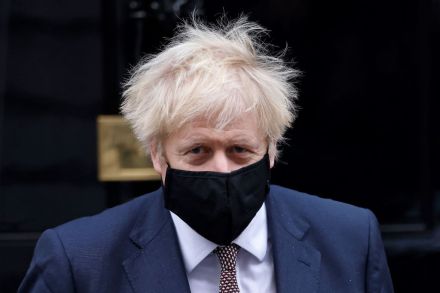
It now seems likely that freedom day is going to involve rather less freedom than everyone had hoped. Later today, Boris Johnson is expected to announce that the 21 June easing of lockdown will be delayed by up to four weeks, until every adult has been offered at least one vaccine by the end of next month. The delays mean that nightclubs will stay closed and work from home guidance will remain in place – although the 30-person limit on wedding guests is expected to be lifted and there will be more outdoor events allowed to take place. The abrupt change to the lockdown easing plan comes as the Indian (or Delta) variant sweeps across Britain.

What can the west do about China?

From our UK edition

14 min listen

As China changes its two child policy to a three child policy over fears of population decline, the west is also having to regularly change its approach towards the world's next superpower. John Connolly talks to James Forsyth and Cindy Yu about our precarious relationship with China.

Why does Boris give out his phone number?

From our UK edition

12 min listen

Boris Johnson's mobile phone number has been available online for 15 years, it emerged last night. Why does the Prime Minister give it out so freely? John Connolly speaks to Katy Balls and James Forsyth.

Top floor: Minton tiles inspire a remarkable devotion

From our UK edition

It’s only since I moved to Staffordshire that I’ve come to appreciate that some of the finest works of public art aren’t on the walls of great buildings, but on their floors. Staffordshire, of course, is the home of Minton tiles — one of the most successful British exports of the Victorian era. The company was founded by Thomas Minton in Stoke-on-Trent, but it was his son, Herbert, who cracked the tile market. In the 1820s Herbert became obsessed with the idea of making medieval-style encaustic tiles, which create a pattern using different colours of clay rather than a glaze. Encaustic tiles are centuries old, but were too expensive to produce at scale.

Tory backlash over Cumbrian coal mine U-turn

From our UK edition

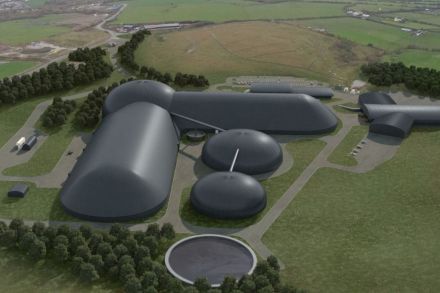
Is there a clash between the government’s plans to achieve Net Zero and its aspirations to level up parts of the North and Midlands? It certainly seems that way, after the Planning Secretary Robert Jenrick last night U-turned and launched an inquiry into the construction of a new coal mine in Cumbria, which would provide coal for the construction of steel. His decision to ‘call in’ the planning application came after the US climate envoy John Kerry told the BBC this week that ‘coal is not the future’.

The key moments from Salmond’s Holyrood evidence

From our UK edition

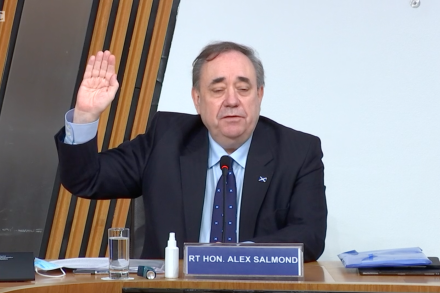
This afternoon, in the Robert Burns room of the Scottish Parliament, former First Minister Alex Salmond, for so many years the supreme political force north of the border, came out swinging against his successor Nicola Sturgeon and the wider Scottish establishment. In a remarkable evidence session, Salmond attacked the leadership of the Scottish government, suggested that the inquiry into its behaviour had its ‘hands tied behind its back with a blindfold on’, and argued that Nicola Sturgeon had broken the ministerial code. Salmond’s evidence to the Holyrood inquiry – set up to investigate the Scottish government’s handling of complaints made against him – had already been mired in controversy.

London heading for at least Tier 3

From our UK edition

12 min listen

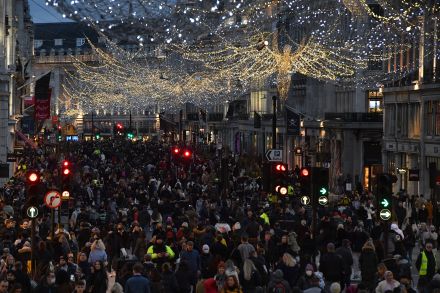
London is set to enter the highest set of coronavirus restrictions. Normally this would see restaurants, pubs and indoor entertainment venues forced to close, but could the capital see the introduction even tighter rules? John Connolly speaks to Katy Balls and James Forsyth.

Full list: Boris Johnson’s new tiers

From our UK edition

The government has revealed today which areas will be moved into different tiers at the end of the national lockdown on 2 December. And as expected, Boris Johnson has decided to take a hard-line approach to the new restrictions, before the regulations are relaxed over the Christmas period. Only three areas in England have been kept in the lowest Tier 1, two of which are not on the mainland. Only the Isle of Wight, the Isles of Scilly and Cornwall have been spared tighter restrictions. The vast majority of the country will be kept in Tier 2 at the beginning of December, which means that mixing between household bubbles will be banned indoors, and hospitality venues that do not serve a ‘substantial meal’ will be closed.

What will the new tiered system look like?

From our UK edition

Anyone who was hoping that things would go back to normal when the national lockdown ends next month will be sorely disappointed today. This afternoon, Boris Johnson is expected to outline in Parliament a new tougher tiered system, which will come into force on 3 December, when the national lockdown ends. The Prime Minister is then expected to reveal which areas will be in each tier on Thursday, after consulting the latest coronavirus infection data. Most areas are expected to be moved into Tiers 2 and 3. So what will the new tiers actually involve? The papers report this morning that the rules on socialising will stay roughly the same in the new tiered system, with the ‘rule of six’ in place in Tier 1.

Has Vote Leave lost control?

From our UK edition

14 min listen

Downing Street has seen a day of backstabbing and counter-briefings after Dominic Cummings ally Lee Cain resigned as Boris Johnson's director of communications. John Connolly talks to Fraser Nelson and Katy Balls.

Is mass testing the way out of lockdown?

From our UK edition

16 min listen

As England heads into a second lockdown, today brings a glimmer of hope. Liverpool will be the first UK city to undergo mass testing, including a fast turnaround saliva test. John Connolly talks to Katy Balls and James Forsyth about whether Moonshot, this time around, is more realistic. Tell us your thoughts on our podcasts and be in for a chance to win a bottle of Pol Roger champagne by filling out our podcast survey. Visit spectator.co.uk/podcastsurvey.

Can the Labour left resist Keir Starmer?

From our UK edition

11 min listen

Labour is truly under new leadership as Jeremy Corbyn gets suspended from the party today. The left of the party is clearly not happy - but can they do anything about the new direction of the party? John Connolly talks to James Forsyth and Katy Balls. Tell us your thoughts on our podcasts and be in for a chance to win a bottle of Pol Roger champagne by filling out our podcast survey. Visit spectator.co.uk/podcastsurvey.

Keir Starmer has declared war on the left of the party

From our UK edition

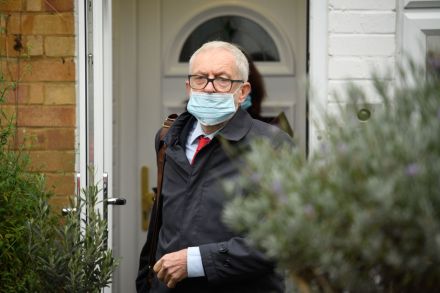
Jeremy Corbyn, the former leader of Labour, has been suspended from his own party and had the whip removed. The move to oust him was taken by the party after Corbyn commented on a report by the Equality and Human Rights Commission, published today, into anti-Semitism in the Labour party. Earlier today Corbyn released a statement in response to the report, claiming that he rejected some of its findings and arguing that the scale of Labour's anti-Semitism problem had been 'dramatically overstated' for political reasons – which he also blamed on the media.  In response, the Labour party acted to remove Corbyn from the party, while it investigates his comments.