Jim Lawley

Jim Lawley is a former university lecturer who has lived and worked in Spain for 40 years.

When will Spain’s political paralysis end?

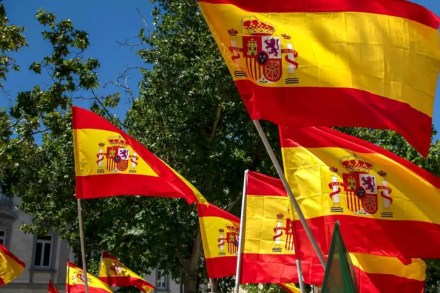
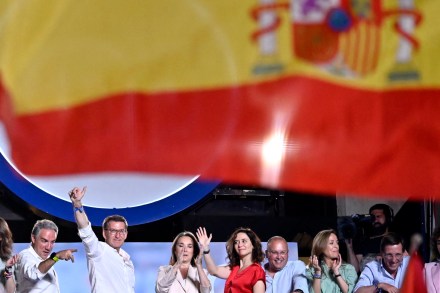
Sunday’s general election in Spain was supposed to answer the question: will Spain be governed for the next four years by a right-wing coalition or by a left-wing coalition? If the question was easy to understand, the answer certainly isn’t. Like the four previous general elections, this one was inconclusive – only even more so.  The right-wing Partido Popular won 136 seats and Vox, even further to the right, won 33, giving a Partido Popular/Vox coalition a total of 169 seats – fewer than most polls had predicted. Unfortunately for the just over 11 million Spaniards who voted for these two parties, this leaves them seven seats short: in a 350-seat parliament, 176 is the number needed for a majority.

How Spain’s politics succumbed to radicalism

If Spain’s left-wing government loses tomorrow’s general election, thousands of people including many senior civil servants stand to lose their jobs. Their positions are discretionary; if the political masters change, so do the personnel. When the left took office in 2018, for example, an estimated 6,000 public servants were fired, including several hundred advisers. The incoming Prime Minister Pedro Sánchez also put trusted supporters in charge of the state-run broadcasting company, the Paradors (a chain of state-owned hotels) and the social research organisation that organises opinion polls. Not surprisingly, its polls have been biased to the left ever since.

Can Spain forgive Pedro Sánchez?

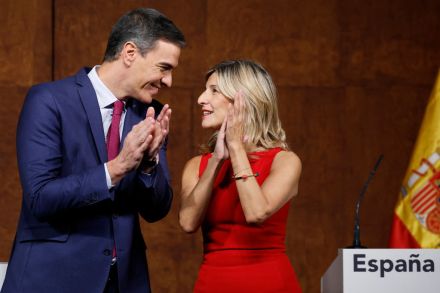
Voters in Spain’s general election on 23 July have a clear-cut choice. They can choose to continue with the left-wing coalition currently in power or they can replace it with a staunchly right-wing government. Since 2019 Spain has been governed by a minority coalition consisting of PSOE, Spain’s main left-wing party, with 120 seats, and Podemos, further to the left, with 35. With a total of only 155 of the 350 seats in the national parliament, in order to pass legislation the left-wing bloc has had to seek ad hoc support from various regional parties, including Basque and Catalan separatists.

What the rise of Vox means for Spain

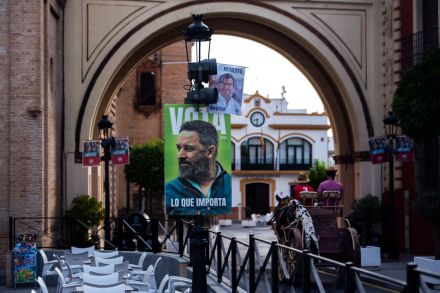
Vox, the most right-wing of Spain’s mainstream political parties, has emerged considerably strengthened from Sunday’s local and regional elections. With the left-wing vote slumping badly, the Partido Popular, the largest right-wing party, also had an excellent night, but crucially it will need the support of Vox to govern in many regions and town halls.          These elections then suggest that Vox may be a highly influential (albeit junior) partner in the central government after the general election which, it has just been announced, will be held on 23 July. At present it is the third-strongest party in the national parliament with 52 of the 350 seats, while the Partido Popular is the second-strongest with 88 seats.

Spain’s shift towards the radical right

Yesterday’s snap election in Castile-León, one of the 17 regional autonomies into which Spain is divided, was another excellent day for Vox, the most right-wing of Spain’s mainstream parties. Vox, which previously had just one seat in the 81-seat regional assembly, now has 13 and holds the balance of power. Vox’s success prevented the Partido Popular, which has governed in Castile-León for over three decades, achieving an absolute majority (41 seats or more). Instead after winning only 31 seats, the Partido Popular, Spain’s main party of the right, said it would begin discussions with all the parties.

Can Spain save its dying villages?

In a little village on the Spanish Meseta, I once asked an old lady about the next village some three or four miles away. She shook her head as if considering a hopeless case and said, 'Oh, the people there are very different.' To me, those villages seemed like two peas in a pod. But to her, they were worlds apart. Spaniards often refer to their home town or village as their patria chica: the little fatherland. 'Every village, every town,' wrote Gerald Brenan in The Spanish Labyrinth, 'is the centre of an intense social and political life. As in classical times, a man’s allegiance is first of all to his native place, or to his family or social group in it, and only secondly to his country and government.

Bronze is the best medal

In the 50-kilometre walk at the 1948 Olympics, the gold and silver medallists were aged 28 and 33 respectively. The man who took bronze, Britain’s ‘Tebbs’ Lloyd-Johnson, was 48 years old. Still the oldest person ever to win an Olympic track and field medal, Tebbs is now more famous than the men who finished ahead of him. Another British bronze at those 1948 London Olympics was also worth more than most gold medals. Just three years previously when released from forced labour in a Japanese prisoner of war camp, weightlifter Jim Halliday had weighed a skeletal six stone (38 kg).

Spain’s growing culture war over General Franco

There are hundreds of mass graves dotted around the Spanish countryside. In roadside ditches, down hillside gullies, dumped in pits and down disused wells lie thousands of bodies: civilians murdered in cold blood by Franco’s death squads during the civil war that convulsed Spain between 1936 and 1939. Over the nearly forty years of Franco’s dictatorship, few spoke of what had happened during the war; silence and selective amnesia were safer. And even when Franco died in 1975, the overriding priority was the transition to democracy. The old Francoist establishment indicated that it would make way for the new era — provided that there was no digging up of the past and no reprisals. Spaniards were happy to look to the future.

Spain’s pardoning of Catalan separatists may backfire

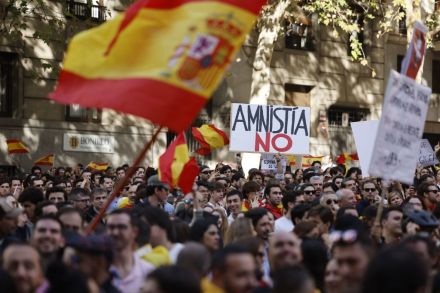
In one of his adventures on the highways of 17th-century Spain, Don Quixote encounters a gang of prisoners ‘manacled and strung together by the neck, like beads, on a great iron chain'. Undeterred by Sancho’s protestations that these are criminals on their way to serve as galley slaves in just punishment for their crimes, Don Quixote, declaring that it is his duty as a knight errant to provide ‘succour for the wretched’, fights off the guards and frees them. In something of the same spirit, Spain’s prime minister has just announced a pardon for Catalan separatist leaders. Nine politicians, serving sentences of up to 13 years for offences including sedition, are now to be released after almost four years in jail.

Is this a new dawn for the Spanish right?

In Tuesday’s regional elections in Madrid, the right-wing Partido Popular emerged as by far the most successful party, more than doubling its representation to win 65 of the 136 seats in the assembly. Isabel Díaz Ayuso, the 42-year-old local Partido Popular leader who was seeking re-election, won more seats than the three left-wing parties combined. Vox (13 seats), the most right-wing party on the Spanish political spectrum, has already promised Ayuso the support she needs in order to govern. Despite not quite delivering an outright majority, Ayuso’s bold decision to call the snap election has clearly paid off.

Can Spain’s Europhilism last?

'Suppose a man be carried, whilst fast asleep, into a room where there is a person he longs to see and speak with; and be there locked fast in ... he awakes, and is glad to find himself in so desirable company, which he stays willingly in ... I ask, is not this stay voluntary? I think nobody will doubt it: and yet, being locked fast in, it is evident ... he has not freedom to be gone.' Happy in a room he cannot leave, the man John Locke imagined during his musings on free will might almost be a metaphor for contemporary Spain in the European Union. Awakening from the long sleep of Franco’s dictatorship, the Spanish people were delighted to find themselves in the EU where they had always wanted to be and where their country is now locked fast into the Eurozone.

Spain’s anarchists are rioting

Michael Bakunin, the 19th century revolutionary Russian anarchist, identified Spain as the place where his creed was most likely to take root. In 1868, to get the ball rolling, Bakunin dispatched his disciple, Giuseppi Fanelli, to Spain. After some difficulty in raising the money for his train fare, Fanelli finally arrived in Madrid where he was introduced to a small group of printers who attended a working-class educational institute. Although Fanelli spoke only Italian and French and most of the print workers spoke only Spanish, his address made a dramatic impact. A shortage of money meant Fanelli could not stay long but he left behind copies of Bakunin's speeches. These were carefully studied and enthusiasm for anarchy was soon spreading like wild-fire through Spain.

Catalonia’s grievance culture

‘Scotland,’ declared the Times in 1856, is ‘manifestly a country in want of a grievance.’ The same could be said of Catalonia, which held regional elections this week. Catalonia spent much of the nineteenth century adding to its store of grievances. In 1885 a deputation of politicians travelled to Madrid in a fruitless attempt to interest Spain’s government in a comprehensive list of their region’s ‘greuges’ (Catalan for grievances). A century later the post-Franco democratic settlement for Catalonia attempted to right these historical wrongs once and for all by granting the region unprecedented powers of self-government. Since then Catalonia’s autonomy has increased even further.

Can Spain’s faith in the EU survive Covid?

According to ancient Moorish legend, when the world was created each land was given five wishes. Spain’s first four wishes – for clear skies, seas full of fish, good fruit, and beautiful women – were all granted, but the fifth, for good government, was denied on the grounds that to grant that too would create a paradise on earth. Certainly over the last couple of centuries, good government in Spain has tended to be conspicuous by its absence. Philosopher Ortega y Gasset summed up Spain’s tragic history and its desire to become more like the liberal democratic European countries in his famous phrase: 'Spain is the problem and Europe the solution.' It seems that many Spaniards agree: the European Union is widely regarded as an unquestionably good thing for Spain.

The dark art of playing world-class Scrabble

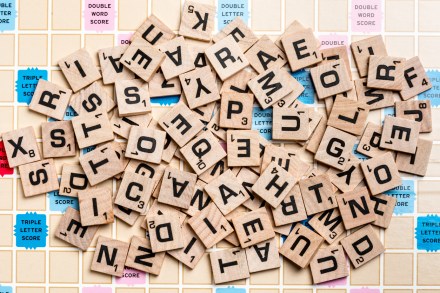
When the top players gathered in Torquay last year for the World Scrabble Tournament (this year’s contest should have been this week, but has been cancelled thanks to you-know-what), it was to use ‘words’ like these in their games: dzo, ch, foyned, ghi… Yep, that’s right; a whole lot of words that, let’s be frank about this, are not words. That’s why my spell-checker underlines them in red. The top players, you see, don’t win tournaments by being cleverer than the rest of us. They do it by memorising a long list of non-words so they can avoid the problems ordinary players encounter. With O I I I I U U on the rack, most of us would forfeit our turn while muttering something rude.

Will Spain’s nation of rogues comply with the curfew?

A few years ago, when I was in the queue to catch a plane, a Spanish lady caught me watching her as she surreptitiously removed a sticker from her hand luggage, which meant it would have been stored in the hold. ‘Los españoles somos muy pícaros’ (we Spaniards are real rogues) she told me with a smile of complicity and a rueful shake of the head. Spaniards sometimes point out with a touch of pride that it was their country which pioneered the picaresque novel – a literary genre which tells the story of an ingenious rascal who lives by his wits, sometimes on the wrong side of the law. My own experience is that Spaniards are no more rascally than other nationalities – but some of them like to think they are.

Spain’s politics is fraying

'Those who cannot remember the past are condemned to repeat it.' Philosopher George Santayana’s dictum is starting to look more relevant than ever in Spain, the country of his birth. The political temperature in Madrid has risen sharply in recent weeks and the language politicians are using has become unmistakably bellicose. The casual observer might almost be forgiven for wondering momentarily if we’re back in 1936, with politicians limbering up for a re-run of Spain’s civil war.  The opposition has accused the left-wing government of using Covid restrictions as 'a political weapon' and of enforcing the Madrid lockdown 'at gunpoint'. Political parties criticise each other for retreating to their respective 'bunkers' and launching attacks from 'their trenches'.

Spain’s bureaucracy may not survive Covid

Sancho Panza’s long-cherished ambition was to become a politician. He wanted to be installed as governor of an island; Don Quixote had led him to believe that this was the reward a loyal squire could expect to receive from the knight errant he had served. Attractive opportunities to move into government increased dramatically for Spain’s latter-day Sanchos after the death of Franco; almost overnight one of Europe’s most centralised nations became a quasi-federal state with 17 autonomous communities. Each of these 17 regions has its own parliament and government and well-paid politicians. The head of the autonomous community of Catalonia, for example, has a salary of €153,000 (£138,500) a year and can look forward to a generous pension.

Does Catalonia really want independence?

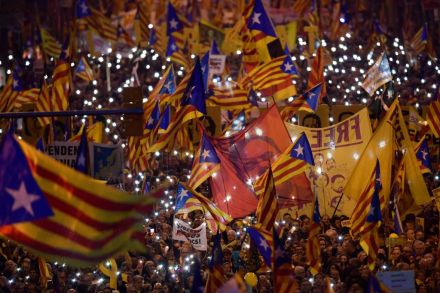
In 1714, after a long siege, Spain managed to regain control of Barcelona after the War of Spanish Succession. Catalan nationalists point to the day Barcelona fell, 11 September 1714, as the point when Madrid began to strip their homeland of its ancient privileges, and three centuries of subjugation and repression began. To remind everyone of the importance of the year 1714, Barcelona fans chant in favour of independence for Catalonia when the Camp Nou football stadium clock shows that 17 minutes and 14 seconds of a match have passed. Meanwhile the day itself, 11 September, is commemorated every year as La Diada (‘The Day’), Catalonia’s national day.

Spain’s summer is well and truly cancelled

In villages and cities throughout Spain, the annual Fiesta of The Assumption is celebrated in great style on 15 August. But not this year. This year in most places the processions through the streets, the communal meals, the street theatre, the romerías (excursions to the local shrine), the craft fairs, the bell-ringing, the open-air dances, the annual football match against the neighbouring village, the clay pigeon shooting, the bull-running, the bullfights, the open-air chess tournament, the card game championships, the children’s drawing competition, the fairs, the firecrackers, the fireworks, and the all-night carousing are all cancelled.