Jeremy Clarke

Jeremy Clarke

I rather enjoy my chemotherapy sessions

With a French health card everything is free for us cancer patients, even taxis to and from the hospital. ‘This is the longest taxi ride I’ve ever taken in my life,’ I said to last week’s driver, Virginie, on the outward leg of our three-hour round trip to the hospital at Marseille. ‘Your poor French state though,’ I added. ‘Good for us taxi drivers though,’ she pointed out. She was around 50 years of age. Her summer frock revealed a powerful upper back. She wanted to talk about her four girls aged between 13 and 19. The first three had been always obedient and polite, but the youngest was a terror. She’d had more trouble with the 13-year-old than with the other three put together. It’s like being in a war, she said.

A tale of refugees from ‘Brexit Britain’

In the New Year I was introduced to a couple who had fled Britain impulsively on New Year’s Eve with just a suitcase each to escape ‘Brexit Britain’. They rented a terraced house in our quartier of the village and had us round for supper, and I also went there to watch football on the laptop. They appeared to live modestly and frugally, wore the same clothes every day, and spent their days walking ceaselessly in the blazing countryside armed with shepherd’s crooks. Had they done the right thing, we privately wondered, fleeing their native land merely to prove their allegiance to the ideal of a politically and culturally united Europe?

Was I the picture of evil incarnate?

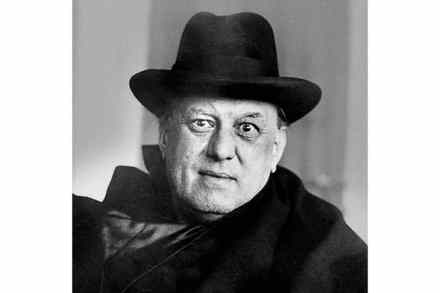
Not long after Catriona and I first met, her husband painted my head and shoulders portrait in oils as I sat next to an open window in Provence with my shirt off. The result was an astonishing and rather brilliant study of spiritual depravity. But I was too amazed and humbled to have my portrait painted in oils by a professional artist of international repute to much care about the result. Nor had I expected a photographic likeness. And at the same time I was genuinely delighted that at least I didn’t look like a bourgeois. Later the painting arrived in Devon in the post, beautifully and expensively framed, and I hung it in pride of place above the mantelpiece. But the image of a man so obviously rejoicing in evil had a universally disquieting effect on those who saw it.

How I love England — despite the hellhole that is Gatwick airport

At Gatwick airport, after an hour and 15 minutes in a snaking queue system apparently purposely designed to infect as many as possible with Covid-19, and our three bladders inflated like party balloons, we finally presented ourselves before an available passport control officer. Early fifties, hatless, bald and recruited from the working class, he was the first English person on English soil I’d spoken to for 18 months. I formed the impression of a man who liked a drink. ‘And these two are?’ he said. ‘My grandsons,’ I said, looking at them besottedly in spite of us having lived together in insupportable heat for a week. ‘And you’ve come from where?’ he said. A trick question, surely, the answer to which I had to ponder for a second or two.

A tale of many swimming pools

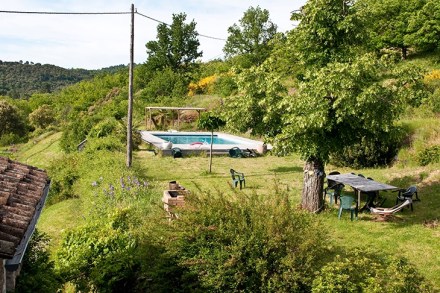
My two grandsons are staying with us here in Provence for a week. Roman soldier Catriona flew from Marseille to Stansted and back in a day to get them out. Oscar, aged 11, is a regular summer visitor and knows the ropes. Klynton, ten, is here for the first time. Klynton is what used to be described as ‘a bit slow’. At school he stays two years in the same class to everyone else’s one. He is a cheerful, polite lad with a phenomenal memory for football statistics. He can hardly dress himself but can tell you that last season Sadio Mané scored 11 goals with seven assists and is 29 years old and 175cm tall. Also, he tells me, he hasn’t seen his grandad for two years and one month.

From ferreter to animal-rights champion

I was sitting quite still at the typewriter when a plump mouse emerged from under the fridge and crossed the kitchen floor, moving by monorail. Conscious suddenly of another presence, the mouse paused and cast a speculative and I thought conciliatory eye over me. His fur was a rich chocolate, his eye beady with interest. Catriona — thank God! — was in the room above reading the paper. I heard her laugh out loud. ‘This woman!’ she called down. ‘She’s totally amazing!’ ‘Oh yes?’ I said. ‘In what way amazing?’ ‘She’s had all her toes cut off,’ she said. ‘She’s a cousin of the Queen.’ I looked at the mouse and shrugged. A French country mouse is a pretty, guileless thing.

The art of losing your hair

Although fatigued to the point of catatonia, and sitting there like a 19th-century Fang funeral mask, I am glad to contribute to the gaiety of a dinner party by being a good listener. But to be a good listener, even a catatonic requires acting skills. I am learning to lift my glass to my mouth and absentmindedly sip while politely maintaining eye contact. I am learning to leave a dignified or at least sane interval between each visit to the glass and to vary that interval. I am learning to appear interested long after interest has waned or petered out. These skills need polish and I am not yet the finished product.

A date with destiny – and chemotherapy

I was shown to a room divided into three cubicles, each with a reclining chair and bed table. In the first, a nurse was vacuuming fluid from a man’s lungs. He was large and physically helpless with a beautiful smile. He had no voice but croaked breathlessly over the whirring noise of the machine. I set up shop in the middle cubicle and peeked round the partition to greet my other neighbour, a bird-like woman with a black head wrap. Her smile too was bright, with a suggestion that in her case chemotherapy is no longer the disaster it once was. Six weeks ago my colon was resectioned. While she was at it, the surgeon laid a tube from my heart to an opening on my neck to facilitate the administration of any future chemotherapy.

A very annoying guide to the Somme battlefields

We arranged to meet the second, more expensive, guide of our Somme battlefield visit at the Thiepval Memorial visitor centre car park. He arrived punctually. The foreign correspondent climbed in the back of his car and I got in the front. As he drove us past Lutyens’ masterpiece, instead of genuflecting towards it, the guide launched tunelessly into a repetitive mumbled refrain while thumping an imaginary bass drum with an imaginary foot pedal. ‘What’s that you’re singing?’ I asked. ‘Oh, nothing really. I’m just enjoying myself,’ he said. ‘Go on,’ I said. ‘What’s the song?’ ‘It doesn’t matter,’ he replied tetchily.

Walking the Somme

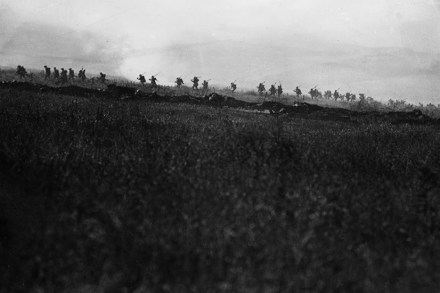
Where the 36th (Ulster) Division attacked at 7.30 a.m. on the first morning of the Battle of the Somme in 1916, I ate a cheese and onion sandwich and a KitKat. What happened was this. Charging forward from saps dug out into no man’s land from the frontline trenches in Thiepval Wood, the Ulsters overran the enemy’s first, second, third and fourth lines and the formidable Schwaben Redoubt. But the Germans quickly put down a barrage of machine-gun fire across no man’s land preventing reinforcements getting through. Hand-to-hand scrapping in the German trenches continued all day until a weary remnant was pushed back to the original German front line. The sunken road in no man’s land was heaped up with dead.

Help! I’m restaurant-phobic

Vernon fancies this new age elfin-faced French woman who owns and runs a restaurant. She’s hard-working, she’s a reader, and she has a great library, he says. He would chuck his Stetson into the ring, he says, but every now and again she comes out with some bonkers new age or woke statement that makes him lose confidence in her intelligence. Vernon doesn’t oppose new age or woke thinking because he is on the right. (He is at heart a socialist.) He opposes it because he thinks it is shockingly unintelligent. ‘Man,’ he says. ‘If you saw her library, you’d think here is one bright lady.’ I understand his dilemma, I tell Vernon, but why talk?

It’s the end of lockdown – and the village has gone wild

The village square is a long and pedestrianised oblong shaded along its length by massive pollarded plane trees. It’s known as ‘le Cours’. There’s a Tabac and a Spar and an ancient fountain that children play on and a shop selling Panama hats. Otherwise le Cours is dominated by the tables and chairs of a dozen or so bars, cafés and restaurants. Viewed from one end at the height of summer, it looks like one great dining hall under the trees. In July and August chic families drive up here from the Mediterranean coast to eat. One recognises the clothes and that forbidding, peculiar aura of new wealth. Until last week you could have fired a shotgun up the Cours and not hit anyone.

Jason Ricci is my mentor, guru and anointed one

A second week recovering in bed in this pleasant south-facing bedroom. If I sit up, my back resting against whitewashed rock, I can look out of the window across 30 miles of oak forest to the Massif Des Maures, a coastal mountain range. As the day progresses, these indistinguishable mountains are altered by the changing light until finally and dramatically the softer evening rays reveal the folds and valleys in topographical detail. The revealing doesn’t last more than five minutes and I try to remember to look out for it. Then the mountains darken and, after a last commemorative glow, vanish. Last week there was a violent electric storm and downpour every afternoon. You could set your watch by it.

The art of negotiating with French nurses

‘Ça va, Monsieur Clarke?’ said a nurse when he noticed I was stirring. It was an effort to speak. ‘Thirsty,’ I croaked. He handed me a graduated test tube containing exactly ten millilitres of warm water. Incredibly, the big clock on the wall said six in the evening. I’d been gone for eight hours. While I was gone, a surgeon had snipped 30 centimetres off my colon, plus a valve, and rejoined the ends. I’d never had an operation before and was surprised by the severity of the pain. I couldn’t move an inch in any direction. A porter wheeled me back to the single room with a view over north Marseille and tipped me off the trolley into bed. During the evening a succession of nurses and doctors came and fiddled with me.

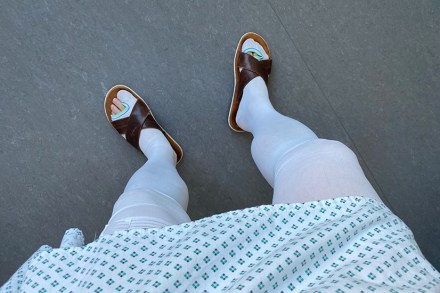
The curse of surgical stockings

The porter rolled me off the trolley and on to the bed, wished me a good day and departed. My previous neighbour in the two-bedded ward — a frail, aloof, slow-moving African man — was gone. In his place was a visibly vigorous man of about my age with a charismatic, masculine face reminiscent of Anthony Quinn’s Zorba the Greek, except he had no front teeth. The wiry grey hair was closely scissored and he wore a sportive white polo shirt and black jog pants. Even in repose he looked dynamic. A nurse entered to take my readings. Now I must drink plenty of water, she said, to flush out the clots. When she’d gone, Anthony Quinn fixed his dark eyes on mine and spoke. (Later I learned that he was Algerian Arab.

A taste inquisition on Stink Street

Walking up through the Stink Street medieval arch with a bag of shopping, I spotted Michael between the oleander branches seated in front of his ancient cottage having a drink. Stink Street is so called because it is just without the old town walls and in medieval times pigs were kept there. At this time of year it’s not easy to walk up Stink Street after midday without one or other of the cottagers inviting you to join them for a glass. And it was just after six and I deserved one. Stink Street runs uphill steeply and has only recently been dressed with its first layer of tarmac. Michael’s little front terrace nestles close by to the road.

The joy of ironing

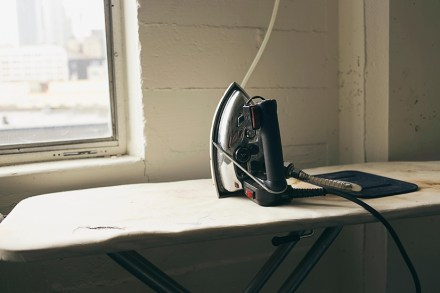
On the Saturday morning of the Ascension Day bank holiday, I swung down the stairs and ladder to the little bedroom-cum-book room and did the ironing. For me ironing is therapy. If the internal critic becomes too negative or noisy, I stick a playlist on and steam flatten the commentary line by line. On Saturday morning the internal critic was going full blast. ‘That’s it, mate. You’ll be brown bread by Michaelmas and forgotten by Christmas. What a shame you fizzled out like that. Lazy and unfocused right to the end. All those bright hopes you entertained to change for the better, to make some money to pass on, to open an honest dialogue with God. You’re all mouth and trousers. Always have been.

The myriad signatures of a canine pissoir

Sally (la Sal, the Salster) is part whippet, part Labrador and part dormouse. She is 16 years old, stone deaf, three-quarters blind and has dementia. She sleeps like the dead all day but loves her evening walk. We’ve decided that for as long as she enjoys her walks and remains continent indoors we’ll delay taking her to the vet and asking him to put her light out. ‘We’re talking about you,’ I shout at her after we’ve had a review because the dementia has become more obvious. No response. Deaf as a post. ‘You’re on borrowed time, sweetheart,’ I say, lifting her ear to speak into her head. No response. Strange it must be for a dog to live in silence.

If all else fails, there’s always basket weaving

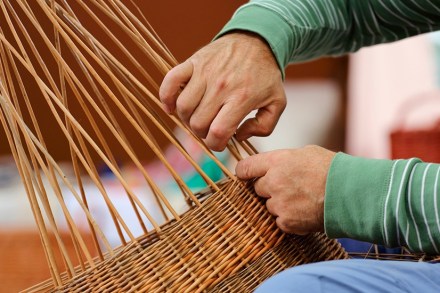
The only thing left for me now is to embrace humility and take up basket weaving. In our dog and ferret club in the 1990s we had a ferret guy called Ron. Ron was an old sweat Royal Marine and he applied Royal Marine levels of commitment and organisation to our dog and ferret shows, as a strategy, I think, in his battle against the bottle. In the Royal Marines, he told me, anyone suspected of alcoholism was sent on a basket-weaving course. All his ferret cages were hand woven and I went to his house once and his TVTimes had a beautiful basketwork cover. Or the harmonica. I’ve lately made a serious start to learning to play licks on the blues harmonica.

My clairvoyant GP

‘Willie or bum?’ I said to Catriona on the motorway. Everything in my recent medical career has been introduced via the former: cameras, cutters, stents. I naturally assumed it would be the same choice of pathways for exploring and snipping off three pieces of my liver. At the wheel, Catriona laughed at my idiocy and explained where my liver was and that there was not a pathway from it to either of those entrances. ‘They’ll go straight in through the side with a needle,’ she said. ‘Ow,’ I said. While I undressed in front of her, the admissions nurse scanned my written forms. ‘Anglais? I only take cash,’ she said, proudly enunciating her one English phrase. She was stout and very Marseillaise in that she joked with a tough face.