Jay Elwes

Dictators with the luck of the devil

From our UK edition

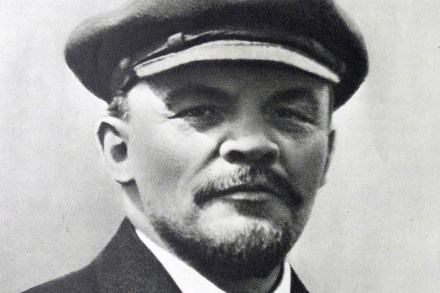
‘What brings strong personalities to power?’ asks the historian Ian Kershaw. ‘And what promotes or limits their use of that power?’ Those two questions are at the centre of this book, a study of some of the 20th century’s most important leaders. The result is partly an analysis of character, but also an attempt to
Solving the mystery of mass almost ruined Peter Higgs’s life

From our UK edition

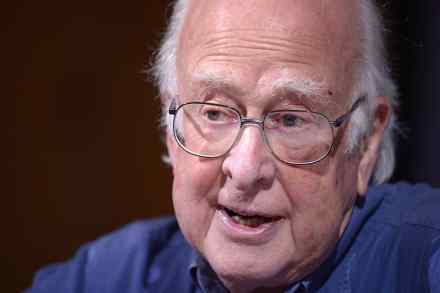
In 1993 William Waldegrave, the science minister, was looking into a project being planned on the continent. Cern, the European research body, was upgrading its particle collider to create what it called the Large Hadron Collider. This underground apparatus ran beneath the French-Swiss border and it was so vast that its diameter equalled that of

The deep roots of global inequality

From our UK edition

Thomas Piketty, the French economist who shot to fame for writing a colossal work of economics that many people bought but few actually read, recently received some advice. ‘What you write is interesting,’ a friend told him, ‘but couldn’t you make it a little shorter?’ Piketty has answered the call for brevity with a book

The trouble with Thomas Piketty

From our UK edition

Thomas Piketty, the French economist who shot to fame for writing a colossal work of economics that many people bought but few actually read, recently received some advice. ‘What you write is interesting,’ a friend told him, ‘but couldn’t you make it a little shorter?’ Piketty has answered the call for brevity with a book

Could Putin be toppled? An interview with Richard Dearlove

From our UK edition

‘One of the things about being in Moscow as the guest of the Russian government,’ says Richard Dearlove, the former head of MI6, ‘is this real attempt to make you feel like an outsider.’ It comes, he says, ‘from a fundamental Russian suspicion of foreigners’: ‘The Kremlin is designed to intimidate you. It’s designed to

Has liberalism destroyed itself?

From our UK edition

According to Vladimir Putin, liberalism is an ‘obsolete’ doctrine, a worn-out political philosophy no longer fit for purpose. In this well-timed, rather urgent book, Francis Fukuyama attacks that view and puts a vigorous case for the defence. Despite its faults, liberalism is a force for good, he says, and it remains the only political philosophy

Has the past decade blunted our sense of the duty of care?

From our UK edition

Modern British history can be divided into two parts: before Covid and after. That is the central pillar of this at times arid but ultimately compelling account of British social policy since 1945. We recovered in the aftermath of the second world war. Can we do it again, post-pandemic? Peter Hennessy, a crossbench peer, starts

Inside Putin’s mind: the lessons of Chechnya

From our UK edition

As far as Vladimir Putin is concerned, ‘we are nobody, while he who chance has enabled to clamber to the top of the pile is today Tsar and God’. So said Anna Politkovskaya, the eminent Russian journalist, in her book Putin’s Russia. She continued: ‘In Russia we have had leaders with this outlook before. It

Is it an exaggeration to talk of a ‘gender war’?

From our UK edition

According to Nina Power’s forceful and rather unusual What Do Men Want?, we in the West are currently engaged in a ‘battle over sex’. And while that has been going on, ‘another war is being waged. This one is against men, the whole damn lot of them!’ To back up this ‘war on men’ idea,

How the third world war was narrowly averted

From our UK edition

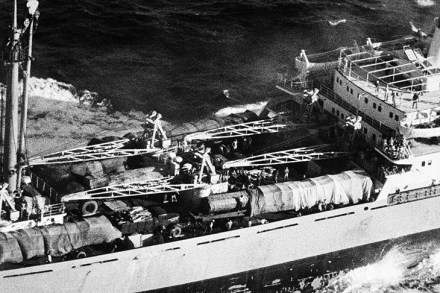
Nuclear weapons carry a payload of cold logic: if both sides have them, neither will ever use them. But in 1962, when the Soviet Union and US squared up to one another over Cuba, that logic broke down. As this superb new book shows, the Cuban Missile Crisis was the product of miscalculation, ignorance and

The myth of ‘progressive’ thinking

From our UK edition

One of the guiding instincts on the political left is that society should be ‘progressive’. Social attitudes, politics and the economy should all advance together, making society fairer and more equal in the process. In this view, a tax can be progressive if it targets the income of the wealthy, just as a law is

The autistic mind could hold the key to the future

From our UK edition

An old, cynical adage holds that ‘if all you’ve got is a hammer, everything looks like a nail’. I remembered that aphorism while reading the new book by Simon Baron-Cohen, one of the world’s leading authorities on autism, in which he unpicks the instincts and processes that have driven human progress. His conclusion? The great

Shock and awe — what should we make of our Viking ancestors?

From our UK edition

In June 793, a raiding force arrived by boat at the island monastery of Lindisfarne, on the Northumbrian coast. The attack that followed was shockingly brutal. The English cleric Alcuin wrote: ‘Never before has such terror appeared in Britain… Behold, the church of St Cuthbert spattered with the blood of the priests of God, despoiled

Disrupting the world — from a small bedroom in Hounslow

From our UK edition

On 6 May 2010 the eurozone crisis was tearing through the continent. Greece was bankrupt, and it looked as though Spain or Italy could be next. Markets were on edge, volatility was high — and then something very strange happened. The S&P 500, one of the US’s main stock indexes, began to crash. It went

Much-hyped technological innovation isn’t necessarily progress

From our UK edition

Modern advances in communication technology, computer power and medical science can sometimes be so startling as to seem almost like magic. It’s easy to get excited about it all — but what happens if we get too excited? What happens if we lean too heavily on technology, convinced that it can solve all our problems?

The nightmare of Okinawa made Truman decide to use the atom bomb

From our UK edition

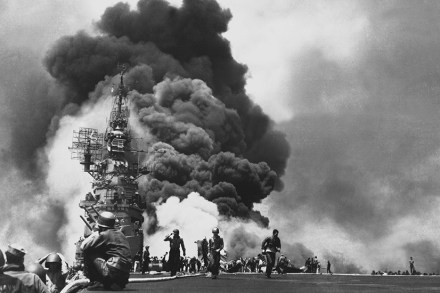
The US operation of 1945 to take the island of Okinawa was the largest battle of the Pacific during the second world war. Seven US divisions were used in the operation, approximately half a million men, along with the entire US Pacific fleet of 1,457 ships. The initial assault was led by a landing force