Jane Ridley

Jennie, Clemmie and Goosie too

From our UK edition

‘There never was a Churchill, from John of Marlborough down,’ wrote Gladstone, ‘that had either principles or morals.’ With the shining exception of Winston and his brother Jack, Churchill men have tended to be bad hats, but this makes them all the more interesting to read about. ‘There never was a Churchill, from John of Marlborough down,’ wrote Gladstone, ‘that had either principles or morals.’ With the shining exception of Winston and his brother Jack, Churchill men have tended to be bad hats, but this makes them all the more interesting to read about. Mary Lovell’s new book tells the story of the Churchills as a family over four generations, and it never ceases to amaze and entertain.
Mastering the k-word

From our UK edition

The film The King’s Speech, which is due to appear in the UK in January, tells the story of George VI’s struggle to overcome his stammer. The film The King’s Speech, which is due to appear in the UK in January, tells the story of George VI’s struggle to overcome his stammer. The speech therapist who cured the King was an Australian called Lionel Logue, and Mark Logue is his grandson. This book grew out of the researches that he began when the film-makers approached him for information. Lionel Logue was an amateur actor and elocution teacher who made a career teaching Australians how to speak correctly, back in the long vanished days when they were ashamed of their lazy diction and half-open mouths.

Girls from the golden West

From our UK edition

Who was the first American to marry an English duke? Most students of the peerage would say it was Consuelo Yzagna who married the eldest son of the Duke of Manchester in 1876. But the banjo-strumming Cuban American Consuelo was not the first Yankee duchess. As early as 1828 the American Louisa Caton married the eldest son of the Duke of Leeds. This was half a century before the dollar princesses, trading titles for cash, played havoc with Burke’s Peerage. Louisa and her sisters were the pioneers of the American invasion of London society. Their conquest was so successful, and they became so assimilated, that they left barely a ripple. Only now has Jehanne Wake researched and pieced together their story. The four Caton sisters were born into one of the grandest American families.

Secrets and silences

From our UK edition

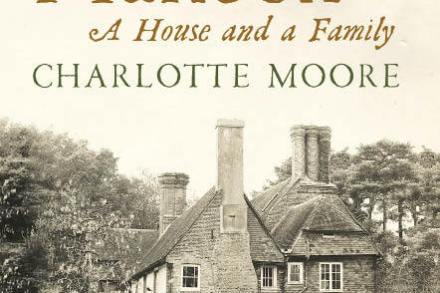
Charlotte Moore’s family have lived at Hancox on the Sussex Weald for well over a century. Charlotte Moore’s family have lived at Hancox on the Sussex Weald for well over a century. Hancox is a large, rambling house, and the Moores are a family who throw nothing away. Charlotte Moore still cooks on a 1934 Aga. Every drawer and every cupboard bulges with letters, diaries, receipts, even cheque book stubs. Moore has pieced together this chaotic archive to construct the history of her family. It is a complex but riveting story. Hancox was bought in the 1891 by a 23-year old spinster named Milicent Ludlow. Both her parents had died, leaving her with independent means.

Elder, but no better

From our UK edition

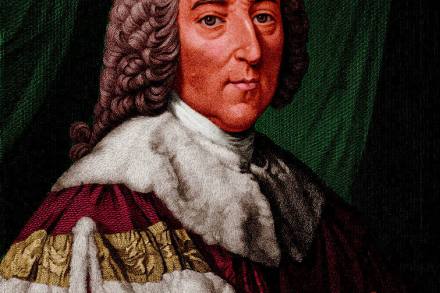
William Pitt the Elder, Earl of Chatham was hailed by Victorian schoolboys as the man who made England great. He was the patriot leader, the minister who steered the country through the Seven Years War, climaxing in the Year of Victories of 1759. General Wolfe heroically captured Quebec, British troops helped Frederick the Great of Prussia smash the French at the battle of Minden, and the British navy decisively defeated the French at Quiberon Bay. England emerged as the greatest power not just in Europe but in the world, and Pitt was the hero. In fact, Pitt’s reputation was wildly inflated. The war was fought by soldiers making decisions on the spot — it had to be, as letters took several weeks to reach England. Pitt neither planned nor financed the war.

From Madrid with love

From our UK edition

In June 1943 the film star Leslie Howard was mysteriously killed when his plane was shot down by the Luftwaffe on a return flight from Spain. This was an unprovoked attack on a commercial airliner, and there seemed to be no motive for it. British intelligence circulated rumours that the Germans had hoped to kill Churchill, whom they mistakenly thought was travelling on the plane. In fact, it now seems that the Germans’ target was Leslie Howard himself. He was returning from a celebrity tour of Spain, following the success of Gone with the Wind, in which he starred as Ashley Wilkes. Howard had been sent to Spain as part of a propaganda campaign to win Spanish support for the British.

The champagne Marxist

From our UK edition

Marx is back in fashion. For decades Marxists have been an endangered species, but now the collapse of capitalism has caused a revival in their stock and Das Kapital tops the German bestseller lists. Tristram Hunt’s biography of Karl Marx’s shadowy collaborator Friedrich Engels could hardly be more timely. ‘Marx was a genius,’ declared Engels, ‘we others were at best talented.’ Engels was a socialist hack who had the nous to attach himself to the genius Marx. It was his friendship with Marx that differentiated him from the other would-be revolutionaries, now long forgotten, who sat up drinking and arguing until 3 a.m. in the bars of Brussels in the 1840s. But as Tristram Hunt makes clear, Engels was not just Marx’s stooge.

A scandalous woman

From our UK edition

Lady Worsley’s Whim, by Hallie Rubenhold There is a magnificent portrait by Reynolds at Harewood House in Yorkshire of Lady Worsley. She wears a sweeping red riding habit, she looks self-assured and alert, and she holds a riding crop as an allusion to her skill as a horsewoman. In reality, as Hallie Rubenhold’s book vividly reveals, Lady Worsley was one of the most scandalous women of her day, the subject of the first squalid celebrity divorce. Lady Worsley, who rejoiced in the odd first name of Seymour, was a massive heiress. She inherited a fortune of over £60 million in today’s money from her father, Sir John Fleming, who owned a farm in the London suburb of Brompton. Aged 18, she married a wealthy, socially ambitious baronet named Sir Richard Worsley.

Living with a dark horse

From our UK edition

The Horsey Life, by Simon Barnes Dolly Dolores was a big-bottomed mare with a white star on her forehead who loved to jump. Simon Barnes experienced an instant connection with her on his first ride. He had never owned a horse before, but his wife persuaded him to buy her. He spent a royalty cheque on her. She was always a lively ride. At first Barnes just gave Dolores her head and let her do what she wanted. She was an ace jumper, never refused, never ran out — one of those rare horses with a passion for jumping. Barnes competed in cross-country events (though he is modest about this) and he started winning prizes, but then Dolores began to behave in a weird manner. She stood up on her hind legs and refused to move. People advised him to have her shot.

A chilly professional

From our UK edition

The Forgotten Prime Minister: The 14th Earl of Derby, by Angus Hawkins Who was the 14th Earl of Derby? He was three times Conservative prime minister, but few people have heard of him today. He became leader of the Tory rump after Peel smashed the Conservative party in 1846, and he remained leader until ill health forced him to resign some 22 years later. He was immensely rich, with estates in Lancashire yielding a princely income of £100,000. He was clever and a swashbuckling orator — the ‘Rupert of debate’, Bulwer-Lytton called him. He was also a gifted classical scholar. Confined to his bed by an attack of gout, he spent the time composing an acclaimed translation of Homer’s Iliad. In spite of all this, he has been forgotten. Rightly so, some might say.

Truth is stranger than fiction

From our UK edition

Jane Ridley on a history and a fiction of Leningrad  The siege of Leningrad is the ultimate nightmare: what happens when you push humanity to its utmost limits. The German armies advanced on Leningrad and besieged it in September, 1941. The siege lasted for almost 900 days, but the first winter was the worst. Bread, water, power, fuel all ran out. As the icy winter temperatures fell below minus 30 Celsius, people died of starvation at a rate of 20,000 a day. The streets were piled high with corpses: people were too weak to move their dead, and the ground was too frozen to bury them. Michael Jones, in his historical account of the siege, explores the moment when humanity changed. At first, the Leningraders were altruistic and tried to help each other.

Doctoring the record

From our UK edition

The Story of San Michele is one of the great bestsellers of all time. It languishes on the shelves of second-hand bookshops, the autobiography of a Swedish doctor who fell in love with the island of Capri. The author, Axel Munthe, is a shadowy figure, a name often mentioned but (to me at least) an enigma. Munthe’s life, as related by Bengt Jangfeldt in this new biography, was an extraordinary adventure, far more exciting than his autobiography. He was entirely self-made. Born in 1857, he was a middle-class Swedish boy, the son of a pharmacist. When he began to cough blood as a medical student, he left Sweden in search of the warmth of the south.

God and the GOM

From our UK edition

Richard Shannon has been writing about Gladstone on and off for almost 50 years. His first book, a study of Gladstone and the Bulgarian Agitation, was published in 1963. He is the author of a major biography of Gladstone in two exceptionally hefty volumes, which appeared to critical acclaim in 1982 and 1999. So why does he feel the need to hammer out another 200,000-odd words on the GOM? Well, the answer is really frustration. Shannon disarmingly admits that his two fat volumes of biography were ‘too dense for their own good’. Not enough people read them. Shannon had a view of Gladstone, but the message wasn’t getting across. The purpose of this (relatively) slim version is to drive home the Shannon thesis.

The name of the game

From our UK edition

Between 1997 and the passing of the Hunting with Dogs Act in 2004, parliament spent 700 hours debating hunting. Over 250,000 people took part in the Countryside March through London in 1998. Why such an apparently marginal issue, involving a tiny minority of rural troglodytes, should have mattered so much in the modern age of New Labour is a question well worth asking. Emma Griffin is an admirably even-handed historian with very long sight. By casting back to 1066 her study gives a fresh perspective, and she achieves the difficult feat of saying something new about hunting. Her argument goes like this. From the time of the Normans all the ingredients of hunting were in place. There were riders and dogs and they chased a solitary prey — in the Middle Ages, this was deer.

When friends fall out

From our UK edition

Political biography is in the doldrums. No one wants to read 800 pages or so of cradle-to-grave dead politics, especially if it’s familiar stuff and has all been written about before. The detail is too much, and the potted narrative of forgotten political manoeuvring tends to overwhelm the life. One way out of this dilemma is to write about relationships. Friendship in politics is the hidden key to the top — can you think of an anorak who made it as prime minister? Even the nerdish ones had friends — the younger Pitt had Wilberforce, Bonar Law had Beaverbrook; but once our hero climbs to the top of the greasy pole the dynamics change and old relationships fall apart.

The thrill of the illicit

From our UK edition

Listing page content here Hunting is cool. Ten years ago no one in her right mind would have dreamed of writing a novel about hunting, but now Candida Clark has done exactly that. Just as George Bush’s ‘war of terror’ gave a huge boost to al-Q’aeda, so Labour’s attempt to impose a ban has actually invigorated hunting. Today it’s more popular than ever, given an extra shot of adrenalin by the thrill of dodging the law. Parliament spent 700 hours debating hunting, and the result was a botched and unworkable law which makes things worse, not better, for the fox. The reason for this fiasco is simple. As Charlie Pye-Smith explains in his excellent essay, Rural Rites, the ban was driven by class war, not by a concern for animal welfare.

In Her Majesty’s service

From our UK edition

The night Prince Albert died at Windsor (14 December 1861) Queen Victoria rushed wild and sobbing from the death bed to the nurseries, where four-year-old Princess Beatrice lay asleep. Grabbing the child, the queen brought her to her bedroom. According to one account, Victoria, stunned by grief, ghoulishly dressed the little girl in the nightclothes of the dead Albert and lay beside her. Afterwards, the queen insisted on having Beatrice, or ‘Baby’ as she was called, with her for hours each day. Beatrice was the youngest by four years of Queen Victoria’s nine children, and this closeness to her grieving mother was, in Matthew Dennison’s account, the defining feature of her childhood.

The straight man and the courtier

From our UK edition

Gladstone and Disraeli were the Punch and Judy of Victorian politics, and reams have been published about them, but no one has written a book which centres on their relationship. Richard Aldous has had the clever wheeze of charting their rivalry, retelling the story in what he calls a ‘modern way’ for a generation who know little about the past. Actually, the modern way turns out to be remarkably old-fashioned. This book is a romp. Aldous writes fluent, vivid prose and he excels at scene-setting. It’s all very filmic. The book opens with Gladstone at Hawarden Castle, his country home, receiving the telegram announcing the news of Disraeli’s death. Cut to Hughenden Manor, whence Dizzy’s coffin is carried out to the sound of peacocks screeching on the terrace.

Send her victorious

From our UK edition

Listing page content here The Iraq war has shed a whole new light on the wars fought by the British during the reign of Queen Victoria. War was more or less continuous during the first half of Victoria’s reign, and very few of these imperial wars were actually provoked. The UN would not have approved of the wars in the Punjab or Burma, Persia or China which the British waged in the 1840s and 1850s. As Saul David shows in this new book, the Victorians routinely fought wars of aggression. Some were for reasons of regime change, to replace an unfriendly ruler by a puppet. Others were naked acts of conquest. The big difference between the wars fought by George Bush today and those of Victorian Britain is that the government back home in London played very little part.

The man who saw the Jabberwock

From our UK edition

John Tenniel’s name means little today, but everyone knows his work. Tenniel was the artist who illustrated Lewis Carroll’s Alice in Wonderland, creating those unforgettable images of the little girl in the Alice band who shrinks and grows so alarmingly. The cartoons which Tenniel drew each week for Punch have survived as well. Thanks to Tenniel, we still think of a grim, hatchet-faced Gladstone chopping trees, or a jaunty but distinctly Semitic Disraeli in coronet and toga. Political cartoonists like Tenniel wielded massive influence in the days before press photography. Tenniel trained as a history painter, but aged 30 he gave up the roller- coaster of high art and got a job on the staff of Punch. For over 50 years, starting in 1850, he churned out cartoons.