James Walton

James Walton is The Spectator’s TV critic

Satire misfires: Our Country Friends, by Gary Shteyngart, reviewed

From our UK edition

It is, as you’ve possibly noticed, a tricky time for old-school American liberals, now caught between increasingly extreme versions of their traditional right-wing adversaries and the new Puritans on the left. In Our Country Friends, Gary Shteyngart sets out to explore their resulting confusion — but ends up inadvertently exemplifying it. Like his creator, the protagonist is a Russian Jew, born in Leningrad in 1972, who as a boy moved to America with his parents and later made his name writing satirical novels about people from the same background. Unlike Shteyngart, though, Sasha Senderovsky is now facing a stalled career, having abandoned literature in an ill-advised bid for success in TV screenplays.

A blisteringly bonkers first episode: Doctor Who – Flux reviewed

From our UK edition

BBC1 continuity excitedly introduced the first in the new series of Doctor Who as ‘bigger and better than ever’ — presumably because the more accurate ‘bigger and better than it’s been for a bit’ doesn’t have quite the same punch. Still, Sunday’s programme was a definite, even exhilarating improvement on those of recent years. Since Chris Chibnall became the showrunner in 2018, thrills have taken a firm second place to solemn lectures on how the most dangerous monster of all is human prejudice. Yet at no stage here did the Doctor (Jodie Whittaker) encounter some acknowledged hero of black and/or women’s history — and so allow us a self-satisfied bask in having risen above the bigotry of less enlightened times.

A highly polished exercise in treading water: Season 3 of Succession reviewed

From our UK edition

At one point in an early Simpsons, Homer comes across an old issue of TV Guide, and finds the listing for the sitcom Gomer Pyle, U.S.M.C. ‘Gomer upsets Sergeant Carter,’ he reads — adding with a fond chuckle, ‘I’ll never forget that episode.’ Even for British viewers unfamiliar with the show, the joke is clear: that’s what happens in every episode. Sad to say, this popped into my head while watching the first in the new series of Succession. The acting, script and direction are as brilliant as ever.

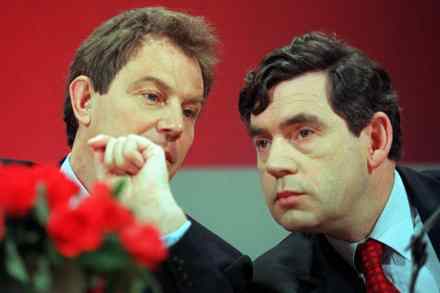
Blair & Brown: The New Labour Revolution should be called ‘The Tragedy of Gordon Brown’

From our UK edition

Murder Island features eight real-life ‘ordinary people’ seeking to solve a fictional killing on a fictional Scottish island. What follows is so confused and confusing that you can only imagine it was pitched to Channel 4 as ‘Broadchurch meets The Apprentice’ and nodded through as a result, without anybody asking such pesky questions as ‘So how might that work, then?’ Or if they did, that they were silenced by the news that Ian Rankin was signed on as the writer — whatever that might mean, seeing as most of the programme is necessarily unscripted and the investigation itself impossible to plot in advance.

Douglas Murray, Katy Balls, James Walton

From our UK edition

15 min listen

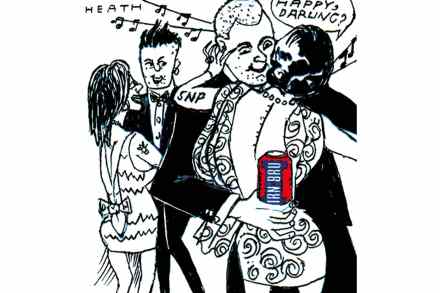
On this week's episode, Douglas Murray examines the left's tactics of victimhood in the wake of the Labour conference. (00:48) Then James Walton gives us his review of the new Bond film, No Time to Die. (08:34)And finally, Katy Balls talks about how the CO2 shortage could lead to a lack of her beloved Irn Bru.

A compelling mess: No Time to Die reviewed

From our UK edition

These days, James Bond can no longer just be the main character in the Bond films. He’s also had to become a defiant metaphor for them. Since Daniel Craig took over the role, Bond has regularly been told that he’s badly outdated. Yet, by the closing credits, he’s once again proved how much the world still needs him. That this has been reflected at the box office is, I’d suggest, largely down to one neat trick: Craig’s Bond films have thrown in just enough gruff emoting to get people to go along with the pretence that his Bond is a radical reinterpretation, while still essentially sticking to their trusty old-school methods.

No Time to Die is a compelling mess

From our UK edition

Times being what they are, James Bond can no longer just be the main character in the Bond films. He’s also had to become a defiant metaphor for them. Since Daniel Craig took over the role, Bond has regularly been told that he’s badly outdated. Yet, by the closing credits, he’s once again proved how much the world still needs him. That this has been reflected at the box office is, I’d suggest, largely down to one neat trick: Craig’s Bond films have thrown in just enough gruff emoting to get people to go along with the pretence that his Bond is a radical reinterpretation, while still essentially sticking to their trusty old-school methods.

Somewhere between eye-opening and jaw-dropping: Sky’s Hawking – Can You Hear Me? reviewed

From our UK edition

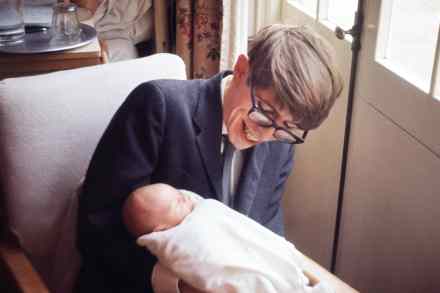
It is, of course, not unknown for a man to become famous with the support of his family — and, once he has, to prefer global adulation to being with them, before leaving his wife for a younger woman. What’s rather less common is when the man in question is almost completely paralysed. This was the story told by Hawking: Can You Hear Me? and, in advance, it might have sounded an over-familiar one. After all, not only was Stephen Hawking one of the few physicists to become a tabloid staple, but he was also played to Oscar-winning effect by Eddie Redmayne in The Theory of Everything. As it transpired, though, the programme proved somewhere between eye-opening and jaw-dropping.

Bleak, unashamedly macho and grown-up: BBC2’s The North Water reviewed

From our UK edition

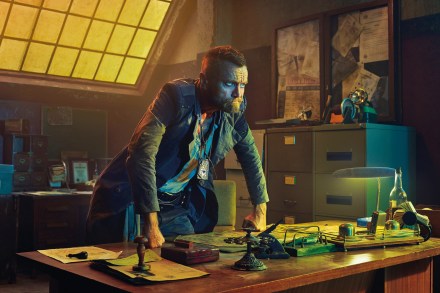
‘The world is hell, and men are both the tormented souls and the devils within it.’ This was the cheery epigraph from Schopenhauer with which The North Water introduced itself — aptly, as it transpired. Certainly, BBC2’s starry new Victorian drama is not for those who prefer their television characters to be loveable. The first person we met was Irishman Henry Drax (Colin Farrell), who gruntingly concluded his business with a Hull prostitute before heading for the docks in a way familiar to viewers of Victorian TV dramas: shamble up the cobbles, straight on past the women in shawls, turn left at the urchins.

A total mess: BBC2’s The Watch reviewed

From our UK edition

Last Sunday on Channel 4, a man called Eric Nicoli proudly remembered ‘the bravest thing I’ve ever done’. In November 1975, Rowntree was poised to launch the Trek chocolate bar. The packaging was ready, along with an advertising campaign featuring, for some reason, potholers. But as the company’s new product manager, Eric couldn’t rid himself of the niggling feeling that Trek was boring. So — and this is the brave bit — he went to the boss and said that Rowntree should think again. ‘You better be bloody right, young man,’ the boss replied. And with that, Eric returned to the drawing board where he came up with the name Yorkie and an advertising campaign featuring, for some reason, lorry drivers.

When did Sunday night TV become so grim? Baptiste reviewed

From our UK edition

There was, you may remember, a time when Sunday night television was rather a jolly affair: gently plotted and full of rosy-cheeked yokels, twinkly coppers and warm-hearted patriarchs. Well, not any more — as BBC1’s Baptiste and ITV’s Professor T confirm. Both feature main characters, and quite a few supporting ones, with backstories so abidingly grim that you can only hope they don’t send out annual Christmas circulars. So it is that Julien Baptiste — French detective turned freelance missing-persons hunter — now has a dead daughter to go with his imprisoned son. Meanwhile, Cambridge academic Jasper Tempest’s OCD is clearly linked to the fact that, at the age of seven, he found his alcoholic father hanging from a noose in the family hallway.

Looks lovely if nothing else: Craig and Bruno’s Great British Road Trips reviewed

From our UK edition

To its huge credit, ITV has managed to find perhaps the last two television celebrities who’ve never before been filmed travelling around Britain while exchanging light banter and using the word ‘iconic’ a lot. In Craig and Bruno’s Great British Road Trips, the Strictly judges are driving a Union flag-bedecked Mini through such telegenic staples of heart-warming TV dramas as the Lake District, the Yorkshire Dales and the Scottish Highlands. For the opening episode, the choice fell on the Cornish coast, which certainly helped the programme achieve its primary aim of looking lovely. But this, as it transpired, was just as well — because for a fair amount of the time, not much else happened.

Thoughtful and impeccable: Ken Burns’s Hemingway reviewed

From our UK edition

Ken Burns made his name in 1990 with The Civil War, the justly celebrated 11-and-a-half-hour documentary series that gave America’s proudly niche PBS channel the biggest ratings in its history. Since then, he’s tackled several other big American subjects like jazz, Prohibition and Vietnam; and all without ever changing his style. In contrast to, say, Adam Curtis (another ambitious film-maker whose methods have remained unchanged for 30 years), Burns’s documentaries take an almost defiantly considered approach, forgoing anything resembling self-regarding flashiness in favour of such old-school techniques as knowledgeable talking heads, careful chronology and straightforwardly appropriate visuals.

Return to LA Confidential: Widespread Panic, by James Ellroy, reviewed

From our UK edition

Even by James Ellroy’s standards, the narrator of his latest novel is not a man much given to the quiet life. Freddy Otash breaks legs for Frank Sinatra. He gets Dean Martin’s pregnant Latina maid deported. He sticks the hand of someone blackmailing Liberace into a deep-fat fryer. He sleeps with the 21-year-old Elizabeth Taylor while she’s only on her second marriage. And all that’s in the first 20 pages, while Otash is still an LA cop. Once he goes freelance as a private eye, things turn rather more lurid. Widespread Panic is a rare stand-alone novel among Ellroy’s assorted trilogies and quartets. But, as you can maybe tell already, that doesn’t necessarily make it a radical departure.

One of the best Covid dramas so far: BBC2’s Together reviewed

From our UK edition

Let me start with a spot of admin: if you’re wondering what The Speccie makes of GB News, it’ll be reviewed next week once the channel’s had a fair chance to establish itself. In the meantime BBC2’s Together took an impeccably up-to-date subject and gave it surprisingly old-fashioned treatment — by returning us to the far-off days when TV drama had its roots in theatre rather than cinema. Not only was it a 90-minute two-hander, but the characters spoke to both each other and the audience on a single set. Sharon Horgan and James McAvoy played an unnamed couple (always a bit annoying for a reviewer but I won’t let that affect my steely objectivity) who entered the first Covid lockdown convinced of the fact that they hated each other.

Camp am-dram, plus stuff about the patriarchy: Channel 5’s Anne Boleyn reviewed

From our UK edition

Fifty-one years ago, in the BBC’s much-acclaimed The Six Wives of Henry VIII, Anne Boleyn was portrayed as a brave and innocent woman brought low by the men around her, notably Henry VIII and Thomas Cromwell. Even then, of course, this was by no means an unconventional view. Only the previous year, the film Anne of the Thousand Days — nominated for ten Oscars — had taken a similar line, as indeed had Foxe’s Book of Martyrs (1563), which objected to all ‘sinister judgments and opinions… against the virtuous queen’.

Haunted by the past: Last Days in Cleaver Square, by Patrick McGrath, reviewed

From our UK edition

At the risk of encroaching on Spectator Competition territory, what is the least surprising thing for any given narrator in a particular author’s work to say? (For one of Irvine Welsh’s, a single word of four letters might be enough.) In the case of Patrick McGrath, I’d suggest, the answer comes on page 55 of his new novel: ‘I confess I feel that my sanity is under threat.’ McGrath famously grew up in the grounds of Broadmoor, where his father was the medical superintendent, and his consequent lifelong interest in psychiatry is reflected in pretty much all of his fiction.

Quietly radiates a wholly justified confidence: BBC 1’s The Pact reviewed

From our UK edition

There was certainly no lack of variety among new TV dramas this week, with a standard British thriller up against more glamorous American competition in the shape of some extravagant Victorian sci-fi and an adaption by an Oscar-winning director of a Pulitzer-winning novel. (All three, mind you, did naturally feature a one-dimensional white bloke as the embodiment of sexist and/or racist villainy.) The surprising thing at this stage is that it’s the plucky British show that looks most promising. The Pact began, like many a thriller before it, with a frightened woman running through some dark woods. So far we still don’t know why — unless it was just force of TV habit.

A TV doc that is truly brave: BBC1’s Ian Wright – Home Truths reviewed

From our UK edition

Ian Wright: Home Truths began with the ex-footballer saying that the home he grew up in was ‘not a happy one’. As truths go, though, this soon turned out to belong firmly in the category of ‘understated’. Not surprisingly, Wright’s favourite boyhood programme was Match of the Day — which is why his stepfather would make him stand with his face against the wall while it was on. (‘Just because he could,’ Wright explained.) He also beat Wright’s mother: often, Wright recalled, while she repeatedly cried the word ‘Sorry!

A very watchable doc cashing in on Line of Duty: BBC2’s Bent Coppers reviewed

From our UK edition

If you’re after an exciting, twisty programme about police corruption that doesn’t also feel a bit like sitting an exam in Line of Duty studies, then Bent Coppers: Crossing the Line of Duty could well hit the spot. As both the timing and subtitle not so much suggest as bellow, this three-part documentary series is an obvious attempt to cash in on its fictional counterpart. Happily, though, it’s a successful one. In Wednesday’s second episode the focus was on 1970s Soho, where the most reliable way to make a fortune was by opening what the narrator Philip Glenister called, in suitably 1970s argot, ‘dirty bookshops’. Of course, there were certain overheads involved, like rent and huge bribes to the police.