James Walton

James Walton is The Spectator’s TV critic

Patronising, clichéd and corny: BBC1’s Gold Digger reviewed

From our UK edition

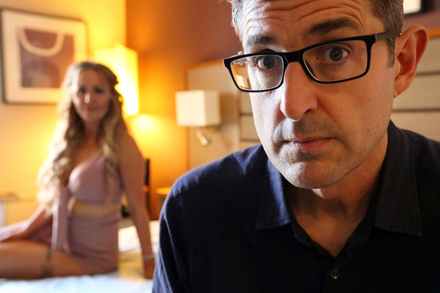
Some last taboos, it seems, can remain last taboos no matter how frequently they’re confronted. Grief, the menopause, masturbation, mental illness are all routinely described that way whenever they get depicted on television — i.e. quite often. But perhaps the sturdiest last taboo of the lot is that older women can have sexual feelings: something that appears to come as a rather patronising surprise to TV folk every time they tackle it — i.e. quite often. The latest example of such bravery is Gold Digger (BBC1, Tuesday), a drama keen for us to understand that a woman of 60 can still be both desirable and a goer — although not so keen as to cast a woman of 60 in the role.

It’s a dull world in which children don’t challenge their parents

From our UK edition

On the Shoulders of Giants consists of 12 essays that the late Umberto Eco gave as lectures at the annual Milanesiana festival of culture between 2001 and 2015. Judging from the book, seeing him deliver them must have been like going to a concert these days by Van Morrison or Bob Dylan. Sometimes he’s on top form, all the old magic thrillingly intact; quite often he seems to be rather going through the motions. And while he can always be relied on for a generous smattering of his greatest hits — conspiracy theories, William of Ockham, the Rosicrucians, Pseudo-Dionysius the Aeropagite — these too are performed with noticeably varying amounts of feeling and effort.

BBC wildlife documentaries are just a chance to tell us all off

From our UK edition

Older readers may remember a time when landmark BBC wildlife documentary series were joyous celebrations of the miraculous fecundity of the planet we’re lucky enough to find ourselves living on. Well, not any longer. In our more censorious age, they’ve become another chance to essentially tell us all off. So it was that Seven Worlds, One Planet (BBC1, Sunday) began with Sir David Attenborough presenting the usual highlights package of the wonders to come, with each episode focusing on a different continent. But then he put on his special serious voice to add the dark warning that ‘This may be the most critical moment for life on Earth since the continents formed.’ (Quite a long time, I think you’ll agree.

Should we be playing the surveillance state for laughs? Celebrity Hunted reviewed

From our UK edition

One of the many great things about The Capture was that we could never be sure whether the British authorities’ capacity for virtually blanket surveillance was a nightmare vision of the future or a nightmare portrait of the present. Celebrity Hunted, though, suggests a third possibility: that virtually blanket surveillance is simply proof of how marvellous the authorities are, and so untroubling that it can be played for laughs. This third series is, once again, part of Channel 4’s annual Stand Up to Cancer season, and features four teams of two, whose job is to go on the run for a fortnight and avoid capture by intelligence experts equipped with the latest snooping technology.

A solid costume drama but Dame Helen has been miscast: Catherine the Great reviewed

From our UK edition

It’s possibly not a great sign of a Britain at ease with itself that the historical character most likely to show up in a TV drama now seems to be Oswald Mosley. But the week after his starring role in Peaky Blinders ended, there he was again, right at the beginning of BBC1’s next Sunday-night drama. World on Fire opened with Mosley addressing a 1939 Manchester rally, where he duly whipped up his supporters and reminded the rest of us of the dangers of extremism. Luckily, there were two people in the hall brave enough to protest: salt-of-the-earth northern lass Lois Bennett and her much posher and therefore much stiffer boyfriend Harry Chase.

Abba, Twitter vs Instagram, and papal selfies: the modern face of the Catholic Church

From our UK edition

As a lifelong Catholic, I’ve often thought that two of the Church’s chief characteristics are a) how weird it is when you think about it; and b) how weird it is that so few people in it think how weird it is when you think about it. Happily, if a little smugly, I have to say that nothing in the first episode of Inside the Vatican (BBC2, Friday) caused me to revise this theory. There was a time, of course, when allowing TV cameras to film your institution was a risky strategy, as St Paul’s cathedral and the Royal Opera House can testify after those fly-on-the-wall series of the 1990s showed us their dirty laundry with some glee.

I have no clue what’s going on but can’t wait to find out: BBC1’s The Capture reviewed

From our UK edition

How did the police ever solve any crimes before CCTV? That was the question which sprang to mind watching the first episodes of two highly promising new crime dramas this week. It’s also the central question now facing the detective in one of them. Part police officer, part career women, Rachel Carey in The Capture (BBC1, Tuesday) is being fast-tracked through the system to the traditional disapproval of her grizzled, old-school boss DCI Alex Boyd — imaginatively known as Boydy. Fortunately, Rachel (Holliday Grainger) won’t be with his unit for long. Having saved Britain from a deadly terrorist attack while working for special ops, she’s been sent there temporarily to see how she might handle a high-profile murder or kidnapping.

The Octopus in My House left you with an overwhelming sense that octopuses are astonishing

From our UK edition

Professor David Scheel, the presenter of a BBC2 documentary on Thursday, instantly brought to mind that American scientist in The Fast Show: bearded, bespectacled, softly spoken and willing to try an experiment just for the hell of it. A marine biologist in Alaska, Scheel has been studying octopuses (his own preferred plural, incidentally) for 25 years. But what, he whispered excitedly, ‘would I find out if I invited an octopus into my house?’ Well, one obvious answer we got from the starkly titled The Octopus in My House is that a TV film crew would be happy to show up and record what happened — which was essentially that he and his 16-year-old daughter Laurel spent a lot of time peering wonderingly into the animal’s tank.

How not to make TV

From our UK edition

BBC2’s How the Middle Classes Ruined Britain (Tuesday) began rather promisingly. ‘I’m a working-class comedian who voted Leave,’ announced presenter Geoff Norcott, ‘and I think it’s about time you lot heard some home truths.’ But then came the programme itself — which turned out to be the TV equivalent of a footballer who, faced with an open goal, dribbles about aimlessly before falling over. The first bit of aimless dribbling followed the shock news that middle-class parents often try to get their children into the best local schools, sometimes by claiming to live nearer to them than they do.

Rocket men | 11 July 2019

From our UK edition

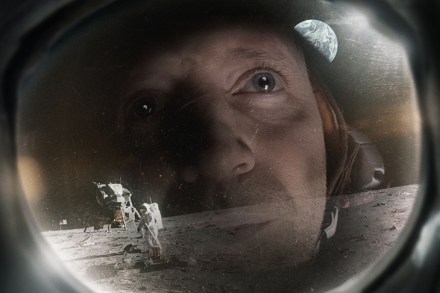
As the title suggests, 8 Days: To the Moon and Back (BBC2, Wednesday) comprehensively disproved the always questionable idea put forward by Elton John’s ‘Rocket Man’: that being an astronaut is ‘just [a] job five days a week’. More importantly perhaps, by concentrating purely on how Apollo 11’s lunar voyage unfolded over the eight days in question, without any pesky hindsight or analysis, it stirringly reminded us how uncomplicatedly thrilling the first moon landing was at the time. And also, you couldn’t help noticing, how madly risky. A key piece of equipment throughout the mission appears to have been the seat of the pants.

Just another Sunday soap

From our UK edition

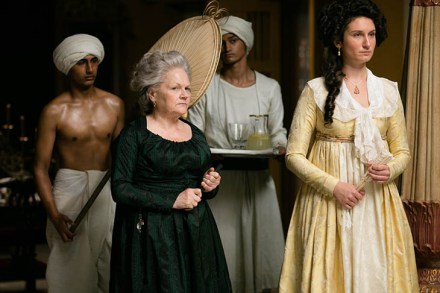
ITV’s new drama Beecham House is set in late 18th-century India where the British and French were still battling it out for supremacy. Its opening credits feature the east at its most exotic, with a montage of ceremonial elephants parading, sari-clad women gliding and lotus flowers opening. The hero is John Beecham (Tom Bateman), a hunky Englishman who proves honourable to the point of mild priggishness as he navigates his way through a world of dusky beauties, inscrutable orientals and treacherous Frenchies. If there were any Indians around at the time who weren’t gorgeously attired rich people, violent bandits or servants who took real pride in their work, we’ve yet to meet them.

Donald Trump and the politics of Netflix

From our UK edition

Given that there’s apparently no aspect of American life where culture wars don’t rage, the only surprise about Netflix's latest controversy is that it hasn’t been going on for at least three years. After all, this is a company whose CEO, Reed Hastings, called for a Hillary landslide in 2016, because ‘Trump would destroy much of what made America great’. The reason #boycottnetflix was trending earlier this month on you-know-where is that Netflix announced that it would ‘rethink’ filming in Georgia if the state's new abortion law went ahead.

Stranger things

From our UK edition

Usually, the return of Killing Eve would be pretty much guaranteed to provide the most unconventional, rule-busting TV programme of the week — where genres are mixed so thoroughly as to create a whole new one. This week, though, there were two new series that were even harder to classify. One was ITV’s Wild Bill: a show so bonkers that the fact it stars Rob Lowe as the recently appointed chief constable of East Lincolnshire mightn’t be the weirdest thing about it. When the resolutely American Bill Hixon (Lowe) first arrived in Boston, Lincs, it looked as if we’d be in for a standard fish-out-of-water comedy, with the traditional differences between Brits and Yanks played for knockabout laughs. And for much of the opening episode we were.

One female sleuth after another

From our UK edition

Susannah Stapleton’s erudite but hugely entertaining debut is a true-life detective story about the quest for a true-life detective. A longstanding fan of Golden Age crime fiction, Stapleton is reading a 1930s Gladys Mitchell novel featuring the sleuth Mrs Bradley when she has a sudden thought: were there any non-fictional female sleuths around at the time? Reaching for her laptop, she soon finds a reference to Maud West, who billed herself as ‘London’s only lady detective’. And with that, writes Stapleton, in by no means the book’s only use of classic detective-story phrases, ‘The game was afoot’. Her first stop is the Times archive, where she discovers an advert for Maud’s services from 1909 (‘Are you worried? If so, consult me!

Here comes the sun

From our UK edition

When you see the opening caption ‘4.6 billion years ago’, it’s a pretty safe bet that you’re watching a programme presented by Professor Brian Cox. And so it proved again this week, as his latest exploration of the solar system began on BBC2, with an episode about Mercury and Venus. Being an officially designated ‘landmark’ series, The Planets (Tuesday) has many of the features you’d expect: lush music, an impressive CGI budget, a ten-minute behind-the-scenes segment at the end. More surprising is Cox’s willingness to anthropomorphise the planets — and to regard the ones that aren’t lucky enough to be Earth with a touching level of sympathy. After all, it’s not their fault they’re so lifeless.

Thinking inside the box | 16 May 2019

From our UK edition

These days, a common way of introducing radio news items is with the words ‘How worried should we be about…?’ The trouble with this formula is not just the strange notion that anxiety has apparently become some sort of moral duty — even a badge of honour. It’s also that we generally know what the answer will be: we should be very worried indeed. Now, in Russell T. Davies’s Years and Years (BBC1, Tuesday), the same formula serves as the premise for a television drama. The first episode began by introducing us to three adult siblings, scrupulously chosen to represent modern Britain — at least as seen on TV. (The publicity material duly calls them ‘an ordinary British family’.

The end is in sight

From our UK edition

Channel 4’s When I Grow Up had an important lesson for middle-class white males everywhere: you’re never too young to be held up as a git. The series, billed as ‘a radical experiment in social mobility’, gets a group of seven- and eight-year-old children from different backgrounds to work together in a real-life office setting — which in Thursday’s first episode was, rather unexpectedly, Hello! magazine. The editor-in-chief Rosie Nixon began by announcing, in the tones of one making a brave stance against prevailing social attitudes: ‘I do feel passionately about diversity.

Goodbye to all that | 17 April 2019

From our UK edition

If you’ve ever faced the social embarrassment of having to admit that you’ve never seen Game of Thrones (Sky Atlantic, Monday), then imagine what it’s like when you’re a TV reviewer. The customary excuse of ‘There really isn’t time to keep up with everything on telly’ might work for most series. But now that GoT is officially a programme that everybody watches (apart from all the people who don’t), it’s beginning to feel a bit feeble for this one. So it was that, after swotting up as best I could on the scores of backstories over the weekend, I decided to give the final series a go. I was, of course, expecting the show to have an epic feel.

The wisdom of the crowd

From our UK edition

On Sunday a drama began with ED905 being stolen by an OCG who’d faked an RTC that required IR, little realising that they had a UCO in their midst. So yes, Line of Duty (BBC1) is back in all its jargon-laden glory — and, judging from the first episode, it’s lost none of its ability to grip either. For those a bit rusty on their police abbreviations, that opening scene featured the female member of an organised crime group pretending she’d crashed her car with a baby inside, causing the woman in charge of a passing police convoy to stop and help. The rest of the gang then appeared in regulation Line of Duty balaclavas, killed three officers and drove off with the lorry-load of heroin the police were escorting.

King of the Bears

From our UK edition

Jonathan Lethem’s new book is billed as ‘his first detective novel since Motherless Brooklyn’, which won America’s national book critics circle award for fiction in 1999. But if you’ve ever read his work, you’ll know not to expect a straightforward crime-solving tale — or anything like it. Throughout his career, Lethem has set out to wrong-foot his readers with a tricksy blend of realism, literary pastiche, ruminations on America and narrative elements that are deeply, even recklessly, odd. Now, in The Feral Detective, he’s at it again.