James Kirkup

James Kirkup

James Kirkup is a partner at Apella Advisors and a senior fellow at the Social Market Foundation.

The graduate benefit is not what it was

Politicians are keen to fix what is seen as a mounting political problem with student loans. An increasing number of graduates are pointing out that the Plan 2 loan scheme in particular imposes some painful and unreasonable marginal burdens on their earnings. After all, paying another nine percentage points of student loan charges on top of your marginal tax rate is a miserable experience. So too is the absurd interest rate charged on those loans, which is based on the RPI measure of inflation that, in almost every other regard, the government has conceded is unrealistic and unviable. So we have a large number of graduates unhappy about their financial situation.

The bond markets aren’t done with Rachel Reeves

Never has Rachel Reeves been so glad to be so boring. The Chancellor will deliver today her spring update on the public finances at a time of unusual calm in the often overdramatic story of UK economic policy. One of the biggest actors in the story, the bond market, is currently happy and sleepy. In effect, the government’s plans assume a period of austerity just as the next election approaches After several years in which movements in government borrowing costs dominated the political conversation, calm has returned. Recent official data suggests that Reeves is under less fiscal pressure than she was in 2025. Tax receipts are up and the Treasury expects to borrow a bit less this year than last.  This is a welcome change.

Gordon Brown deserved better than Peter Mandelson’s treachery

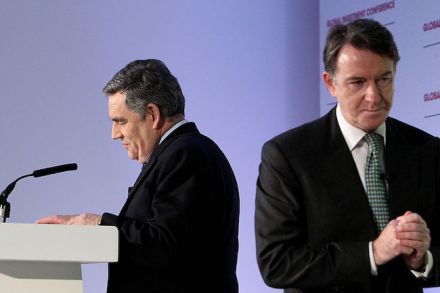
Peter Mandelson may just have achieved the impossible. He has made me feel sorry for Gordon Brown. When I was a lobby correspondent in the 2000s, I spent a great deal of time covering Brown, first as chancellor, then as prime minister. I did not emerge from the experience with a particularly warm impression of the man. He was thin-skinned, prickly, self-righteous and often very, very angry. He is not, as his public image sometimes suggests, a cuddly saint. Many colleagues would take a similar view.

The flaw in Labour’s Brexit delusion

The lexicon of Brexit has a new entry: the 'Farage clause'. As part of Labour’s 'reset' talks with Brussels, EU negotiators have reportedly floated a termination provision that would require compensation if a future UK government walked away from a new deal designed to ease post-Brexit checks on food and agricultural trade. In plain English: if Britain signs up to reduce border friction now and then later blows the arrangement up, Brussels wants someone to pay the bill for putting the border back together again. Like lots of things involving Britain and the EU, however, this 'Farage clause' is not what it looks like. It isn’t really about the Reform UK leader. It’s about puncturing Labour delusions about restoring British ties with Brussels.

AI could make degrees redundant

For decades, British politics has lived in the shadow of a major failure of social and economic policy: the imbalance between graduates and those who don’t go to university.  Many politicians have understood the need to do better for the 'other 50%' who don’t go to higher education. But few have delivered real change.  From Boris Johnson’s 'levelling up' to Keir Starmer’s newfound focus on 'higher-level skills,' the goal has remained constant: to provide a better deal for those who don’t go to 'uni'.  Yet despite the speeches and the promises, the divide remains a major fault line of our politics. It explains Brexit (grads were Remain, non-grads Leave) and the crumbling of the Red Wall – Labour is increasingly the party of metropolitan graduates.

Britain is giving up on work

Work is good. Work generates wealth, makes people happier and, maybe, delivers salvation. The Protestant work ethic is much disputed among sociologists and economic historians, but most people accept that some level of work is both necessary and desirable. This makes it all the more troubling that, buried in the OBR data under the Budget, are signposts to a future Britain where fewer people work at all – and where those who do are working less. The Office for Budget Responsibility says the labour force participation rate is forecast to fall ever so slightly, from 63.5 per cent in 2024 to 63.4 per cent in 2029. A tenth of a percentage point over five years is not huge.

Will Rachel Reeves’s two Budget gambles pay off?

It’s traditional to describe Budgets as a political gamble. Rachel Reeves is actually making two bets. First, that voters can be persuaded to see the big picture of the economy – and second, that Labour MPs can be persuaded to take the long view of this parliament. Both are long-odds flutters. On the macro numbers, Britain is… fine. Not flourishing, but not failing. GDP is still inching forward – up 1.3 per cent on the year to the third quarter of this year – better than France (0.9 per cent) or Germany (0.3 per cent). Services output is growing modestly; productivity is edging upward; and household debt is at its lowest level since at least 2007. Retail sales are up 0.4 per cent on the year. The FTSE has been having a fine old time.

Food inflation is a ticking time bomb for Rachel Reeves

As the Budget approaches, Westminster is full of chatter about Rachel Reeves’s decision to take the 'smorgasbord' approach to fiscal policy: lots of small, detailed measures, each raising only modest sums for the Treasury. Conventional wisdom says, correctly, that this is risky. Every little tweak is another opportunity for something to misfire. And when people in SW1 talk about small Budget measures going wrong, they often invoke the same cautionary tale: the pasty tax. That was the 2012 proposal by the coalition government to impose VAT on hot takeaway food, meaning the price of a Greggs sausage roll or a service station pasty would rise by 20 per cent. The resulting Pastygate saga became a symbol of how quickly a seemingly minor fiscal change can explode into political farce.

Britain’s stingy state pension is good news

That Britain has the least generous state pension in the G7 should be recognised for what it is: good news. The fact that it won’t be celebrated tells us a lot about the mismatch between policy and politics around pensions in the UK. The nature of Britain's state pension isn’t an accident or a failure. It’s the product of deliberate design. For the past three decades, British policymakers have chosen to provide retirement income largely through private saving rather than tax-funded state benefits. They’ve done so quietly, but rationally. The alternative would be to copy France – a country that still treats the state pension as a social guarantee and which, as a result, is inching closer to fiscal crisis.

Ming Campbell was too good for politics

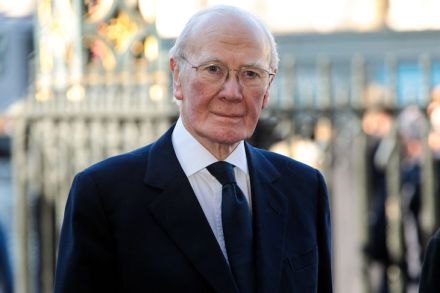
Sir Menzies Campbell’s death means the loss of one of the most inconspicuously interesting people I’ve known in politics, not to mention one of the nicest. Ming, who led the Lib Dems from 2006 to 2007, had naturally faded from the limelight in recent years, but there was a time when he was everywhere. He was a regular on Question Time and anywhere else that big subjects – especially foreign affairs – were discussed. The headlines on his death, at the age of 84, will naturally refer to him as 'former Lib Dem leader' but really that role was only a small part of his story, and one of the least interesting. Not that it was always easy to get to that wider story.

Labour’s transfer deadline day

17 min listen

The summer transfer window comes to a close today but, as Parliament also returns from summer recess today, the only team Keir Starmer is focused on is his own in Number Ten. The Prime Minister has decided to reshuffle his advisers, including bringing in Darren Jones MP to Number Ten from the Treasury. Political editor Tim Shipman and James Kirkup, a partner at Apella Advisors and senior fellow at the Social Market Foundation, join economics editor Michael Simmons to go through the moves. Will yet another change in advisers boost Labour's fortunes? Or are they doomed to relegation? Produced by Patrick Gibbons and Natasha Feroze.

James Lyons’s departure will cost Keir Starmer

When my friend James Lyons told me last summer that he was going to take a gap year, I knew it wouldn’t be a normal career break. It’s common enough for successful men around 50 to take some time out from busy, stressful careers to re-evaluate, reflect and just get some sleep. I know bankers who have gone back to university, consultants who’ve gone travelling and private equity guys who become surfers. James Lyons is usually the first to see where the story is going But that was never going to James’ mid-life break from the norm. He’s the most intensely focused person I know.

Farage is right: paying illegal migrants to leave is a good idea

Nigel Farage’s latest immigration plan contains a proposal that deserves to be taken seriously. Reform UK’s 'Operation Restoring Justice' promises mass deportations, detention camps, and the withdrawal from international treaties. Those elements will raise both legal and moral challenges. But another part of the package is something that deserves attention and credit: a scheme to pay £2,500 to people who agree to leave Britain voluntarily. To some, the idea will look like bribery. Why should taxpayers reward people who have broken the rules? That is the instinctive reaction of many voters and the line taken by some politicians. Yet in policy terms, the idea is a good one. Removing people against their will is enormously expensive and politically fraught.

Kill the single state pension age

When William Beveridge designed the welfare state in the 1940s, the state pension age was 65 for men and 60 for women. Life expectancy for a man was around 66, and around 71 for a woman. The pension was not designed to fund decades of leisure: it was a modest provision for the last couple of years of life, one that not everyone would receive. Today, life expectancy for a man aged 66 (the current state pension age) is around 85, and a woman aged 66 can expect to live until she is 88. The average person now spends close to a fifth of their life in retirement. What was once a short post-script has become a major chapter – and an increasingly expensive one.  This is the backdrop for the latest statutory review of the state pension age (SPA), led this year by Dr Suzy Morrissey.

Does Northumberland need lynx?

Farming is hard, and sheep farming especially so. Sheep are endearing but awkward creatures, generally looking for the most inconvenient way to die. The weather is usually miserable. Lambing is an annual torment. The government is always dreaming up new ways to make things harder. In a real sense, I’m writing this because sheep farming is so hard. That’s what persuaded me to leave the bleak, beautiful hills of Northumberland and make my living from writing and talking in bland, warm rooms in London. But my heart is still there, in the hills. My family too, and their sheep. So I continue to take an interest in the life of rural Northumberland, including in various attempts by well-meaning campaigners to reimagine the place as a stage for their environmental dreams.

The populist case for fixing the pension system

Pensions rarely top the Westminster agenda or get politicians excited. Too boring, too distant. But maybe, just maybe, pensions will soon become political.    There is a growing consensus among pensions policymakers and industry insiders: if we want future generations to retire with a bit of security and comfort, contributions into defined contribution (DC) pensions must rise. That means workers will need to put in more – and so will their employers.  So soon the government will take the next sensible steps on this sensible journey, with its ongoing Pensions Review starting to focus on ‘adequacy’, technocrat-speak for saving enough to retire on.   The world of pensions policy is a small, pleasant one.

Labour MPs should thank – not blame – Reeves for trying to cut welfare

Labour MPs blaming Rachel Reeves over welfare cuts are like teenagers blaming their mum for telling them to wear a coat when there are bloody great storm clouds on the horizon. It's silly and it won't save them from getting soaked. But this is emerging as part of the blame game over Labour’s welfare debacle, where the party's MPs forced the government to shred its own welfare bill by threatening to vote it down at second reading. 'She must be toast,' a Labour MP told the FT. The Times quotes a senior Labour source accusing Reeves of having 'very little political acumen'. The argument, apparently, is that Reeves is at fault for trying to find £5 billion of savings on a welfare bill that is currently on course to reach £373 billion by the end of the decade – or 10.8 per cent of GDP.

Labour’s welfare rebels will regret their revolt

A Labour government facing a rebellion over welfare reform is something of a dog-bites-man story – Labour never finds this issue easy. But the nature of the current rebellion tells us something novel and revealing, not about the policy, but about the modern Member of Parliament. Yes, principle and policy matter here, but what’s really driving dissent on Labour’s backbenches is not ideology, but geography. Or more precisely, constituency geography. Many of the Labour MPs likely to defy the leadership on welfare cuts are not old lags or even rebels by temperament. Many are new to Westminster, elected in the 2024 landslide that gave Labour power. And their rebellion is not really born of Corbynite nostalgia or factional muscle-flexing.

Only proper welfare reform can bring true ‘national renewal’

Rachel Reeves’ Spending Review does more than set budgets. It exposes a contradiction at the heart of Labour’s approach to government: a party that wants to rebuild the state won’t take the hard decisions needed to make that possible. The review was more painful that it needed to be for Labour, because Labour MPs have shied away from serious welfare reform. Two mistaken ideas dominate much of the progressive conversation about the public finances. The first is that the state can go on doing more and spending more forever, with no real constraint. The second is that all talk of welfare reform is right-wing cruelty. Unless and until Labour challenges both ideas head-on, hopes of 'national renewal' will be forlorn. A pound spent on welfare cannot be spent on services.

The NHS should be Farage’s next hobby horse

Nigel Farage’s march to the left continues. Reform is now committed not just to reinstating winter fuel payments for all pensioners but also, more significantly, to scrapping the two-child benefit cap.   This is striking but shouldn’t be a surprise. Reform’s move to the left on economic questions has been arguably the most important political trend of the year.  It’s a big part of the reason that Labour now considers Reform, not the Conservatives, to be the main opposition party. It also shows that Farage is properly serious about winning seats and winning power.