James Kirkup

James Kirkup

James Kirkup is a partner at Apella Advisors and a senior fellow at the Social Market Foundation.

The Tories would be lost in opposition

From our UK edition

It is widely observed that many Conservatives are preparing to lose power at the next general election.  The Conservative Democratic Organisation and National Conservatism meetings last week are generally regarded as preparation for the leadership battle that would likely follow Rishi Sunak’s departure from No. 10. Most (though not all) Tories appear to assume that Sunak could not remain leader after that exit, nor want to. Privately too, even the most optimistic Tories will concede that leaving government after 14 years – they’ve just beaten the New Labour tenure – has to be considered a real possibility. What would the Conservatives do in opposition? This is not a trivial question.

We need to talk about the Liberal Democrats

From our UK edition

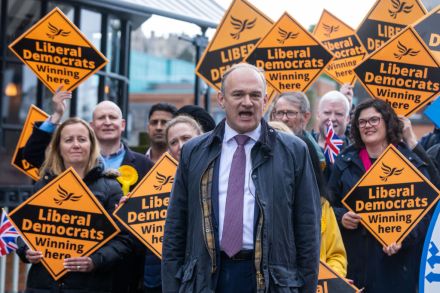
Since 2015, it has been common and rational for people in Westminster to ignore the Liberal Democrats. After the end of the coalition government, the Lib Dems suffered repeated electoral losses and misjudged or mishandled big political events: the fact that the most clearly anti-Brexit UK party has ended up with just 14 MPs today tells you a lot about Lib Dem effectiveness in recent times. The defining feature of Lib Demmery at the local elections has been aggressive Nimbyism The 2023 local election results probably mean that Westminster needs to update its thinking and start paying more attention to the Lib Dems and the policy positions that have helped them win in places such as Stratford-on-Avon, Windsor and Dacorum in Hertfordshire.

Will the Tories become radicalised over the ECHR?

From our UK edition

I’m writing this shortly after hosting Professor Tim Bale and David Gauke at the Social Market Foundation for a talk about Tim’s excellent book about the radicalisation of the Conservative party in recent years.   That discussion raised a very good question: is leaving the European Convention on Human Rights the next Brexit?  The immediate origins of this question lie in the small boats issue.  My view is that the Sunak government will fail to satisfy those voters who are unhappy about Channel crossings.  Stark-sounding political threats of deportation and the like won’t deter people desperate enough to travel across a continent in a metal box, then board a raft to cross 20-odd miles of choppy sea.

What I got wrong about junior doctors

From our UK edition

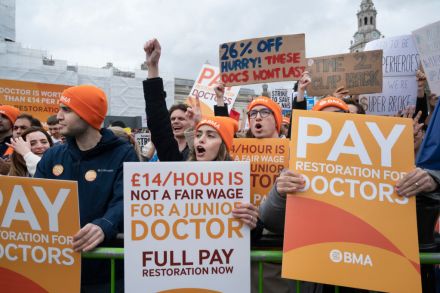
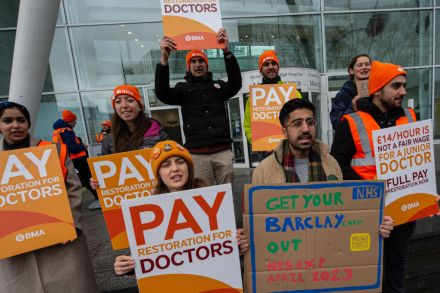
I recently wrote a column elsewhere about the junior doctors strike. As if often the way with this topic, it resulted in some strong and sometimes vituperative reactions.  It also led to many conversations with people in and around medicine.  Some of them thought I’d got things wrong. That’s a reasonable position to take, and it’s often useful to take criticism seriously. So I had a think about the column again, and concluded that there were indeed a few things I could have done better at.   Retention Of the various ‘you’ve got your facts wrong’ critiques of my column, the one I think that has most weight is that I overlook the importance of retention – rather than recruitment – in medicine.

What junior doctors really earn

From our UK edition

16 min listen

Striking junior doctors are demanding a 35 per cent pay rise. Is that realistic? And are junior doctors really underpaid? Lucy Dunn is joined by economics editor Kate Andrews and Spectator contributor James Kirkup.

Women are being ignored again in the surrogacy debate

From our UK edition

Just over five years ago, I wrote an article here about sex and gender and the issues raised by policies and practices allowing people to self-identify in the gender of their choice. Then, the topic was obscure and marginal to a great many people: my decision to write about it was regarded by many friends and contacts as eccentric and perhaps self-harmingly misjudged. Today, with the sex/gender debate firmly established on the political agenda, I’ve largely left the conversation. Where once there weren’t enough people in politics paying attention, I sometimes think there are now too many. Would it really do any harm to ask a surrogate mother to affirm after birth that she wanted to go through with the surrogacy?

At least Gavin Williamson tried to keep schools open during Covid

From our UK edition

Governing means accepting and embracing trade-offs. Almost every public policy choice involves deciding how important one set of people are, or how to balance their interests with others. Covid mitigation measures were a case study in government-as-trade-off. Time and again, ministers had to weigh up public health, NHS capacity, economic and fiscal costs, human freedom and countless other factors. Covid choices were especially stark because they very visibly involved the sickness and death of some of those people. Choices were made to prioritise several interests ahead of those of children. None of those choices were easy or simple and you shouldn’t take seriously anyone who says they were.

There’s still a hint of life in the Tory party

From our UK edition

Westminster is a place of consensus, orthodoxy and prevailing wisdom. At any given moment, there is the Narrative, the story that everyone – or close to everyone – believes, or pretends to. The Narrative can ignore objective facts, but also change quickly when finally confronted with realities too big to overlook.  I reckon the last big shift in the Narrative happened sometime on the Monday of Tory conference in October. In a few hours, it dawned on a lot of people that not only was the Liz Truss premiership doomed, but the Tories were very likely to lose the next election.  Since then, journalists, lobbyists, civil servants and even unworldly think-tankers have been treating Labour as a government-in-waiting.

How self-ID helped bring down Nicola Sturgeon

From our UK edition

In the years when I wrote a lot about sex and gender and politics and law, I made the same observations many times. One, that politicians weren’t talking fully and openly about the implications of self-identified gender, and the policies and practices related to it. Second, that as a result, such policies would never be politically sustainable: no policy made in the shadows can survive in sunlight. Over several years, and not just in the UK, policymakers of many sorts began to subscribe to the doctrine of self-ID, but very few ever sought or won public consent for the associated policies. I don’t think you need to be a conspiracy theorist to think that there was an element of deliberate strategy behind that lack of public debate.

Nicola Sturgeon and the vindication of the Terfs

From our UK edition

Scottish prison service rules allowing male-born transgender offenders to be housed in women’s prisons have been suspended and are now under ‘urgent review’. The women who raised concerns about this issue for several years have thus been vindicated; their persistence and determination in raising those concerns should be noted and acclaimed.  The Scottish development follows cases that have grimly caught the public eye across the UK. Last week’s conviction of the double rapist known as Isla Bryson was followed by reports that the violent sex offender ‘Tiffany Scott’ (born Andrew Burns) was heading for a female jail – solely because he says he identifies as female.

Being attacked by the BMA is good news for Keir Starmer

From our UK edition

Here are two facts about British healthcare that not enough people know.  First, GPs don’t work for the NHS. They are private contractors who sell services to the NHS via GP partnerships which are profit-making businesses owned by GPs.  Second, the British Medical Association is not a medical body. It’s a trade union for doctors, representing the financial interests of medics including GPs and their profit-making partnerships.  These two facts should be known by any voter thinking about politicians and health policy.  Yet many people appear unaware of them. That’s partly thanks to poor journalism. And it’s partly thanks to the success of general practitioners and the BMA in wrapping themselves in the NHS flag in order to conceal their true nature.

Why yesterday’s men will loom large in 2023

From our UK edition

New year, old politicians.  Yesterday’s men will loom large in the politics of 2023.  British politics has a nostalgia problem, often to the benefit of our over-large population of former prime ministers. They may have disappointed in office, but the urge to rose-tint our memories means failure is no bar to a lucrative or influential post-premiership.  How else to explain the £2 million earned by Theresa May since the end of her painful, pedestrian premiership? Her reputation has also been enhanced through the power of hindsight: during the chaos of 2022’s politics, the history of her shambling, stumbling government was quietly rewritten and she became a 'grown-up' politician from a lost age of sensibleness.

An invitation to the editor of Edinburgh’s student paper

From our UK edition

You’re reading this because quite a long time ago now, I was a student at Edinburgh University. As well as doing a bit of academic work, I fell into journalism editing the university newspaper. It’s called the Student and it’s pretty old. Founded in 1887 – by people including Robert Louis Stevenson – it’s probably Britain’s oldest student newspaper. I can write this today because of my time as a student journalist: without that experience, there’s no way someone of my background would have made it into the national media. The paper also helped people who went on to have vastly more distinguished careers than mine: Gordon Brown, Robin Cook, David Steel all wrote there. Fleet Street and broadcast journalism is littered with former Student writers.

Rishi Sunak will regret his Channel crossings crackdown

From our UK edition

Rishi Sunak’s latest promises on asylum and immigration suggest the PM has learned very little from his Tory forebears. Ken Clarke used to compare eurosceptic right-wing Tories to crocodiles circling the prime ministerial boat. Most Tory leaders chose to feed the crocodiles buns to keep them happy. But what happens when you run out of buns? David Cameron knows the answer to that one. Sunak is also offering buns. But when the buns run out – or simply don’t appear – his problems will only grow. The PM is vowing to crack down on illegal Channel crossings. He promises to clear the backlog of asylum cases. He promises to reject more claims from Albanians.

Cutting immigration means higher taxes

From our UK edition

‘Only the higher-than-expected numbers of migrants coming to the UK under the post-Brexit migration regime adds materially to prospects for potential output growth over the coming five years relative to the assumptions that we made in March.’ That’s from the Office for Budget Responsibility’s (OBR) assessment accompanying the Autumn Statement. It’s a pretty striking line: the state’s official analyst of the public finances says that the only good thing to happen to the UK economy since March is higher immigration.   How much higher? In March, the OBR produced an economic forecast that assumed net migration would run at around 130,000 a year for the next five years. Now it puts that figure at just over 200,000.  Why?

What the Gavin Williamson saga says about British politics

From our UK edition

I wonder if the fall of Gavin Williamson is the latest evidence that British political parties are becoming harder to govern. It seems quite possible that his resignation is part of a story that will see Rishi Sunak struggle to command Conservative MPs to accept difficult choices on tax and spending. Any upset could even bother the bond market. Additionally, this story carries a warning for Keir Starmer.  Contrary to some of the media narratives visible today, the end of Williamson is more complicated than ‘Bad man who did bad things quits – Hoorah’.

Raising inheritance tax is fair and right

From our UK edition

Here’s a thought experiment about tax and fairness. Imagine two people, Janet and John. They’re both 30 years old. Janet did better at school and works harder than John, does longer hours and earns more. Her salary is £50,000. Her take-home pay is £37,776 – she pays £12,224 in income tax and national insurance each year. John’s doing OK: he earns £25,000. His take-home pay is £20,881, after taxes of £4,119. Let us wind the clock forwards by twenty years and assume all else is equal: salaries and tax rates remain unchanged. Over those two decades, Janet’s efforts bring her £755,520. John’s total is £417,620. Then, aged 50, both our imaginary friends sadly lose their imaginary parents. Janet’s parents live in social housing.

‘Bring Back Boris’ means the Conservatives are unleadable

From our UK edition

Boris Johnson was finally thrown out of Downing Street because of his handling of sexual misconduct allegations by a political ally. Dozens of ministers quit his government over his lack of integrity. He remains subject to an investigation that could see him suspended from parliament for dishonesty. Dozens of Conservative MPs believe he is the best person to lead their party and Britain. The Bring Back Boris movement confirms that the Conservative party is now unleadable. Whoever ends up as prime minister next week will be unable to command a reliable majority of the party’s MPs.

The Huntonomics trap

From our UK edition

I don’t know who will become the next prime minister, and I’m not going to make a guess here. But I do make this prediction: the next leader is going to face a major internal Tory fight over immigration. That prediction is based on the thing that drove Liz Truss from office: the urgent need to reassure gilt markets that Britain has a growth plan that will help repair the public finances.  That need has not gone away. It will define the government whoever leads it. That government seems very, very likely to include Jeremy Hunt as Chancellor since a new PM taking office next Friday and removing him days before his fiscal statement on 31 October would risk panicking the markets again. And we know how that ends.

Spare a thought for Liz Truss’s comms advisers

From our UK edition

Spare a thought for Liz Truss’s communications advisers. They’re following the unwritten rules of crisis management to a tee, but it’s only making things worse. They find themselves in this quandary partly because the government’s situation is uniquely bad – and partly because the Prime Minister is so bad at communicating. Watching Truss’s interview with the BBC’s Chris Mason last night, many viewers will have had thoughts such as ‘please make it stop’. Others might ask: why is she doing this? Going on TV to confirm that you’ve failed – but still think you can lead your party into the next general election – really doesn’t make things better.