James Heale

James Heale

James Heale is The Spectator’s deputy political editor.

Labour triumph in West Lancashire by-election

From our UK edition

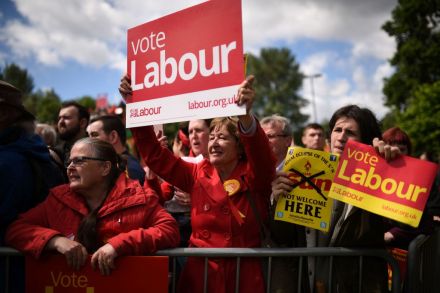
Labour last night held the seat of West Lancashire on a ten-point swing from the Tories. The constituency has gone red since 1992 and was mostly recently represented by Rosie Cooper, who chose to resign to become chair of the Mersey Care NHS Foundation Trust. Turnout was just over 31 per cent, with Labour winning with 62 per cent of the vote and the Conservatives on 25 per cent. It is a cliche, but perhaps the most surprising thing about this result is how unsurprising it is. The result was within less than half a per cent of national polling trends: currently Labour are on course to win a three figure majority that surpasses their 1997 result. The Reform party did better than expectations, taking 4.
Is Lee Anderson No. 10’s secret weapon?

From our UK edition

10 min listen

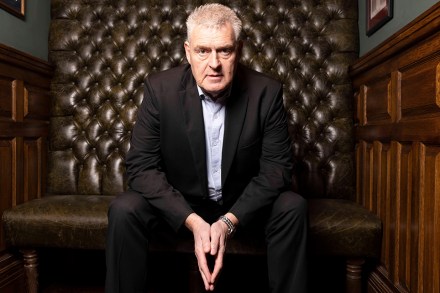
The chatter in Westminster has been dominated by comments the new deputy chairman of the Conservative Party gave to James Heale, The Spectator's diary editor, in an interview published today. When asked if he was in support of the death penalty, Lee Anderson said: 'Yes. Nobody has ever committed a crime after being executed. You know that, don’t you? 100 per cent success rate.’ On the podcast, Isabel Hardman talks to James and Katy Balls about whether No. 10 anticipated that the Conservative Party's new deputy chairman would be making quite so many headlines, so soon into his promotion. Produced by Cindy Yu.

Lee Anderson: ‘Capital punishment? 100% effective!’

From our UK edition

Who is the worst man in Britain? According to the Daily Mirror, it’s the 56-year-old former coal miner and Tory MP Lee Anderson, who clinched the award a year ago after criticising England’s footballers for ‘taking the knee’. How did Anderson, who this week was appointed Deputy Chairman of the Tory party, respond to the accolade? ‘I immediately rang my parents to thank them for all their support. It’s the first time anyone from my family has been voted the worst man in Britain, so I tried to win it two years on the trot.’  Since his election in December 2019, Anderson has emerged as the pugnacious ambassador for the Red Wall intake of Conservative MPs.

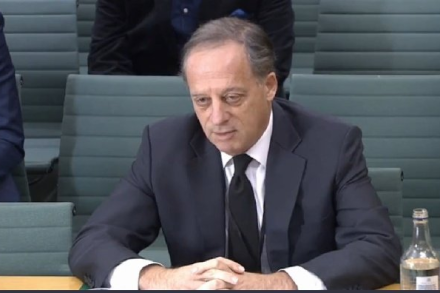
Four things we learnt from Richard Sharp’s BBC grilling

From our UK edition

This morning Richard Sharp, the BBC's Chairman, appeared before the Culture select committee of MPs. It was a difficult session for Sharp as the panel focused on reports that he helped Boris Johnson secure a loan, weeks before the then-prime minister recommended him for the role. Johnson has denied that Sharp had given him such advice. John Nicholson of the SNP and Labour's Kevin Brennan led the way on grilling Sharp about whether he had breached any conflict of interest rules. Below are four things we learned from his testimony. Sharp insists he did not given Johnson financial advice Boris Johnson has said he is 'ding dang sure' that Sharp did not give him advice about his finances – and the former Goldman banker concurred in his evidence today.

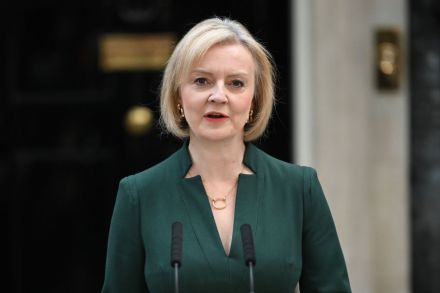
What Liz Truss gets right (and wrong)

From our UK edition

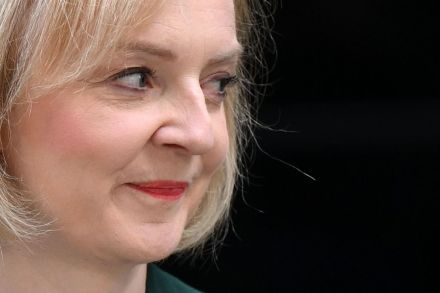
After three months of silence, Liz Truss has spoken out – first in a 4,000-word article for the Telegraph and now in a 50-minute-long interview with the Spectator. Truss, the shortest-serving Prime Minister in British political history, feels enough time has now elapsed to give her account of her 49-day premiership, the collapse of which was caused by a combination of the financial and political markets. As the co-author of a book on her long rise and rapid fall, I was intrigued to hear Truss speak for the first time publicly about where it all went wrong. Both the interview and article make clear that Truss’s time in No. 10 has not fundamentally altered her or her political beliefs. Truss’s faith in free markets still burns bright; tax cuts remain the cure to our ails.

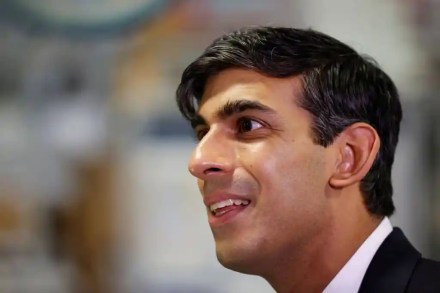
Five things we learnt from Rishi versus Piers

From our UK edition

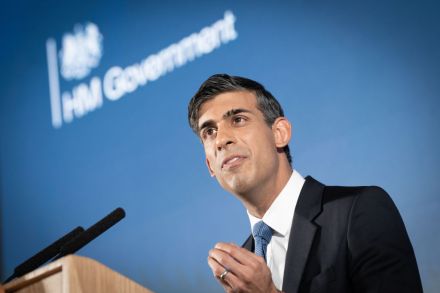
Tonight marks 100 days since Rishi Sunak became Prime Minister – so what better way to celebrate than an interview with Piers Morgan? The charge from some of Sunak's critics like Nadine Dorries is that he's an 'invisible' 'submarine Prime Minister' who isn't 'out at the front, making the case' for his party. This evening's encounter on TalkTV gave him the chance to do just that. Morgan mixed policy with the personal, in the style he's used previously to good effect in interviews with the likes of Gordon Brown and Keir Starmer. Much of it focused on Sunak's 'five pledges' – reducing debt, halving inflation, boosting growth, stopping the boats, cutting NHS waiting times – though there were questions too about his earnings, recreations and marital life too.

Nadine Dorries and the rise of the ‘presentician’ 

From our UK edition

‘Politics is show business for ugly people,’ said Paul Begala, famously. Westminster today, however, is more akin to a finishing school for aspiring media personalities. We live now in a new age of ‘presenticians’ – in which more and more political figures present their own news shows.  Turn on your TV and you could well be confronted by one of a dozen current or former MPs who are now anchors or regular pundits. On GB News, there’s the husband-and-wife duo of Esther McVey and Philip Davies, and Lee Anderson MP just replaced his fellow Tory Dehenna Davison as the network’s resident ‘Red Waller’. Jacob Rees-Mogg has also joined the self-styled ‘People’s Channel’.

The anti-strike bill shows the Tories can still unite

From our UK edition

The House of Commons voted to pass the government’s flagship trade union legislation on 30 January. By 315 to 246 votes, MPs backed enacting minimum service levels for fire, ambulance and rail services for when the sectors decide to take industrial action. It comes ahead of ‘Walkout Wednesday’ – the biggest day of strikes since 2011. It will see hundreds of thousands of workers, including teachers, train and bus drivers, walk out in separate disputes over pay, jobs and conditions. Labour has fiercely attacked the government’s plans, with Angela Rayner repeatedly clashing with Business Secretary Grant Shapps in the House over the so-called ‘Sack nurses Bill.

Should politicians stick out a scandal?

From our UK edition

18 min listen

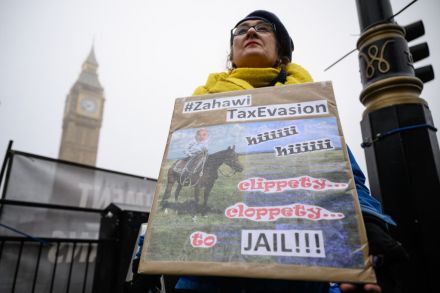
It emerged this week that Nadhim Zahawi was in a row last year with HMRC over tax payments, but he is currently holding onto his post as Conservative party chairman. When should a politician resign? And is it worth fighting back? Ten years ago, the News of the World broke a story about then Liberal Democrat MP Mark Oaten’s personal life. On the podcast, Mark joins Fraser Nelson and James Heale to talk about what it’s like to be in the centre of a scandal.

What’s behind the Tory rift on levelling up?

From our UK edition

10 min listen

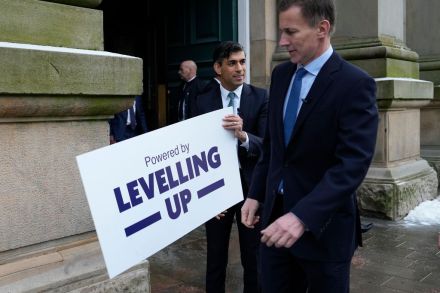
Rishi Sunak faces the fury of Red Wall MPs and other Tories today as he announced the distribution of the second round of the government's levelling up fund. Of all the regions receiving money, the southeast will in fact receive the most (£210 million), while the government would rather point to the fact that, on a per capita basis, the North and Wales benefit more. Cindy Yu discusses with Katy Balls and James Heale. Produced by Cindy Yu.

Is Boris on manoeuvres?

From our UK edition

13 min listen

Boris Johnson's potential comeback has been dominating headlines for several months now. As Rishi struggles to unite the party, Katy Balls, Fraser Nelson and James Heale discuss whether the prime minister should be worried.

Starmer is plotting mischief over the Northern Ireland Protocol

From our UK edition

Speaking in Belfast this morning, Keir Starmer offered ‘political cover’ to the Prime Minister over any change to the Northern Ireland Protocol. A new deal with the EU is thought to be imminent – and Labour sees the chance for mischief. Starmer said it is ‘time to put Northern Ireland above a Brexit purity cult’ and that ‘we can find ways to remove the majority of checks’ through new solutions, adding that ‘there are legitimate problems with the Protocol and these must be recognised in any negotiations’. Starmer’s speech is well-timed His comments are a recognition of the Protocol’s relevance over the next few months.

Should Sunak unleash Kemi Badenoch?

From our UK edition

17 min listen

Rishi Sunak is in Scotland meeting with First Minister Nicola Sturgeon, and said today that he is concerned about new gender laws in Scotland which would allow 16-year-olds to apply for a gender recognition certificate to change their gender. But with Sunak trying to improve relations with Holyrood, should he send Kemi Badenoch, the minister for women and equalities, to fight the fight for him? James Heale speaks to Fraser Nelson and Katy Balls.

Welfare reform is back on the agenda

From our UK edition

This week Jonathan Ashworth set out Labour's answer to the 5.2 million on out-of-work benefits – a figure which The Spectator was first to pick up on. Now the Times reports on the government's own plans to help those on out of work benefits back into employment. Since the pandemic, successful disability claims are up by 70 per cent, with the Office for Budget Responsibility suggesting that the cost of long-term sickness benefits will rise to £8.2 billion by 2027. Economic growth is one of Rishi Sunak's five promises; he is said to be concerned about achieving that goal without bringing many of the economically inactive people back into work to solve labour shortages. A range of policies are reportedly on the table.

Is No. 10 trying to ban strikes?

From our UK edition

13 min listen

Business Secretary, Grant Shapps has introduced a bill proposing a minimum level of public sector work during strike action for six key industries. Labour's Angela Rayner told the Commons these plans are 'insulting and utterly stupid'. As a policy that Tories largely agree on, could this bill bring the party together? Also on the podcast, Isabel Hardman reacts to Ken Clarke's suggestion that the middle class should pay fees to use the NHS, and why has former minister Claire Perry O'Neill torn up her Conservative party membership?James Heale speaks to Katy Balls and Isabel Hardman. Produced by Natasha Feroze.

Shapps seeks the mantle of moderation on strikes

From our UK edition

Fresh from his photoshop debacle, Grant Shapps arrived in the Commons today to outline the government’s plans for minimum safety level legislation. He and his colleagues are currently engaged in a difficult balancing act: negotiating with unions over pay one day, then seeking to curb their powers the next. It is emblematic of the 'carrot and stick' approach that ministers have adopted throughout this winter of industrial action – hinting heavily that workers will receive pay improvements in the next financial settlement, while threatening new restrictions to prevent a future repeat of these strikes. Shapps is seen as one of the Conservatives' more affable communicators.

Is Trussonomics really dead?

From our UK edition

16 min listen

Cindy Yu talks to Katy Balls and James Heale about the former prime minister's lunch with her loyalists at Ma La Sichuan, and whether her ideas might be mounting a comeback.

Why did Starmer steal ‘take back control’?

From our UK edition

12 min listen

Keir Starmer said this morning that communities would ‘take back control’ under a Labour government. In a speech delivered just down the road from where Rishi Sunak spoke yesterday, the Labour leader promised to expand devolution. Is his vision radical enough? Max Jeffery speaks to Isabel Hardman and James Heale.

Are Sunak’s five pledges enough to sort Britain out?

From our UK edition

11 min listen

Rishi Sunak made five pledges to fix Britain in a speech in London today. Inflation will halve, the economy will grow, debt will fall, NHS waiting lists will be cut, and the government will pass laws to tackle the small boats crisis. Is the PM promising too much, or not enough? Max Jeffery speaks to Isabel Hardman and James Heale.

Simon Clarke: What the PM can learn from Liz Truss

From our UK edition

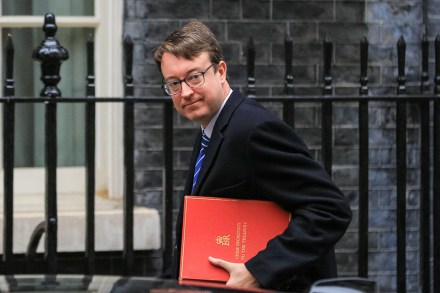
After Liz Truss’s spectacular fall from power, it was hard to find Tories who were happy to admit to having supported her. ‘Trussonomics’ became a punchline. Most of her plans were scrapped, including, this week, her childcare proposals. But among the wreckage of the Truss experiment, there is one survivor who is willing to defend its principles, loudly and publicly. And now he’s waging a lonely fight on the backbenches. ‘If the leadership dramas have taught us anything, it is that a battle for the soul of the Tory party is under way’ Simon Clarke had little profile when he was a Treasury minister under Boris Johnson, but as Truss’s levelling up secretary he was one of the most vocal advocates of her ideas.