James Heale

James Heale

James Heale is The Spectator’s deputy political editor.

Assisted dying and Chagos row overshadow Starmer’s carbon capture pledge

From our UK edition

17 min listen

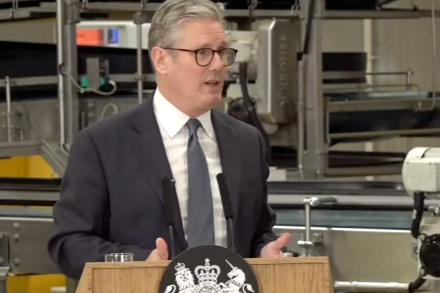
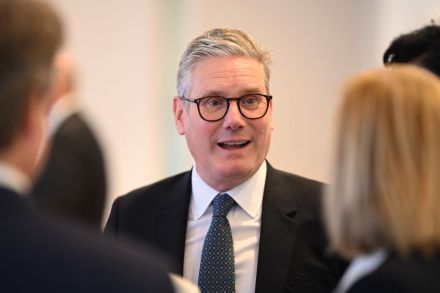
What Keir Starmer wants to be talking about today is his landmark £22 billion investment into carbon capture. Flanked by Ed Miliband and Rachel Reeves, his speech was an unusually personal one where he spoke about the impacts of deindustrialisation. But how new is this policy? And what does this huge investment mean for the £20 billion black hole?  What Westminster seems more interested in talking about is the news that assisted dying is back on the agenda and the fallout of the deal to give the Chagos Islands to Mauritius. Is there a degree of inevitability about these two stories resurfacing?  Oscar Edmondson speaks to Isabel Hardman and James Heale.  Produced by Oscar Edmondson.
Can Keir Starmer sell carbon capture?

From our UK edition

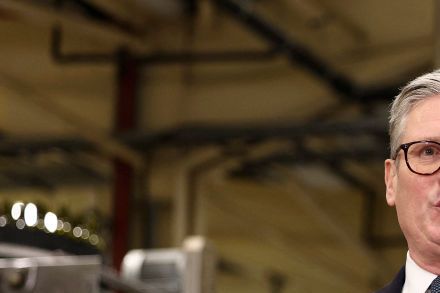
The Prime Minister is in Liverpool today, outlining plans for green investment. Nearly £22billion is pledged for projects to capture and store carbon emissions from energy, industry and hydrogen production. This includes funding for two 'carbon capture clusters' on Merseyside and Teesside over the next 25 years. Ministers hope this will create new jobs, attract investment and hit climate goals. Keir Starmer's speech was an unusually personal one. Speaking at a glass manufacturing factory, he began by offering up his usual line about being 'the son of a toolmaker' but then elaborated saying 'that matters to me, because until I went off to college, I didn’t even know any working environment other than a factory.

Tugendhat clashes with Cleverly over Chagos Islands

From our UK edition

With less than a week to go until MPs vote in the Tory leadership race, a row has blown up over an unlikely cause. A quarrel in a far away country is causing a rupture between the two men whom most colleagues think could be next to go out: Tom Tugendhat and James Cleverly. Both are fishing in the same waters for votes on the centre and left of the party. Of the two, Cleverly was perceived as having given the better speech yesterday at Tory conference. But the government's decision to hand over the Chagos Islands to Mauritius could revive old fears about Cleverly's judgement. Following the announcement this morning, the Shadow Home Secretary rushed to condemn the news. He declared that it showed 'weak, weak, weak' government, adding 'Labour lied to get into office.

Britain could regret handing over the Chagos Islands to Mauritius

From our UK edition

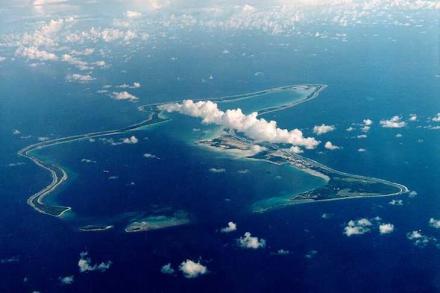
The United Kingdom will shortly be ceding sovereignty of the Chagos Islands to Mauritius. Under the terms of a new treaty, there will be a 99-year-lease for Diego Garcia, the tropical atoll used by the US government as a military base. It follows two years of negotiation over the strategically important cluster of islands in the Indian Ocean. Both sides have vowed to finalise the treaty as quickly as possible. Given the Chagos Islands’ strategic access to the Indian and Pacific Oceans, a backlash is inevitable The announcement today follows Keir Starmer’s call with his Mauritian counterpart Pravind Jugnauth.

Who was the winner from today’s Tory leadership speeches?

From our UK edition

17 min listen

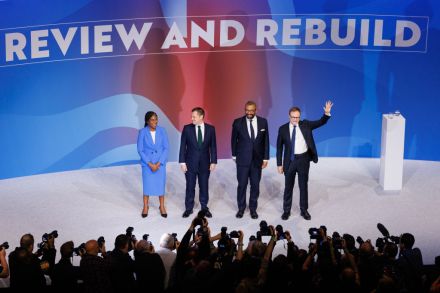
The final day of the party conference saw all four candidates take to the stage in a bid to have a David Cameron moment. Back in 2005, Cameron managed to gain momentum at the party conference with an assured speech (no notes) and get one over on his main rival – the then frontrunner – David Davis. So, did anyone managed a similar feat in Birmingham? James Heale speaks to Katy Balls and Isabel Hardman.  Produced by Oscar Edmondson.
Robert Jenrick promises a ‘new Conservative party’

From our UK edition

The Tory front runner was third up in Birmingham. Throughout this race, Robert Jenrick has sought to position himself as someone with the polish of David Cameron and the politics of Nigel Farage. His speech today was very much in that vein: a staunchly right-wing message centred around delivering a ‘new Conservative party'. Like Cameron in 2005, he talks of change: but change, he would argue, of a very different nature to hug-a-hoodie modernisation.  Jenrick’s pitch was much more critical about the state of modern Britain Jenrick's speech began with a neat bridging exercise: talking of his father’s work in a metal foundry as a way of referencing the Iron Lady.

Tom Tugendhat fails to rouse the Tories

From our UK edition

It is the final day of Tory conference and the event for which we have all been waiting: the four leadership candidates are each delivering their 20-minute speeches, setting out their vision for the country. Tom Tugendhat had the mixed blessing of going first. The benefit of this was that it allowed him to deliver a series of gags about Labour donor Lord Alli which still sounded somewhat fresh. But it meant too that his speech was something of a warm-up act, delivering feel-good lines to an audience that was still filtering in throughout the first few minutes. The first half of Tugendhat’s speech was pedestrian The first half of Tugendhat’s speech was somewhat pedestrian. He spoke of an optimism at the conference and the need to take the fight to Labour.

Kemi Badenoch comes out fighting

From our UK edition

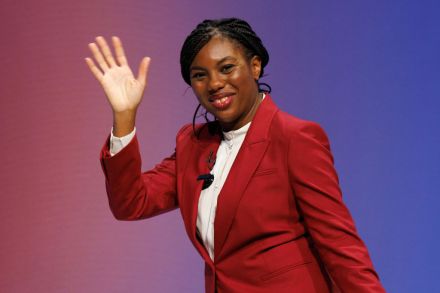
It has been a busy Conservative conference for Kemi Badenoch, whose comments on Sunday about maternity pay have dominated the last few days. Each of the other candidates in the Tory leadership race is wary of saying anything that might remotely damage their chances next week. But Badenoch remains undaunted by criticism, as she showed in a trenchant performance at an ‘In Conversation’ event with The Spectator this evening in Birmingham. Speaking to Fraser Nelson, Badenoch told the audience that: ‘Sometimes you have to walk through the fire… a lot of MPs are just afraid of not being liked, being scared of the mob. If we as Conservatives buckle every time we get criticism, we are not going to get anything done.

Liz Truss: I would have won more seats than Rishi

From our UK edition

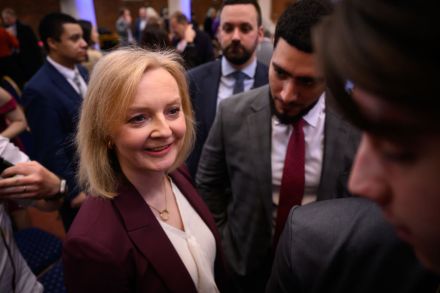
There are noticeably fewer people here at Tory conference in Birmingham this week. But one former MP can still reliably pack in the punters. Despite losing her seat in July, the 'Liz Truss show' shows no sign of any drop in enthusiasm, with some 300 conference attendees packing out a lecture theatre for a blast of sound thinking. A further hundred Tories were turned away at the door: proof, some say, that two years after her defenestration, Liz Truss is still yet to lose her appeal. The former Tory premier was here this afternoon to do her sole event of the conference: a Daily Telegraph in-conversation with columnist Tim Stanley. The event proved to be vintage Truss, full of lines about the failings of Andrew Bailey, the OBR and the Fleet Street press.

Rishi Sunak urges unity in farewell as Tory leader

From our UK edition

It was a curious farewell for Rishi Sunak this afternoon. The Tory leader has just finished his final speech to the party faithful before handing over the reins in five weeks time. Keen not to overshadow his four would-be successors, Sunak opted not to give the traditional Wednesday farewell speech to a seated audience of hundreds. Instead, he preferred to deliver fifteen minutes of remarks in a venue which resembled a school disco, with thumping tunes, glowing copies of the Tory logo and drinks vouchers for attendees to swap at the bar. After a crushing election defeat – the worst in Tory history – this was not a victorious farewell in the manner of Tony Blair's 2006 exit. Rather, it was part rally and part sorrowful goodbye, as Sunak looked back on 14 years of Tory government.

Rachel Johnson, James Heale, Paul Wood, Rowan Pelling and Graeme Thomson

From our UK edition

34 min listen

On this week’s Spectator Out Loud: Rachel Johnson reads her diary for the week (1:19); James Heale analyses the true value of Labour peer Lord Alli (6:58); Paul Wood questions if Israel is trying to drag America into a war with Iran (11:59); Rowan Pelling reviews Want: Sexual Fantasies, collated by Gillian Anderson (19:47); and Graeme Thomson explores the ethics of the posthumous publication of new music (28:00).  Produced and presented by Patrick Gibbons.

Inside Starmer’s dinner with Donald Trump

From our UK edition

16 min listen

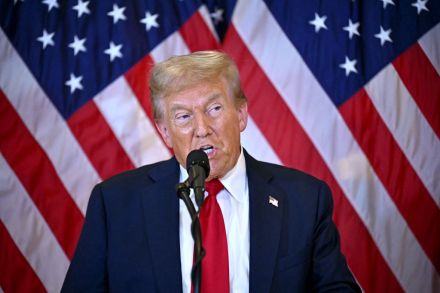
The political equivalent of the Rumble in the Jungle happened last night when Starmer sat down for a two-hour dinner with Donald Trump, following the Prime Minister’s speech at the UN General Assembly. Details of what Trump and Starmer talked about are scant: the official read-out merely says they discussed the ‘longstanding friendship’ between Britain and America. Is this good politics from the prime minsiter?  Elsewhere, the Tory party conference kicks off in Birmingham this weekend and with it the beauty contest for the next Conservative leader. What should listeners expect?  Oscar Edmondson speaks to James Heale and Kate Andrews.  Produced by Oscar Edmondson.

Will ‘flatgate’ damage Keir Starmer?

From our UK edition

Labour conference has been and gone and still Lord Alli remains in the headlines. The latest claims regarding the multimillionaire peer surround his £18 million penthouse flat in Covent Garden which Keir Starmer used repeatedly during his time as Leader of the Opposition. Two periods in particular are being scrutinised by the press. First, the use of Alli's flat by Starmer during the later stages of Covid. Second, his decision this spring to move his family there to allow his son to revise for his GCSEs. While the criticism of Lord Alli initially centred on claims of wealthy donors and 'cash for access', the story has now moved on to whether Starmer has been honest in declaring his use of Alli's flat.

Are we on the brink of ‘all out war’ in the Middle East?

From our UK edition

12 min listen

Events have moved on fast since Labour conference with the mounting prospect of ‘all out war’ in the Middle East. This comes after reports that Israel are preparing a ground invasion of Lebanon to push back Iran-backed militant group Hezbollah. What levers are at the disposal of the international community to de-escalate this very volatile situation?  Also today, Keir Starmer’s impressive performance on the international stage risks being undermined by the freebies story which continues to rumble on. What’s the latest?  Oscar Edmondson speaks to James Heale and Michael Stephens, senior fellow at RUSI.  Produced by Oscar Edmondson.
Inside Labour’s love affair with Lord Alli

From our UK edition

As a peer who hates publicity, Lord Alli might have been expected to dodge the Labour conference – given the near-constant coverage of ‘donorgate’. Former staff talk of birthday cards and Christmas gifts, of Prada bags and Paul Smith shirts Yet there he was, clad in his 1990s telly executive uniform of white trainers and dark suit, nonchalantly strolling around Liverpool. It was public confirmation of what Alli’s friends say privately: that brushes with the press won’t deter him from bankrolling the party he has financed for 25 years. Alli, who is thought to be worth £200 million, has found himself the unwelcome centre of attention over his gifts to members of the cabinet. He gave clothes and spectacles to the Starmers.

What did we learn from Keir Starmer’s speech?

From our UK edition

14 min listen

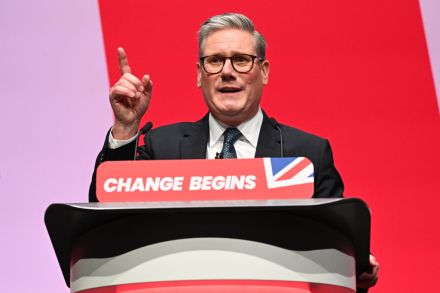
Sir Keir Starmer has declared 'change has begun' in Liverpool. He defended the cuts to the winter fuel payments, announced a Hillsborough Law, and saw off a heckler. But did we learn anything from the speech in terms of policy? Is he leaving conference in a better or worse position than he entered? Isabel Hardman is joined by James Heale and Katy Balls.

Keir Starmer is in the mood to fight

From our UK edition

Keir Starmer’s first conference speech as Prime Minister neatly embodied the past three days in Liverpool: patchy, uninspiring, with a strong finish and the promise of better tidings tomorrow. Starmer took to the stage today after a conference that feels more muted than Labour’s landslide victory might suggest. His speech was accordingly light on policy but heavy on warnings about what is likely to lie ahead. This fits with the broad theme of new Labour premiers meeting their party after taking power. Much like Clement Attlee, Harold Wilson and Tony Blair in 1946, 1964 and 1997, Keir Starmer chose to use his first speech to be honest with his party.

Who was the real audience for Rachel Reeves’s speech?

From our UK edition

11 min listen

Chancellor Rachel Reeves has just finished her speech at Labour conference. After a brief interruption by hecklers, she addressed austerity, the pandemic, and winter fuel payments. How was the speech received, and who does it really speak to?  Elsewhere, Sue Gray's lack of appearance in Liverpool hasn't done anything to slow down discussion of recent controversy. James Heale is joined by Katy Balls and John McTernan, formerly Tony Blair's Political Secretary.

Is Labour going through its own Partygate?

From our UK edition

11 min listen

Labour's first party conference in government has opened under the shadow of the 'Frockgate' scandal, which continues to rumble on. James Heale and Katy Balls report from Liverpool on what the mood is like – and the big topics for the party this week. Produced by Oscar Edmondson and Cindy Yu.

Will Starmer clash with the unions?

From our UK edition

15 min listen

It's easy enough to keep both business and the unions on side when you are vague about your policies – and when your opponent is messing up so badly. That was Labour's position going into the election. But now that it's in government, can it keep that balancing act up? Next week's Labour party conference will be the government's first real test. James Heale talks to Kate Andrews and Paul Nowak, general secretary of the Trades Union Congress. Produced by Cindy Yu.