James Heale

James Heale

James Heale is The Spectator’s deputy political editor.

Budget week: Labour braced for backlash

From our UK edition

13 min listen

It's Budget week (finally)! How this week goes will set the tone for Labour’s first year in office. It’s fair to say that expectations are relatively low – with the Prime Minister himself warning of ‘painful decisions’ ahead. We know a lot of what will likely be included and Treasury sources are keen to play down talk of any Budget rabbits – suggesting a mix of the measures currently being discussed in the media. So what should we expect? And can Labour ride out the week unscathed? Also on the podcast, Labour have suspended the whip for Mike Amesbury, MP for Runcorn and Helsby, after he appeared to threaten a man who has been knocked onto the road in Frodsham, Cheshire. Labour look like they will be facing their first by-election.
Should Britain pay reparations to Commonwealth countries?

From our UK edition

16 min listen

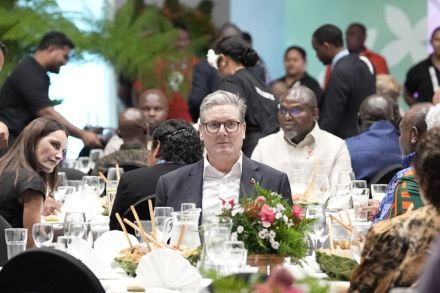
This week, Keir Starmer has been in Samoa for a summit with delegations of the 56 nations which make up the Commonwealth. Between having to answer questions on Donald Trump and the budget, he has also been pressed on the issue of slavery reparations, with the leaders of some Caribbean countries insisting it is ‘only a matter of time’ until Britain bows to demands of handing over billions of pounds in compensation. Speaking today, Starmer addressed the issue. He said, ‘I understand the strength of feeling’ but insisted that he would be ‘looking forward, not back’. So what are the arguments for and against reparations? And why is this debate relevant now, in 2024? James Heale speaks to historian Robert Tombs. Produced by Oscar Edmondson.

Labour’s ‘working people’ muddle

From our UK edition

11 min listen

Who exactly are 'working people'? The Labour party's use of this phrase during the election raised questions over who they will really be levying taxes upon. With less than a week to go until the Budget, Labour in government is now again struggling to give a clear definition of what they mean. James Heale talks to Katy Balls and Kate Andrews. Produced by Cindy Yu.

How many Tories will defect to Reform?

From our UK edition

11 min listen

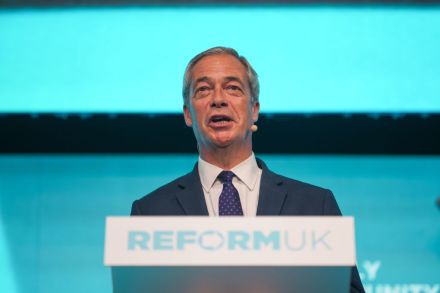
After Nigel Farage's overture to Tory councillors to 'defect', one already has. Farage has also been on manoeuvres, piling on the criticism against Labour for its volunteers campaigning for the Democrats in the US. James Heale talks to Katy Balls and Freddy Gray about the latest. Tickets are still available to join Freddy Gray and Nigel Farage on Thursday 24 October for their analysis on the US election. Get your tickets here.Produced by Cindy Yu.

Is Labour interfering in the US election?

From our UK edition

16 min listen

Keir Starmer can’t even fly to Samoa without another international British embarrassment breaking out. The latest is an angry accusation from Donald Trump’s campaign that Labour is committing the crime of ‘election interference’ in the United States. ‘The British are coming!’ screamed a typically camp Trump-Vance official press release last night. The campaign denounced Britain’s ‘far-left’ governing party for attempting to subvert democracy by sending almost 100 of its activists across the pond to sway American voters. But are the British actually coming? Freddy Gray speaks to James Heale, The Spectator's political correspondent.  Produced by Oscar Edmondson.

Trump’s crusade against Labour

From our UK edition

16 min listen

Donald Trump has made the extraordinary move to file an official complaint against the British Labour party for their volunteers campaigning for the Democrats. On this episode, James Heale talks to Katy Balls and the Financial Times's Stephen Bush about what's behind the Labour tradition of sending volunteers to other democracies, and why a second Trump presidency might be the defining theme of this Labour government. Produced by Oscar Edmondson and Cindy Yu.

Has Robert Jenrick run out of momentum?

From our UK edition

There are just ten days to go until the end of the great Tory leadership race. It has been a mammoth affair, stretching back to Rishi Sunak's resignation at the beginning of July, with twists at every turn. There have been four ballots, in which three different candidates came top: a reflection of the unpredictable nature of the contest. Many thought it unlikely that both Robert Jenrick and Kemi Badenoch could make it to the membership round together and yet, here they are: the final two. The Jenrick campaign got off to a strong start, quickly collecting an array of MP endorsements. The former immigration minister comfortably came top of the first two ballots at the beginning of September and entered the final four stage in a confident mood.

Andrew Bailey’s pessimistic pre-Budget warning

From our UK edition

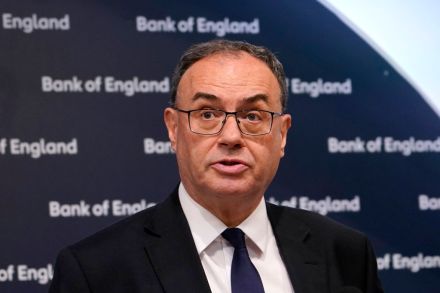
With a week to go until Rachel Reeves’s first Budget, Andrew Bailey has today sounded a note of gloomy caution. Speaking at a Bloomberg event in New York, the Governor of the Bank of England channelled the mythological Cassandra, whose warnings were accurate, but ignored. He told his audience today that ‘Cassandra was fated by the god Apollo to utter true prophecies but not to be believed’. Bailey’s meant to remind the audience that memories of financial crises recede over time. He warned against ‘the trap of complacency’, saying: I can observe this happening with the global financial crisis fifteen years or so on. I do get people telling me that ‘you have solved that one so we can relax’. But the work I set out above on theory and history is timeless.

Does Streeting’s NHS plan amount to anything?

From our UK edition

13 min listen

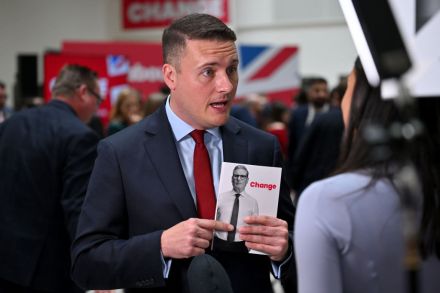
This morning, Health Secretary Wes Streeting launched the ‘biggest consultation in NHS history’ in a bid to get public input into how to save the UK’s flailing health service. The British public and clinicians are being asked to share their experiences and ideas to help 'fix our NHS'. After years of discussion and reviews, how likely is it that Labour delivers the urgent reform that the NHS needs?  Elsewhere, there have been more signs of what might be in the budget at the end of the month. Who might the big winners and losers be? James Heale discusses with Katy Balls and Isabel Hardman.  Join Freddy Gray a special live recording of Americano on Thursday 24 October. You can buy tickets at spectator.com/electionspecial.

Inside the race for the Chancellor of Oxford

From our UK edition

What do we mean these days when we talk about the British ‘establishment’? When Henry Fairlie coined the term in 1955 – in The Spectator, of course – he defined it as ‘the whole matrix of official and social relations within which power is exercised’. A lot has changed in the past 70 years. The influence of the monarchy has diminished, the class system no longer holds sway, party politics is almost unrecognisable. Yet the idea of the establishment retains its powerful allure and, in the election of the next chancellor of Oxford University, we see how much it still matters to Britain’s 21st-century elite.

Tories try to hammer Labour on freebies

From our UK edition

It seems that one of the great posts in British politics has been filled at last. The title of ‘Minister for Sticky Wickets’ was held by the likes of David Gauke and Michael Ellis during the Tory years. Now, with Keir Starmer on the back foot over freebies, it is Ellie Reeves filling that role. The Cabinet Office minister was today sent out to defend the government on an Urgent Question. It followed further allegations this weekend about the role of ministers in Taylor Swift’s security arrangements. Reeves opened the batting for the government, explaining how it proposes to change the ministerial register of interests. She was up against John Glen, whose speech largely consisted of listing a litany of Labour’s crimes and misdemeanours from the past 100 days.

Is Labour’s investment summit back on track?

From our UK edition

13 min listen

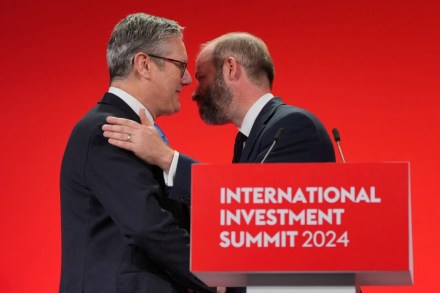
This morning is the government's big investment summit. They pledged to have the summit within their first 100 days in an attempt to hit the ground running and show the UK as a sensible place to do business. The timing – two weeks before the budget – is interesting, and so is the U-turn from P&O, who will attend the summit despite comments last week by Transport Secretary Louise Haigh (she described the ferry company as a ‘rogue operator’). P&O's reported £1 billion worth of investment is back up for grabs. Is it time to invest in Britain? What is Labour's big pitch to business? Also on the podcast, over the weekend we had the sad news that former First Minister of Scotland Alex Salmond passed away. What will be his legacy?

Is Keir Starmer the new Harold Wilson?

From our UK edition

19 min listen

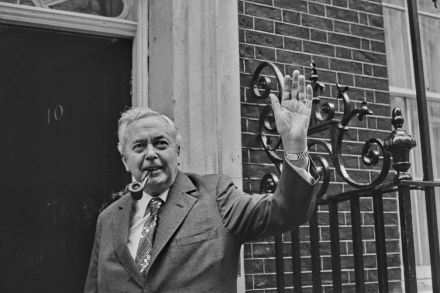
It's another busy few days for the Prime Minister as he chairs the inaugural meeting of the Council of Nations and Regions today, marks 100 days in office, and hosts an investment summit on Monday. With the absence of Sue Gray looming large, James Heale unpicks the politics behind these milestones with Katy Balls and the Financial Times's Stephen Bush. They share some lessons from history and the welcome, or perhaps unwelcome, comparison with former Labour Prime Minister Harold Wilson. Also on the podcast, they discuss the merits and pitfalls of potential Conservative Party rule changes. Could their era of rapid defenestration soon come to an end? Produced by Patrick Gibbons.

The ‘Green Budget’ could leave Rachel Reeves red-faced

From our UK edition

16 min listen

The Institute for Fiscal Studies has published its yearly Green Budget, weeks ahead of Chancellor Rachel Reeves’s first fiscal event. It’s grim reading, for both the government and the public. For Labour to make good on its promise to avoid ‘austerity’, taxes are going to need to go up significantly: by £25 billion, the IFS’s reports, and that’s just to ‘keep spending rising with national income.’ Can Reeves square the circle?  James Heale speaks to Katy Balls and Kate Andrews.  Produced by Oscar Edmondson.

Can Morgan McSweeney reboot the government machine?

From our UK edition

The Queen is dead: long live the King. This week brought an end to Downing Street’s unhappy experiment in dyarchy. Out goes Sue Gray, banished to the regions. In her place stands the Irishman who won the No. 10 power struggle: Morgan McSweeney, Keir Starmer’s first chief of staff in opposition, is back on top. McSweeney’s allies believe that the new government will flourish into maturity after a troubled start. ‘We’re back to being political,’ one crows. As another minister prefers to put it: ‘He needs to go around and crack some heads – and quick’ The new chief’s strengths are threefold. First, he is familiar with how the PM thinks. Unlike Gray – who knew little of Starmer before her appointment – McSweeney has been intimately involved in his rise to power.

The final three: Cleverly storms ahead

From our UK edition

12 min listen

The Conservative party has narrowed down the leadership candidates to the final three, with James Cleverly taking a surprise lead over both of his more right wing rivals. With Cleverly all but confirmed to get into the members' round, which of Kemi Badenoch and Robert Jenrick will join him? Cindy Yu talks to James Heale and Paul Goodman. Produced by Cindy Yu.

James Cleverly storms into the lead

From our UK edition

It's official: the Tories believe in JC. Following last week's party conference in Birmingham, James Cleverly has this afternoon topped the penultimate ballot of Tory MPs. The Shadow Home Secretary stormed into the lead with 39 MPs, overtaking both Robert Jenrick on 31 and Kemi Badenoch on 30 to officially confirm his status as the new frontrunner for Tory leader. After a disappointing showing in the previous ballot – in which Cleverly tied Tom Tugendhat with 21 MPs – the momentum shift puts him in prime position for the final round of voting tomorrow. Cleverly picked up an extra 18 votes – some 15 per cent of the entire parliamentary party.

Cleverly gains momentum as Tory MPs prepare to vote

From our UK edition

Tory MPs are today preparing to cast their votes in the next round of the party’s leadership contest. The final four will become three, ahead of another ballot tomorrow afternoon to produce the pair who will go to the membership. It is now four weeks since Mel Stride was knocked out and the big shift in the Tory leadership race is neatly demonstrated by the candidate that Stride has chosen to endorse. James Cleverly won his backing last night, with some MPs believing that he now has the momentum to make it to the final two. Cleverly performed poorly on the last ballot, going backwards to tie with Tom Tugendhat on 21 votes apiece. But since then he has had a good month, with the bookmakers suggesting that he is now the favourite to win.

Will Starmer’s No.10 reset work?

From our UK edition

2 min listen

Who’s in charge in Downing Street? Until recently, the answer to that question would tend to reveal whether you were a Sue Gray or Morgan McSweeney supporter. Keir Starmer’s two most senior aides were viewed to be in a power struggle over the direction of the government. But with Gray's resignation this weekend, it is McSweeney who is running the show. What direction will he take No.10?   James Heale speaks to Katy Balls and John McTernan, former political secretary to Tony Blair.  Produced by Oscar Edmondson.

Where is the Brexit dividend? Live at Conservative conference

From our UK edition

37 min listen

In this special Saturday shots we hear from a panel discussion on Brexit, originally recorded at Conservative Party conference.  Four years on there are successes to point to, namely eliminating the cost of membership, new trade deals and the speed of the vaccine rollout. Yet the prevailing sense is that the full potential of Brexit has not been realised. Where do we go from here?  The Spectator's James Heale speaks to former MEP Lord Hannan, Telegraph columnist Sherelle Jacobs, Iain Duncan Smith MP and Tom Lubbock, co-founder of JL Partners.