James Heale

James Heale

James Heale is The Spectator’s deputy political editor.

Why Zia Yusuf changed his mind about quitting Reform

From our UK edition

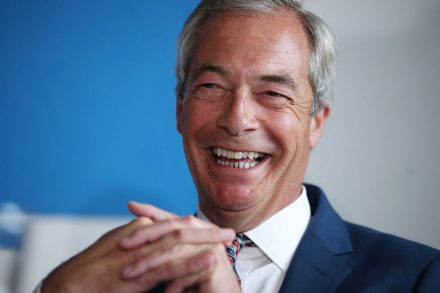
Well, that was quick. Within 48 hours of his resignation as party chairman, Zia Yusuf has returned to the Reform fold. In a joint Sunday Times interview with Nigel Farage, Yusuf has admitted to making a ‘mistake’. He will now take up a new revised role within the party, focusing on policy formation and leading on the party’s DOGE mission in local government. A new chairman will be named on Tuesday, amid a backroom shake-up focused on sharing the load on Reform’s leadership. ‘Welcome back Zia,’ wrote Richard Tice on one internal Reform WhatsApp group. ‘Hope you enjoyed your holiday!’ What led Yusuf to change his mind? The obvious precedent here is Farage himself in May 2024.

The Tories are edging towards ECHR exit

From our UK edition

Following last month's local elections disaster, Kemi Badenoch's team promised a 'step change'. So just 24 hours after Shadow Chancellor Mel Stride offered a 'mea culpa' for the mini-Budget, Badenoch has followed up by suggesting that the UK 'will likely need to leave' the European Convention on Human Rights (ECHR). It comes amid a hardening of internal Tory opinion on the subject, following both a number of high-profile rulings by British courts and a surge in illegal migration. 'I do believe that we will likely need to leave', Badenoch said Badenoch's argument is as follows: foreign criminals, convicted of horrific abuse, currently cannot be deported. The ECHR is now being used in ways never intended by its original authors.

Surprise Labour victory as Reform’s fallout continues

From our UK edition

14 min listen

Scottish Labour have a new MSP today as Davy Russell won the Hamilton, Larkhall and Stonehouse by-election, taking the seat from the SNP. Labour won with 31.6% of the vote with the SNP second on 29.4%, Reform close behind on 26.1% and the Conservatives a distance fourth with just 6% of the vote; this marks rare good news for both Keir Starmer and Scottish Labour leader Anas Sarwar. Both SNP and Reform will be disappointed not to have won, but Reform have been quick to highlight how close they came, considering how new the party is. Plus, there are signs that Reform took votes away from the incumbent SNP, demonstrating again that Reform can appeal to voters across the political spectrum – what does this mean for next year’s Holyrood elections?

Zia Yusuf resigns from Reform

From our UK edition

10 min listen

Zia Yusuf resigned this evening from his position as chairman of Reform UK, saying: ‘I no longer believe working to get a Reform government elected is a good use of my time.’ This comes after he tweeted yesterday that it was ‘dumb’ for Sarah Pochin, Reform’s newest MP, to urge the Prime Minister to ban the burka during PMQs. Did he jump before he was pushed? And can Reform UK really claim to have ‘professionalised’ when this is the second high profile departure this year?  Oscar Edmondson speaks to James Heale.

Nigel wants YOU, secularism vs spirituality & how novel is experimental fiction?

From our UK edition

52 min listen

How Reform plans to win Just a year ago, Nigel Farage ended his self-imposed exile from politics and returned to lead Reform. Since then, Reform have won more MPs than the Green Party, two new mayoralties, a parliamentary by-election, and numerous councils. Now the party leads in every poll and, as our deputy political editor James Heale reveals in our cover article, is already planning for government. The party’s chair, tech entrepreneur Zia Yusuf, describes the movement as a ‘start-up’; and like a start-up, Reform is scaling up at speed. Among the 676 councillors elected last month, a number are considered more than ready to stand as MPs.

From Thatcher to Truss, who’s haunting Mel Stride?

From our UK edition

17 min listen

Shadow Chancellor Mel Stride delivered a speech today where he attempted to banish the ghost of Liz Truss and improve the Conservatives' reputation over fiscal credibility. And he compared leader Kemi Badenoch to Thatcher, saying she too struggled at first and will 'get better' at the dispatch box. LBC broadcaster Iain Dale and the Spectator's economics editor Michael Simmons join deputy political editor James Heale to unpack Stride's speech, talk about Labour's latest policy announcement over free school meals and discuss why both the main parties are struggling with fiscal credibility. Plus, Iain talks about his new book Margaret Thatcher and the myths he seeks to dispel. Why does he think the former PM still endures 35 years after she left office? Produced by Patrick Gibbons.
Mel Stride’s ‘mea culpa’ for Liz Truss

From our UK edition

The Shadow Chancellor’s speech this morning was a predictable one. Mel Stride is the kind of Conservative who spin doctors love to send out on the media round: smart, well-briefed and able to stick to the party line. He is also the kind of Conservative who was very much not a fan of Liz Truss, in both temperament and in substance. Tory Kremlinologists will recall that he was one of the most ardent internal critics of her mini-Budget of September 2022, as the-then Treasury Select Committee chair. So, it was no surprise then that the top line from his speech was an apologia for Truss. ‘Never again’, promised Stride, ‘will the Conservative party undermine fiscal credibility by making promises that we cannot afford.

Nigel’s army: Reform’s plans for victory

From our UK edition

‘I’ve changed my mind!’ It is a year this week since Nigel Farage uttered those fateful words, marking his decision to return as leader of Reform UK during the general election campaign. Much has changed in those 12 months. The party’s polling has doubled, membership has soared to 235,000 and new faces make up most of the backroom staff. Now that the party has hit 30 per cent in the polls, Reform strategists insist the vote share can go higher: 40 per cent is viewed as a realistic target. Zia Yusuf, the party chairman, likes to describe Reform as a ‘start-up’, breaking apart SW1’s monopolistic cartel. This high-ambition, high-growth strategy yielded 677 councillors in the local elections last month.

To spend or not to spend

From our UK edition

16 min listen

Rachel Reeves unveiled billions of pounds of investment today for transport and infrastructure projects, as Labour attempts to demonstrate that next week’s spending review is not just about departmental cuts. However, most of the political noise today has centred on her announcement that the winter fuel cut will be reversed by the end of the year. But what does this all mean for the average voter, for the Chancellor’s fiscal headroom – and why is the government still blaming its own ‘fiscal rules’? James Heale and Michael Simmons join Lucy Dunn to unpack the Chancellor’s announcements and explain the economic jargon, plus a look at today’s PMQs. Produced by Patrick Gibbons and Oscar Edmondson.

Kemi has a new favourite word: chaos

From our UK edition

Whisper it, but there was some rather good lines amid the dross of today's PMQs. 'Mr Speaker, I asked the Prime Minister what he believes in', jibed Kemi Badenoch at one point. 'He had to look in his folder to find out the answer.' The Speaker responded in kind. 'Please', he said, during one of Keir Starmer's lengthier evasions, 'Let's listen to the answer even if you don't believe you're getting one.' But it was one word, repeated more than a dozen times, which emerged from today's session: chaos. Badenoch hit the PM with it at every chance, pointing to the winter fuel and two-child benefit U-turns as proof of the 'chaos, chaos, chaos' in which, she said, this government is now embroiled.

Is the public ready for difficult decisions on defence?

From our UK edition

16 min listen

Former Commander of Joint Forces Command – and one of the authors of the Strategic Defence Review – General Sir Richard Barrons joins Lucy Dunn and James Heale to talk through the main conclusions of the review, and the questions it raises. Labour have talked up the fact that this is the first government in a generation to not reduce the size of the armed forces. But, as Sir Richard explains, difficult choices await politicians and the public if the UK wants to be more prepared, and faster, for potential threats. Produced by Patrick Gibbons.
Is Britain ‘battle-ready’?

From our UK edition

15 min listen

Today the government has published the long-awaited strategic defence review. The brief was to take a new look at some of the challenges to the UK in 2025, and what is needed to ensure our security and reset our defence priorities. We are still waiting for some of the detail, but so far we know: £15 billion for new warheads to be carried by the new Dreadnought-class submarines; a dozen new SSN-Aukus attack submarines; £1.5 billion to build at least six munitions' factories; £6 billion to procure munitions over the remainder of this parliament; and £1 billion for digital capability and a new CyberEM Command. Where is all that money coming from? Most of the squabbling today has been over the commitment to 3 per cent of GDP on defence spending.

Starmer tries to sell the Strategic Defence Review

From our UK edition

The Prime Minister has been up in Scotland this morning, ahead of the full publication of the Strategic Defence Review (SDR) at 3.30 p.m. today. It will set out the UK’s defence spending priorities for the next ten years, including plans to build up to 12 new nuclear-powered attack submarines and spend £15 billion on the warhead programme. In a speech, Starmer touted the document as a ‘a blueprint to make Britain safer and stronger, a battle-ready, bomber-clad nation with the strongest alliances and the most advanced capabilities.’ Three changes will come from this review, he said. The first, a move to ‘war-fighting readiness’. The second: an additional focus on ensuring that everything this government does is to add to Nato’s strength.

What is Robert Jenrick up to?

From our UK edition

It has been another good week for Robert Jenrick. At a time when many of the shadow cabinet are struggling to make an impact, his video on fare-dodging in London has certainly caused a stir. The 58-second clip – in which Jenrick, like some Tory Batman, accosts Tube passengers walking through barriers – has now been viewed nearly 15 million times. It prompted a Newsnight discussion, acres of coverage and begrudging private praise from opposition politicians too. Such videos are not some mere fluke but rather, the product of much time and effort by Jenrick and his aides. He has learned from masters of the craft like Pierre Poilievre, the leader of the Canadian Conservatives.

What will save the Tories? The economy, or Robert Jenrick?

From our UK edition

16 min listen

Lots to discuss today: Robert Jenrick takes on TfL, a Nazi jibe from the attorney general and allegations of shoplifting made against our own Michael Simmons. But we start with Keir Starmer’s big speech yesterday, where the theme was ‘get Nigel’, after polling from More in Common showed that framing the election as a two-horse race could be beneficial to Labour. They are attempting to cut the Tories out altogether but, in response, the Conservatives plan to use fiscal credibility as the battleground to crawl back up the polls. Will the economy save the Tories? Elsewhere, Robert Jenrick is the star of the week after a video of him reprimanding fare-dodgers on the Tube went viral, racking up more than ten million views on X.

Lord Hermer’s ‘Nazi jibe’ shows his naivety

From our UK edition

Amid talk of a summer reshuffle, I recently asked a senior member of the Labour party if he thought the Attorney-General was likely for the chop. He paused and reflected. 'No', he eventually replied. 'But he's going the right way about it.' Similar sentiments will no doubt be expressed in Downing Street today as they pore over the morning papers. 'Law chief in Nazi jibe at Tories and Reform', screams the splash headline of today's Times: Richard Hermer KC has done it again. Hermer showed a naivety of how his remarks would be interpreted The cause of the headline is a speech which Hermer made to the RUSI think tank yesterday on the government's commitment to international law.

Senior Tories plan candidate overhaul

From our UK edition

There are many justifiable criticisms of how the Tories ran candidate selection for the last election. On the day that Rishi Sunak headed to the Palace, scores of nominees were still to be chosen, prompting a mad scramble to find 160 candidates in 12 days. Some seats faced accusations of 'stitch-ups', including Basildon and Billericay, where the-then party chairman was controversially selected from a shortlist of one. Scores of unknown names had to be parachuted in elsewhere. The good news for long-suffering members is that this message appears to have been heard by senior Tory figures. An eight-page paper on candidate selection has now been drawn up as part of the Party Review into the 2024 election.

This won’t be the last time Starmer attacks ‘fantasy’ Farage

From our UK edition

Liz Truss's short-lived premiership is remembered fondly by few in British politics. But one group who certainly never miss a chance to mention it are Labour MPs sent out on broadcast duty. Having successful used the ex-PM as a two-word stick to hammer the Tories, now Keir Starmer is trying to use the same trick on Nigel Farage. The Prime Minister used an engagement at a business manufacturer in the north-west of England to test his party's latest attack lines on Reform UK. The striking thing about Starmer’s comments is how they echo the Tory critique of Farage His remarks focused on those industries affected by the tariffs Donald Trump has slapped on the UK. The Labour leader claimed 'We protected those jobs. Would Nigel Farage have done the same? Absolutely not.

Rape investigation into Crispin Blunt dropped

From our UK edition

An 18-month investigation into allegations of rape against former Justice Minister Crispin Blunt has now been dropped. In October 2023, the-then Tory MP was arrested by Surrey Police, prompting the removal of the party whip. He confirmed he was the subject of the probe at the time following reports of a Conservative parliamentarian being arrested. Blunt was subsequently bailed and stood down from parliament at the July 2024 election, with the investigation still ongoing. However, in a statement, Surrey Police today told The Spectator that: An investigation was launched following a report of rape in October 2023. Extensive enquiries have been carried out and a man in his 60s and a man in his 50s were arrested on 25 October 2023 in Horley in connection with the offence.