James Heale

James Heale

James Heale is The Spectator’s deputy political editor.

Finally we know what Badenoch stands for

10 min listen

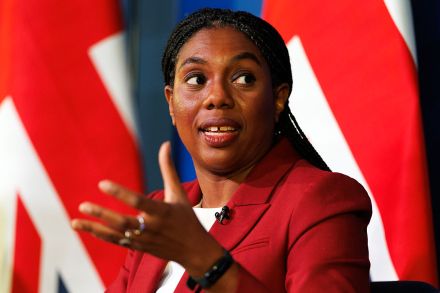
This morning Kemi Badenoch wrapped up Tory conference with a speech that will – for now at least – calm Conservative jitters. The Tory leader’s hour-long address in Manchester was intended as a rejoinder to critics of her leadership and she certainly achieved that aim. Having been accused of lacking spirit, imagination and vigour, Badenoch today demonstrated all three and gave an idea of what the direction of the party looks like under her. The main headline grabbing announcement was her plan to abolish stamp duty – a surprise ‘rabbit’ that sparked a standing ovation. Is she safe, for now? Lucy Dunn speaks to James Heale and William Atkinson.

Badenoch’s conference speech will calm Tory jitters

Kemi Badenoch wrapped up Conservative conference with a well-received speech that was bursting with policy ideas. The Tory leader's hour-long address in Manchester was intended as a rejoinder to critics of her leadership. Having been accused of lacking spirit, imagination and vigour, Badenoch today demonstrated all three. The main headline grabbing announcement was her plan to abolish stamp duty – a surprise ‘rabbit’ that sparked a standing ovation. Had her speech been a disaster, one can imagine a flurry of letters being triggered by nervy Tory MPs The £9 billion commitment would be funded from the £47 billion savings shadow chancellor Mel Stride unveiled earlier this week.

Robert Jenrick steals the limelight at Tory conference

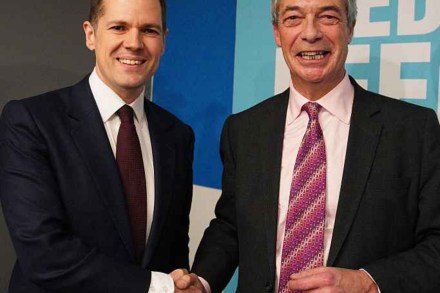
It is day three of Conservative Party conference and the punchiest speech of the event has just been made. Robert Jenrick, the heat-seeking missile of the Tory front bench, has just delivered another howitzer aimed squarely at Britain’s judiciary. Brandishing a judge’s wig, he addressed the conference faithful with the vim and vigour that have seen him soar to the top of the ConservativeHome shadow cabinet league table. Jenrick’s twenty-minute address – the last before Kemi Badenoch’s big speech tomorrow – was a full throttle, studs-up attack on what he calls ‘activist’ judges.

Who’s listening to the Tories? Live from conference

39 min listen

Tim Shipman, James Heale and Lucy Dunn record live at Conservative party conference in Manchester. What's the mood at conference – and has Kemi done enough to neutralise her detractors? Tim says he expects there to be no immediate leadership challenge but the Conservatives need to get real about the 'attention economy' they're faced with. What inspiration can they take from Tory grandee Michael Heseltine? And can they 'make conservative sexy again'? Plus, audience questions on the upcoming budget and the challenges for the Conservatives in both Wales and Scotland. Produced by Patrick Gibbons.

Will this be Kemi’s last conference?

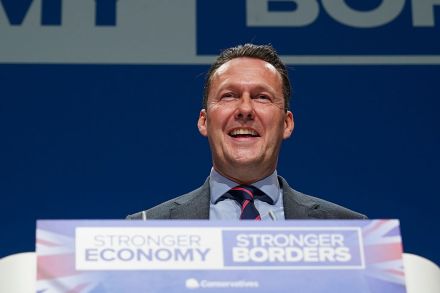
The Conservative party conference kicks off today in Manchester. Dominating the headlines is the long-awaited announcement that the next Tory government would pull Britain out of the European Convention on Human Rights (ECHR). In a break with recent conferences, leader Kemi Badenoch will be making two speeches. The first this afternoon will set out what ECHR-exit would look like. The second on Wednesday will deal with more of what George Bush Sr. called ‘the vision thing’: Badenoch’s big picture for Britain. ‘Stronger economy, stronger borders’ is the party’s slogan for the four-day jamboree. That reflects the two-pronged approach that senior Tory strategists believe is the only way back to power.

Inside London’s embassy parties

Like the new school year, ambassadors to Britain usually change each September. Among those leaving this summer are the German, Swiss and Canadian representatives; their successors will shortly begin limbering up on the cocktail circuit, eager to make their social mark. The man they will have to beat is the US ambassador, Warren Stephens. His great advantage is Winfield House, his palatial private residence, which boasts the second-largest garden in the capital after Buckingham Palace. Every year, the London elite pile in here to toast the Fourth of July. At this year’s Independence bash, Stephens made his mark with spectacular fireworks and a star-spangled smorgasbord of food from across the fifty US states.

James Heale, William Atkinson, David Shipley, Angus Colwell and Aidan Hartley

25 min listen

On this week’s Spectator Out Loud: James Heale says that, for Labour, party conference was a ‘holiday from reality’; William Atkinson argues that the ‘cult of Thatcher’ needs to die; David Shipley examines the luxury of French prisons; Angus Colwell provides his notes on swan eating; and, Aidan Hartley takes listeners on a paleoanthropological tour from the Cradle of Mankind.  Produced and presented by Patrick Gibbons.

Kemi Badenoch’s plan to save the Tories

18 min listen

The Prime Minister was set to announce his crackdown on the existing rights of refugees at the European Political Community meeting today; however, he has flown back to chair a Cobra meeting after a terror attack in Manchester. Two people have been killed and at least two others injured after a driver allegedly rammed a car into pedestrians outside a synagogue and attacked them with a knife. The suspect, who was shot by police, is also believed to be dead. Also on the podcast, Tim Shipman interviews Kemi Badenoch for the magazine this week. As she enters conference season with the Tories running third in the polls behind Reform and Labour, she tells Tim that she is up for a fight.

Starmer has bought himself time. Can he use it wisely?

The Labour conference in Liverpool was a curiously upbeat affair. Much of the good spirit came from schadenfreude at the misadventures of Andy Burnham. The Mayor of Greater Manchester scuttled out of Liverpool just before Keir Starmer’s speech, having united the party in mutual contempt at his posturing in recent days. ‘A fucking clown’ was the verdict of an ex-cabinet minister. ‘He did an Eric Heffer,’ remarked one Labour official – a reference to the cantankerous Liverpool MP who stormed out of Neil Kinnock’s conference speech 40 years ago. ‘It was the worst coup attempt since South Korea,’ says a former aide. Burnham, however, is merely a symptom, not a cause of Labour’s woes. Serious rivals are unlikely to telegraph their ambitions quite so blatantly.

Starmer delivers ‘the speech of his life’

20 min listen

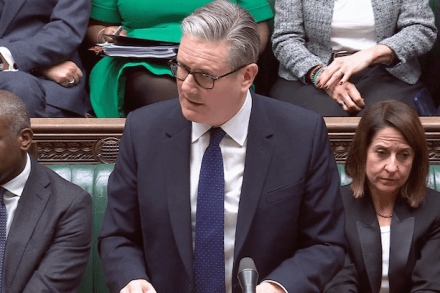
We have just heard the Prime Minister’s headline speech at Labour Party Conference and – whisper it quietly – that might have been Keir Starmer’s best yet. As briefed out beforehand it was a patriotic address, with lots of flag waving in the room as he presented his version of patriotism in contrast to a Nigel Farage who is guilty of talking Britain down. It was miles better than the dreariness of last year and instead struck a chord of hope against the broken Britain narrative. Even though there was little of actual substance on the economy and more platitudes about ‘smashing the gangs’, this did seem like a landmark moment for Keir Starmer where he communicated an actual plan for the Britain he wants to build.

The political climate suits Wes Streeting right now

Timing is everything in politics. So it was intriguing to see Wes Streeting – the great hope of Labour moderates – being given prime billing on the morning of Keir Starmer’s big speech. The Health Secretary’s 20-minute address was so perfectly pitched to his audience’s prejudices that you might have thought it had been created by the AI he lauds so frequently. All of Labour’s buzzwords were there: talk of 1945, attacks on Nigel Farage, a war on health inequalities and Streeting’s own council estate back story. There was even glutinous praise for Angela Rayner. ‘We need her back’, he told the party faithful, to inevitable rapturous applause. Streeting’s appeal as a communicator has been his ability to deliver the government line in an interesting and original way.

Labour conference: ‘a holiday from reality’?

11 min listen

Labour party conference has kicked off in Liverpool, and the Chancellor has just delivered her keynote speech. ‘Security, security, security’ was the message from Rachel Reeves as she addressed the Labour party faithful. The Labour government, she said, will create an economy that puts the British worker above all else. Aside from setting out her economic vision, she made time for a few jabs in Manchester mayor Andy Burnham’s direction and gave a nod to shadow education secretary Bridget Phillipson (should we take that as an endorsement?). Has she been taking notes from Gordon Brown? Elsewhere, the mood in the bars is much more buoyant than it was last year – although that has a lot to do with the absence of Sue Gray.

Rachel Reeves takes the fight to Reform

The Chancellor has just finished her speech at the Labour party conference. It has been a pretty torrid 12 months since Rachel Reeves’ last appearance in Liverpool. Since then, the Budget and borrowing costs have left her precariously exposed, in both Westminster and the City. But Reeves – a Labour tribalist to her core – seemed to draw heart from the conference floor. In a solid, if unspectacular performance, her peroration contained some red meat for the party to cheer: the abolition of long-term youth unemployment, new libraries and plans for an EU youth mobility scheme. Yet it was the first half of Reeves’ speech which highlighted the ghosts of Christmas past, present and future that she must slay to win re-election in 2029. The first was Liz Truss and the Tories.

Keir Starmer: Reform’s migration policy is ‘racist’

Labour conference has begun this weekend in Liverpool under something of a cloud. The run-up to the five-day shindig has been dominated by questions about old donations and Andy Burnham’s intentions. A slew of poor polls suggest the party has gone badly off track after 14 months in office. But following a summer in which many of his party felt that he had gone missing in action, Keir Starmer appears to now be channeling Donald Trump’s mantra: fight, fight, fight. The Prime Minister used an interview with the BBC this morning to come out swinging, taking aim at his critics both inside and outside the Labour party. It is an approach that will resonate with some of his demoralised backbenchers who are, in the words of one, ‘waiting for a lead’.

Panic and plotting inside Labour conference

The Labour party returns to Liverpool this weekend for its annual four-day jamboree. Twelve months after a dismal conference, dominated by discussions about donations, drift and dire decisions, most party activists will be disappointed that the situation has not improved. In 2024, the story was the controversial then-chief of staff Sue Gray and ‘freebiegate’ – the row over the multi-thousand-pound clothes Keir Starmer accepted from Labour donor, Lord Alli. In 2025, it will be the futures of Starmer and Gray’s successor, Morgan McSweeney. Both men are under intense pressure amid doubts about their chosen political strategy. ‘It's going to be a shitshow,’ says one MP who has decided to skip the conference.

ID cards are back: will they work?

17 min listen

The Labour machine has whirred into gear to try and contain a certain Northern mayor’s mischievous interventions this week, by announcing a big controversial piece of policy. The news that ID cards – Tony Blair’s pet project – will be introduced has splashed all the front pages, demoting Andy Burnham to yesterday’s news. It’s a policy with broad public support, but with a passionate minority opposition including the leaders of the other major parties. The fact that it is being rebranded as a ‘Brit card’ with the aim of tackling the migration crisis has also ruffled a few feathers. Will it work politically? And, more importantly, will it work in practice?  Lucy Dunn speaks to Tim Shipman and James Heale.  Produced by Oscar Edmondson.
Starmer’s Reform solution? ID cards

It has been another difficult week for Keir Starmer. He has lost his director of communications, and his chief of staff, Morgan McSweeney, is under constant fire. The economy is stagnant and he faces near-constant manoeuvring from Andy Burnham. So today’s speech at the ‘Global Progress Action Summit’ in London took on an added weight. With Labour conference beginning on Sunday, many of Starmer’s MPs and members are looking for a lead after another summer of drift. The Prime Minister sought to do that in a 20-minute address. His speech sought to explain the loss of confidence which has seen the party’s poll rating slump to less than 20 per cent.

Labour unveils its Reform fightback

After a summer of drift, Labour today launches a fresh fightback against the rise of Reform UK. Leading the charge is Steve Reed, the recently promoted Minister for Housing, Communities and Local Government (MHCLG). In an interview with Michael Gove for The Spectator’s YouTube channel, he explained the thinking behind his department’s new ‘Pride in Place’ programme. A reported £3.4 billion will be pumped into struggling communities over the next decade to try and to resurrect the British high street. You can watch the full interview below. Reed’s argument is simple: if communities are stronger, they are less likely to turn away from Labour and vote for Reform. ‘Nigel Farage weaponises grievance’, Reed says.

What’s really behind Reform’s rise

It is the question dominating bars and fringe debates this party conference season: what exactly is driving Reform UK’s popularity? Various explanations are proffered: the collapse of the two-party system, fickle voter tastes, the rise of populism across the West. But these are symptoms of a much greater shift: the new information age, unleashed by the internet. In a nation whose politics have long been characterised by venerable institutions, Reform, born in 2020, can claim to be Britain’s first successful e-party. Like most apparent overnight successes, Reform has in fact been years in the making. For much of the 2000s, Nigel Farage struggled to get anywhere with his Eurosceptic messaging.

Burnham fires warning shot at Starmer

Labour conference begins on Sunday. Keir Starmer is under fire, besieged by all sides. The party’s left think he is a fraud; the party’s right believe him to be incompetent. All agree that he is rudderless and fear he is leading Labour to defeat. So it is with exquisite timing then that Andy Burnham has done a big glossy interview with the New Statesman, who stick him on the front of their cover, four days before the Prime Minister meets with his mutinous members up in Liverpool. The Mayor of Greater Manchester’s intervention is predictably unhelpful for Starmer. Amid plenty of wistful musings about the joys of Northern England, Burnham signals his discontent with the direction of this government.