James Heale

James Heale

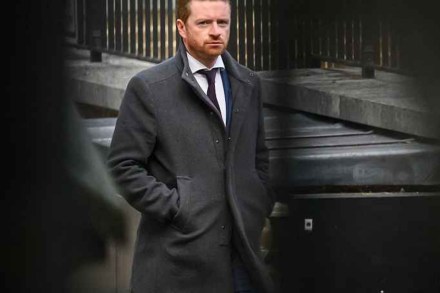
James Heale is The Spectator’s deputy political editor.

Reeves’s ‘lying’ denials are only the start

Four days after a Budget is usually the time when it starts to unravel. Some within Labour see it as a victory of sorts for Rachel Reeves that, so far, the post-Budget debate has focused mostly on the run-up to her statement rather than the measures it contained. Certain policies – such as business rates changes for small businesses – have the potential to blow up into political rows. But the collapse of the Chancellor’s authority this summer has meant the Budget did not contain any serious reform that could stir up major trouble.

The ‘Your Party’ conference is a mess

It used to be said that the old Liberal party had so few MPs that they could fit in the back of a taxi. At least they were willing to share the same vehicle. After more than five years of plotting, Jeremy Corbyn’s Your Party is finally holding its first conference in Liverpool this weekend. The run-up to the event was overshadowed by not one, but two, MPs exiting the six-strong ‘Independence Alliance’ in the House of Commons. That sense of infighting and paranoia has set the stage nicely for the past 24 hours. For Zarah Sultana has announced that she is boycotting day one of the conference, in protest at the the expulsion of members of left-wing groups. Your Party organisers expelled members of the Socialist Workers Party (SWP) as its rules do not permit dual membership.

Lara Brown, James Heale, Sam Olsen & Toby Young

19 min listen

On this week’s Spectator Out Loud: Lara Brown reports on how young women are saying ’no’ to marriage; James Heale takes us through the history of the Budgets via drink; Sam Olsen reviews Ruthless by Edmond Smith and looks at Britain’s history of innovation and exploitation; and, Toby Young questions the burdensome regulation over Politically Exposed Persons (PEPs).  Produced and presented by Patrick Gibbons.

Inside Reform’s £1 million Budget blitz

It can be difficult for challenger parties to make much of an impact on the Budget, with parliament designed to emphasise the role of government and opposition. But Reform UK is determined to make a splash this week and reflect the dominant polling position that the party has enjoyed since April. Senior figures have earmarked a total of £1 million to be spent in the run-up and aftermath of Rachel Reeves' Budget, to drive home the party's position on tax and the wider economy. Tomorrow, the bulk of the outlay will be evident in the nation's press. Double page spread adverts will run in the Telegraph, Times, Sun, Mail, Metro and iNews, featuring a 'letter to the nation' signed by Nigel Farage.

Rachel Reeves’s Klarna Budget: spend now, pay later

After the frenzy of the Commons, comes the poring over the fine print. Rachel Reeves’s Budget is being studied across Westminster, following a chaotic lunchtime in which the OBR’s response was uploaded online an hour before her speech. That speech was heavily pre-briefed, with few real surprises. Taxes were hiked by £26 billion – though not as much as last year’s £32 billion. The level of fiscal headroom has been doubled to more than £22 billion. Growth will be up this year from 1 per cent to 1.5 per cent – but down from earlier projections by 2029. ‘The Chancellor is relying heavily on tax rises towards the back end of the parliament,’ says the Institute for Fiscal Studies. More borrowing in the medium term, then tax hikes.

Rachel Reeves’s farcical Budget

15 min listen

As Budget days go, today was unprecedented. The complete list of measures announced by Rachel Reeves – along with their costings and economic impacts – was leaked by the Office for Budget Responsibility (OBR) an hour before the Chancellor took to her feet. The OBR apologised and called it a ‘technical error’. The headline is tax hikes to the tune of £26 billion, income tax thresholds will be frozen again and the tax burden will hit a record high at 38 per cent of GDP. Was this the most farcical Budget in history? Michael Simmons speaks to James Heale and Tim Shipman.

Why Reeves’s smorgasbord Budget won’t fix Britain

14 min listen

James Nation, managing director at Forefront Advisers, and Michael Simmons join James Heale to analyse what we know, one day ahead of the Budget. James – a former Treasury official and adviser to Rishi Sunak – takes us inside Number 11, explains the importance of every sentence and defends the Budget as a fiscal event. Plus, Michael takes us through the measures we know so far – but is the chaotic process we've seen so far just symptomatic of 'broken Britain'? Produced by Patrick Gibbons.

Rachel Reeves is running out of excuses

The Chancellor addressed her backbench troops last night, ahead of Wednesday's Budget. Rachel Reeves' remarks sought to impress upon her colleagues the importance of unity amid a likely onslaught of criticism. 'Politics is a team sport,' she said. 'We have to stick together if we’re going to deliver the change, and get the second term that we want.' She stressed that her Budget is a 'package', which will contain both good and bad choices. 'It’s not a pick and mix – you can’t say you like the cola bottles but you don’t like the fruit salads. It comes together as a whole.' That can be read as a warning to Labour MPs who have a propensity to publicly criticise unpopular individual policies.

Benjamin Disraeli to Rachel Reeves – how each Chancellor drank their way through the Budget

Rachel Reeves is due to deliver her budget this Wednesday. Throughout the years, the only person permitted to drink inside the House of Commons is the Chancellor. What has been the tipple of choice for each Chancellor dating back to Benjamin Disraeli? Michael Simmons and James Heale drink their way through the ages, discuss the historical context of each budget, and question whether Rachel Reeves has the toughest job yet.

Reform’s Russia problem

Nigel Farage has had better afternoons. Nathan Gill, the former leader of Reform UK in Wales, has just been sentenced to ten-and-a-half years in prison after admitting taking bribes to give pro-Russia interviews and speeches. The one-time Brexit party MEP is believed to have received up to £40,000 in total for helping Kremlin-friendly politicians in Ukraine. At the Old Bailey, Mrs Justice Cheema-Grubb said Gill had abused his position and eroded ‘public confidence in democracy’. Oleg Voloshyn, once described by the US government as a ‘pawn’ of Russia’s secret service, gave the money on behalf of a ‘close friend’ of Vladimir Putin’s, Viktor Medvedchuk, who was the source of both the requests and cash.

Covid report: ‘a £200 million I told you so’

15 min listen

Yesterday we had the publication of the second module of the Covid Inquiry on the decision-making at the heart of government. It confirmed a toxic and disorganised culture at the heart of No. 10 and the headline is that the government acted ‘too little, too late’, costing as many as 23,000 lives in England. That figure is already disputed, not least by our economics editor Michael Simmons who argues on the podcast that the inquiry is a ‘disgrace’ and demonstrates a lack of domain knowledge about the limitations of modelling. Where else does the inquiry fall short? What will be the political ramifications in Westminster? James Heale speaks to Michael Simmons and Isabel Hardman. Produced by Oscar Edmondson.

Labour may have lost the countryside forever

Before the last election, Keir Starmer promised that his party’s relationship with the countryside would be ‘based on respect, on genuine partnership’. But, 16 months into his premiership, the government is shedding rural votes after Rachel Reeves’s changes to inheritance tax. Protesters wearing flat caps and riding tractors have become a familiar sight in Westminster, such is the outrage about the effect on family farms. At the most recent protests, Labour MPs in rural seats were reduced to begging the Treasury to pause the changes ahead of the Budget. ‘So many of my farmers are pleading with me,’ admitted Samantha Niblett, MP for South Derbyshire.

Labour’s ‘dog whistle politics’

11 min listen

Neither Kemi Badenoch nor Keir Starmer performed very well at Prime Minister’s Questions: both fluffed their lines early on. Badenoch managed to suggest the Budget had already happened, while Starmer got lost during an attack on Tory economic policy. But while Badenoch was back to the kind of poor delivery that had previously upset so many of her Conservative colleagues, Starmer still came off worse. The most interesting exchange was with Reform Chief Whip Lee Anderson, who goaded Starmer to ‘be a man’ and ensure that all the cancelled local elections go ahead next year. This facilitated an exchange about recent allegations regarding Nigel Farage’s behaviour when he was a schoolboy. Is this one going to follow the Reform leader around?

How Nigel Farage would cut spending

At 94 per cent of GDP, UK government debt is the fourth highest among advanced European economies. With the tax burden at a record postwar high, there is increasing evidence to suggest that voters’ attitudes on public spending are hardening. Yet any political party proposing retrenchment faces the same problem: what cuts are they prepared to make that will not harm their electoral coalition? Nigel Farage offered his party’s answer to that question at a press conference this morning.  Reform’s ideology is perhaps best characterised by its in-house philosopher James Orr, who champions ‘the politics of national preference.

Shabana Mahmood vs the asylum system

15 min listen

This afternoon, the Home Secretary will set out in the House of Commons her proposed reforms to the asylum system. The headline changes proposed by Shabana Mahmood have been well briefed in the weekend press: refugees will have temporary status and be required to reapply to remain in Britain every two-and-a-half years; those arriving would have to wait 20 years before they can apply for permanent settlement; and countries that refuse to take back migrants will be threatened with visa bans – Angola, Namibia and the Democratic Republic of Congo are among those likely to be initially punished. Is she the one to finally take on the migration crisis? Lucy Dunn speaks to Tim Shipman and James Heale.

Shabana Mahmood’s asylum reforms are a calculated risk

This afternoon, the Home Secretary will set out in the House of Commons her proposed reforms to the asylum system. The headline changes proposed by Shabana Mahmood have been well briefed in the weekend press. Refugees will have temporary status and be required to reapply to remain in Britain every two and a half years. Those arriving would have to wait 20 years before they can apply for permanent settlement. Countries that refuse to take back migrants will be threatened with visa bans: Angola, Namibia and the Democratic Republic of Congo are among those likely to be initially punished. The Home Secretary told broadcasters on Sunday that she will also amend laws that guarantee housing and financial support to asylum seekers who would otherwise face destitution.

Why are so many prisoners accidentally released? With H.M. Chief Inspector of Prisons

15 min listen

Britain’s prisons are a legislative problem that has beset successive governments. New revelations show 91 accidental early releases in just six months, the latest in a growing pattern of administrative chaos across the criminal justice system. Between drones delivering drugs, crumbling Victorian buildings, exhausted staff and an ever more convoluted sentencing regime, what is the cause of so many blunders? And what will Labour’s promised reforms actually fix – and are more crises inevitable? James Heale speaks to Charlie Taylor, H.M. Chief Inspector of Prisons. Produced by Oscar Edmondson and Megan McElroy.

What is going on in the Treasury!?

15 min listen

With less than a fortnight to go until the Budget, it seems Rachel Reeves has performed an almighty U-turn. At the beginning of the week, the established consensus in Westminster was that the base rate of income tax would rise, breaking Labour’s flagship manifesto pledge. The Chancellor had already rolled the pitch, holding a press conference at which she warned ‘each of us must do our bit’. But the Financial Times – Reeves’ newspaper of choice – reports today that she has ‘ripped up’ her plans. Why the sudden change of heart? Oscar Edmondson speaks to James Heale and Tim Shipman. Produced by Oscar Edmondson.

Rachel Reeves rips up her Budget plans

With less than a fortnight to go until the Budget, it seems Rachel Reeves has performed an almighty U-turn. At the beginning of the week, the established consensus in Westminster was that the base rate of income tax would rise, breaking Labour’s flagship manifesto pledge. The Chancellor had already rolled the pitch, holding a press conference at which she warned ‘each of us must do our bit’. But the Financial Times – Reeves’ newspaper of choice – reports today that she has ‘ripped up’ her plans. Citing two officials, the paper reports that the decision to change tack was communicated to the OBR on Wednesday.

Politics or economics – which is Labour worst at?

11 min listen

It’s been another bruising week for the British economy. New GDP figures reveal that growth has almost flatlined, inching up by just 0.1 per cent between July and August – a sign, many fear, that the UK is drifting into deeper malaise. With the budget less than a fortnight away, can the Chancellor square the circle of sluggish growth, tax pressures and a restless Labour party? James Heale speaks to Tim Shipman and Paul Johnson about the mounting economic uncertainties, the Treasury’s lack of a clear tax strategy, and the political doom loop the government now finds itself in. Are Labour’s early missteps catching up with them – and will the coming budget steady the ship or spark a fresh crisis? Produced by Oscar Edmondson and Megan McElroy.