James Heale

James Heale

James Heale is The Spectator’s deputy political editor.

Andy’s intervention on defence

A week on from the start of Andy Burnham's premiership, and Westminster is bracing for another innings of announcements from the government. Among them, after meeting Volodymyr Zelenskyy today, the PM will be announcing fresh decisions on defence spending on Thursday. The government are also plotting out their plans for changes to adult social care this week, while Whitehall is still suffering from the recent influencer outbreak. James Heale is joined by Noa Hoffman to pick up on the key stories, and assess how they might play out in the coming days.   Produced by Henry Lloyd and Natasha Feroze.

Andy's intervention on defence

James Heale, Iona Bain, Tali Fraser & James Phillips

On this week’s Spectator Out Loud: James Heale explains what the Opposition parties plan to do now that Andy Burnham is in No 10; Iona Bain explains why premium bonds are a pointless way to save for your child, and what to do instead; Tali Fraser asks whether we should be rolling back the years and all return to a barter economy; and finally, James Phillips reviews Biological War: A Scenario by Annie Jacobsen, giving us all a very friendly flashback to 2020. Produced and presented by Henry Lloyd.

James Heale, Iona Bain, Tali Fraser & James Phillips

How Reform and the Tories plan to fight Andy Burnham

14 min listen

In the magazine this week, James Heale writes that Kemi Badenoch was in an upbeat mood when she addressed her troops last week. ‘This time last year,’ she told the 1922 Committee, ‘people said Jenrick was taking over the party, Starmer was steady and Farage would be the next prime minister. A year later, Rob is under police investigation, Starmer has resigned and Farage is not even an MP.’ It is a reminder of how quickly the wheel of politics can turn. So what is Badenoch’s grand plan for taking on Burnham? Also today, No. 10 North is officially open for business – but has anyone really thought it through? Noa Hoffman speaks to Tim Shipman and James Heale. Produced by Oscar Edmondson.

How Reform and the Tories plan to fight Andy Burnham

Grant Shapps misses out on Tory selection 

The Tories are stepping up their seat selections, amid increased speculation that a new Prime Minister will mean an early election. Kemi Badenoch has talked extensively about the importance of attracting good quality candidates as she bids to show that the party has changed under her leadership. The selection process has been overhauled, with the Tories boasting that more than 2,000 people have now applied. One of those is Grant Shapps, the former Home Secretary. Such is his enthusiasm to stand that he co-founded the Conservatives Together organisation in 2024, to ‘provide the training and resources needed to help rebuild the party.’ Shapps though is understood to have not passed the selection process, according to multiple party sources.

Iain Dale: Standing for Parliament was a ‘humiliating experience’

25 min listen

In a busy week for British politics, LBC’s Iain Dale joins Tim Shipman and James Heale to discuss his new book, Have I Said Too Much? Iain speaks frankly about standing as a Conservative candidate at two general elections – and his fateful attempt to fight a third. James asks what makes a good political book, while Tim delves into the 2005 Conservative leadership election and Iain’s role in approving the infamous ‘It’s DD for me’ T-shirts. Iain also reflects on his friendship with the late Ann Widdecombe, and on how she came to be defined both by the strength of her convictions and her renowned sense of humour. Produced by Henry Lloyd.

Iain Dale: ‘Standing for Parliament was a humiliating experience’

Is Andy Burnham really committed to devolving power?

Andy Burnham’s third day in office tells us much about the man. This morning he unveiled his latest proposal to help on the cost of living: a reduction in England’s bus cap from £3 to £2 from January. For the benefit of the TV cameras, the policy was emblazoned on the side of a big red bus – a stunt that certainly has form in political lore. Expected to cost more than £500 million, ministers believe it will ‘give people the breathing space they need’. Smiling on his ever-present smartphone, the new PM declared that affordable transport links were an essential as ‘lower fares will help people get to where they need to.’ It builds on Burnham’s work in Manchester, when buses were brought under local control through franchising.

How Reform and the Tories plan to fight Andy Burnham

Kemi Badenoch was in an upbeat mood when she addressed her troops last week. ‘This time last year,’ she said to the 1922 Committee, ‘people told me Jenrick was taking over the party, Starmer was steady, Farage would be the next prime minister. A year later, Rob is under police investigation, Starmer has resigned and Farage is not even an MP.’ It was a reminder of how quickly the wheel of politics can turn. Now the arrival of Andy Burnham has reset Westminster. The cabinet has been re-orientated towards Birmingham and the north. Members of the Co-Operative party – the standard-bearers of Labour’s collectivist tradition – have been given the business, energy and education briefs. Mutualism, more than Manchesterism, could define the new government. In his first speech at No.

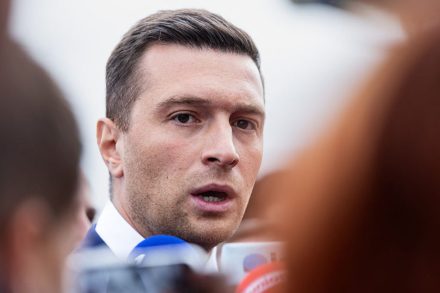
Jordan Bardella to headline Reform conference

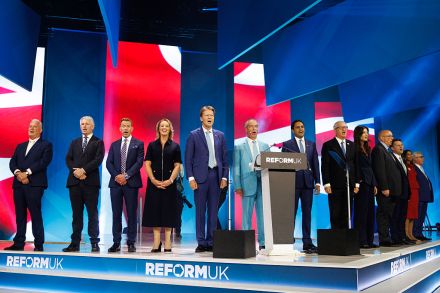
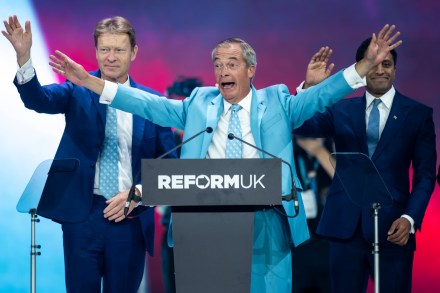
Nigel Farage has always been keen to emphasise his status as a global figure. Whether it is his friendships with America's Donald Trump or Australia's Pauline Hanson, the Reform UK leader likes to see himself as part of a wave of 'new right' figures across the globe, championing national sovereignty and borders. One of those he has forged ties with is Jordan Bardella, President of the National Rally in France. Marine Le Pen, the RN party leader, is currently polling as the favourite for next May's presidential election: if elected, Bardella will serve as her Prime Minister. Farage had lunch with the young Frenchman last December, discussing plans to stop small boats crossing the Channel. Since then, the relationship only seems to have deepened.

Burnham's northern queens

Burnham’s northern queens

14 min listen

Appointment into Andy Burnham's new cabinet went late into the evening: Wes Streeting to defence, plus the comeback queens – Louise Haigh, Lucy Powell and Angela Rayner all into senior posts in government. Noa Hoffman, James Heale and Tim Shipman discuss the new appointments and Andy Burnham's morning policy announcements.

Burnham, Healey, Miliband & Mahmood become the big four

10 min listen

Andy Burnham has continued to announce his new cabinet: John Healey as Chancellor, Ed Miliband as Foreign Secretary and Shabana Mahmood remains in the Home Office. Now ten of Starmer's most trusted ministers have either been sacked or quit. What could come of Angela Rayner? And what could be the consequences of having some of the most powerful people in Labour on the backbenches? Natasha Feroze speaks to Noa Hoffman & James Heale.

Burnham, Healey, Miliband & Mahmood become the big four

John Healey is a clever choice for Chancellor

One of the key traits of a successful politician is the capacity to surprise. Andy Burnham has proved he has that ability in his first big call of the new cabinet. For weeks now, the race for Chancellor has dominated in Westminster. Most pundits backed either Ed Miliband or Shabana Mahmood to take up the post: standard bearers for the soft left and Blue Labour factions in the party, respectively. But Burnham has decided to go for a third option: John Healey, the Defence Secretary who quit Keir Starmer’s government 39 days ago over the failure to increase military expenditure sufficiently. The move will be read as a sign that Burnham is serious about bolstering defence spending and honouring Britain’s international commitments, as he claimed on the steps of Downing Street this morning.

Burnham's new cabinet – who's in & who's out?

Labour’s new cabinet – who’s in & who’s out?

21 min listen

As Andy Burnham unveils his first Cabinet, join Tim Shipman and James Heale for a special live edition of Coffee House. Who’s in, who’s out? What do the appointments reveal about Burnham’s priorities, and might they hint at the likely direction of his premiership? Along with a panel of familiar faces and special guests, get the only analysis you’ll need as the political implications begin to unfold.

Burnham is trying to do a Brown

Tomorrow, Andy Burnham will become Britain’s 59th Prime Minister. The team around him has been strikingly circumspect when it comes to setting out his plans. But this weekend we are starting to get some smoke signals via the Sunday papers. The new PM will back licences for drilling at the Rosebank and Jackdaw gas fields. Thames Water, Britain’s largest water supplier, is likely to be placed in special measures over £18bn owed to creditors. Plans for digital ID and the abolition of jury trials will be scrapped, with the post of AI minister upgraded to cabinet rank. Around a third of the cabinet are expected to be sacked and the Departments for Business and Technology overhauled too.

Neil O’Brien: ‘This is a radically different party’

No one quite yet knows what Andy Burnham will be like as Prime Minister. But a preview of the coming Tory critique is offered by Neil O’Brien, the man tasked with co-ordinating the Conservative Party’s policy offering. ‘He's tended to go with the soft left all the time, WASPI women, always the sort of easy answers’, he says. ‘I just don't see any fundamental reconsideration of the big choices that got us into this mess.’ Burnham might be ‘more deft’ than his predecessor – but there is little sign he is willing to countenance ‘some big break with Starmerism’ on Britain’s economic woes. An Opposition criticising the government is nothing new. O’Brien, though, is refreshingly willing to hold his own party to account.

The coming battle between ‘Mr Brexit’ and the ‘King of the North’

It was Napoleon who said that ‘To understand the man you have to know what was happening in the world when he was twenty.’ Nigel Farage is nothing if not a man of the 1980s. Big ambitions, loud suits, indoor smoking: for him, the greatest year to have been alive was 1988, the high noon of Nigel Lawson’s tax-cutting zeal. Farage was a City trader whose thinking remains defined by that era of Thatcherism: of buccaneering Britain and primary colours politics. ‘Everyone around him was doing well’, says one friend ‘and then he spent the next two decades discovering that it was not the case for the rest of the country’. One person who recalls that era less fondly than Nigel Farage is Andy Burnham One person who recalls that era less fondly is Andy Burnham.

Happy coronation day!

Happy Coronation Day!

14 min listen

Andy Burnham will today be crowned Labour leader, before entering Downing Street on Monday. His first speech is expected to argue that Labour has lost touch with the working-class communities it was founded to represent – and to promise a new era of devolution, economic intervention and northern political power. Meanwhile, the shape of Burnham’s government is beginning to emerge. Ed Miliband now appears unlikely to become chancellor, amid concerns that he would be too powerful and too closely associated with Labour’s north London intellectual set. What does his apparent rejection reveal about the party’s new dividing lines? And, as details emerge of a possible 'policy blitz' in the first days of Burnham’s premiership, could a wealth tax be on the cards?

Lib Dems plot their own think tank

For almost a century, first the Liberals and now the Liberal Democrats have had to consign themselves to being the third force of British politics. This minor status though can conceal the party’s rich history of contributing to broader intellectual thought. David Lloyd George, John Maynard Keynes and William Beveridge are the classic cases; Matthew Taylor and Tim Leunig are more recent examples. A raft of current government policies have their roots in Liberal policy papers. Devolution, Bank of England independence and the pensions triple lock were all proposed in various Liberal manifestos, years before being enacted into law.

Reeves out, Shabana in?

15 min listen

Rachel Reeves has delivered what is likely to be her valedictory Mansion House speech, defending her record on growth, borrowing and the public finances. But with businesses counting the cost of higher employers’ National Insurance and Labour preparing for a change of government, what will her legacy be? Meanwhile, the race to become Andy Burnham’s chancellor appears to be shifting. Ed Miliband was once seen as the frontrunner, but some around Burnham fear that he would be too powerful – and too resistant to their plans for devolution and Treasury reform. Shabana Mahmood is now being tipped for the job, but would moving her from the Home Office prove a costly mistake? Noa Hoffman speaks to James Heale and Michael Simmons. Produced by Oscar Edmondson.

Reeves out, Shabana in?

Lineker’s Burnham chat told us nothing

On the terrace of parliament, only two stories dominate this evening. The first is the end of Keir Starmer, who this lunchtime faced Prime Minister’s Questions for the final time. The second, much more exciting event, is England versus Argentina in the World Cup semi-final tonight. It was only appropriate, therefore, that Starmer’s successor, Andy Burnham, has sought to tie the two together in one of the few interviews he has given prior to entering No. 10. Since a poor performance on Newsnight during the Makerfield by-election, Burnham has sat down for only one full-length broadcast grilling – despite being about to take over the nuclear codes for a G7 country.

Farewell, Sir Keir Starmer

Farewell, Sir Keir Starmer

Keir Starmer has delivered his final PMQs. It was a more cordial occasion compared to most weeks, with Kemi Badenoch exchanging jokes with the outgoing Prime Minister over their previous clashes amid a more sombre tone given the murder of Ann Widdecombe. But will this final speech go down in history? And how will Andy Burnham do things differently? Noa Hoffman speaks to James Heale and Tim Shipman.