James Hawes

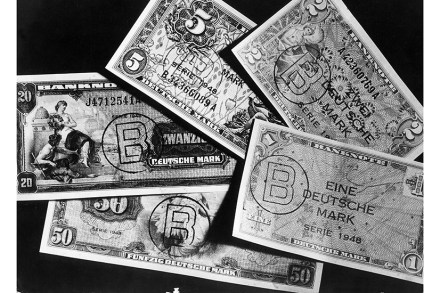
Germany’s post-war recovery was no economic miracle

From our UK edition

Lord Macaulay wrote that ‘during the century and a half which followed the Conquest there is, to speak strictly, no English history’, because everything in England was decided by an elite who spoke French. This, of course, makes it one of the most fascinating and overlooked parts of our national story.By a similar token, the years 1945-1955 have been neglected by German scholars, because their national history, in Macaulay’s terms, also did not properly exist. Germany, prostrate, shorn of its ancient east, its fate as yet undecided, was entirely run by occupying powers. Yet, as Harald Jähner argues, this is the very era which defined modern Germany. His Aftermath is what every reviewer longs for: a scholarly masterpiece which is also a good read.
Will the next generation wonder what the fuss over Brexit was about?

From our UK edition

Robert Tombs’s new book is not long: 165 pages of argument, unadorned by maps or images. But brevity is good, and we pick it up expecting much insight, because its predecessor was so wonderful. In The English and Their History (2015), Tombs, a scholar of French, not English, history, boldly saw the wood where specialists saw only the trees. Surely, he said, England should have a history of its own. The election had just signalled that England-and-Wales might soon be a separate polity for the first time since 1707. Tombs delivered a timely and gripping investigation of this land, so filled with marks of continuity, yet prone to occasional, apparently inexplicable, bouts of implosion.

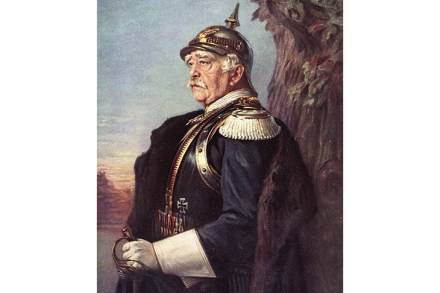
Whitewashing Bismarck just won’t wash

From our UK edition

The reviewer’s first duty is to declare any skin he may have in the game, so here goes: I write this in a bone-chillingly old house filled with portraits of Prussian Junkers, ancestors of my third son, the oldest of them still wearing steel plate about chest and shoulders, the more recent armoured only by expressions of ineffable superiority. What a lot of them there are. Somehow their Lutheran Prussia — dirt poor by the standards of France and Britain but uniquely militarised, its spiritual heart so far east as to be now in Russia — managed, in the second half of the 19th century, to annex the entire human and industrial strength of wealthy, advanced, largely Catholic western Germany for their ancient ‘drive to the east’.

James Hawes on why the break-up of the Union is inevitable

From our UK edition

43 min listen

In this week's Book Club podcast my guest is James Hawes. The bestselling author of The Shortest History of Germany turns his attention in his latest book to our own Island Story: The Shortest History of England. He tells me why he thinks there's real value in so brief an overview of our history, how Jurassic rock formations doomed our politics, why we never got over the Conquest, how the break-up of the Union is now an inevitability, and why the Cross of St George is a funny emblem for English nationalists to rally behind.

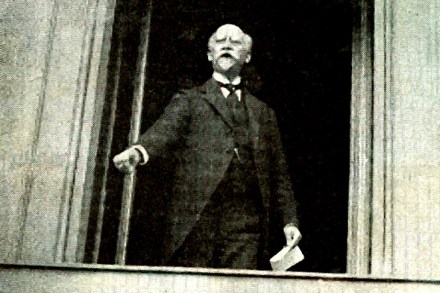
The greatest ‘if only’ of modern history… that the Weimar Republic had succeeded

From our UK edition

Has it ever occurred to you that the Spanish flu pandemic of 1918 might have won us the war? Until I read November 1918 it hadn’t to me. Now I know that between May and June that year, as German forces moved to within artillery range of Paris, a million of Ludendorff’s troops, half-starved owing to the British blockade, went down with the virus. Meanwhile, the better nourished British army, regrouping for the battle of Amiens, had a mere 50,000 sick. On such things history can turn. Splendidly researched, and with a striking new thesis, Robert Gerwarth’s book warns against assuming that the way things turned out was inevitable.

Hitler’s legacy: two books examine different aspects of the horror that was Germany, 1945

From our UK edition

Two new books offer very different takes on the utter ruination of Germany in 1945. Each in its own way shows the enfeebling results of our modern obsession with amateur psychologising. Françoise Meltzer’s Dark Lens is based around a couple of dozen snaps which her mother, a Frenchwoman who had been in the Resistance, took of ruined German cities immediately after the war. This personal angle whets the reader’s appetite, as does the reminder of just how strangely fascinated we all are by ruins.

Squabbling over Kafka

From our UK edition

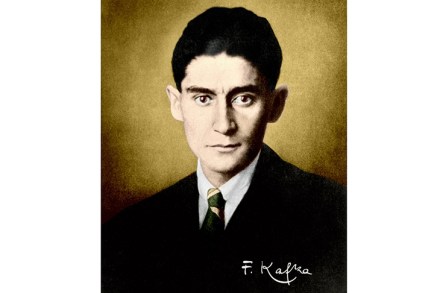
Benjamin Balint’s Kafka’s Last Trial is a legal and philosophical black comedy of the first water, complete, like all the best adventure stories, with a physical treasure to be won or lost. Balint lays out with cool, collected passion the full absurdity of the 2011 court struggle which climaxed when a couple of boxes of aged, yellowing jottings, upon which an elderly Tel Aviv lady had allegedly allowed her cats to sit for many years, were taken under armed guard, besieged by writs and counter-writs, to the highest court in Israel. Until 1973, you see, these boxes had belonged to Max Brod, best friend of Franz Kafka, the legendary Nostradamus of Prague who (as any fool knows) somehow predicted the Holocaust.

A meeting of remarkable men

From our UK edition

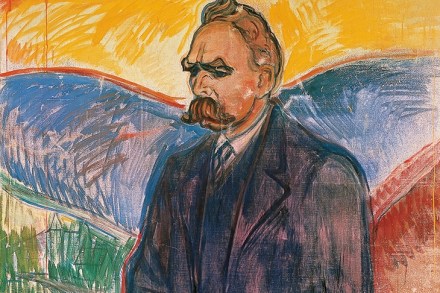
In 1945, with the second world war won bar the shouting, Bertrand Russell polished off his brief examination of Friedrich Nietzsche’s contribution to Western thought with the splendid phrase: ‘His followers have had their innings.’ Russell knew that Nietzsche’s followers didn’t just mean the Nazis. Ten years before Hitler’s acolytes started editing special volumes of Nietzsche’s aphorisms about the Will to Power, the Blond Beast and suchlike, Leon Trotsky declared that ‘the Nietzscheans’ were his natural allies in the creation of the socialist ‘superman’.