James Hanson

James Hanson is a presenter on LBC and former host of Times Radio's Frontline series on the war in Ukraine.

I’m sick of social media running bores

From our UK edition

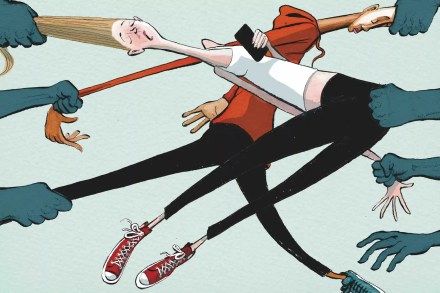
The phenomenon of people living their lives vicariously through social media is nothing new. We’ve all got that friend who uses their Instagram story to post passive aggressive memes about their ex. Or the one who decides to document the repainting of their downstairs loo as if it’s an interior design triumph worthy of Architectural Digest. But in recent years a new type of social media menace has started populating my timeline more and more: the one who makes running their entire personality. First it’s their pre-run mirror selfie in Lululemon running kit. Then it’s the badly shot video, with heavy breathing, as they power their way around Battersea Park on a Tuesday morning.

Nigel Farage will regret his anti-Zelensky comments

From our UK edition

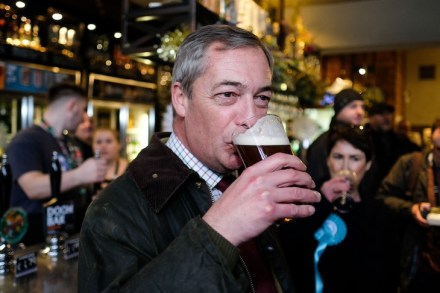
‘I just thought Reform cared about national borders and sovereignty’. So sighed the journalist Julia Hartley-Brewer at the end of her recent interview with the party’s deputy leader, Richard Tice. He’d been trying to argue that Donald Trump was right to cut Ukraine out of peace talks with Russia. A normally polished media performer, I have never seen Tice look so uncomfortable as he was when being grilled by Hartley-Brewer on ‘how much of Britain would you give away if we were invaded?’. This week, it was Nigel Farage’s turn to appear hostile to Ukraine on national radio. Discussing Friday’s showdown in the Oval Office on LBC, he took the side of Trump over Zelensky, claiming the Ukrainian president had been ‘rude’ and ‘played it very badly’.

The endless entitlement of Waspi women

From our UK edition

In this godforsaken era of feigned victimhood, is there any group less worthy of our sympathy than the Waspi women? Having been, rightly, denied compensation by the government in December, they are now threatening legal action unless they are given a payout. Will their entitlement never end? It’s hard to know where to start with this dreadful campaign. Their name alone should be considered a breach of the trade descriptions act. ‘Women Against State Pension Inequality’ suggests they’re campaigning against some great disparity. Except they’re not. They’re just angry that the inequality from which they historically benefited has come to end. ‘Women Against State Pension Equality’ would be a more appropriate name for the group.

Can Britain defend itself and have a welfare state?

From our UK edition

No one can say we weren’t warned. As early as 1971 America was warning that it could reduce its defence commitment to Europe, when the Democratic Senator Mike Mansfield proposed halving the number of US troops stationed on the continent. The Senate defeated that particular resolution, but the sentiment never went away. In 2016, Barack Obama lambasted European countries as ‘free-riders’ complacently sheltering under America’s security umbrella and throughout his first term Donald Trump was crystal clear that other Nato members needed to drastically increase their defence budgets. So when JD Vance put the message in blunter terms at the Munich Security Conference last week, no one should have been surprised. It was one of the longest telegraphed punches in history.

Donald Trump is making the same mistake as Neville Chamberlain

From our UK edition

It is easy to forget how popular Neville Chamberlain was in the autumn of 1938. Proclaiming ‘peace in our time’ after signing the Munich Agreement, he was heralded as the deal-maker supreme. A leader who’d averted needless bloodshed and whose critics were merely warmongering naysayers. You don’t need me to tell you the rest of the story, but you might have thought its lessons wouldn’t be so easily forgotten. Today it is Donald Trump casting himself as the bringer of peace to continental Europe. Posting on his Truth Social platform, the president said he’d spoken with Vladimir Putin, and that they two men had ‘agreed to have our respective teams start negotiations immediately’ over ending the war in Ukraine.

I’m sick of fare dodgers on the Tube

From our UK edition

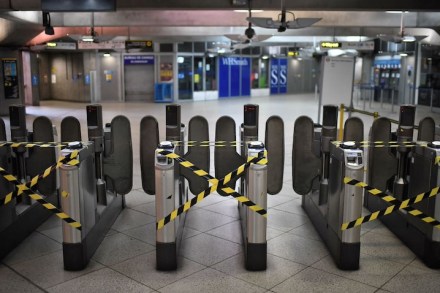
Go to any tube station at rush hour in London. Literally any. Then wait by the barriers and watch. Within 60 seconds it’s likely you’ll see at least half a dozen young men (it’s almost always young men) barge their way through the barriers without a care in the world. No one is shocked anymore because it happens with such depressing regularity. Paying commuters stay silent – as do the hapless high-viz clad Transport for London staff watching on. I’ve frequently seen fare-dodgers mockingly wave at TfL staff, safe in the knowledge they are powerless to stop them.  As a daily commuter on the underground, I reckon every tenth person passing through my local tube station in Oval doesn’t bother to pay. Most just shoulder-charge through the barriers.

Hollywood luvvies have become Donald Trump’s useful idiots

From our UK edition

In events that were foreseeable to anyone outside America’s cultural elite, the actress and popstar Selena Gomez is facing an online backlash to her now-deleted Instagram post decrying Donald Trump’s immigration policy. The offending video featured a sobbing Selena, who has Mexican heritage, wailing into her phone camera that 'all my people are being attacked' and that 'I wish I could do something but I can’t'. It was a performance of such histrionic hamminess it’s little wonder Miss Gomez missed out on an Oscar nod for Emilia Perez. The reaction has been swift and unforgiving. Many were quick to point out that, contrary to Gomez’s assumptions, Trump’s plan to deport unlawful migrants – especially those who’ve committed crimes – is actually rather popular.

How Donald Trump could really help Ukraine

From our UK edition

There was surprisingly little in Donald Trump’s inaugural address about Russia and Ukraine, aside from a vague pledge to ‘stop all wars’. There was certainly no repeat of his campaign trail promise to end the conflict within 24 hours of taking office.  But, while answering reporters’ questions in the Oval Office as he signed a flurry of executive orders, Trump did comment on Zelensky and Putin – the two men he wants to bring to the negotiating table. ‘Zelensky wants to make a deal’ said Trump. He ‘didn’t know’ if Putin does too, but ‘he should’. And then the returning president said something far more revealing: he claimed Putin was ‘destroying Russia’ by not agreeing to a peace deal and that the country’s economy is in ‘big trouble’.

Why didn’t Rishi wait?

From our UK edition

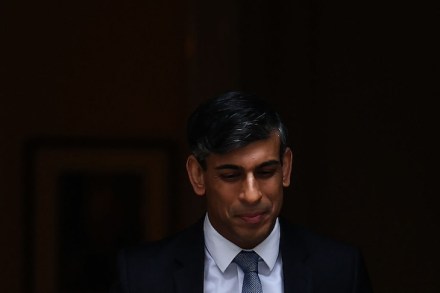
So there we have it. Westminster’s favourite parlour game has finally concluded. We now know the date of the general election, 4 July. As his political capital continues to seep away, Rishi Sunak has decided to play one of his last remaining jokers – the right to call an election before he’s constitutionally obliged. But given the Conservatives remain more than 20 points behind Labour in the polls, the question remains: why didn’t Rishi wait? Much as Boris had a ‘countdown to Brexit’ clock installed in CCHQ in 2019, Sunak might as well install a ‘countdown to California’ clock in No. 10 Let’s be blunt. Barring some kind of miracle, the Tories are going to lose – and badly. Even if the polls narrow over the campaign, Sunak cannot possibly be thinking of winning.

Reform is a busted flush without Nigel Farage

From our UK edition

Any insurgent political party needs a breakthrough moment. For the SNP, it was Winnie Ewing’s victory in the 1967 Hamilton by-election. For the SDP, it was Glasgow Hillhead in 1982. For Ukip, their success in the 2004 European Parliament elections was the moment the mainstream parties sat up and took notice. For Reform UK, such a moment should have occurred in the small hours of this morning. Except it didn’t. In truth, many voters remain unaware of Reform The Blackpool South by-election was seemingly tailor-made for Richard Tice’s party. The town is classic Red Wall territory. The previous incumbent, Conservative Scott Benton, had resigned in disgrace, and you’d think Keir Starmer’s brand of north-London centrism would have little appeal with the locals.

Nigel Farage has left the jungle. What now?

From our UK edition

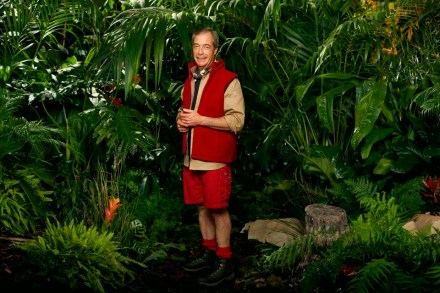
Nigel Farage has left the jungle. For a brief moment it looked as if the original Brexiteer might pull off yet another electoral upset. Instead, he finished a creditable third on I’m a Celebrity... one of the biggest popularity contests on TV. This won’t be the last we hear of Nigel Farage Throughout the series, left-leaning commentators have accused ITV of deliberately ‘fun-washing’ (a depressingly 2023 phrase) Farage’s reputation. The comedian Stewart Lee wrote an especially humourless piece for the Guardian, which included a passage implying that because of Farage’s appearance in the jungle, Ant and Dec were somehow sympathisers of the Norwegian white supremacist Anders Breivik (yes, really).

Could Nigel Farage win I’m a Celebrity?

From our UK edition

This weekend, Nigel Farage enters the jungle on I’m a Celebrity… Get Me Out of Here! – reportedly for a fee of £1.5 million, the highest in the show’s history. How Coutts must wish they still had his custom. His very appearance is already being objected to by the usual suspects. In the Guardian, Zoe Williams accused ITV of ‘fun-washing’ Farage’s reputation, broadcaster Danny Baker called the channel ‘morally bankrupt’, and the hashtag #BoycottImACeleb has already been used by around 10,000 people on X. So far, so predictable. But what if, over the next three weeks, Farage charms the British public? What if, not the first time, he pulls off an electoral upset? What if… Nigel Farage wins I’m a Celeb?

Young people are right to hate the Tories

From our UK edition

According to the latest YouGov polling, just 1 per cent of 18- to 24-year-olds plan to vote Conservative at the next election. That’s right – 1 per cent. There are now more caravans in the UK than young Tories. Among 24- to 49-year-olds, the figures aren’t much better; Rishi Sunak’s party trails Labour by 45 points. It wasn’t always this way. In 1983, Margaret Thatcher won 42 per cent of the youth vote, nine points ahead of Michael Foot. In 2010, David Cameron won 30 per cent. Even in the Labour landslide of 1997, John Major still won 27 per cent of 18- to 24-year-olds. It is a fallacy to suggest young voters are pre-determined to reject the Conservatives. But can you really blame them for doing so now?

What is the point of Ed Davey?

From our UK edition

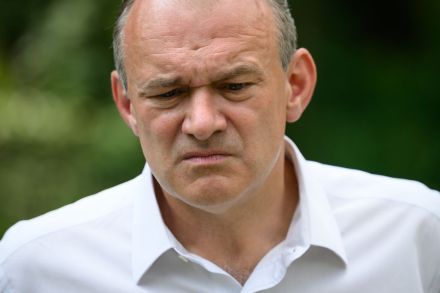
Since being elected as a Liberal Democrat MP in 1997, Ed Davey has been through many phases: conventional Paddy Ashdown supporting social democrat; contributor to the free-market Orange Book; cabinet minister under a Conservative Prime Minister; knight of the realm; ‘bollocks to Brexit’ remainiac; and now, leader of his party and professional orchestrator of cringy election stunts. Superficially, he is performing his latest role with some success.  As Lib Dem activists gather in Bournemouth this weekend for their annual conference, many will be buoyant. The party’s recent by-election win in Somerton and Frome was their fourth such victory since Davey became leader, with hopes of another next month in Mid Bedfordshire.