James Forsyth

James Forsyth

James Forsyth is former political editor of The Spectator.

The Tory drift goes on – but replacing May is impossible

From our UK edition

‘We take the view that while things are bloody awful, we don’t want to risk making things worse.’ That is how one senior Tory backbencher sums up the mood of the parliamentary party. No one disputes that the Conservatives are in the doldrums. There is no wind in the government’s sails. No. 10 doesn’t know where it wants to take the country. This general sense of drift is interrupted by the occasional squall. The latest storm was caused by Nick Boles’s criticism of Theresa May. On Friday evening, the former housing minister took to Twitter to lament the lack of a radical government agenda and to tell the Prime Minister to raise her game. Immediately, Westminster began wondering what he was up to. Who he was speaking for? After all, Boles has form.
Dennis Skinner’s antics put Jeremy Corbyn off at PMQs

From our UK edition

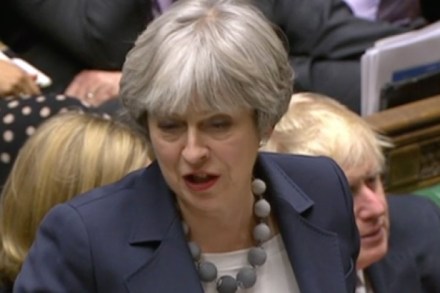
Jeremy Corbyn has learnt from last week’s PMQs where Theresa May simply stood up and said she wasn’t going to answer as he hadn’t asked a question. His first two questions were short, sharp and to the point. He began by asking Theresa May if she agreed with Boris Johnson that the NHS needed an extra £5 billion. He followed that up by asking her who the public should believe about the NHS and the winter crisis, her or A&E doctors? Then, Corbyn slightly lost his thread. But this wasn’t really his fault. The chamber was distracted by a vigorous row between Dennis Skinner and the SNP MP Angus MacNeil; at one-point Skinner rose from his seat to jab his finger at MacNeil.

Boris is right about NHS funding – but he didn’t get his way today

From our UK edition

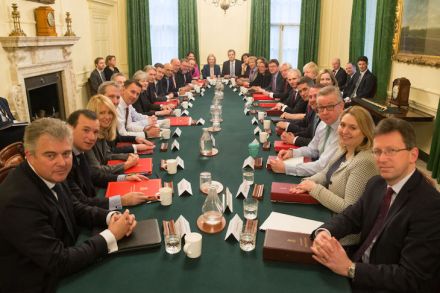
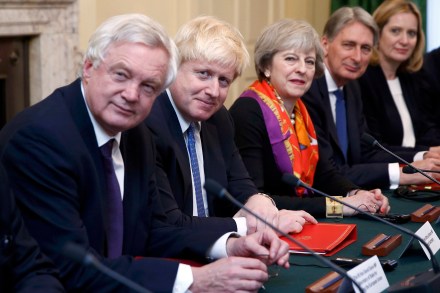
Cabinet today was not the dramatic showdown over NHS funding that some expected. Boris Johnson was, unsurprisingly given that Theresa May knew what he wanted to say, not called on to speak first. Those Ministers who went before him emphasised that it would be better if these debates took place in private, not public. When it was Boris’s turn to speak, I am told that he slightly pulled his horns in. He made the case for more money for the NHS but he didn’t argue for a specific figure, I understand. Interestingly, and in a sign of how May still views the International Trade Secretary as her bridge to Brexiteers, Liam Fox was called to speak early. Fox, a doctor himself, stressed that these arguments should take place behind closed doors not in the newspapers.

Staying in the customs union would be a risky bet for May

From our UK edition

There’s renewed speculation in Westminster that Britain might end up staying in the customs union. The CBI is calling for the UK to stay in a customs union with the EU and Labour is expected to move to backing customs union membership soon. The argument goes that because customs union membership does not require free movement, it is compatible with the referendum result. Big exporting businesses tend to like the idea as it would ease most of the bureaucratic problems in moving goods around post-Brexit. But I don’t think Theresa May will go for this idea. If Britain stays in the customs union, then it can’t do comprehensive free trade deals with other countries; all it could do would be services only agreements.

The Tories need a plan for the NHS

From our UK edition

On Tuesday, the Cabinet will discuss the NHS and how it is coping with the winter crisis. But, as I say in the Sun today, the Tories need more than update on what's going on, they need a proper plan for the NHS. It is one of the issues that could cost them the next election. When David Cameron became Tory leader, his main focus was on the NHS. He used to say that you could sum up his priorities in three letters, N H S. He reckoned that until voters trusted the Tories with the health service, they wouldn’t win an election. But right now, the Tories aren’t talking about the NHS more than they absolutely have to.

Macron charms, but won’t give ground on the City

From our UK edition

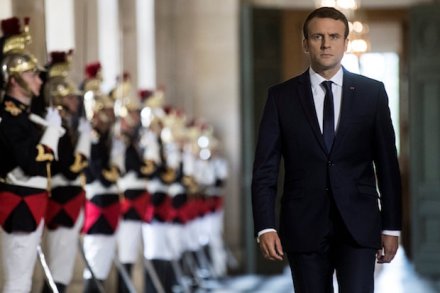
Emmanuel Macron is revelling in his new status as the preeminent politician in Europe. In his joint press conference with Theresa May, he turned in a charming performance highlighting the ties between Britain and France and urging the two countries to ‘make a new tapestry together’. However, there was a sting in the tail. When Macron was asked about financial services and the single market, he emphasised that Britain’s choice was between Norway—full involvement in the single market but paying into the budget, accepting ECJ jurisdiction and free movement—and Canada, a much more limited free trade deal. Interestingly, though, he said he didn’t want to exclude any sector from the EU’s free trade deal with the UK.

The Tories must hold their nerve on tuition fees

From our UK edition

One upshot of last week’s reshuffle is that Number 10 will get its review of higher education. But a lengthy look at tuition fees would be a mistake in both policy and political terms, I argue in the magazine this week. Tuition fees have all but killed the Liberal Democrats. The breach of their manifesto pledge to abolish the charges, compounded by them voting for a fees increase, broke the party. Even the Tories can’t compete, nor should they want to, with Labour’s pledge to abolish tuition fees. So any plan to reduce fees isn’t going to work politically. All it would do is help Labour by pushing the issue up the agenda. Policy-wise, fees are the least worst option.

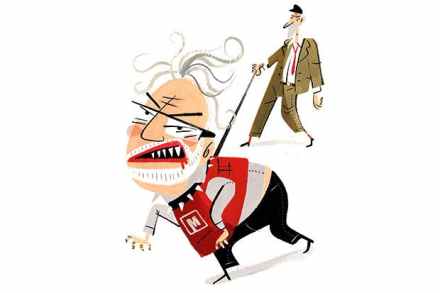
You can’t beat Corbyn with Miliband

From our UK edition

Tuition fees have all but killed the Liberal Democrats. The breach of their manifesto pledge to abolish the charges, compounded by them voting for a fees increase, broke the party. Even the opportunities presented by Brexit have not revived them. In their defence, they can plead that tuition fees make fools of all parties. The Conservatives opposed them at first, then raised them to £9,000 a year. The Labour party introduced them, yet now campaigns to abolish them. In 2018, we seem to be in for another bout of tuition-fees silliness. No. 10 is clear that Jo Johnson was moved from the universities brief in the reshuffle because he was obstructing a review of the current policy.

Corbyn is missing an opportunity each week at PMQs

From our UK edition

Neither Theresa May nor Jeremy Corbyn are great Commons’ performers. PMQs is, more often than not these days, a no score draw. Today’s exchanges were slightly better than usual. The collapse of Carillion is right in Jeremy Corbyn’s wheel-house. But, once again, his failure to be forensic let him down. At the end of the session, we didn’t know any more than we did at the beginning.  Corbyn failed to come back on the question of whether the government was awarding contracts to Carillion because of, not despite, its profit warnings. His blanket opposition to private sector involvement in the provision of public services also meant that he didn’t hammer home how the Tories have failed to break up the outsourcing oligopoly.

Donald Tusk’s Brexit comments should worry the government

From our UK edition

Donald Tusk’s comments, echoed by Jean-Claude Juncker, that Britain could still change its mind on Brexit should worry the UK government. Why? Because as long as senior figures in the EU think there is a chance Brexit won’t happen, there’s very little incentive for them to think creatively about the future relationship. Instead, the temptation for them is to offer as little as possible in the hope that this might prompt a change of heart in London. Now, realistically, I think Brexit is going to happen. The referendum and the parliamentary vote to trigger Article 50 means that it is very hard for it not to, though what kind of Brexit it is—obviously—is very much up for grabs.

What does Momentum’s NEC clean sweep mean for Labour?

From our UK edition

Perhaps, the most remarkable thing about Momentum’s clean sweep in Labour’s National Executive Committee elections was how expected it was.  If even two years ago, you’d have told people in the Labour party that Jeremy Corbyn would not only still be leader but have solid support in the shadow Cabinet and a majority on the NEC they’d have been shocked and fearful about the Corbynite left’s ability to rewrite the rules of this party. So, what will the Corbynite left do with this power? There’s lots of speculation today about mandatory re-selection and a purge of moderate MPs. But I am sceptical as to whether this will happen anytime soon. At the moment, there’s limited resistance within the Parliamentary Labour Party to what Corbyn is doing.

May can’t bend Macron’s ear on Brexit until she knows what the UK wants

From our UK edition

Emmanuel Macron and half a dozen of his top team are heading to the UK late next week. I write in The Sun today that they’ll sit down with Theresa May and a handful of senior Cabinet Ministers at Sandhurst for an Anglo-French defence summit. The occasion should be a perfect opportunity for Theresa May to bend Macron’s ear on Brexit. After all, the whole meeting is devoted to the Anglo French security relationship which will be important, and continue, long after Brexit. But May’s ability to lobby Macron will be impeded by the fact the British government still hasn’t decided precisely what Brexit deal it wants. The Cabinet didn’t discuss the Brexit end-state this week and it’s not on the agenda for next week either.

Nigel Farage’s referendum call should be greeted with caution

From our UK edition

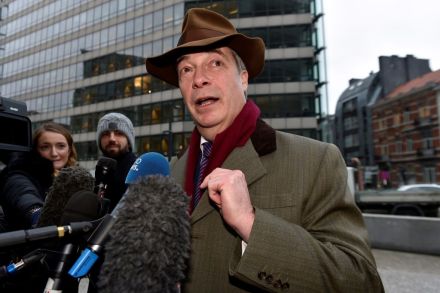
What to make of Nigel Farage talking about why there might need to be a second Brexit referendum? To some on the Remain side, this is a moment—the Evening Standard have splashed on it, the Liberal Democrats have welcomed it and Labour MP Chuka Umunna has declared that Farage for ‘the first time in his life is making a valid point’. They reason that if the man who was so influential in there being a referendum in the first place is open to a second one, surely it will happen? But I don’t think this is right. Farage’s comments were, I suspect, driven as much by a desire to be back in the headlines as anything else. There isn’t yet any sign of a great, concentrated public desire for another vote.

May’s three great weaknesses

From our UK edition

‘They are not as strong as they thought they were,’ one Whitehall source remarked to me on Monday night as he contemplated the fallout from Theresa May’s attempt to reshuffle the cabinet. No. 10 had come to believe that a successful Budget and ‘sufficient progress’ in the Brexit talks meant that much of May’s political authority had been restored. This emboldened them to think that she could now pull off a proper reshuffle, something Gavin Williamson had regularly cautioned against when he was chief whip. But a reshuffle that was meant to confirm the Prime Minister’s return to political health has ended up highlighting her three biggest weaknesses. The first thing it showed was that she has not regained her political authority.

New Year, same old PMQs

From our UK edition

Anyone hoping that 2018 would bring an improvement in the quality of debate between Theresa May and Jeremy Corbyn, or a reduction in the length of John Bercow’s interventions, would have been disappointed by today’s session. Corbyn and May traded the usual blows on the NHS. There was little in the exchanges that was enlightening. Jeremy Corbyn listed examples of people being treated in car parks, Theresa May said that the NHS had been better prepared for winter than ever before. She then tried to turn the conversation to the shortcomings of the NHS in Labour-run Wales. The rest of the session wasn’t much more enlightening either. Indeed, Justine Greening’s decision to sit up with Anna Soubry struck me as one of the more significant developments of the day.

Theresa May’s political recovery stalls

From our UK edition

Today’s reshuffle was meant to demonstrate Theresa May’s return to political health. But it hasn’t worked out that way. This reshuffle has been chaotic even by the standards of these things. I can’t remember an official Twitter account getting the first appointment of the day wrong before. It has also advertised the limitations to May’s authority. She has not got her own way on several appointments either because of a minister declining a move (Jeremy Hunt) or refusing to take the job they were offered (Justine Greening). The appointment of Caroline Nokes as Immigration Minister attending Cabinet is also bizarre. Before today, who thought she was the right person to design Britain’s post-Brexit immigration system?

3 New Year’s resolutions for Theresa May

From our UK edition

In The Sun today, I propose three New Year’s resolutions for Theresa May. She should be decisive on Brexit, bold on housing and try and fix social care. None of these will be easy; and all three of them will be made more difficult by her mistakes in 2017. But if the Tories don’t make progress on these fronts in the next 12 months, Jeremy Corbyn will be that much closer to Downing Street. May’s visibility this week—reiterating her desire to be the Prime Minister who fixes the housing crisis and apologising to NHS patients who have had their operations cancelled—shows she wants to hit the ground running. The reshuffle which is expected early next week, most likely Monday, is also meant to show a government that is energised.

Unofficial deadline of mid-January for working out UK’s end-state negotiating position

From our UK edition

On Monday, the Brexit inner Cabinet will finally have a proper discussion on what kind of trade deal with the EU, the UK wants. But this meeting won’t settle the question. Rather, it will be the start of a discussion. Inside government, I write in The Sun this morning, an unofficial deadline of mid-January has been set for working out a position agreed by the whole Cabinet. The aim is that this should give the UK government a chance to work out its negotiating strategy before talks proper start in March. Privately, senior figures in Downing Street admit that the government wasn’t as prepared as it should have been for the first round of these negotiations. They are keen not to repeat that mistake in this the second—and more important—phase of the talks.

How Ruth Davidson plans to become First Minister of Scotland

From our UK edition

Ruth Davidson is clear in her interview with Fraser Nelson and me that she won’t be making her mind up about standing for a Westminster seat until after the Scottish Parliament election in 2021. Why does Davidson want to wait until then before making any decision? Because she thinks she can become First Minister of Scotland. This might seem a bit bizarre, delusional even; the Labour revival in Scotland means that the Tories are sometimes coming third in the polls and it is hard to see what other party would back her for the job. But Davidson is convinced that there is a ‘clear route’ to the Scottish Tories taking power.

The age of volatility

From our UK edition

Every year in British politics seems to be more surprising than the last. Few predicted in 2015 that the Conservatives would win a general election outright for the first time in 20-odd years. Fewer still realised that Theresa May would become the most popular Prime Minister since records began. And almost no one foresaw how the tide would turn against her so dramatically that the Tories would lose their majority, or that Jeremy Corbyn’s Labour would make such significant gains. How to make sense of it all? Tory MPs are being offered an explanation by Gavin Barwell, the Prime Minister’s chief of staff, who has been seeing them in groups (starting with the cabinet) to talk them through the party’s post-election polling.