James Forsyth

James Forsyth

James Forsyth is former political editor of The Spectator.

Number 10: We’ll do a free trade deal with the US

From our UK edition

Earlier I wrote about how a paper circulated to ministers before Chequers makes clear that the UK’s plan to follow a ‘common rulebook for all goods including agri-food’ with the EU ‘would not allow the UK to accommodate a likely ask from the US in a future trade deal’ as the UK would be unable to recognise the US’s ‘array of standards’. But Number 10 are absolutely insistent that this doesn’t mean there won’t be a trade deal with the US; they also say that senior figures in government and trade experts are confident that a deal could still be done and that Theresa May wouldn’t be talking to Donald Trump about a trade deal next week if one wasn’t possible.

Theresa May’s Brexit paper could mean no US trade deal

From our UK edition

Earlier this afternoon, Cabinet Ministers received key papers ahead of the Chequers meeting tomorrow. The paper states that ‘The UK should maintain a common rulebook for all goods including agri-food’. It goes on that the UK will make ‘an upfront choice to commit by treaty to ongoing harmonisation with EU rules on goods’. As I say in the magazine this week, one of the key questions is how this will be done. If, as Downing Street currently wants, parliament is in charge of this process then the Brexiteers might be able to stomach it. But if the EU insist on this process being automatic then I expect that several Cabinet Brexiteers would find this unacceptable.

Free movement is Europe’s totemic issue

From our UK edition

It isn’t just Brexit that worries the government, as the cabinet meeting this week demonstrated. Much of it was taken up with a discussion of the upcoming Nato summit and Donald Trump’s visit. Ministers were told that Britain would be encouraging its allies to increase defence spending, with the aim of assuaging Donald Trump and strengthening the alliance. Michael Gove then asked what Britain was getting out of joining this lobbying effort: Boris Johnson responded that the goal was to ‘get through the week’. Gove dismissed that as a ‘lie back and think of England’ approach. Theresa May then took exception to the use of this phrase. It doesn’t take much to cause an upset in cabinet nowadays.

Why did Corbyn talk about buses not Brexit at PMQs?

From our UK edition

Today’s PMQs could have been very tricky for Theresa May. Jeremy Corbyn had an array of targets to choose from. He could have pressed for Brexit detail ahead of Chequers, mocking the Cabinet divisions on the topic. He could have gone on the National Audit Office excoriating Esther McVey over her claims on Universal Credit. Or he could have asked about the Electoral Commission finding against Vote Leave – a campaign that two of her Cabinet Ministers were at the heart of. If these options weren’t enough, he could have got her to respond to the US letter demanding that the UK spend more on defence if is to maintain its status as the US’s premier military ally, a tricky issue for May ahead of Donald Trump’s visit.

Theresa May: Brexit does mean Brexit

From our UK edition

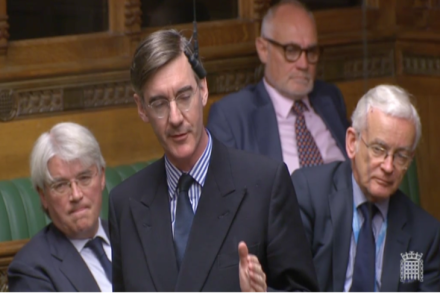
Theresa May’s appearance in the Commons today debuted some new language but didn’t tell us much about what she’ll set out to the Cabinet on Friday. May repeated that membership of the European Economic Area would not respect the result of the referendum. Now, she has said this several times before but her comment will reassure some Brexiteers. They’ll be less reassured, though, by her dodging the question when Jacob Rees-Mogg asked her if the UK would continue to be bound by the Common External Tariff after Brexit. May was conciliatory in her tone at the despatch box, but she seemed particularly keen to calm Brexiteers.

Michael Gove rips up Theresa May’s customs plan

From our UK edition

Michael Gove has literally ripped up Theresa May’s plan for a new customs partnership with the EU. As I say in The Sun today, to the surprise of the officials present, Gove tore the document in two at a meeting on Wednesday night. After the Brexit inner Cabinet couldn’t reach a consensus on what customs relationship to have with the EU after Brexit, it was split into working groups to look at the two options: the new customs partnership and a streamlined customs arrangement, dubbed MaxFac. Gove was put on the one looking at the new customs partnership—which is Theresa May’s preferred model. It would see the UK collecting tariffs on the EU’s behalf even after Brexit.

Jeremy Hunt tells Tories that a ‘low taxes at all costs’ party would lose the next election

From our UK edition

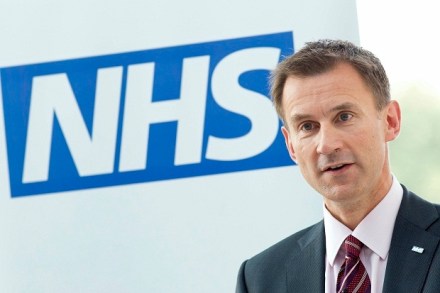
In conversation with Andrew Neil at a Spectator event this evening, Jeremy Hunt defended the principle of increasing taxes to pay for more spending on the NHS. He warned Tories unhappy with the idea that if in an election you offer voters a choice between a low taxes at all costs party and decent public services, they’ll vote for decent public services. He said that this extra money for the NHS was needed to deal with a ‘once in a generation change in demography’ and that it was important that the Tories show the public they are on the right side of this argument. In language reminiscent of David Cameron, Hunt declared that ‘as a Conservative I want to say it is not a choice between lower taxes and decent public services: you can have both’.

Nato’s Trump trouble is music to Putin’s ears

From our UK edition

Is the Nato summit going to precipitate the greatest crisis for the Western alliance since 1966? Senior figures in the British government fear it will, as I reveal in the magazine this week. Trans-Atlantic relations are already at their lowest ebb in decades, as the US and the EU fight over trade. This­ summit will, as Fraser pointed out recently, give Trump the chance to open another front in this war. He’ll be able to berate — with some justification — Germany, and all but three of Nato’s EU members, for not spending the alliance minimum of two per cent of GDP on defence last year.

May’s cruellest month

From our UK edition

Theresa May is about to embark on the toughest month of her premiership to date. Next week, she must persuade her cabinet to agree a common position on Britain’s future relationship with the European Union. The following week, she will attend a Nato summit which may well shake the foundations of the alliance. Then, without a moment to catch her breath, she must host Donald Trump when he visits the UK. As if that weren’t enough, she must also win a Commons vote on Britain leaving the customs union. It is tempting to predict that the cabinet meeting at Chequers in the coming days will result in yet another elaborate compromise. After all, that is what happened when the Brexit inner cabinet was last summoned in February to her country retreat for a ‘crunch meeting’.

Jeremy Corbyn and Jacob Rees-Mogg clash at PMQs

From our UK edition

Jeremy Corbyn wasn’t short of material to work with at PMQs. But it ended up not being as bad for Theresa May as one would have predicted. In purely parliamentary terms, Corbyn’s mistake was to try and blend policy into his criticisms of the divisions in government. This enabled Theresa May to mock Corbyn’s attempt to present himself as the person listening to businesses’ concerns. He would have been better off playing the whole thing for laughs. Perhaps the most interesting part of PMQs came straight after the session. Jacob Rees-Mogg got up to object to what Corbyn had said about him. Rees-Mogg complained that, contrary to what Corbyn had claimed, he hadn’t moved a hedge fund to Dublin.

How the EU’s migration crisis is making Brexit more difficult

From our UK edition

Next week’s EU Council will see little progress on Brexit. As I write in The Sun today, migration—not Brexit—is the biggest issue on the agenda for the EU 27. Migration is roiling European politics again. Angela Merkel’s coalition is threatening to break apart over the issue. While in Italy, the new government is threatening to close its southern border—blocking migrant rescue ships from landing—and open its northern border, encouraging illegal migrants and asylum seekers to head north to Germany and Sweden. So worried is the European Commission President Jean-Claude Juncker that he is hosting a mini-summit this Sunday to try and come up with some policies that can ease Merkel’s domestic political troubles.

Could Article 50 end up being extended and Brexit delayed?

From our UK edition

The 30th March 2019 is the date in every Leave-backing MP’s mind. It is the first day Britain will be legally outside of the EU. But as I say in the magazine this week, Cabinet Brexiteers are concerned that this date may slip. One tells me that the UK is ‘likely to face at some point soon a huge amount of pressure to extend Article 50’. At first, this seems surprising: why would the EU want to do that? After all, the ticking clock favours them in this negotiation. But this minister explains that the EU’s aim would be to extend Article 50 further without guaranteeing the UK the transition phase the government so desperately wants. Brussels would then use this period to extract more concessions. What’s certain is that the Brexit talks are behind schedule.

It’s Brexit business as usual

From our UK edition

The cabinet’s trip to Chequers next month will be a tense affair. Things always are when Brexit is the only item on the agenda. This week’s cabinet meeting, convened to discuss the new NHS funding settlement, offered a preview of some of the arguments to come. Greg Clark, the Business Secretary, and David Gauke, a Treasury man now installed as Lord Chancellor, argued that the public finances need a soft Brexit. Intriguingly, no one pushed back against that point. In part, this was because Boris Johnson — the most bullish of the cabinet Brexiteers — was not there. One senior Downing Street source tells me that the silence of the other Brexiteers shows that, ‘Not many of the other leavers are as blasé as he is about disruption.

Jeremy Corbyn lets Theresa May off the hook at PMQs

From our UK edition

PMQs today was a missed opportunity for Jeremy Corbyn. Corbyn chose to go on the NHS, rather than Donald Trump’s border policy. But this needn’t have been a mistake. Corbyn, after a rather long preamble, started off by asking what taxes would rise to pay for this increased spending. Theresa May replied that Philip Hammond would set all this out in due course. At this point, Corbyn should have asked May to rule out specific tax increases, for example an increase in National Insurance, or to embrace certain measures, such as removing the earnings cap on National Insurance contributions. This would have put May on the spot more. Instead, he kept his questions general, allowing May to block away with relative ease.

Theresa May and Sajid Javid clash over Billy Caldwell case at Cabinet

From our UK edition

At Cabinet this morning, Sajid Javid tried to raise the Billy Caldwell case and the issue of medicinal cannabis. Theresa May replied that now was not the time to discuss this question. But Javid came back several times, pointing out that this was a fast-moving situation and that the Cabinet needed to discuss it. One Secretary of State tells me, Javid ‘wouldn’t take it is not on the agenda for an answer’. The Cabinet Ministers I have spoken to since the meeting are with Javid on this issue. They believe that the government urgently needs an answer to this question if it isn’t to look heartless, and that compassion dictates that the government must move quickly.

Theresa May can’t escape Brexit

From our UK edition

Next week, Theresa May will announce a massive cash injection for the NHS. As I say in The Sun this morning, in normal times, this would be one of the defining moments of her premiership. But this announcement will be overshadowed by the latest parliamentary drama over Brexit. Westminster will be waiting to see if May can win her Wednesday showdown with the Remain Tory rebels over how much control parliament should have over the Brexit process. Those close to May admit that they just don’t know if they have the votes to win. One of those intimately involved in trying to see off the rebels admits that they are now reliant on Labour Eurosceptics coming to her rescue.

The pressure on May is rising

From our UK edition

Cans kicked down the road, last--minute concessions made, the process kept on track — just. This is how many people expected the Brexit negotiations between the United Kingdom and the European Union to go. But that is just a description of the situation at Westminster. We still don’t know whether the government has the votes in the Commons to take Britain out of the customs union. Theresa May avoided a rebellion on the issue this week by, essentially, promising the rebels they would have the chance to vote on this before the summer is out; the chief whip has guaranteed to them that the Trade Bill will return to the Commons before the summer recess.

What did Theresa May promise the Tory rebels?

From our UK edition

The confusion about what precisely the government promised those Tory MPs attracted to the Grieve amendment hasn’t yet been cleared up. Today, Number 10 is saying that Part C of the Grieve amendment, which would have allowed the Commons to effectively direct the government if there wasn’t a deal by the 15th of February, is off the table. But several of those who went to see Theresa May last night think that she indicated the government would come up with its own, different version of C. In other words, that there hadn’t been a blanket rejection of C. Now, the word is that the government’s proposed amendment, which it will move in the Lords next week, will be published tomorrow. This will tell us how far the government has gone to meet the rebels’ concerns.

The SNP walkout was a student-style stunt

From our UK edition

The SNP walkout today at PMQs was a stunt. But I was left with the feeling that John Bercow didn’t handle it wonderfully. It was clear from the moment that Ian Blackford requested that the House sit in private that the SNP wanted to be ordered out of the chamber. Bercow’s insistence that the vote wouldn’t take place until after PMQs played into the SNP’s hands as it gave Blackford something to object to so vociferously that he had to be kicked out. The rest of the SNP then followed him, giving the Nationalists the TV pictures they craved. Now, the question is how effective this SNP walkout was. It certainly highlighted their anger, synthetic or otherwise, at the limited time there has been to debate the devolution elements of the withdrawal bill.

David Davis warns Tories are at risk of 1997-style defeat if Britain is under the backstop in 2022

From our UK edition

David Davis has, I write in The Sun this morning, warned the Brexit inner Cabinet that if Britain is under the backstop at the time of the next election then the Tories will suffer a 1997-style defeat. The Brexit Secretary argued that this risk meant that the UK had to keep control of the backstop: it had to be able to choose when to end it. But Davis lost this argument with the Prime Minister. However, Number 10 have assured Brexiteer Cabinet Ministers that the UK will be out from under the backstop by the time of the next election in 2022. I am told that Theresa May is hopeful that the new customs arrangement can be nailed down by the end of 2021 at the latest. But this seems distinctly over optimistic.