James Forsyth

James Forsyth

James Forsyth is former political editor of The Spectator.

Cabinet Brexiteers want May to ready her Brexit back up plan

From our UK edition

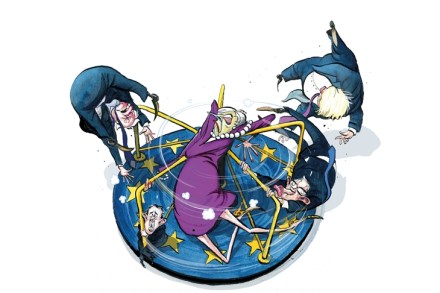
Number 10 have long been convinced that if they could talk to the member states, rather than the Commission, they’d have a better chance of getting a reasonable Brexit deal. So, the Salzburg meeting on the 20th of September, where May will get to speak to the leaders of the EU27 directly, has taken on huge importance. But, as I say in the magazine this week, while the heads of government might be more understanding of May’s political predicament, they still won’t accept her Chequers plan. Rather, they’ll—at best—push for further concessions from her. What May must decide over the summer, is what she’ll do when they ask for this. The remaining Brexiteers in her Cabinet take the view that Chequers mustn’t be seen as merely an opening offer.
Who wins when everyone is in crisis?

From our UK edition

Britain’s three main political parties are in crisis. That isn’t meant to happen. If only by a process of elimination, one of the three UK-wide political parties should be doing well at any given moment. These simultaneous crises are one of the things that is making politics so volatile. Let’s start with the Liberal Democrats. The political circumstances seem almost perfect for them but their failure to even break into the teens in the polls when the two main parties are both in crisis does makes one question whether they can ever return to the levels of popularity they enjoyed before the ill-fated coalition with the Conservatives.

The dilemma facing Labour MPs at the next election

From our UK edition

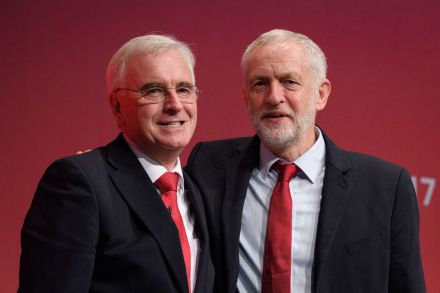
John McDonnell’s response to the latest episode in Labour’s anti-Semitism scandal is another reminder of how he grasps the political danger of this to the Corbyn project so much better than Corbyn himself does. The shadow Chancellor appears to get, in a way that Corbyn doesn’t, just how much this issue could damage Labour. One of the striking things about politics right now is that the Corbynite economic agenda has become relatively uncontroversial within the Labour party. At the start of Corbyn’s leadership, the party committing itself to a universal basic income would have caused a major row. But today’s announcement has passed off without controversy. Rather, what is causing problems is Jeremy Corbyn’s personal worldview.

Barnier’s dangerous assumption

From our UK edition

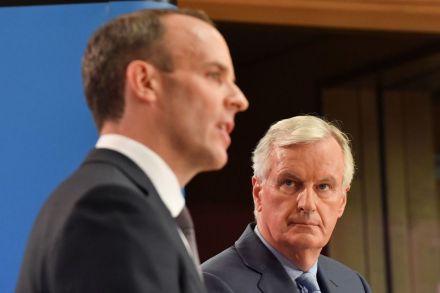
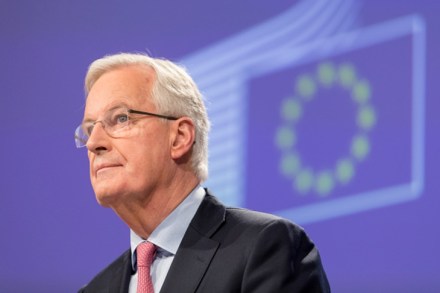
So what happens now Michel Barnier has laid into Theresa May’s customs plan? That’s the question I try and answer in my Sun column this morning. Those close to May are trying to downplay Barnier’s criticisms. One Cabinet Minister remarks, ‘It is not a great surprise. He’s been saying no all along’. This Minister’s view is that it is now ‘up to the member states’ what happens next. But they aren’t likely to come to the rescue of May’s plan: I understand that only a handful of them are interested in it. Barnier’s real aim, as May has told the Brexit inner Cabinet, is to keep Britain in a customs union with the EU. His calculation is that faced with a choice between a customs union and no deal, Britain will buckle.

Michel Barnier confirms David Davis’ Brexit deal warning

From our UK edition

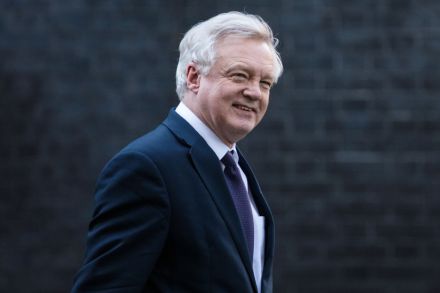
David Davis could be forgiven a wry chuckle today. For what he warned Theresa May about has come to pass: Michel Barnier has made clear that the EU Commission can’t accept Theresa May’s proposed facilitated customs arrangement as it won’t have a third country (ie, the UK) collecting tariffs on its behalf: ‘The EU cannot and the EU will not delegate the application of its customs policy and rules and VAT and excises duty collection to a non-member who would not be subject to the EU's governance structures.’ This was the main point of the Chequers offer: that Britain would have frictionless trade with the rest of the EU by making itself an EU buffer zone.

Why austerity is ending

From our UK edition

The last day of the parliamentary term is usually an occasion for the government to get a whole bunch of bad news out of the way all at once. But this summer’s end-of-term announcements were used as a chance to put out some seemingly good news. Teachers, prison officers and members of the military will all receive pay increases of above 1 per cent for the first time in five years. The lifting of the public sector pay cap is another reminder of how politics and the Tories have moved on from the age of austerity that George Osborne announced in his 2009 conference speech. Much has been written about the 2017 election and how the loss of the Tory majority changed Brexit. But it had almost as big an impact on government spending rules.

Theresa May must work on her Brexit sales pitch

From our UK edition

Regional Cabinets are always a bit gimmicky. The idea that putting ministers on a train to somewhere outside of London would make them take different decisions has always struck me as somewhat absurd. But today’s, as Katy said earlier, has taken on a particular significance because it marked the beginning of Theresa May’s attempt to sell her Brexit plan to the public. This plan needs some selling. Polling for the Sunday Times showed that only 12 per cent of voters think it would be good for Britain, compared to 43 per cent who disagree. May’s appearance today, though, is unlikely to have moved the dial much. There’s no clear top line from it.

Theresa May should enjoy her summer break, for the autumn will be her toughest time yet

From our UK edition

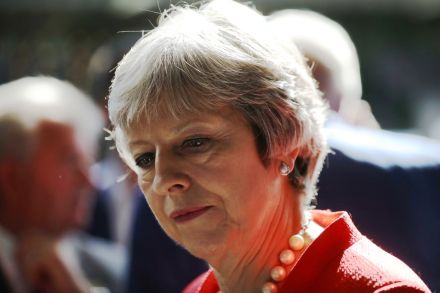
‘She’s safe until September’. That’s the verdict on Theresa May of one of those who knows the Tory parliamentary party best, I write in The Sun this morning. Number 10 want to use the summer to try and turn opinion around on Mrs May’s Chequers plan. Under consideration, is a plan for her to do events at various venues around the country to try and convince voters of the merits of it. Every Cabinet Minister has been told that they must devote one day over the summer to selling Chequers, including doing broadcast interviews on it. Ministers are already watching closely to see how Esther McVey, the Welfare Secretary, and the Aid Secretary Penny Mordaunt, who are known sceptics of the scheme, handle this request.

May’s summer madness

From our UK edition

The summer holidays couldn’t come soon enough for Theresa May. So desperate was she to get MPs away from Westminster that she wanted to send them home early. Normally, prime ministers would do almost anything to avoid headlines such as ‘MPs vote to go to the beach’. But in these circumstances, Downing Street decided that was the lesser of two evils. In the end, Members of Parliament persuaded No. 10 that it would be wrong for the government to send the Commons into recess at a time of looming national crisis. It would have looked like an abdication of responsibility. But the fact that this idea was even contemplated reveals the panic gripping the Tory hierarchy. Westminster is more febrile now than it has been in more than a decade.

Boris’s speech makes it harder for May to sell her Chequers plan

From our UK edition

Boris Johnson did not launch a full-on attack on Theresa May in his resignation speech. But he was brutally critical of the Chequers plan, saying that in crucial respects it was ‘Brexit in name only’. He complained that since the Lancaster House speech ‘a fog of self-doubt has descended’ and that the UK never even attempted to turn that speech into a negotiating position. He said that ‘18 months of stealthy retreat’ had led the UK to its current predicament. In a speech shorn of his usual jokes, the former Foreign Secretary urged Theresa May to change course, to return to Lancaster House. He said that there was ‘still time to save Brexit’.

Three things that Theresa May can do to try and avert a political disaster

From our UK edition

If Theresa May gets a Brexit deal and it can’t get through parliament, then we are heading towards the most dangerous political crisis in living memory, I say in The Sun this morning. For I very much doubt that the 80 percent of MPs who are opposed to no deal, would let Britain leave without an agreement. But disregarding the result of the referendum—either by abandoning Brexit or leaving only to make Britain, effectively, a non-voting member of the EU—would cause a democratic shock. 17.4 million voters would be, understandably, furious about having their vote ignored. So, what can Mrs May do to avert this disaster? Well, I think there are three things she should do. First, she should start treating voters and her own MPs like adults.

Theresa May heads into uncharted waters

From our UK edition

The single most important fact in British politics, I say in the magazine this week, is that Theresa May does not currently have the votes to pass her Brexit plan even if she could get the European Union to accept it. ‘The numbers just don’t stack up’, one Cabinet Minister laments to me. May’s problem is that there’ll be a sizeable Tory rebellion against the Chequers deal. One Cabinet Minister predicts that 60-odd Tories will vote against it and it is hard to see how May can get enough opposition MPs to back the deal to make up for it. Compounding the situation for May is that both Tory Eurosceptic ultras and pro-European Labour MPs believe that they can get what they want by voting down her deal.

Brexit in a spin

From our UK edition

‘The numbers just don’t stack up,’ one cabinet minister wearily declared to me on Monday night. This is, perhaps, the single most important fact in British politics today: Theresa May does not currently have the votes to pass her Brexit plan even if she could get the European Union to accept it. Boris Johnson and David Davis’s resignations mean that it won’t just be Jacob Rees-Mogg and a dozen ultras voting against Theresa May’s Brexit deal, but a far larger group. Further proof of this came on Tuesday, when two of the party’s vice-chairs — Ben Bradley and Maria Caulfield — resigned so that they could oppose the deal. Tellingly, neither one would have been on anyone’s list of Brexit obsessives.

Trump surprises Nato members with demand that they should spend 4% on defence

From our UK edition

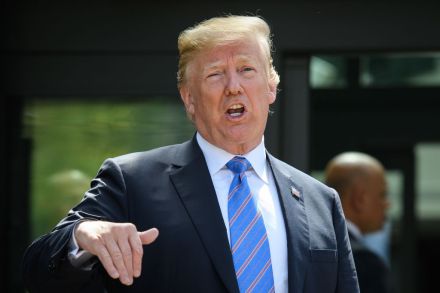
Donald Trump has demanded that Nato members spend four percent of their GDP on defence. He is proposing a doubling of the current Nato target of two percent. This is, obviously, a negotiating tactic: even the US doesn’t, currently, hit this 4 percent mark. I suspect that Trump’s real aim is to highlight how few Nato countries meet the two percent target, apart from the US only four others do. He would also like European countries to spend more so that the US can reduce its military commitments in Europe. But the way in which his request was presented, on a day in which he once again took a swipe at Germany, will do nothing to ease fears about his real intentions towards Nato.

Jeremy Hunt gets the Foreign Office

From our UK edition

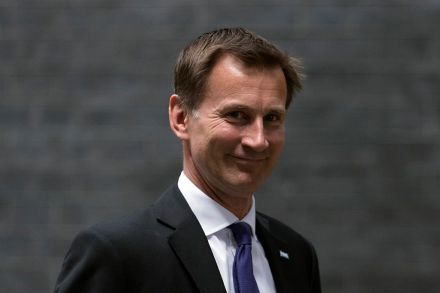
Jeremy Hunt is the new Foreign Secretary, replacing Boris Johnson. Having secured a new funding settlement for the NHS, Hunt has—finally—agreed to move jobs. I suspect it will be quite some time before anyone beats his record as the longest serving Health Secretary ever. Hunt was a Remainer during the referendum campaign. But since he has become one of those ministers who have talked with some genuine enthusiasm about the opportunities that Brexit might offer. Having lived in Japan and having family links on his wife’s side to China, Hunt does know something of the world outside Britain. He is also naturally diplomatic. I suspect that Foreign Office officials will find it easy to get along with this son of an admiral. This is a significant promotion for Hunt.

What happened when Theresa May met with her MPs

From our UK edition

Having lost two of her most senior Cabinet Ministers, Theresa May went to address her MPs in a stuffy, hot room. But the occasion went off fairly-well for her. The vast majority of the questions were supportive and even the veteran Eurosceptic Edward Leigh made clear that the 1990s showed that a leadership contest wouldn’t achieve anything. Perhaps, the most hostile moment came towards the end of the session when Philip Davies asked if she regretted how Friday was handled given it appeared like a Remain coup. Other than Davies, most of the questions were fairly friendly. Former Cabinet Ministers Damian Green, and Patrick McLoughlin were supportive. Maria Caufield, a party vice-chair, was slightly more critical.

Boris Johnson resigns as Foreign Secretary

From our UK edition

Boris Johnson has resigned. The Foreign Secretary becomes the second senior Cabinet Minister to quit over the deal agreed at Chequers, which he reportedly called a ‘turd’. At the weekend, those close to Boris were clear that he wouldn’t resign. They said that the only people who would benefit from his resignation would be Michel Barnier and co and that he intended to stay and fight against further concessions to the EU. So, what has changed? Well, a cynic would say David Davis’s resignation. But I understand another factor for him has been how he would defend this plan in public. The more he thought about it, the more he felt he couldn’t do it. I understand he is now of the view that no deal is better than this deal.

Why David Davis resigned

From our UK edition

The Brexit Secretary David Davis has quit. Davis’s resignation is the biggest political crisis that Theresa May has faced since the loss of her majority in the general election and leaves her facing a battle to save her premiership. Davis has gone because he could not stomach the opening UK negotiating position agreed at Chequers. Davis has long been clear that he wanted a final deal that was, essentially, a souped-up version of the Canada free trade deal. But the position agreed at Chequers envisaged a relationship very different to that, one far more firmly in the EU’s regulatory orbit. As Brexit Secretary Davis was meant to promote the Chequers plan at home and abroad.  He clearly didn’t feel that he could do that. In truth.

How much more unpalatable will the EU make this deal?

From our UK edition

From the flurry of joint op-eds from Cabinet Ministers today, you might be forgiven for thinking that the Chequers deal is the deal. But, of course, it is not. Rather, it is the UK’s government opening position in the negotiation on the future relationship. So, logically, you would expect the government to have to make more concessions. The problem for the ministerial Brexiteers is that what the EU is likely to demand will make the deal much more difficult to defend. Take, for instance, parliament’s role in having to pass any changes to the so-called ‘common rulebook’ between the UK and the EU. Number 10 likes to talk about this as a ‘parliamentary lock’ on any changes that could be detrimental to the UK.

The reason May’s third way won approval? Cabinet Brexiteers have no alternative plan

From our UK edition

Theresa May is through Chequers with a plan that proposes having the UK follow EU rules on goods and agri-foods. This isn’t what the Cabinet’s Brexiteers would have expected two years ago, or even nine months ago. But as I say in The Sun this morning, the biggest single reason they are putting up with this is that they don’t have an alternative plan. When Boris Johnson invited the Cabinet’s Brexiteers plus Gavin Williamson and Sajid Javid, who were pivotal to the Brexiter inner Cabinet’s rejection of Theresa May’s new customs partnership plan, to his office for a meeting on Wednesday morning it only highlighted the group’s problems. First, Javid declined the invitation, as he didn’t want to get factional.