James Forsyth

James Forsyth

James Forsyth is former political editor of The Spectator.

The problem with Philip Hammond’s speech

From our UK edition

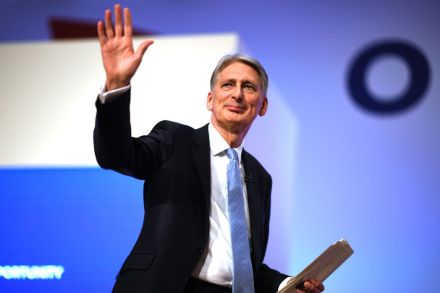
Tories used to laugh at Jeremy Corbyn. But today, Philip Hammond said that the questions Labour are asking ‘deserve a response.’ He acknowledged that people feel that ‘they are working for the system but the system isn’t working for them.’ Hammond tried to deliver a response based on Tory pragmatism, making the case for evolution rather than revolution. But he warned the Tories that if they ‘look for a moment like the party of “no change”’ then Corbyn will have his chance.' The problem with Hammond’s speech, though, is that the Tories are being so incremental on domestic policy at the moment that they do risk looking like the party of ‘no change’.
Dominic Raab’s conference speech won’t harm his leadership ambitions

From our UK edition

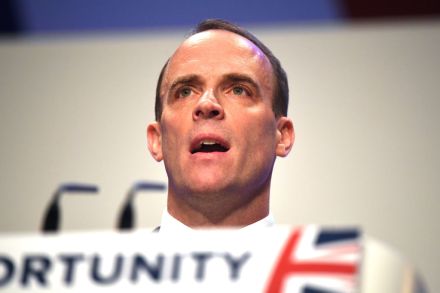
Dominic Raab has just given an impressive, grown-up speech to Tory conference that will see his stock rise still further. The Brexit Secretary began his speech by appealing for tolerance, pointing out that there were good arguments—and good people—on both sides of the referendum campaign.  He even acknowledged that some Brexiteers had been too quick to dismiss Remain’s warnings about how difficult leaving would be. It was a reminder of how much easier it is for someone who isn’t trying to prove their Brexit credentials to adopt the emollient tone that’s needed if the country is to be brought back together. Raab walked a tightrope on Chequers, defending the principles of the deal but not ruling out a different approach.

Message-free May given tough time by Marr

From our UK edition

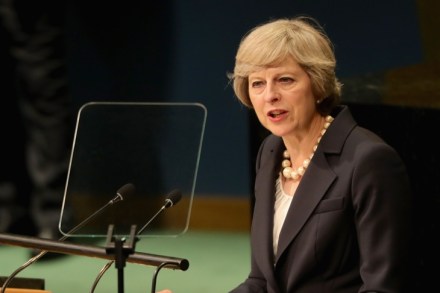
The big Sunday of conference TV interview is a chance for a leader to set the tone for their party’s gathering. But Theresa May failed to seize that opportunity this morning. She was, oddly, bereft of a positive message on either Brexit or domestic policy and the interview ended up being dominated by Tory splits on Brexit and the Windrush scandal. On Brexit, May stuck to the line that she doesn’t know what the EU’s objections to Chequers are. This is really stretching things. We know that the EU doesn’t like the Facilitated Customs Arrangement as it feels that it imposes burdens on them and gives the UK many of the benefits of the customs union while leaving it free to cut tariffs on the EU’s competitors.

The Tories need a domestic agenda

From our UK edition

Brexit dominates the headlines going into Tory conference. But as I say in The Sun this morning, the absence of a domestic agenda is an even bigger problem for them than their divisions over Brexit. Labour have over the last few days set out their vision for Britain. Unsurprisingly, I don’t agree with it and think the attitude to property rights revealed by its plan for 'inclusive ownership funds' is downright alarming. But give Jeremy Corbyn and John McDonnell this, their agenda is undoubtedly clear and bold. As one Cabinet Minister says, half admiringly, ‘they’re hungry’. The Tory party’s problem is that it isn’t giving the country a vision of where it wants to take it.

All by herself

From our UK edition

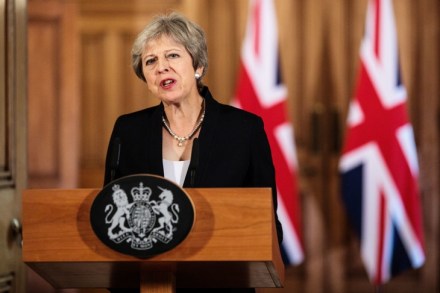
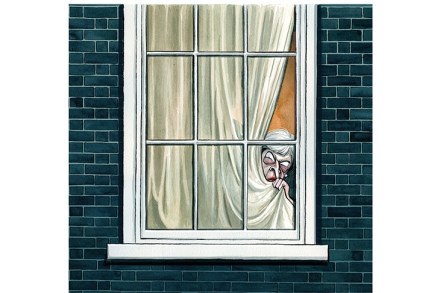
Few people would choose to celebrate their birthday by listening to Philip Hammond speak, but that is the pleasure that awaits Theresa May on Monday. On Tuesday she must suffer in silence as Boris Johnson derails Tory party conference with an appeal to ‘chuck Chequers’. It’s hard not to pity the Prime Minister. She is now horribly isolated. Both in her own cabinet and in Europe, she has few allies. As she tries to sell her Chequers plan, almost nobody is backing it or her. Other prime ministers have endured difficult periods. Few have faced them with as little support. It is no coincidence that Ruth Davidson, the leader of the Scottish Tories, now says she doesn’t want to be PM. She has seen inside No.

The Tories will have to up their game in response to this Corbyn speech

From our UK edition

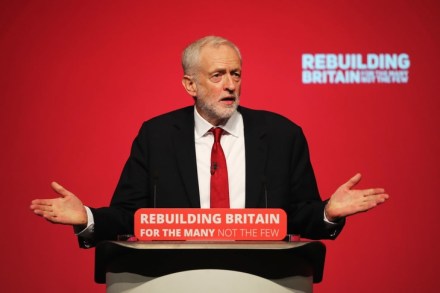
Jeremy Corbyn’s speech to Labour conference has raised the stakes for the Tories ahead of their gathering in Birmingham. Corbyn is mastering the art of making very radical things sound reasonable. Listening to him talking about ‘Inclusive Ownership Funds’ which ‘will mean workers share more fairly in the rewards of successful businesses’ you would have no idea that what this really means is the government confiscating 1pc of a companies’ equity every year without compensation; an idea that is bound to scare off business investment. Labour want to present their agenda as a response to the 2008 crash. Jeremy Corbyn’s distance from New Labour means that the Tory arguments about how Labour policies made the crash worse, just bounce off him.

Brexit, what happens now?

From our UK edition

It is the morning after the statement before. So, what happens now? That’s the question I attempt to answer in my Sun column this morning. Theresa May is trying to shock the EU into engaging with her Chequers plan by saying she really is serious about no deal. Her statement yesterday was meant to be a very public burning of her boats; a message that she won’t sign up to either of the options they’re trying to push her towards. But if we don’t get any sign from the EU in the next fortnight that they are prepared to be flexible, May will come under huge pressure from her Cabinet colleagues to change tack.

Will Theresa May’s big Brexit gamble pay off?

From our UK edition

Theresa May has attempted to put the ball back in the EU’s court this afternoon. After the rejection of her Chequers plan at the Salzburg summit, May has told British voters and the EU that she regards no deal as preferable to either the UK being in the EEA and the Customs Union or a customs border between Northern Ireland and Great Britain. She said that if the EU wants to reject Chequers, it is incumbent on them to come back with an alternative proposal. The question is whether the EU takes this no deal threat seriously.

Donald Tusk tells Theresa May to chuck Chequers

From our UK edition

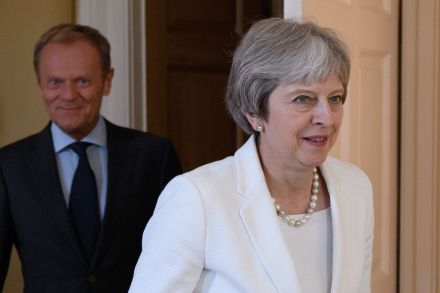
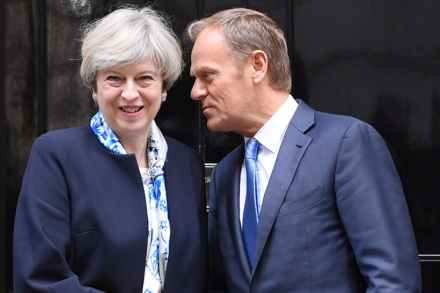
The government weren’t expecting a dramatic breakthrough in the Brexit talks at Salzburg. But they were hoping for some more positive mood music, for some language that would help Theresa May get through party conference. But Donald Tusk has just issued a broadside against Chequers: ‘The suggested framework for economic co-operation will not work, not least because it is undermining the single market.’ Tusk’s brutal language makes it that much harder for Theresa May to maintain that the EU is engaging with Chequers and her plans for a European Traded Goods Area and a Facilitated Customs Arrangement.

The benefits of a blind Brexit

From our UK edition

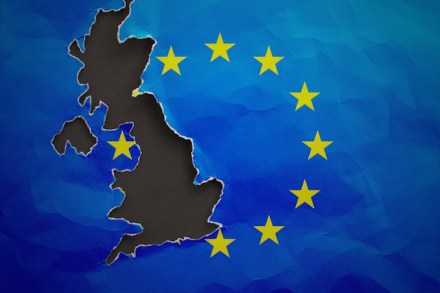
Brexit won’t be over by 29 March 2019. Britain will legally leave the European Union on that date. But that won’t tell us what Britain’s future relationship with the bloc will be, or how closely aligned the UK will be to the EU. Those are questions for which we will have to wait for the answers. What MPs will vote on before next March is not a ‘Brexit deal’ but a withdrawal agreement. Theresa May won’t come to the Commons and table her Chequers plan for approval, which is just as well given that she doesn’t currently have the votes to pass it.

Donald Tusk’s Brexit warning spells trouble for Theresa May

From our UK edition

What to make of Donald Tusk, the President of the European Council’s latest tweet? Ahead of tonight’s dinner in Salzburg, he says: ‘Today there is perhaps more hope but there is surely less and less time. On the Irish question and the framework for economic cooperation the UK’s proposal needs to be reworked’ The first sentence is classic Tusk; he has a fondness for statements that are meant to sound profound. His comments on the Irish border are also to be expected. The UK and the EU are still 48 kilometres apart on this question and playing a dangerous game of chicken. Theresa May will use tonight’s dinner to try and persuade the 27 EU heads of government to back away from trying to impose a customs border in the Irish sea.

The unwelcome distraction waiting for the PM in Salzburg

From our UK edition

Theresa May heads to Salzburg tomorrow to try and persuade the leaders of the EU27 of the merits of her Brexit plan. But there’ll be an unwelcome distraction for her in the morning. I understand that the European Commission will issue a reasoned opinion in the Olaf case, where the Commission accuses the UK of failing to prevent customs fraud on shoes and textiles imported from China and is demanding over two billion euros in lost revenue. The UK continues to contest this case, and I understand it has asked the Commission for more information on various points. But the timing of this reasoned opinion has raised eyebrows in government circles. It seems more than a coincidence that it is appearing on the day that May sits down with the leaders of the EU 27.

Philip Hammond raises the prospect of delaying Brexit day

From our UK edition

Philip Hammond’s political tin ear has struck again. As I write in The Sun this morning, he has twice been slapped down in Cabinet this week. On Tuesday, he talked about ‘squealing’ about universal credit and was chastised by the Chief Whip for his language. Those sympathetic to Hammond point out that he was referring to Labour when talking about ‘squealing’. But it was still a poor choice of words when discussing changes to the benefits system. Then at the ‘no deal’ Cabinet on Thursday, Hammond raised the prospect of delaying Brexit day. After the legislative timetable for getting ready for ‘no deal’—which is tight—had been outlined, Hammond pointed out that the government has the power to put the Brexit date back.

The Tories are conspiring to chuck the Chequers plan

From our UK edition

Right now, as I say in the magazine this week, Theresa May doesn’t have the political space to make further significant concessions to the EU. Without significant concessions, the EU isn’t going to agree to the Chequers plan. This is why a growing number of Cabinet Ministers are already talking about when the government should move on from Chequers and put a different offer - closer to a Canada-style deal - on the table. One influential member of the cabinet insists that this is the key issue: whether Theresa May has ‘the agility to change tack’.

All battle, no plan

From our UK edition

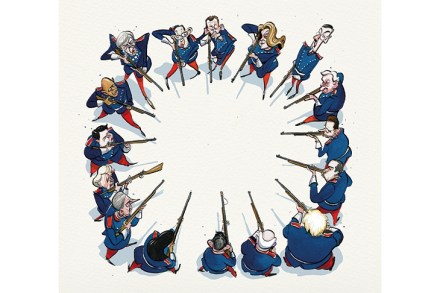
It looks as if the Conservative party is already at war. Fifty or so Brexiteer Tory MPs openly meet to discuss deposing the Prime Minister —  yet they have no strategy and (at present) no chance of defeating her in a confidence vote. On Twitter, Tory backbenchers and even ministers can be found threatening to destroy each other. This isn’t just about personality. In the last few months, the question of what Britain’s relationship with the EU should be and who should be Prime Minister have fused together — so the most divisive issue in British post-war politics has been combined with a drawn-out leader-ship contest. The Prime Minister has produced a plan: the Chequers proposal.

An old-fashioned barney, but no friendly fire for May at PMQs

From our UK edition

PMQs today was an old-fashioned, political barney. I have rarely heard the chamber as loud as it was today. Corbyn’s final question - which was, in reality, more of a speech - was inaudible up in the press gallery because of the noise below. But to the relief of May loyalists, there were no hostile questions for her from her own side: no fuel was thrown on the fire started by last night’s meeting of the European Research Group. Corbyn’s questions were on Universal Credit. May tried to turn his usual PMQs tactics back on him, and quoted ordinary people who had benefited from universal credit. But the tactic wasn’t as effective defending government policy as it can be  attacking it; something would be very wrong if no one had gained from a government policy.

The greatest obstacle to a Brexit deal

From our UK edition

The UK and the EU are playing a dangerous game of chicken over the Irish border, I say in The Sun this morning. There has been almost no progress on this issue over the summer and without a deal on it, there can’t be a withdrawal agreement. One of those involved in the negotiations on the British side tells me, the EU ‘believe we will blink first’. But that won’t happen. One Brexit red line that Theresa May is adamant she’ll never cross is her insistence that no British PM could sign the EU’s proposed text on the Irish border, which would see Northern Ireland become part of the customs territory of the EU. Michel Barnier, the EU’s chief negotiator, is prepared to produce a de-dramatised version of the backstop.

The spectre of no deal is receding – probably

From our UK edition

Over the summer, a no-deal Brexit became less likely. Eurosceptic ultras have been forced to be less blasé. The return of Steve Baker to the European Research Group, the lead Brexiteer bloc of MPs, has injected more realism into their discussions on the subject. Baker was involved with no-deal planning in government and has made clear to colleagues that it would present significant challenges. Those intimately involved in the negotiations on the British side say that the EU is also more concerned about the talks failing. As deadlines approach, the focus is on the sheer logistical complexities that would come with Britain crashing out of the European Union. Senior figures on the EU side are alarmed at the challenge of helping Ireland through a hostile no deal.

How Boris Johnson will rain on Theresa May’s parade

From our UK edition

Ever since Boris Johnson resigned, Tories have wondered what he’ll do at conference. We now have an answer: he’ll address a thousand-person rally on the Tuesday, inside the secure zone. The event will be hosted by Conservative Home, the influential Tory website. This is a headache for Tory conference planners. Boris Johnson’s appearance on Tuesday, where he will reiterate his call to ‘chuck Chequers’, will overshadow everything else that is on that day. Given that Johnson’s Telegraph column comes out on Monday, there’s a good chance that he’ll be the big story of the conference for two days out of the four. This is, to put it mildly, not ideal for Theresa May as she tries to reassure Tory members about what her Chequers proposals mean.

Theresa May needs a Brexit back-up plan

From our UK edition

Since Chequers, the UK has been making a big diplomatic push to try and move the Brexit talks along. As I say in The Sun this morning, this has had some success. Inside government, the view is that the chances of a deal are inching up. There is also cautious optimism that the British message on the Irish backstop, that a customs border between Northern Ireland and the rest of the United Kingdom is unacceptable, has finally been understood. But Mrs May hasn’t had a breakthrough yet. There is no sign of the European Commission moving away from its position that the four freedoms of the single market can’t be separated.