James Forsyth

James Forsyth

James Forsyth is former political editor of The Spectator.

Will any Tory MPs join the Independent Group?

From our UK edition

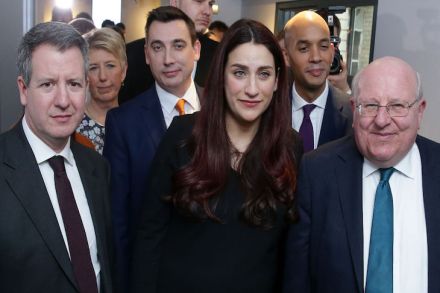
Is this a split in the Labour party or something more? At today’s launch, Chuka Umunna was clear that the Independent Group want to attract MPs from parties other than Labour. Tory party sources admit that they ‘would not be surprised’ if some Tory MPs were to join this new group. Right now, the values of this group seem fairly—for want of a better word—Blairite. The addition of any Tory MPs would make this group more ideological heterodox; and show if it can carve out a distinctive intellectual position. Politically, it would also mean that it was not just Labour who are split.
What can May now get on the backstop?

From our UK edition

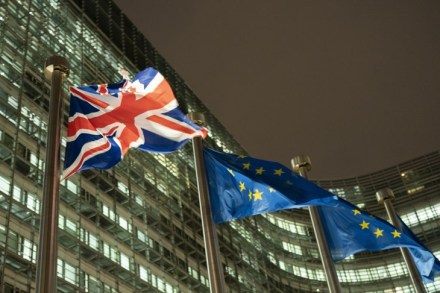
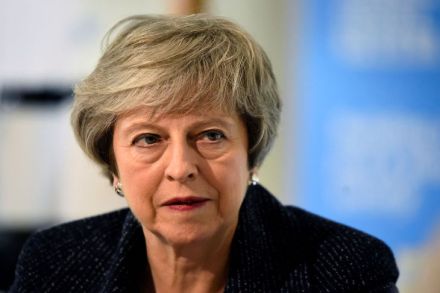
When Theresa May goes to Brussels next week to bat for changes to the backstop, she’ll do so with a large crack in her bat—I say in The Sun this morning. The symbolic defeat that MPs inflicted on her Brexit plan on Thursday night has significantly weakened her negotiating position. The EU doesn’t want to make significant changes to the backstop. When the Brady amendment passed the House of Commons, saying parliament would accept the deal if the backstop was replaced, the EU responded by saying that they didn’t think this parliament majority was ‘stable’. Thursday night’s vote helps them make that argument.

MPs have dealt May’s Brexit negotiating strategy a big blow

From our UK edition

The government has been defeated by 45 votes tonight. This loss doesn’t force a change in policy on Theresa May, but it is a significant blow to her negotiating strategy. She has been saying to the EU that with legally binding changes to the backstop, she could get the withdrawal agreement through parliament. The EU will argue that this result shows that even with changes to the backstop, May couldn’t get a deal through. They’ll therefore become more forceful in their attempt to urge her to come to an arrangement with Jeremy Corbyn on a customs union. The ERG have, ironically, made it less likely that May will get anything significant on the backstop and increased the chances of the UK ending up in a customs union with the EU.

If May loses tonight, the EU will want her to do a deal with Corbyn 

From our UK edition

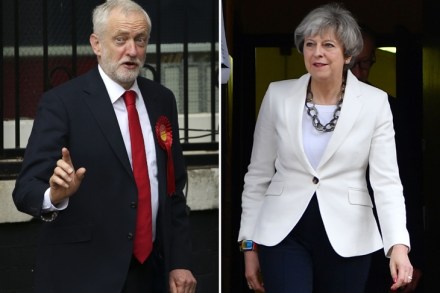
Today’s vote is not a meaningful vote. But that doesn’t mean it is meaningless. If Theresa May’s motion is passed tonight, it will enable her to carry on saying to the EU that parliament supports her approach and that a legally binding change to the backstop is needed to get a deal through. But if May loses, then the EU will be confirmed in its view that May doesn’t have a stable majority for a deal even with changes to the backstop. Brussels will become surer and more vocal about its view that the way for the UK to pass the withdrawal agreement is for May to do a deal with Jeremy Corbyn on a customs union. Right now, it isn’t certain what the result of tonight’s vote will be.

Tories must avoid complacency over Corbyn

From our UK edition

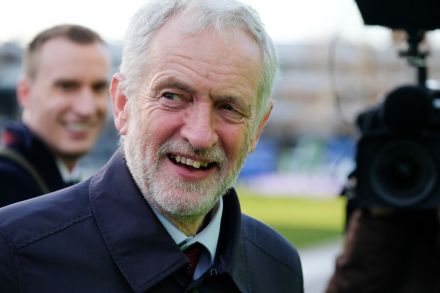
Statistically, a Tory victory at the next election is unlikely. British voters tend not to grant a fourth term to governments: it has happened only once in our post-war history. That was under John Major in 1992 in an election in which the government lost 40 seats. But this time, the Tories would go into a general election as a minority government. If this were not handicap enough, they’ll also have to fight the election having spent years dealing with Europe, the subject that splits the party most deeply. Yet, remarkably, the Tories are still in with a chance of winning a fourth term. They have one man to thank for this: Jeremy Corbyn. If Labour were led by a more conventional figure, politics would be very different.

May’s statement showed how she will try to pass her Brexit deal

From our UK edition

Theresa May’s statement to the Commons didn’t contain anything dramatic. But it did show how May is going to try and pass a deal. There was lots in the statement on workers’ rights, an attempt to make the deal more palatable to Labour MPs. But May also sought to reassure her own side by ruling out Jeremy Corbyn’s customs union plan far more explicitly than she did in her Sunday night letter to him. There was little sign of a cross party consensus in May and Corbyn’s exchanges. The tone was, predictably, partisan. Things became even more heated when the SNP leader Ian Blackford got involved. He shouted ‘liar’ at May across the chamber as she responded to him, a remark that the Speaker forced him to withdraw.

The UK’s shift in attitude to the threat of China

From our UK edition

Gavin Williamson’s speech today is another demonstration of how the UK government’s attitude to China has changed. In the Cameron Osborne era, the UK was determined to be China’s best friend in the West. All the emphasis was on creating a ‘golden era’ in Anglo-Chinese relations. But now, the government strikes a more realistic—and hawkish—tone on China. In his speech today, Williamson brackets China with Russia as a threat. The headlines today have been about Williamson’s decision to send the UK’s new aircraft carrier, carrying both US and UK jets, to the Pacific in a message to Beijing. But just as telling is the emphasis that Williamson places on various alliances.

Corbyn has complicated May’s Brexit strategy

From our UK edition

Number 10 had hoped that if it could hold off the Cooper amendment again next week, then it could eke out a concession from the EU on the backstop. But as I say in The Sun this weekend, this approach has been complicated by Jeremy Corbyn’s soft Brexit plan. This scheme, obviously, appeals to the EU: it would keep Britain in the customs union and following many of the rules of the single market. ‘The Labour party and the EU are operating in tandem to some extent, which is worrying for us’ frets one Cabinet Minister. So, May needs to persuade Brussels that such a deal couldn’t get through because her government would collapse as soon as she proposed it.

The Tories will struggle to win an election without a clearer domestic agenda

From our UK edition

'What would a Conservative manifesto say on Brexit?’ Many Tories consider this question a slam-dunk argument against an early election. But the party’s predicament is actually much worse. It is easier to work out what their manifesto would say on Brexit than on a whole host of other issues. The Tories are relatively united on Brexit, for the moment. Only eight of the party’s MPs voted against Sir Graham Brady’s amendment last month which authorised Theresa May to seek ‘alternatives’ to the backstop. So this would be the Tory position in a pre-Brexit election. In an immediate post-Brexit contest May would presumably seek a vague mandate to negotiate the best possible future relationship, leaving open what precisely that is.

Corbyn’s offer weakens May in Brussels, but helps her at Westminster

From our UK edition

One of the main messages that Theresa May is taking to Brussels today is that significant, legally binding changes to the backstop are needed to get the withdrawal agreement through the House of Commons. Jeremy Corbyn’s letter to her undermines that position. In it, the Labour leader sounds less hostile to the backstop than he did after meeting May last week. Instead, he suggests that the way to deal with the backstop issue is through a political declaration that makes it much less likely that it has to be used. This is the EU’s preferred solution too, and so Corbyn’s offer undercuts the message that May is trying to take to Brussels.

The Tories are a party in search of policies

From our UK edition

‘What would a Conservative manifesto say on Brexit?’ Many Tories consider this question a slam-dunk argument against an early election. But the party’s predicament is actually much worse. It is easier to work out what their manifesto would say on Brexit than on a whole host of other issues. The Tories are relatively united on Brexit, for the moment. Only eight of the party’s MPs voted against Sir Graham Brady’s amendment last month which authorised Theresa May to seek ‘alternatives’ to the backstop. So this would be the Tory position in a pre-Brexit election. In an immediate post-Brexit contest May would presumably seek a vague mandate to negotiate the best possible future relationship, leaving open what precisely that is.

Don’t expect much on Brexit before Valentine’s Day

From our UK edition

Don’t expect much movement on Brexit this side of Valentine’s Day, I say in The Sun this morning. There are two reasons for this. First, EU leaders are irritated with Theresa May. She signed off on a deal with them, assured them it could get through the Commons and then lost by a record margin. They are now sceptical when the British indicate that this or that change could get the deal through parliament. Despite the Brady amendment passing, the EU are still doubtful about what would get a deal over the line. But there is another reason beyond their irritation why the EU are holding off from engaging with Mrs May. They want to see what happens when the Commons next votes on Brexit on the 14th of February.

May’s final mission

From our UK edition

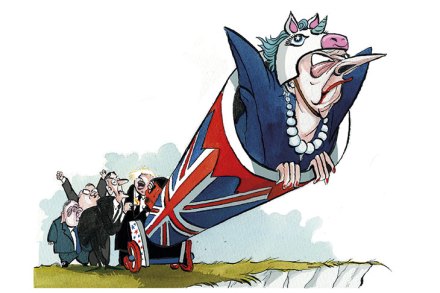
Theresa May will soon arrive in Brussels with a series of unlikely demands. She must tell the European Union that she wants to re-open a deal that she was hailing as not just the best, but the ‘only deal possible’ a few weeks ago. Parliament has now made her eat her words. It is a testament to her predicament that this counts as a triumph for her. She has narrowly avoided a far worse fate. Had parliament voted another way — rejecting Graham Brady’s amendment and passing Yvette Cooper’s — she would have been sent into the negotiating chamber with nothing to say. She wouldn’t have been able to tell the EU what the Commons wanted.

Theresa May’s biggest Brexit battle is still to come

From our UK edition

The morning after the night before finds the Tory party still in good spirits. There is a sense of relief that the party managed to find something that all but 18 of them could vote for. It was no small achievement to get nearly every Tory MP into the same lobby on Europe with Brexit only 59 days away. But the harder part is still to come. First, Theresa May has to get something from Brussels and then she has to get it through the Commons. But May’s victory last night has brought her time. She’ll hope that she can get something from the EU and that the longer both no deal and a lengthy extension to Article 50 remain possible outcomes, the more MPs will come round to her agreement as the least worst option. May has no guarantee of success.

What Labour’s support for Cooper’s Brexit amendment means

From our UK edition

Labour is now backing the Cooper amendment. It will whip its MPs to vote for this amendment which would require the Government to request an extension to Article 50 if no agreement can be reached with the EU. The aim of the amendment is to prevent a ‘no deal’ Brexit on March 29th. However, in a sign of the divisions within Labour over the issue, the party will then seek to amend Cooper to reduce the length of the extension from nine months to three. (Ironically, nearly everyone in Whitehall expects Article 50 to be extended for a few months even if a deal gets through in the next couple of weeks because of the amount of time it’ll take to put the withdrawal agreement into domestic law). With Labour’s backing, Cooper is highly likely to pass.

May urges Tory MPs to give her something to battle for

From our UK edition

Theresa May has met Tory MPs tonight in a last-ditch effort to try and persuade them to vote for the Brady amendment tomorrow. She said that she would go back to Brussels and push for ‘fundamental changes’ to the backstop. But to do that, she needed to be able to show the EU that parliament was behind her—and so, MPs had to vote for the Brady amendment. May said that the government would whip in favour of Brady, essentially making it government policy. (Some in the room, though, say that May suggested in one answer that this would be subject to Cabinet agreement). Getting the Brady amendment through will be an uphill task. As Katy reported earlier, the ERG is currently not planning to vote for it.

It would be a mistake for the ERG to not back the Brady amendment

From our UK edition

Bernard Jenkin has just told ITV’s Romilly Weeks that he won’t currently be voting for the Brady amendment. This suggests that the amendment won’t have the numbers as a large chunk of the ERG won’t vote for it. Even from an ERG perspective, this is—to my mind—a tactical mistake. If the Brady amendment doesn’t get a majority on Tuesday, it will be taken by Brussels and by many in the cabinet as proof that a Tory DUP alliance can’t get any withdrawal agreement through. After all, anyone who won’t vote for Brady is saying that they wouldn’t vote for the withdrawal agreement even if the backstop was replaced by ‘alternative arrangements’ designed to prevent a hard border.

Can Theresa May get any Brexit plan through the Commons?

From our UK edition

Tuesday is the last chance for those MPs who want to secure as meaningful a Brexit as possible, I write in The Sun this morning. That evening, MPs will vote on a series of Brexit amendments designed to show the EU what kind of withdrawal agreement the Commons would accept. If one of them passes, then Theresa May can go back to Brussels and say: look, this is what will get the deal through my parliament. It would give her a decent chance of getting the EU to engage. But if none of these amendments can muster a majority, then the EU will simply sit tight. It knows that this parliament is fiercely opposed to no deal, and so isn’t concerned that the UK will actually go down that route. So far, there are a variety of amendments down.

Tory grandees table backstop amendment

From our UK edition

One of the most dramatic examples of how Theresa May’s withdrawal agreement had lost the support of her backbenches came when Graham Brady—the elected chairman of the 1922 Committee of Tory MPs—walked into the no lobby. Brady has now put down an amendment ahead of Tuesday’s vote which makes clear in what circumstances he would back the agreement. It says the House would support the withdrawal agreement if the government and the EU ‘replace the backstop with alternative arrangements to avoid a hard border’.

Back to the backstop

From our UK edition

As the prime minister walks up the main staircase in No. 10, he or she must pass the portrait of every previous occupant of the office. It is the British equivalent of the slave standing behind the Roman general and whispering ‘Remember you are mortal’ because the career of nearly every prime minister, no matter how distinguished, has ended in failure. Theresa May must find two of these portraits particularly haunting. Robert Peel passed the repeal of the corn laws in May 1846 with the backing of the Whigs and others, but was then forced to resign as prime minister the following month as the Tories split.