James Forsyth

James Forsyth

James Forsyth is former political editor of The Spectator.

Third time’s the charm? We could be heading for another vote on Theresa May’s Brexit deal

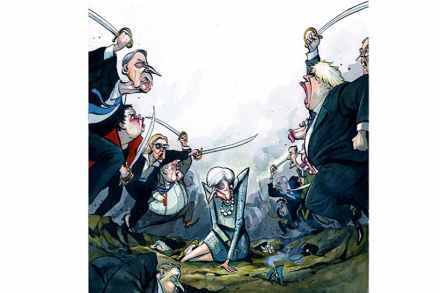
Late last night, there was a sense of optimism among British government ministers that Theresa May’s revised deal might have a chance of passing. But those hopes were crushed this morning by Attorney General Geoffrey Cox’s blunt legal advice. With Cox declaring that the legal risk was unchanged, the Democratic Unionist Party were never going to back the deal. That in turn meant the bulk of the Brexiteers in the European Research Group wouldn’t either. In the end, the withdrawal agreement went down by 149 votes — at the worst end of expectations. ‘I profoundly regret the decision that this House has taken tonight,’ May said upon defeat.
brexit deal

Why we could be heading for a third vote on May’s Brexit deal

From our UK edition

Late last night, there was a sense of optimism among ministers that the government’s revised deal might have a chance. But those hopes were crushed this morning by Geoffrey Cox’s blunt legal advice. With Cox declaring that the legal risk was unchanged, the DUP were never going to back the deal and that meant the bulk of the ERG wouldn’t either. In the end, the withdrawal agreement went down by 149 votes—at the worst end of expectations. May immediately declared that there would be a vote on no deal tomorrow, and it would be a free vote. May’s justification for this was the referendum precedent, but for the governing party to have no position on the most important issue to come before the Commons in years is remarkable.

Has May got enough?

From our UK edition

There was no triumphalism in Theresa May and Jean-Claude Juncker’s press conference. Nor was there much detail. May talked about how the joint interpretative instrument meant that the backstop could be challenged and taken to arbitration if the EU was trying to apply ‘the backstop indefinitely’. What May did not mention was how this arbitration mechanism would work. Multiple Cabinet Ministers think, after discussion tonight, that the arbitration does not refer to the ECJ. If that is the case, it will convince a slug of Tory MPs that this arbitration mechanism has teeth. The second aspect is the aspiration to have alternative arrangements in place by the end of December 2020, in other words at the end of the transition.

There may be a Brexit breakthrough on the backstop

From our UK edition

There’s increasing chatter in Westminster about a possible Brexit breakthrough. The argument goes that if the Tusk / Juncker letter of the 14th of January was turned into a protocol—which would be legally binding, then there would be grounds for Geoffrey Cox to change his legal advice.

There are no good options left for Theresa May

From our UK edition

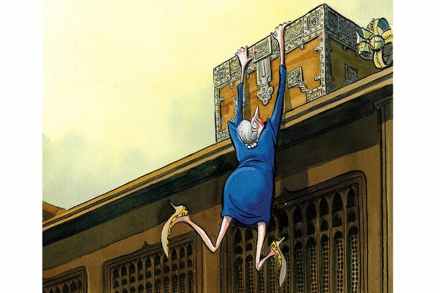
There are no good options left for Theresa May. Barring a remarkable turnaround (and there is more optimism on the government side than there was this morning), she is not going to get enough on the backstop to satisfy the DUP and so her deal will not pass on Tuesday. Her deal failing will trigger a series of events that will involve the Commons not only compelling the government to request an Article 50 extension but also seeking to take over the Brexit process. Over the weekend, the views of key Tories on how disastrous this would be have hardened up.

Is there any way that May’s deal could pass on Tuesday?

From our UK edition

The government’s efforts to get changes to the backstop have run into a brick wall in Brussels. The EU thinks, with justification, that MPs won’t allow no deal and so feels under no pressure to make significant concessions. As I write in The Sun this morning, one minister fully briefed on the negotiations says ‘we’re at what the hell do we do time’ But without a change to the backstop, Theresa May’s deal is going down to another heavy defeat on Tuesday. That won’t be the end of the matter, though. For the next day, parliament will vote against leaving on March 29th with no deal. Parliament will then almost certainly vote to request an extension to Article 50. At this moment, the UK would be in the EU’s hands.

Brexiteers may miss their best chance to take Britain out of the EU

From our UK edition

Theresa May was only ever going to win approval for her Brexit deal by persuading MPs that it was the least worst option. Remain-supporting MPs, she hoped, would come to believe that her deal was the only way of preventing no deal. At the same time, she hoped that Tories worried about ‘no Brexit’ would see her agreement as the best way of ensuring that Britain actually left the EU. But with the Commons vote on May’s Brexit deal just days away, both parts of this strategy are in trouble. Little wonder that the Chief Whip sounded downbeat about the prospects of winning next Tuesday’s vote at cabinet this week. A cabinet revolt has forced May to promise that if her deal is rejected, MPs can have a vote on whether to proceed with no deal or not.

The odds are still stacked against Theresa May’s Brexit deal

From our UK edition

Government loyalists are grim-faced today. There is no sign of a breakthrough in Brussels and Theresa May’s deal appears to be heading for another defeat on Tuesday. May’s problem is that everyone thinks that they get what they want by voting against her deal. As I say in the magazine this week, lots of ERG types have convinced themselves that they’ll eventually get the Brexit they want, come what may. If the Brexit deal goes down on Tuesday, the Commons is highly likely to compel the Government to request an Article 50 extension. At that point, the UK will be a supplicant: it’ll be up to the EU to decide whether to grant one, how long it will be for and what conditions are attached.

Will Brexiteers miss their best chance?

From our UK edition

Theresa May was only ever going to win approval for her Brexit deal by persuading MPs that it was the least worst option. Remain-supporting MPs, she hoped, would come to believe that her deal was the only way of preventing no deal. At the same time, she hoped that Tories worried about ‘no Brexit’ would see her agreement as the best way of ensuring that Britain actually left the EU. But with the Commons vote on May’s Brexit deal just days away, both parts of this strategy are in trouble. Little wonder that the Chief Whip sounded downbeat about the prospects of winning next Tuesday’s vote at cabinet this week. A cabinet revolt has forced May to promise that if her deal is rejected, MPs can have a vote on whether to proceed with no deal or not.

10 days to save Brexit

From our UK edition

MPs have 10 days to pass Theresa May’s Brexit deal or calamity strikes, I say in The Sun this morning. May’s deal is far from perfect. But what will happen if it doesn’t pass is truly appalling. If May’s deal hasn’t won a Commons vote by March 12th, the Commons will vote on whether to proceed with no deal. The parliamentary arithmetic is such that no deal will almost certainly be defeated. The next day, parliament will then vote on whether to request an extension from the EU. This vote will almost certainly pass. At this point, the United Kingdom would be in the weakest position it has ever been in this negotiation. Whether to grant an extension or not would be up to the EU and would require all 27 member states to agree.

Theresa May: ‘I don’t just do what Olly Robbins tells me to’

From our UK edition

On Tuesday night, as I write in the magazine this week, Theresa May met Leave-voting junior ministers. Her aim was to reassure them that she didn’t want an Article 50 extension and if there was one, it would be short. One of those present then asked her what would happen if Olly Robbins came back saying that a short extension was not negotiable. May was visibly irritated by this comment and shot back, ‘I don’t just do what Olly Robbins tells me to.’ She went on to say that a long extension ‘would be seen as a betrayal by the public’. This exchange is, I think, revealing. First, it shows how frustrated these ministers are. The exchange about Robbins wasn’t the only hostile questioning.

May’s breaking point

From our UK edition

The only certainty in the Brexit process is that there is no certainty. Brexiteers had long sought solace in the fact that, by law, the United Kingdom will leave the European Union on 29 March with or without a deal. But it’s now clear that this is not necessarily the case  —  or even likely. As we have seen this week, Theresa May is not in control of her party any more than Jeremy Corbyn is in control of his. Corbyn has been forced to move towards the idea of another ‘public vote’ on Brexit, though he has no enthusiasm for one, because he fears that if he doesn’t, MPs would leave his party and join the new Independent Group.

Amber Rudd, Greg Clark and David Gauke labelled ‘kamikaze’ ministers in tense Cabinet

From our UK edition

Today’s Cabinet was not a happy affair. I’m told that Liam Fox, Gavin Williamson and Andrea Leadsom all made clear their grave concerns about the Government’s new strategy. There was considerable anger at Amber Rudd, Greg Clark and David Gauke for how they have heaped pressure on May to offer this vote on a delay if the meaningful vote fails on the 12th of March. Liz Truss labelled them ‘kamikaze Cabinet Ministers’ and Andrea Leadsom was, I’m told, audibly furious. Brandon Lewis, Julian Smith, Jeremy Wright, Damian Hinds and James Brokenshire all criticised the way this trio had behaved. Michael Gove asked how May would whip in the vote on whether the UK should go for no deal or seek an extension to Article 50.

Jeremy Corbyn backs a ‘public vote’ on Brexit

From our UK edition

Jeremy Corbyn will tell Labour MPs tonight that the party will back a public vote on Brexit. This is the first sign of how The Independent Group has changed the political weather; it is hard to imagine Corbyn accepting this policy without the threat of more defections. Now, we wait to see the details of this policy and whether Labour is going to back a second referendum with Remain on the ballot. But if this is the shift, it is significant. In the 2017 election, Corbyn managed — to my surprise, and with some political skill — to successfully straddle the Leave / Remain divide. This decision will make that more difficult. But there is some talk in Westminster this evening that Labour’s eventual position will be to campaign for its Brexit deal in a referendum.

The £1.6bn question: is Theresa May buying off Labour MPs for Brexit?

From our UK edition

I understand that ministers are being pressured to rapidly approve a new, £1.6bn towns fund. The suspicion among ministers is that this fund, which is spread over seven years, is all part of Number 10’s efforts to get the support of some Labour MPs for Theresa May’s Brexit deal. The write round asking for ministers’ approval for this scheme declares that, ‘This government is committed to supporting communities that feel left behind’. The region which will receive the most money per capita is the Black Country. One cabinet minister tells me that while the write round letter has come from James Brokenshire ‘I don’t believe this has been invented in the MHLG (Ministry of Housing and Local Government)’.

What will the Commons do to Brexit next week?

From our UK edition

Brexit is back in the Commons next week. As I write in The Sun this morning, two of the big questions are: what will Eurosceptic Tories accept in terms of changes to the backstop and will the Cooper amendment pass. A document circulating among Tory Eurosceptics sets out what MPs should and shouldn’t regard as a meaningful change to the backstop. It warns that assurances from the EU Council would be ‘worthless’ and that changes to the political declaration would be ‘not legally binding’. It says that an interpretative instrument would have, ‘Some legal value’ but ‘would be a face-saver that would be legally pretty meaningless.

Tories must temper their Brexit passions – or pay the price

From our UK edition

There is a great opportunity in front of the Tories. As I say in the magazine this week, there’s 12 more years in power for the taking for them because of the split in the Labour party. But seizing this opportunity will require the Tories to temper their passions on Brexit. There are two Brexit outcomes that would be electorally disastrous for the Tories: no Brexit and no deal. No Brexit would be catastrophic because the Tories would have failed to deliver on the referendum result. The last two and a bit years would have been for naught and a pro-Brexit party would take huge chunks out of the Tories’ support. No deal wouldn’t be as bad. But it would still send the Tories to defeat at the next election.

The change we need?

From our UK edition

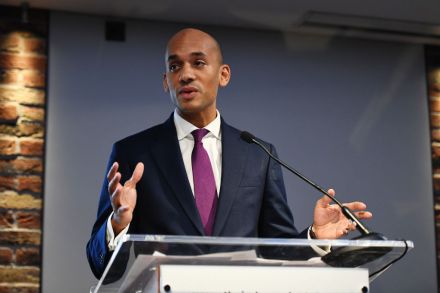
In September 2016, the Labour party reached a turning point but then failed to turn. The re-election of Jeremy Corbyn as leader with an increased majority, despite the opposition of two thirds of his own MPs, seemed to make a split inevitable. But it wasn’t until this week that Labour MPs found the nerve to leave the party and begin to form a new one: the Independent Group. Chuka Umunna, Luciana Berger, Chris Leslie, Mike Gapes, Angela Smith, Gavin Shuker and Ann Coffey all quit citing various aspects of Corbyn’s leadership as their reason for going. Then on Tuesday night, Joan Ryan followed suit. On Wednesday morning, three Tory MPs — Anna Soubry, Sarah Wollaston and Heidi Allen — joined them.

The Independent Group does more damage to Labour than the Tories

From our UK edition

Today’s PMQs was a rather surreal occasion. Sitting high up on the opposition benches were the new Independent Group of MPs. But none of them tried to ask a question and both Jeremy Corbyn and Theresa May chose to ignore the issue. Instead, we were treated to May repeatedly raising the defection of a Labour councillor in Brighton. I still think that this new group does more damage to Labour than the Tories. I doubt that many Tory voters will be attracted to a party led by the most ardent advocates of a second referendum. But the defection of these three Tory MPs risks creating an impression that the two main parties are as bad as each other.

Sajid Javid is wrong to strip Shamima Begum of her British citizenship

From our UK edition

Sajid Javid’s decision to strip Shamima Begum of her British citizenship leaves me deeply uneasy. I can understand why a Home Secretary charged with keeping the public safe would want to do whatever possible to keep this woman out of the country. But Begum was born in this country, grew up here and was educated here. This, surely, makes her British. As a country, we should want to take charge of investigating her and, if the evidence is there, prosecuting her. After all, she offended against the ties that bind when she headed from this country—a liberal democracy with the rule of law—to go and serve in a so-called caliphate that offended against the values we hold most dear.