James Forsyth

James Forsyth

James Forsyth is former political editor of The Spectator.

A feisty debate, but no game changing moment

From our UK edition

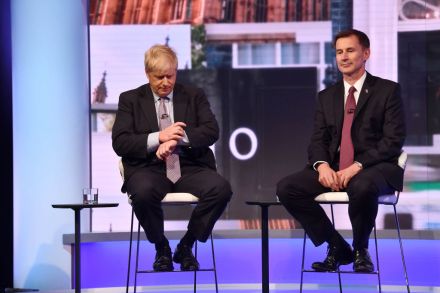
Tonight’s debate between Boris Johnson and Jeremy Hunt was a feisty affair. The pair clashed repeatedly over the October 31st Brexit deadline, tax policy and Donald Trump. The mood of the debate was summed up when Boris Johnson was asked what he most admired about Jeremy Hunt and replied, ‘his ability to change his mind’. Hunt shot back that he most admired Boris Johnson’s ability to avoid answering the question. The Brexit section of the debate was dominated by the question of whether the UK would leave on October 31st or not. Jeremy Hunt pushed Boris Johnson on whether he would resign if that didn’t happen, Boris Johnson dodged before saying that he wouldn’t want to give the EU an incentive not to come to an agreement.

Boris Johnson must remember: In victory, magnanimity

From our UK edition

With the ballot papers out, the next few days will be crucial in the Tory leadership election. As I say in The Sun this morning, it is reckoned that 60 percent of party members will have voted by Thursday. The Boris campaign are bullish. One very senior figure in the campaign is privately predicting that they will win by a more than twenty-point margin. The Hunt campaign is adamant that this isn’t right and that the contest is tightening every day. But interestingly, even several of his Cabinet supporters aren’t trying to claim that the race is close. One tells me, ‘Let’s face it, there isn’t must doubt about what the result is going to be.’ If Boris does win, he must remember Churchill’s dictum: In victory, magnanimity.

Boris Johnson on the Irish border

From our UK edition

In the forthcoming edition of The Spectator, we have an interview with Boris Johnson. You can read the whole interview with Katy Balls and myself from tomorrow morning, but one bit that particularly struck me was his language on the Irish border. Boris Johnson is returning to the position of challenging the Irish and the EU to put up border posts in the event of no deal. Here’s the exchange Can I ask you about the Irish border, can you foresee any circumstances where you would build …? Boris Johnson: No, no. So there is a lot of confusion about this point and so the only way there will be an Irish border is if the Irish government built it because there are no circumstances in which a British government led by you would ever build infrastructure in that way?

Hunt won’t let up in his attacks on Boris

From our UK edition

It is a week on since the first hustings of the Tory leadership run off. Boris Johnson appears to have righted the wobble that led to his rather lacklustre performance in Birmingham. But Jeremy Hunt is not going to ease off. As I report in The Sun this morning, the Hunt campaign’s attitude is, ‘We’re not going to let up on attacking Boris because we know it is cutting through’ The Hunt camp point to polling in the last few days which shows that he has a bigger advantage over Jeremy Corbyn than Boris Johnson and that the public prefer Hunt to Johnson as Prime Minister. This may be, and Hunt—who is far less well known that Boris—may be benefitting from some kind of novelty factor.

Boris’s biggest challenge

From our UK edition

Every campaign has a wobble — and Boris Johnson is getting his in early. A mix of complacency (he felt confident enough to allow his campaign fixer, James Wharton, to catch up on his other commitments) and the drama at his partner’s flat have combined to put him on the back foot. To compound matters, Jeremy Hunt has gone on the offensive. It’s starting to resemble an actual contest. Or it might, if there were really any serious prospect of him losing. As one veteran of Tory leadership contests puts it: ‘The members are still behind Boris. It is Brexit, Brexit, Brexit.’ This Tory argues that when the Brexit-backing members hear the attacks on Boris Johnson, they assume it is as much about stopping Britain leaving the EU as anything else.

Boris Johnson’s Brexit strategy is to play chicken with the EU

From our UK edition

Theresa May’s Brexit strategy was to play chicken with parliament. Boris Johnson’s is to play chicken with the EU. Theresa May believed that if she pressed on with her deal, parliament would – ultimately – blink and pass it. Her thinking was that MPs’ scared of no deal would vote for her deal to avoid that outcome. While Brexiteer MPs who didn’t like the deal, would back it in the end to be sure Britain did leave the EU. May’s approach failed because she was trying to squeeze two groups simultaneously with two different messages. Crucially, she also blinked – she didn’t resist the Cooper, Letwin, Boles attempt to force her to seek an extension.

Hunt preys on Boris’s wobble

From our UK edition

Jeremy Hunt is proving to be a more aggressive rival than many in the Boris Johnson campaign expected. Shortly before the last round of parliamentary voting, Hunt talked about putting ‘Boris through his paces’ which made him sound more like a personal trainer than a political opponent. But since making the final two, Hunt has been far punchier. His attacks on Boris Johnson this morning for ducking various TV debates are properly aggressive. Hunt’s attacks are garnering more attention because, after a relatively smooth parliamentary stage, Boris Johnson is having a wobble. The fallout from the Thursday night incident at his partner’s flat isn’t helping and his Brexit answer is still far too woolly.

How Boris Johnson intends to approach the next stage of the Tory leadership contest

From our UK edition

There was a huge cheer in Boris Johnson’s office when it was announced that Jeremy Hunt had 77 votes, sending him into the final two and eliminating Michael Gove. The Johnson campaign were dreading a run- off against Michael Gove, which would have been far more testing for their candidate. The Johnson campaign are keen to say that there’s no complacency, but there is an understandable confidence that they will beat Hunt. Indeed, their planning for government, which I wrote about in this week’s magazine, is about to be significantly stepped up. Boris Johnson will have no time to waste once he enters Downing Street: there’ll only be 99 days to October 31st. The first hustings on Saturday will give us an idea of how Hunt intends to campaign.

Javid knocked out as Gove moves into second place

From our UK edition

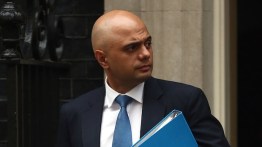
Sajid Javid has been eliminated from the Tory leadership race. He came bottom of the fourth ballot with 34 votes, four down from what he got yesterday. Michael Gove moved into second place, on 61 votes to Jeremy Hunt’s 59. While Boris Johnson received 14 more votes, giving him 157—and the support of an absolute majority of Tory MPs. The increase in Johnson’s vote suggests that there was tactical voting going on yesterday. It is hard to believe that many, if any, of Stewart’s voters would have switched to him. So, where did those 14 votes come from? I would hazard that they are Brexiteers who voted tactically to eliminate Rory Stewart yesterday and have now moved—or returned—to Boris Johnson.

The new PM’s Rory Stewart problem

From our UK edition

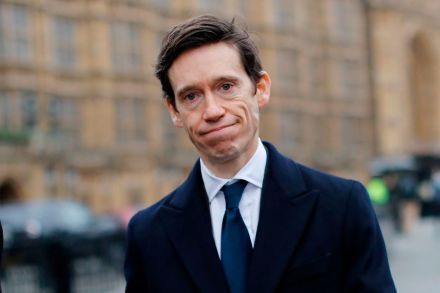
In this contest, Rory Stewart has established himself as the new champion of the Tory left. He has become a significant figure in the party. The interests of party unity mean that any new prime minister would want to have him inside the tent rather than on the backbenches where he would be the natural leader of any rebellion. But Rory Stewart has already said that he wouldn’t serve in Boris Johnson’s Cabinet. Indeed, he seems unlikely to serve in any new Tory leader’s government. This poses a problem for the incoming PM. Stewart’s absence will make it that much harder to bring the Tory party back together. Stewart is also now the natural leader of any Tory effort to force the government to seek another extension, or to block no deal.

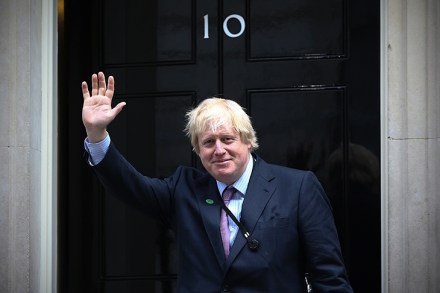
Boris in No. 10

From our UK edition

Quietly and discreetly, the planning for Boris Johnson’s premiership has begun. No one wants to be seen measuring the curtains, but his team are confident he’ll be the choice of Tory party members. It would be the most spectacular upset if he is not. Boris has fixed a Brexit deadline — 31 October — and time is short so his aides are concentrating on what to do when — if — he makes it to No. 10. The first few weeks in No. 10 are crucial for any prime minister, but particularly one who takes over in mid-term, without their own personal electoral mandate. Boris will have only 99 days to agree a Brexit deal that can pass through parliament, something which eluded Theresa May, with many MPs thinking that the government might collapse if he fails.

Rory Stewart’s bad debate leads to his elimination from the Tory leadership race

From our UK edition

Rory Stewart is out of the Tory leadership race. He polled only 27 votes—ten down on what he received yesterday. It seems clear that his performance in last night’s debate, where he chose to take on all the other candidates — not just Boris Johnson — cost him heavily. There was a sense among Tory MPs that the level of blue on blue action his candidacy was causing was damaging the party’s future prospects, and today they have stubbed out his candidacy. The fall in Stewart’s vote makes it hard to blame his ousting on tactical voting. If he had increased his own vote by just two from yesterday, he would still be in the race. Where Stewart’s supporters go now will determine who faces Boris Johnson in the members’ round.

Stewart takes on all the candidates in a chaotic BBC debate

From our UK edition

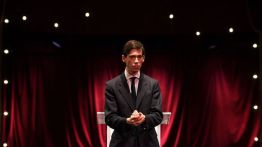
Tonight’s BBC debate was a chaotic affair, with the candidates regularly talking over each other. There was no defining moment. Boris Johnson avoided slipping on any banana skins while the other candidates made a concerted – and fairly effective – effort to check Rory Stewart’s progress. Before the debate, there had been much talk about Rory Stewart taking on Boris Johnson. But in the end, Stewart ended up taking on all the other candidates. He accused them of promising things that can’t be delivered. While this made him distinctive, I suspect it is an approach that won’t have gone down well with the Tory MPs he needs to persuade to switch to him in the coming rounds. The other candidates pushed back on Stewart too.

Rory Stewart makes the most gains – but can he eat into Hunt and Gove’s support?

From our UK edition

Rory Stewart made the biggest gains in the second ballot of the Tory leadership contest. Not only did he get over the 33 votes needed to stay in the race, but he also put on more votes than any other candidate—going from 19 to 37. But with Dominic Raab knocked out, the votes that are most clearly up for grabs are, generally, those of hard-line Brexiteers. It is hard to imagine many, if any, of Raab’s 30 supporters moving to Stewart. That means that if Stewart is to keep up his momentum he is going to have to take votes from the other Cabinet candidates—in particular, Jeremy Hunt and Michael Gove. Tonight’s TV debate will now be more dramatic than expected. But as I said yesterday, there is a danger for Rory Stewart in being seen to go in too hard on Boris Johnson.

Why the TV debates could break Rory Stewart’s momentum

From our UK edition

With Boris Johnson having all but booked his place in the final two, the most interesting question of the Tory leadership contest right now is whether Rory Stewart can get the 33 votes he needs to get through the next round of voting. If he does, he makes it to Tuesday night’s BBC debate. At which point, Stewart would have the chance to take on Boris Johnson directly. Some, including former Downing Street staffers, think that this clash could even propel Stewart into the final two. But I think it could actually break Stewart’s momentum. Why, because a lot of Tory MPs fear too much blue-on-blue action and wouldn’t want the members round to turn into a no-holds-barred contest.

Could the Tory leadership race end early?

From our UK edition

The Tory leadership is fast becoming Boris Johnson’s to lose, I say in The Sun this morning. He has more MPs backing him than any other candidate, and his campaign receives a further boost this morning with the former Defence Secretary Sir Michael Fallon endorsing him. In the words of one of those knows the Tory parliamentary party best, ‘the wind is blowing in one direction’. There is increasing talk among senior figures in the party that if the former Foreign Secretary comes out on top in the parliamentary rounds, it would be best to skip the members part of the contest and make him Prime Minister straight away. The argument goes that the polling shows that Johnson is the members’ choice, and so they wouldn’t mind him being coronated.

A fractured and crowded field

From our UK edition

The remarkable thing about the Tory leadership election is how long it has been coming. When Theresa May blew the party’s majority in the 2017 general election, few imagined that it would be two years before she quit as leader. What kept her in place was not a lack of Tory ruthlessness but a failure to agree on who should replace her. A lack of consensus is the defining feature of this contest. No candidate is pulling ahead in the endorsements, and no one has the backing of most of the cabinet. Instead, the race is as fractured as it is crowded. There are two sides to this election: full-on Brexit vs the cabinet. On the Brexit side, Boris Johnson is consolidating his position.

Gove pitches himself as the liberal candidate in the Tory leadership race

From our UK edition

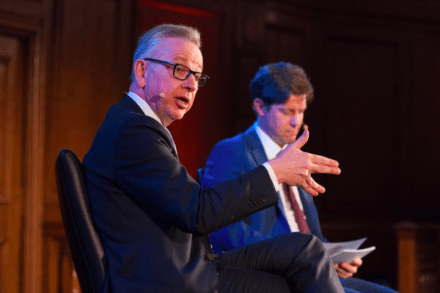
Michael Gove’s positioning in the Tory leadership race became clearer last night. In conversation with Fraser Nelson at a Spectator event, Gove made clear that he would be prepared to extend the Brexit deadline beyond 31 October if there were negotiations going on that would lead to a better deal. He argued that Sinn Fein’s poor recent election results meant that there was more chance of getting the devolved institutions up and running in Northern Ireland if Stormont had a far greater role in the administration of the backstop, which would allay some of the DUP’s concerns: ‘I think that there are ways in which we can work with the Irish government in order to ensure that we either need never go in.

Johnson bags Truss endorsement, but no Boris Amber dream ticket

From our UK edition

The Boris Johnson campaign has been very quiet this week. But as I say in The Sun this morning, it will move into a higher gear next week. Liz Truss is set to become the first person who sits round the Cabinet table to endorse the former Foreign Secretary. I understand that the campaign will also unveil a slew of endorsements from MPs, giving it more declared supporters than any other campaign. One MP who won’t be endorsing him, though, is Amber Rudd. Her and Boris Johnson sat down on Thursday. But ultimately the differences between them over Brexit policy are simply too great to make any kind of dream ticket work. I understand that Rudd pushed the former Foreign Secretary to budge on his commitment that the UK would leave the EU on October 31st with or without a deal.

Can the Tories save themselves?

From our UK edition

Parties don’t get rid of their leaders unless things are going very badly. But this Tory crisis is different in scale and size to anything we have seen in recent decades. The question is not whether the Tories can win the next election, but whether they can survive. The dire state that the Tories are in hasn’t put anyone off running to be leader, however. We suddenly have the most crowded field we have ever seen in a leadership race.Whoever wins will become prime minister without having to go through a general election. It’s quite a prize. Given the unpredictability of Tory contests and the frontrunners’ ability to destroy each other, everyone thinks they have a chance. The parliamentary rounds of this contest are best thought of as similar to Wimbledon.