James Forsyth

James Forsyth

James Forsyth is former political editor of The Spectator.

Ruth Davidson takes a pop at David Cameron in her resignation speech

From our UK edition

Ruth Davidson’s departure is a blow to the Tory party and the Union. Without her, the Tories will find it even more of a struggle to keep hold of their Scottish seats at the coming Westminster election. At the same time, the removal of such a formidable campaigner will make it that bit easier for the pro-independence parties as they try and win a majority at Holyrood in 2021—something that would almost certainly lead to a second independence referendum. Davidson’s press conference this morning was an understated affair: this was not an emotional goodbye, more a matter-of-fact resignation. I suspect that Number 10 will have been relieved by the fact that Davidson while not hiding her differences with Boris Johnson over Brexit, took no swipes at him.

Might there be a Brexit deal after all?

From our UK edition

Parliament has not yet returned from its summer break but we are already in a bitter constitutional battle, with the Prime Minister pitted against the Speaker of the House of Commons and the opposition parties. Boris Johnson’s decision to prorogue parliament is a deliberate attempt to raise the stakes. He wants to deny time to any effort by MPs to pass a law forcing him to request a Brexit extension. His message to them: bring me down or let me get on with Brexit. When parliament returns on Tuesday for a two-week session, MPs will have to decide how to respond to Johnson’s move. Opposition MPs had previously agreed to try to use legislative means to compel the government to seek an extension, as they did before the last Brexit deadline with Yvette Cooper’s bill.

Boris Johnson’s Brexit strategy gives MPs a simple choice

From our UK edition

Talking to various figures in Government today, it is clear that Boris Johnson's team want the choice for MPs to be between their Brexit strategy and making Jeremy Corbyn prime minister. They believe that ultimately there aren’t enough MPs prepared to make Corbyn prime minister; meaning that they’ll get to carry out their Brexit strategy. The decision to prorogue Parliament is designed, in large part, to limit the amount of time available to the opposition to find a legislative way to force the Government to seek an extension. At the same time, it also sends a message about how hard forcing Boris Johnson to request an extension will be.

Why a government of national unity isn’t going to happen

From our UK edition

There’s been much talk this week of a so-called government of national unity (GNU) to stop Boris Johnson’s Brexit plan. The idea is that he’d be forced out in a vote of no confidence in September and replaced by a caretaker PM who would request an extension to our EU membership before resigning and calling a general election. But, as I say in The Sun this morning, it is hard to see this happening. First, this wouldn’t be a government of national unity as its sole purpose would be to extend our membership of the EU which would make it one of the more divisive governments in living memory. But more importantly, Jeremy Corbyn won’t back anyone else for Number 10 while Tory rebels and the Lib Dems aren’t prepared to support him.

Remember, remember, the first of November

From our UK edition

The United Kingdom is a country governed, in large part, by convention —but in the heat of the Brexit debate, those conventions are beginning to evaporate. The Speaker of the House of Commons overturned long-standing procedure to limit Theresa May’s room for manoeuvre. The opposition used a humble address to the sovereign to force the publication of the government’s full legal advice on the withdrawal agreement, though the convention is that such advice is confidential. Parliament then impinged on the executive’s crown prerogative powers by passing a law dictating how the prime minister must behave at an EU summit. Under May, Downing Street sighed at such behaviour but grudgingly accepted it. Boris Johnson and his team have a different response.

Could Boris Johnson have to resign if he loses a confidence vote?

From our UK edition

The argument about whether Boris Johnson would have to resign if he lost a confidence vote is continuing to rage at Westminster. There is, though, an angle to this argument that is being neglected. Right now, the Labour leadership is clear that it won’t back anyone other than Jeremy Corbyn to be prime minister. This means that even if Boris Johnson lost a no-confidence vote, it is not clear who could command the confidence of the Commons. With no alternative government ready to go, then an election would be the obvious answer.  Things become more complicated if an alternative government could somehow be formed. In these circumstances, there would be more pressure on Boris Johnson to resign.

What’s changed with Boris Johnson in Downing Street

From our UK edition

10 days in to Boris Johnson’s premiership and the big change is, as I say in The Sun this morning, that the government machine now thinks no deal really might happen. Those involved in no deal planning meetings say that there is now an intensity to them that there never was before. Rather than querying whether no deal is desirable, officials are getting on with preparing for it. Ministers are also bound into this strategy. One of those who served in both May’s Cabinet and the new one says that under the previous Prime Minister Sunday’s Cabinet conference call would have led to a long discussion about the merits of no deal. But now all ministers are signed up to leaving on October 31st whether there’s a deal or not, it didn’t.

Who’ll blink first?

From our UK edition

On Sunday, Boris Johnson’s cabinet ministers were summoned to a conference call for an update on his Brexit strategy. The EU had not yet indicated any shift in its position, he said, but that should in no way deter the government from its current course. He was confident, he told his cabinet, that if he stuck to his guns the EU would move eventually. This, then, is the new government’s position. The Prime Minister told ministers that he does not think no deal is the most likely outcome — but if the government is not prepared for it, nothing will change. Is he right? Will the EU blink first? Many in the EU are unwilling to give ground. They don’t think the UK can possibly get ready to leave the EU with no deal by 31 October.

Why the EU isn’t taking Boris’s Brexit threat seriously yet

From our UK edition

Boris Johnson’s Downing Street is being quite clear that if the EU wants to talk then it needs to be prepared to reopen the withdrawal agreement. If the EU isn’t prepared to budge on this, the message is that there will be no deal. The EU isn’t inclined to take this threat that seriously right now. The view is that parliament will find a way to block the UK leaving without a deal or Boris Johnson will get cold feet. Even if the UK does leave without a deal, many in the EU reckon that within months the UK will be so keen to come back to the table that it’ll end up accepting the current agreement after all. So Boris Johnson needs to show that he can overcome any parliamentary effort to block no deal and that he can make it politically viable.

Boris Johnson’s political strategy is the same as his Brexit strategy

From our UK edition

Boris Johnson is running an outside / in campaign, I say in The Sun this morning.. If he’s to get the UK out of the EU by October 31st—the defining pledge of his leadership bid—then he’s got to get the public to put pressure on parliament. The new Prime Minister needs MPs to think that they’ll pay an electoral price for standing in his way. That’s why he is in full campaign mode: firing out popular policies, touring the country and making big speeches. A sizable poll bounce would mean that MPs would be far less likely to try and throw obstacles in Boris Johnson’s way.

Boris Johnson finds his voice in the Commons

From our UK edition

Boris Johnson has never really known how to speak in the Commons chamber. He has tried to adjust his speaking style but without great success. And as I say in the magazine this week, despite his reputation for rhetoric he has never made a memorable speech in the House of Commons. But in his first appearance in the chamber as Prime Minister, Boris Johnson simply decided to speak there as he does elsewhere – and it worked. It left the Tory benches – which hadn’t been that enthusiastic at first – roaring for more. In his opening statement, Boris Johnson was full of optimism. He talked of what this country could be like in 2050.

The Boris show

From our UK edition

Boris Johnson’s first 100 days will make or break him — which is what makes his premiership unlike any other. In his favour is his ability to rally support in the country; against him the realities of a hung parliament. How will he begin? It’s already clear that Boris Johnson intends to be an unconventional prime minister. His personality is such that he’s likely to eclipse all else in government. This is going to be the Boris Johnson show. Supporters and critics alike will be determined to keep him in the spotlight. He won’t change his style now that he has got the top job and privately, he is dismissive of those calling for a more sombre — ‘statesmanlike’ — tone. Just as significantly, his No.

Jeremy Hunt’s big risk

From our UK edition

Jeremy Hunt’s refusal to take the job of Defence Secretary means that for the first time since 2001, the runner up in the Tory leadership contest won’t serve on the winner’s front bench. Hunt’s decision not to take the job of Defence Secretary is not without risk for him. Many Tory members and MPs regard it as one of the best jobs in government so deciding that it is essentially beneath him won’t go down well with everyone. The first half of this reshuffle has been brutal, 17 departures from the Cabinet—11 forced. This is a dangerous strategy given that the government’s working majority in combination with the DUP is only four.

Boris Johnson’s risky strategy is to be himself

From our UK edition

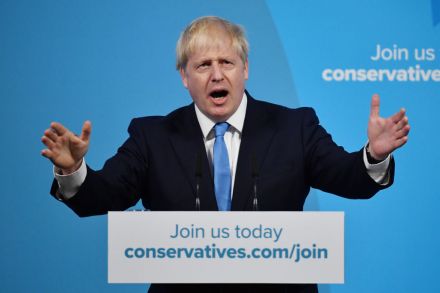
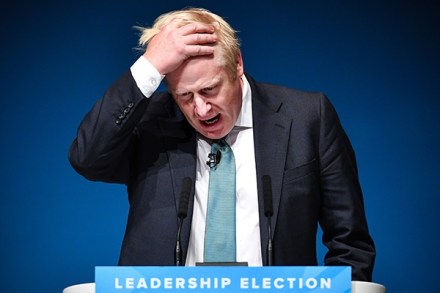
Boris Johnson is the new leader of the Conservative party. He has defeated Jeremy Hunt by a two to one margin, 66 to 34 per cent. This gives him a mandate and will boost his political authority—a boost that he desperately needs given how small his working majority will be, even in combination with the DUP. Boris Johnson’s speech was clearly a holding exercise, his team want to reserve their main messages for tomorrow when he actually becomes prime minister. It wouldn’t be a good look for him to be setting out his plans for the country to his Tory colleagues rather than the country as a whole. But perhaps the most telling thing about the speech was how typically Boris it was. There were jokes and bad puns.

Which Brexit strategy will Boris Johnson go for?

From our UK edition

Before he even gets in to Number 10, Boris Johnson must make one of the most important calls of his premiership. As I say in the Sun this morning, he must decide what his Brexit plan is. On Wednesday, calls with European leaders will begin—and Boris Johnson will have to know what he wants to tell them. As one of those preparing him for government puts it, ‘They’ll call him to say congratulations—and he’ll have to set out his stall’. This is crucial because the European Commission will refuse to negotiate with Boris’s government unless it is instructed to do so by the member states. Within the Johnson camp, there is an ongoing debate about what course to take.

The prorogation vote shows how strong the anti-no deal coalition is

From our UK edition

In a much heavier than expected defeat, the government lost by 41 votes in its attempt to take an anti-prorogation amendment out of the Northern Ireland bill. The vote was essentially a proxy for whether the Commons would accept no deal, and the size of the government’s loss is a reminder of how difficult any Prime Minister would find it to stay in office with this parliament if they went for no deal. It is worth noting that the amendment doesn’t stop no deal; and doesn’t even create an obvious vehicle to do so. But with this size of majority, the anti-no deal faction will be confident of finding a way with John Bercow’s help. Boris Johnson was in the Commons for the vote, ironically sitting just one row in front of a bunch of the Tory rebels.

Will Boris revive cabinet government?

From our UK edition

It has become something of a tradition in British politics: an incoming prime minister promises to restore proper cabinet government. They vow to go back to the good old days of NHS policy being run by the health secretary, schools policy by the education secretary — and decisions taken in open discussion with a prime minister who is first among equals. The reality, however, is that a small clique in No. 10 ends up controlling the government. Gordon Brown made a fuss about bringing back cabinet government to try to differentiate himself from Tony Blair. In a rare admission of error, Brown says in his memoirs that he failed to do so. He tried to do everything himself, with mixed results.

Boris Johnson’s planning for government

From our UK edition

Boris Johnson had been refusing to engage with the question of Cabinet appointments and the like until he was through his Andrew Neil interview. But with that done, his focus is now shifting from the campaign to the transition as I say in The Sun this morning. One source explains the move by saying that ‘from next week, decisions have to be taken for the success of a Johnson administration’. I understand that Johnson will settle on who he wants as Chief Whip, Chancellor and Party Chairman before moving on to the other appointments. One long time Johnson confidant tells me that Boris has learnt lessons from what happened to Vote Leave. It won the referendum, but it didn’t have a plan for what to do the day after.

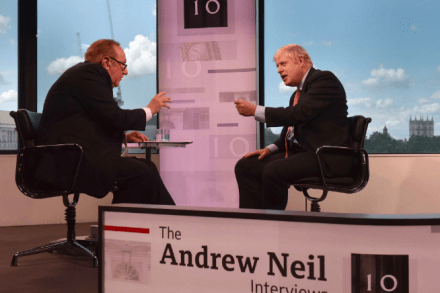
Boris Johnson struggles through interview with Andrew Neil

From our UK edition

Boris Johnson just faced by far his toughest interview of the campaign. He was pressed hard on Brexit, Kim Darroch’s resignation, Nazanin Zaghari-Ratcliffe and his economic policy by Andrew Neil. At the end of the interview, Boris Johnson looked at his watch—I suspect it seemed to him much longer than the half an hour it was. On Brexit, Boris Johnson made his usual case. But his attempt to sound like a details man by citing Gatt 24 Article 5B came rather a cropper when Andrew Neil asked him what was in Article 5C. Boris Johnson had no answer.

Boris’s most important appointment

From our UK edition

After being backed by a majority of Tory MPs, Boris Johnson now looks set to win over party members by an even larger margin. Surveys suggest he will hoover up between two thirds and three quarters of the vote. A Tory leader with such a mandate would, normally, start his premiership with huge amounts of political capital and be able to dictate terms to their opponents within the party. But Johnson will have to watch his back from the moment he crosses the threshold of No. 10. Most new prime ministers arrive with a decent majority. Johnson will be clinging to power from day one. Even with the DUP, the government has a working majority of just five MPs. That might go down to just three after the Brecon and Radnorshire by-election next month.