James Forsyth

James Forsyth

James Forsyth is former political editor of The Spectator.

Boris Johnson won’t surrender the metaphor

From our UK edition

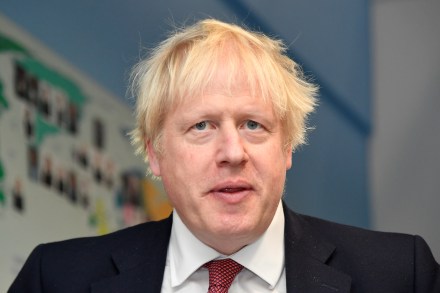
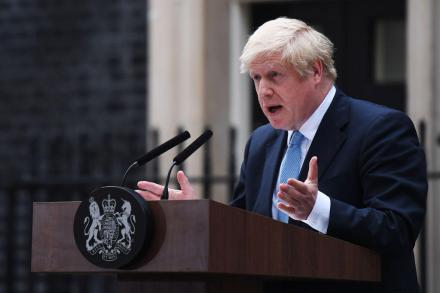
In a feisty interview on The Andrew Marr Show, Boris Johnson defended his use of the term ‘surrender act’, calling it a ‘martial metaphor’ of the type that has long been used in British politics. He said that he had been a 'model of restraint' in his own language. He did, however, express regret for sounding so dismissive of the Labour MP Paula Sherriff’s concerns about death threats. It was clear that Boris Johnson had three intentions in this interview. First, to ram home his message that the Benn Act is a ‘surrender act’ – I lost count of the number of times he used the phrase. Second, to try and turn the conversation to the Tories' domestic agenda.


How the Tories intend to avoid a repeat of the 2017 manifesto disaster

From our UK edition

The Tory plan was to fight the 2017 election as a Brexit election. But that strategy was derailed by a disastrous manifesto that alienated the Tory base and allowed Labour to change the subject to domestic policy. One of the problems with that manifesto was that it was written by a very small clique, meaning that problems weren’t spotted or ignored. To try and avoid a repeat of this, Boris Johnson has put a committee of Cabinet ministers in charge of overseeing the manifesto, I report in The Sun this morning. In line with the Pickles Review into what went wrong at the 2017 election, the Chancellor, the Home Secretary, the Foreign Secretary, the party chairman and the chief whip will all sit on this panel.

The Tory party depends on winning over Leave-voting Labour seats

From our UK edition

A Prime Minister held in No. 10 against his will. The very notion seems absurd, but this is essentially what is happening right now. Boris Johnson wants a general election, a chance to see whether the public agree with him or parliament on the sanctity of the 31 October deadline for leaving the European Union. The House of Commons won’t give him one. Instead it keeps him in office while the opposition condemn him as unfit to be there. In more normal times, the Supreme Court finding unanimously that the prime minister acted unlawfully in the advice he gave the Queen would lead to either a prime ministerial resignation or a motion of no confidence. But Johnson has no intention of resigning and despite parliament’s return, a motion of no confidence has not been tabled.

Boris Johnson and Jeremy Corbyn clash spectacularly in the Commons

From our UK edition

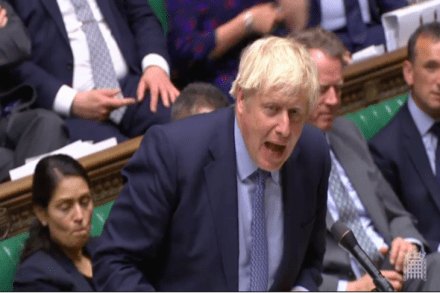
Boris Johnson and Jeremy Corbyn have just clashed spectacularly in the House of Commons. Boris Johnson repeatedly goaded Jeremy Corbyn over his refusal to go for an election now.  This was not a Prime Minister acting like one who had been chastened by the Supreme Court’s decision, but one determined to set himself up as the man determined to deliver Brexit against a parliament that was trying to stop him. One of the most striking features of his speech was how frequently he declared that the public could tell what was really going on, that MPs were trying to block Brexit. In response, Jeremy Corbyn was not at his best. He failed to forensically examine the government’s position.

The Supreme Court rules that parliament has not been prorogued

From our UK edition

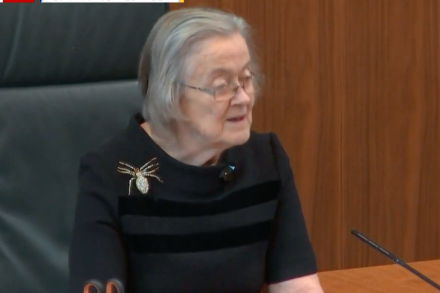
In a dramatic decision, the Supreme Court has ruled that the prorogation of parliament was unlawful and that the Speaker of the House of Commons and the Lords Speaker should bring parliament back at their convenience. John Bercow has already said that parliament should return as a matter of urgency. The Supreme Court verdict is a massive constitutional moment. The judges have ruled that the issue of prorogation is justiciable, which the High Court deemed it not to be. They have also declared that the order in council which led to the prorogation was unlawful and so that parliament hasn’t actually been prorogued. In other words, that prorogation never happened. What is, perhaps, most surprising is that this verdict is unanimous.

Can New York give the Brexit negotiations some momentum?

From our UK edition

Three events will dominate next week. The Supreme Court’s decision on the legality of prorogation, Labour conference and the UN General Assembly. As I say in The Sun this morning, Boris Johnson’s address in New York will be more ‘Green Giant’ than ‘Incredible Hulk’. He’ll stress the UK’s environmental credentials; announcing a new biodiversity fund designed to help save the African elephant, the black rhino and the pangolin. But more important than the speech he’ll make is the meetings that will take place in the margins. He’ll see most of the key players in the Brexit talks in New York, including a meeting with the Irish leader Leo Varadkar on Monday.

Why there’s still a chance of a deal

From our UK edition

One of the reasons why Boris Johnson is Prime Minister is that he is an optimist. After the negativity of the May years, the Tory party yearned for some can-do spirit, which he was able to provide. But his relentless positivity has made it difficult to assess how realistic a Brexit deal is. At cabinet on Tuesday he made very bullish noises about the prospects of an agreement being reached. How realistic is this, though? Johnson told the assembled ministers that he’d had a ‘good lunch’ with Jean-Claude Juncker. There were chuckles. More seriously, he pointed out that the EU had shifted from its prior position, which was that the withdrawal agreement could not possibly be reopened and that only the political declaration could be changed.

Why a Brexit deal would make it through Parliament

From our UK edition

It might not feel like it after Monday’s press conference theatrics and the briefings coming out of Brussels, but there is still a chance of a Brexit deal. It should be stressed that it is still odds against an agreement being reached. There has, though, been some shifting in positions in the last few weeks. The EU is now open to reworking the withdrawal agreement in a way that it simply wasn’t a month or so ago. The British government, the DUP and Dublin have all—to varying degrees—moved; meaning that there is now some hope of finding a way to replace the backstop. As one senior British government source puts it, ‘We have moved on SPS. They have moved on consent’. If a deal can be reached, I think it will pass in parliament.

Why the UK hasn’t presented any specific backstop proposal to the EU

From our UK edition

The EU side regularly points out that the UK government hasn’t presented any detailed proposals on what it wants to replace the backstop with. At a Cabinet committee meeting this week, the Brexit Secretary Steve Barclay set about explaining to ministerial colleagues why this was. As I report in The Sun this morning, He told the Committee that the EU had set three tests for any new proposal. First, it must avoid any infrastructure on the border that would be incompatible with the Good Friday Agreement. Second, it must protect the integrity of the EU’s single market. Third, it mustn’t involve any checks on the island of Ireland. Barclay said that the UK could meet the first two of these tests, but not the third.

Why is Nigel Farage being so emollient to the Tories?

From our UK edition

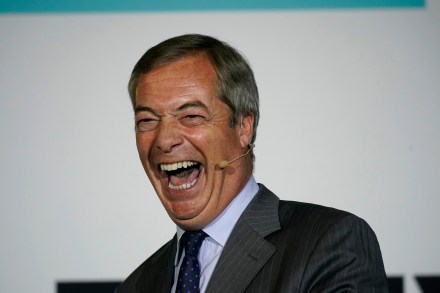
In verbal ding dongs Nigel Farage usually gives as good as he gets. But he has been oddly restrained in his response to the Tories ruling out any kind of electoral pact with him on the grounds that he is not a ‘fit and proper person’. On the Andrew Neil show last night, Farage was strikingly emollient. He said that he didn’t want any role in government in exchange for a pact and downplayed the criticism of him, saying it was just a ‘junior press officer’ sounding off. He argued that a pact was needed because if there was a Labour-led government ‘we’re not going to get a meaningful Brexit of any kind at all’. On this point, I think Farage is right.

Will turning the Tories into the pro-Leave party pay off for Boris?

From our UK edition

An election might still be months away, but the parties have already made their big strategic choices. The Tories and the Liberal Democrats are betting that Brexit is the defining issue of our times and that its pull is strong enough to dissolve longstanding party allegiances. Jeremy Corbyn, meanwhile, is planning on fighting a much more traditional left vs right campaign. His second-referendum policy is almost an attempt to quarantine the issue of Brexit. Since becoming leader, Boris Johnson has reshaped the Tory party in an attempt to make it fit for purpose in an era when politics is defined by Brexit. He has abandoned Theresa May’s tolerance of dissent on this issue.

Blow for Boris as parliament may return early

From our UK edition

The Court of Session’s verdict that prorogation is unlawful is a major headache for Boris Johnson. It makes the Supreme Court’s decision on the matter, and the court will hear the case on Tuesday, much more unpredictable. There is now a significant chance that parliament will have to be recalled. The Supreme Court will hear all the various cases on prorogation at the same time on Tuesday, remember the government won in the High Court in London. But it will adjudicate these cases in line with the law of the court from which they came. So, it will decide the case from the Court of Session according to Scottish Law and the one from the High Court according to English law. This raises the possibility of them deciding it is legal under English law but not Scots.

Boris tells Cabinet, ‘I’m the most liberal Conservative PM in decades’

From our UK edition

Anyone expecting today’s Cabinet to have been a bust-up following Amber Rudd’s resignation will have been disappointed. From what I’m hearing, it was a strikingly harmonious meeting. Perhaps this was because most of the meeting was focused on the government’s domestic agenda. On Brexit, I’m told that Boris Johnson said his policy remains unchanged—that he still wanted the UK to leave on October 31st with a deal if possible, but without one if needs be. He said that what he’ll do on 19 October, the day on which the Prime Minister is required by the Benn Bill to request an extension if there’s no deal, will only become clearer nearer the time.

Amber Rudd quits Cabinet – and the Tory party

From our UK edition

Amber Rudd has quit the Cabinet and resigned the Tory whip. Rudd’s departure deepens the split in the Tory party and will be a particular blow to Boris Johnson; the pair have always got on well personally despite their very different views on Brexit. What will worry Number 10 is that Rudd might start something of a domino effect. There are, as I said in the Sun this morning, several Cabinet Ministers who are worried about the government’s direction and irritated at not being more involved in Number 10’s decision making. I hear that others might follow her out of the door in the next 48 hours, as we discuss in the latest podcast (below) Rudd backed Remain in the referendum and Jeremy Hunt for the Tory leadership.

Tories pushing for Boris Johnson v Jeremy Corbyn TV debates

From our UK edition

Boris Johnson’s best route to a majority is turning the election into a question of whether you want him or Jeremy Corbyn as Prime Minister, I say in The Sun this morning. Polling shows that 43% of voters regard a Corbyn premiership as the worst outcome to the current crisis, compared to 35% for no deal. If Boris Johnson can get the vast majority of that 43% to vote Tory, then he’ll get the majority he so desperately needs. This desire to frame the election as a choice between Boris Johnson and Theresa May means that he is taking a very different approach to TV debates than Theresa May did. I understand that negotiations have already begun with the broadcasters and the Tories have made clear that they’ll do as many head to heads with Jeremy Corbyn as possible.

Boris Johnson could be about to lose everything – or redefine British politics

From our UK edition

Boris Johnson has already decided on his election message: vote for me and get Brexit, vote for anyone else and get Jeremy Corbyn. He will ask voters: who can you imagine negotiating best with Brussels? Me, or Corbyn? Clear as the message may be, the Prime Minister is risking everything in this contest. He could lose it all: Brexit, his premiership, the party, the works. He could go down in history as the shortest-lived occupant of No. 10. Or he could win, take this country out of the EU, then realign and reshape British politics. As one of those intimately involved in the decision to go for an election puts it: ‘It is a massive gamble. Nobody knows how it will pan out.’ One secretary of state admits that the outcome of the election is ‘totally unknowable.

Boris Johnson will get an election in October, eventually

From our UK edition

Labour’s split over the timing of any election has deepened this evening. In an interview with Andrew Neil, John Healey repeatedly declared that as soon as the extension legislation has got Royal Assent, Labour would want an election. Andrew Neil put it to Healey that this contradicted what Keir Starmer said today at the despatch box, when he said that Labour would not favour an election until an extension was actually in place. Jeremy Corbyn then took the same position as Healey when he spoke in the election debate in the chamber. If this holds as the official Labour position, then Boris Johnson will get the numbers for an election as soon as this extension bill is through. Healey was clear too that Labour would use an extension to try and negotiate its own deal.

Boris’s no-deal immigration plan

From our UK edition

Tomorrow the government will say what will happen to free movement in the event of a no-deal Brexit. I understand that free movement will be replaced by a three-year temporary Leave to Remain Scheme for EU nationals who arrive in the UK before 31 December 2020 and register with the EU settlement scheme. Their three years would start from December 2020. So, in other words, if you are an EU citizen who arrives in the UK in March 2020 you would be entitled to stay until at least December 2023. This is a significant change from previous government plans to end free movement on 1 November in the event of no deal. It should provide more certainty to EU nationals considering taking a job in the UK and deal with many of the problems that Fraser Nelson set out in last week’s cover piece.

What is Number 10 up to?

From our UK edition

Boris Johnson’s team wants to set up a binary choice between backing him on Brexit and a Jeremy Corbyn government. First, they are trying this on their own MPs—hence the decision to treat this week’s vote on an extension as if it was a confidence matter. But if this doesn’t work, and at the moment it looks like there are enough rebels for anti no-deal MPs to seize control of the order paper, then—I suspect—they will go to the country with the same message. They are determined not to allow MPs to make a puppet of Boris Johnson. They know that if the Prime Minister requested an extension, even if he had been forced into it, it would destroy their electoral strategy. Why?

Tory MPs who vote for the extension legislation will be barred from standing for the party at the next election

From our UK edition

Parliament returns on Tuesday and it is expected that anti no-deal MPs will – with John Bercow’s help – quickly seize control of the order paper. They will then try and rush through a bill designed to stop the UK from leaving the EU without a deal. I report in the Sun this morning that Number 10 will treat these votes as they would a confidence vote with anyone who doesn’t back the government being immediately disqualified from standing for the Tories again. They hope that this will keep some waverers in the government lobby next week. It would mean that if former Cabinet Ministers such as Philip Hammond voted for the legislation, as they intend to, they would be barred from standing for the party again; ending their time as Tory MPs.