James Forsyth

James Forsyth

James Forsyth is former political editor of The Spectator.

Coffee House Top 10: How Number 10 view the state of the negotiations

From our UK edition

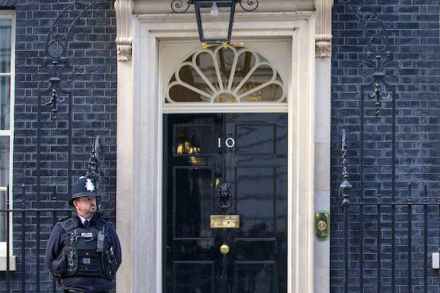
We’re closing 2019 by republishing our ten most-read articles of the year. Here’s No. 1: James Forsyth's article from October on a key Brexit briefing from Downing Street: Earlier today, I sent a message to a contact in Number 10 asking them how the Brexit talks were going. They sent a long reply which I think gives a pretty clear sense of where they think things are. So, in the interest of trying to let people understand where Number 10 reckon the negotiations are, here is their response: ‘The negotiations will probably end this week. Varadkar doesn’t want to negotiate. Varadkar was keen on talking before the Benn Act when he thought that the choice would be ‘new deal or no deal’.
How the Tories plan to hold together their new electoral coalition once ‘Brexit is done’ and Corbyn gone

From our UK edition

The thumping majority by which both the second reading and the programme motion for the Withdrawal Agreement Bill passed yesterday, confirmed that Boris Johnson will have no problem taking the UK out of the EU on January 31st. This sums up the remarkable position that this government is in. It will have done the main thing that it was put in power to do within less than two months of taking office. The danger for the Tories, as I say in The Sun this morning, is that their new electoral coalition was held together by a desire to ‘Get Brexit Done’ and fear of Jeremy Corbyn, and both of those issues will soon be resolved.

Boris’s Britain: How the PM intends to deliver for his new friends in the North

From our UK edition

The era of uncertainty has ended. Boris Johnson’s decisive victory has not only broken the Brexit deadlock created by Theresa May’s disastrous 2017 campaign, but also turned the page on almost a decade of weak government. The previous three general elections have all resulted in constrained prime ministers. First, David Cameron was forced to govern in coalition with the Liberal Democrats. Then, in 2015, his slim majority left him dependent on Tories who would be on the other side from him in the EU referendum he had had to promise. The May debacle left her at the mercy of — and defeated by — her own warring factions. But now we’re looking at something very different: a Prime Minister who is king of all he surveys at Westminster.

The three components of Boris’s plan for government

From our UK edition

The two most significant consequences of this election are that the United Kingdom is leaving the EU and the Tories are a national party in a way that they haven’t been for decades. Boris Johnson’s critics relish saying that these two things are incompatible, that there is no way that Brexit can be made to work for the whole country. ‘Workington Man’, they say, has no desire to see Britain become Singapore-on-Thames. But, as I say in the Christmas issue, this analysis misses the point: Boris Johnson and his team have a very different vision for Brexit than that. There are three parts to Boris Johnson’s plan to deliver for those parts of the country that haven’t fully shared in the prosperity of the last thirty years.

The Tories know they must deliver for their new voters

From our UK edition

‘If Darlington high street isn’t visibly better in four years’ time, we’ll be in trouble’, one of Boris Johnson’s confidants told me the other day. Boris Johnson and his team are, as I say in The Sun this morning, acutely away that if they are going to make Thursday night’s electoral shift permanent then they are going to have to deliver for those places that swung to the Tories in this election. Part of Boris Johnson’s answer will be improving the infrastructure serving these places. In his interview with The Spectator during the campaign, he indicated that he was going to rip up the Treasury’s rules on capital spending to ensure that more gets built outside of London and the South East.

Boris Johnson’s spectacular win heralds a new form of Toryism

From our UK edition

Boris Johnson has won one of the most spectacular election victories in recent British political history. He has broken the deadlock that has gripped British politics since the 2017 election, winning a much larger majority than anyone expected. He is, currently, projected to have a majority of 68. This victory means that the UK will leave the EU on the 31st of January. But it also means something else, and something that might turn out to be almost as important to the future of the country. This election has realigned British politics. The Tories have won Leigh, Workington, Wrexham, Ashfield, Bolsover, Darlington and a slew of other working class seats north of the Watford. At the same time, they have lost Putney and failed to regain Canterbury.

The new Conservatism has begun

From our UK edition

Elections should be carnivals of democracy, yet the campaign we have just been through has felt more like amateur dramatics at times – the standard of debate has not risen to the importance of the issues at stake. Yet this election will go down as one of the most consequential in British history. It has brought a profound change to our politics: not just that Brexit is now certain to happen, but also in the way that both main parties have transmogrified before our eyes – in terms of what they stand for, and who they appeal to. The list of Tory gains shows the extent of the change that has just taken place: Leigh, Workington, Clwyd South, Darlington, Wrexham, Burnley, Redcar, Scunthorpe and a slew of other working-class seats north of the Watford Gap.

This exit poll is a triumph for Boris Johnson

From our UK edition

The exit poll is predicting a Tory landslide, a majority of 86 seats. The United Kingdom will leave the EU on the 31 of January. (The exit poll does have a margin of error but it is inconceivable that it could possibly be this wrong.) This is a huge achievement by Boris Johnson. Earlier this year, the Tories came fifth in a national election with less than ten per cent of the vote—the European Elections. But Boris Johnson’s leadership has completely transformed the Tories’ fortunes. He has reunited the Leave vote behind the Tories while using fear of Jeremy Corbyn to keep most Tory Remainers on board. The exit poll is suggesting that the Liberal Democrats have only made one net gain.

Given the stakes, it’s no surprise this election has gone down to the wire

From our UK edition

Polling stations open in 15 hours time and this is an election where no one is certain what the result will be. The YouGov MRP shows a tightening race with the Tories currently on course for a majority in the twenties but with Labour closing strongly. On the YouGov MRP, if the Tory lead fell by one per cent Boris Johnson’s majority would go into the teens. If it dropped by two points, there would still be a Tory majority but it would be in single digits. The reports from the ground are mixed. In some places, Tories are surprisingly bullish, believing that the Corbyn factor will help them get over the line. In others, they fret that Labour has effectively changed the conversation away from Brexit.

The three things that would have to happen to block a Tory majority

From our UK edition

In 72 hours time, voting will be well underway. We will be talking about turnout being ‘brisk’. Right now, the polls are indicating that a Tory majority is the most likely result. But it is not certain and a combination of three things could still stop it. First, mass Remainer tactical voting. The margins in this election are fine and if Remainers starting backing whoever was most likely to defeat the Tories in their seat, that could put a Tory majority at risk very quickly. There will be lots of calls for tactical voting in the coming days. But it is worth remembering that in 1997, when there was widespread anti-Tory tactical voting, the Labour and Lib Dem leaderships were politically close and hadn’t spent the campaign attacking each other.

There are only two likely outcomes to this election

From our UK edition

There are, as I say in the Sun this morning, two possible outcomes to this election: a Tory majority or a hung parliament. The seats where Labour are now concentrating their resources show that they don’t think they can win outright. Instead, their hopes rest on stopping Boris Johnson from getting to 326 seats. Right now, the Tories are on course for a majority. I understand that their own internal numbers indicate a working majority. But these margins are very fine, and victory could slip away if voters don’t turn out. If Boris Johnson does win a majority next week, it will be because he has presented himself as change. Not just the person who can break the deadlock, but a leader with a different agenda to the one that the Tories have had these last nine years.

The Tories are right to be nervous

From our UK edition

Despite their consistent poll lead, the Tories are anxious. There is only a week to go and in many seats the race is far too tight for comfort. Because they have no potential partners in a hung parliament, if the Tories win, it will be by the ‘skin of their teeth’, I’m told. ‘There’s quite a lot of nervousness at CCHQ,’ says one cabinet minister sounding decidedly nervous. The big Tory concern is that the Remain vote is beginning to coalesce around Labour. To date, the Tories have benefitted from the fact they’re uniting the Leave vote, while Remain is split. If that changes, the likelihood of a majority will be greatly reduced.

Trump flies home as Tories breathe a sigh of relief

From our UK edition

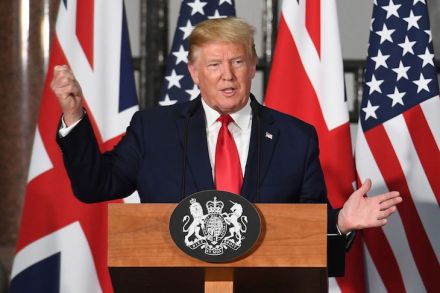
Donald Trump is on his way back to the US, and—as Katy says —they’ll be breathing a large sigh of relief in CCHQ. The great disruptor has not been that disruptive on this visit. He has, largely, kept out of the election. He hasn’t said anything to add fuel to the fire that Labour is desperately trying to get going on the NHS and a US trade deal. He hasn’t picked a fight with Jeremy Corbyn despite the provocations of the Labour leader; Labour would have loved to have turned this election into a question of whose side are you on, Corbyn or Trump’s as that is that rare thing a popularity contest that Corbyn could win.

If Trump wants to dent Corbyn’s election chances, he should just ignore him

From our UK edition

If Donald Trump really doesn’t want Jeremy Corbyn to become Prime Minister, he should, I say in the Sun this morning, just ignore the Labour leader when he comes to London for the Nato summit next week. The Labour leader would like nothing more than to get into a war of words with the US President. If he can turn this election into a question of whose side are you on – his or Donald Trump’s? – it’ll be that rare thing, a popularity contest that Corbyn can win. Those close to Boris Johnson are hoping that Donald Trump keeps schtum next week: and doesn’t get involved in any dramatics. Another spat with the London Mayor Sadiq Khan would be particularly ill-timed given the Mayor’s role in responding to yesterday’s terror attack.

Will the BBC hang tough in negotiations over the Boris Johnson interview?

From our UK edition

So, will Boris Johnson sit down for an interview with Andrew Neil? Jeremy Corbyn and Nicola Sturgeon have done theirs while Jo Swinson and Nigel Farage are scheduled for next week. The Prime Minister hasn’t yet agreed a time for his. Given how tough an Andrew Neil interview is, just ask Jeremy Corbyn if you doubt that, it is hard not to be cynical about the Tories’ scheduling issues. Boris Johnson is, though, offering to appear on the Andrew Marr show this Sunday. This offers an easy solution to the problem. The Tory leader, who is clearly free on Sunday morning, could simply record his interview with Andrew Neil then and it could be shown that evening. I understand that the BBC have proposed a solution along these lines.

Jeremy Corbyn’s failings are being critically exposed

From our UK edition

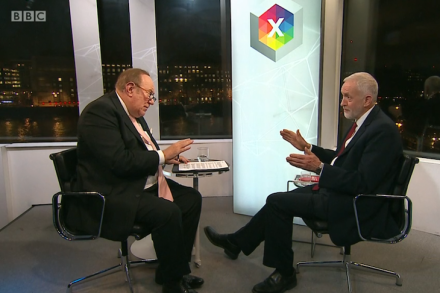
After last night’s interview with Andrew Neil, Jeremy Corbyn desperately needs to change the conversation. He attempted to do that this morning, presenting a set of leaked documents that he said showed the NHS would be sold out if the Tories won the election. But the problem for Corbyn is that these documents don’t show that. Yes, the US wants to extend patents on drugs—which would push up their prices—but there is absolutely no indication that the UK has agreed to this. It is tempting to compare Corbyn’s desire to get the idea going that the NHS will be sold out as part of UK/ US trade deal to Vote Leave’s warnings about Turkey joining the EU. But there is a crucial difference: it was government policy that Turkey should join the EU.

Sturgeon struggles on the currency question

From our UK edition

It was one of the defining moments of the 2014 Scottish referendum campaign. In that early August TV debate, Alistair Darling said any 8 year old could tell you what a country’s flag, capital and currency were but that Alex Salmond couldn’t say what currency an independent Scotland would use. Salmond’s floundering that night badly hurt the ‘Yes’ cause. This evening, when Andrew Neil pressed Nicola Sturgeon on what currency an independent Scotland would use, she replied the pound but without a monetary union. She indicated that this would be the case even if Brexit had happened. So, Sturgeon is saying that Scotland would be applying to join the EU while using a third country’s currency without a monetary union.

Talk of a Tory majority could spell trouble for Boris Johnson

From our UK edition

In their attempt to avoid a repeat of 2017, the Tories have cleared another hurdle. A day on from the launch of their manifesto, there are no policies that are alienating core voters (the dementia tax) or target voters (means testing the winter fuel allowances). Instead, the biggest row is over whether using a net figure for the number of new nurses, rather than a gross one, is acceptable.   So with their manifesto safely launched and the Labour one appearing not to have had the seismic impact that the 2017 one did, are the Tories now on course for a majority? The current trajectory is favourable to them. That seat projection at the weekend which had the Tories on course of a forty-odd seat majority seems about right.

Tory manifesto will shift the party to a more blue collar conservatism

From our UK edition

What happened last time means that the Tories are extremely nervous about their manifesto launch tomorrow. As I say in The Sun this morning, the Tories have had teams poring over it to see what might blow up in it. One of the many problems with the 2017 document was that it failed to understand the shift in the public’s mood when it came to austerity. This manifesto gets that change. I understand that it will bring back a version of the nurses’ bursary, which helped with the costs of training to be a nurse, that George Osborne abolished in 2015. This was widely regarded by the public as a cut too far.

Remain’s last stand: the collapse of the anti-Brexit campaign

From our UK edition

Ever since the referendum, the two strongest political forces in Britain have been Leave and Remain. Loyalty to political parties has faded, but feelings about the referendum result are almost stronger now than they were on 23 June 2016. For Remainers, these are tense times: for years, there has been the hope of a second referendum and stopping Brexit. But if the Tories win a majority next month, then the UK will leave the European Union on 31 January and our future relationship with the EU will be negotiated by the man who led the Leave campaign. By the time of the next general election, Brexit will be a settled fact.