James Forsyth

James Forsyth

James Forsyth is former political editor of The Spectator.

How the deadlock can be broken in trade talks with the EU

From our UK edition

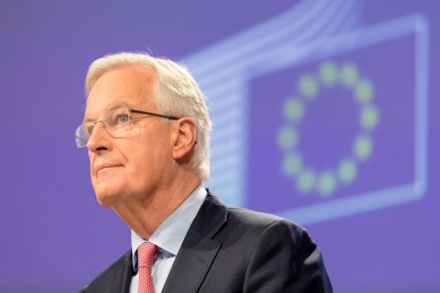
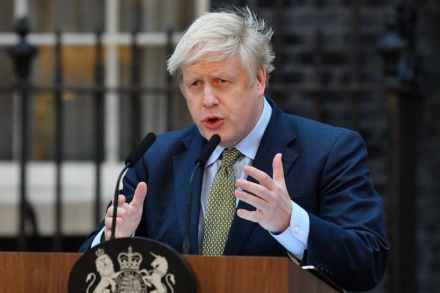
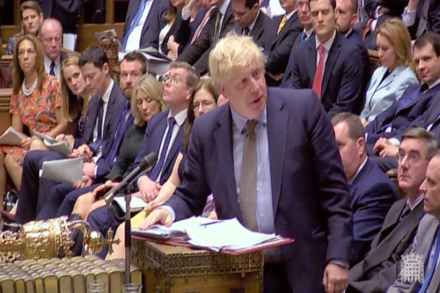
Michel Barnier’s press conference this morning and Boris Johnson’s speech served as reminders as to how far apart on a trade deal the EU and the UK currently are. The EU view is that any tariff free, quota free trade deal must include ‘robust commitments to ensure a level playing field’. The EU seems to be implying that it wants more than just non-regression on this front. But the UK negotiating position, as set out in a written ministerial statement, is that the trade deal cannot include ‘any regulatory alignment, any jurisdiction for the CJEU over the UK’s laws, or any supranational control in any area’. These two positions are incompatible.
The Streatham terror attack reveals a failure within our prisons

From our UK edition

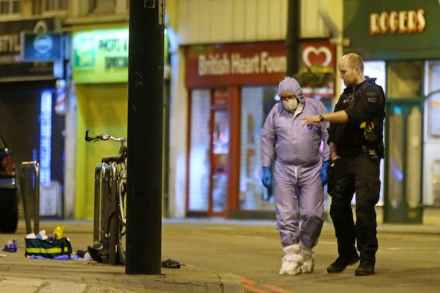
The Streatham attack, again, highlights the problem of what to do with those convicted of terror offences. Longer sentences are, obviously, part of the answer. One of the purposes of prison is to keep those who are a danger to the public off the streets. Letting those convicted of terror offences out early doesn’t fit with that. It is absurd that someone can plead guilty in November 2018 to possessing and disseminating jihadi materials and then be released in January 2020. But the other issue is what is going on inside our prisons. It is all too clear that Suddesh Amman did not come out of prison deradicalised. Neither did the London Bridge attacker.

Brexit won’t end the Tory wars

From our UK edition

Now that Britain is out of the European Union, it will be very hard to go back in. In the 2016 referendum campaign, one of the things that Vote Leave did most effectively was point out that because the EU was constantly evolving, no one could be confident that a vote for Remain was a vote for the status quo. And now Rejoin campaigners will be the ones who want to rip up current arrangements. There is no certainty about the terms on which the country could rejoin. Would the UK, for instance, be expected to commit to ‘ever closer union’ if in the future it were to return to the fold? Even if, say, a party were to win an election on a Rejoin platform, that would not be sufficient for Britain to actually rejoin.

Trade talks between the UK and the EU are heading to an early bust up

From our UK edition

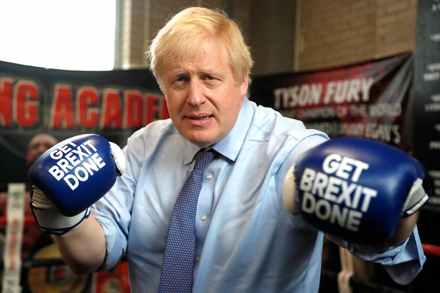
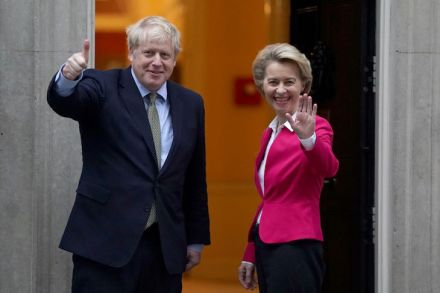
Britain is no longer a member of the EU. Attention now shifts to what kind of trade agreement the EU and the UK are going to come to. I say in The Sun this morning, that the two sides are currently far apart—as we’ll see when the two sides set out their positions on Monday—and the negotiations are heading for a mighty smash. The UK thinks that the EU doesn’t realise how much has changed over the last few months. They fear that the EU has not clocked that this will be a very different negotiation because Boris Johnson has a majority in parliament and wants a free trade deal, and nothing more.

The UK has left the EU

From our UK edition

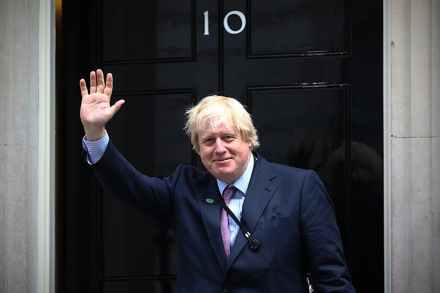
In practical terms, little has changed tonight. Businesses and citizens here will not feel any real difference in the coming weeks and months as they interact with the EU. But in another sense, everything has changed tonight. The UK is now out of the EU and the bar for rejoining will be very high. First of all, a party would have to win an election on a rejoin platform and then, probably, have a referendum. It is hard to imagine a party serious about winning office choosing to reopen this issue in the foreseeable future. Second, there would have to be a national consensus in favour of rejoining. The EU would be reluctant to readmit Britain if it feared that it could want to come out again after the next election.

Mike Pompeo: the UK will be ‘front of the line’ for a trade deal

From our UK edition

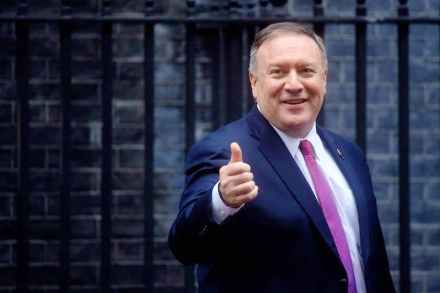
Given how hard Washington had been lobbying the UK government against allowing Huawei to have any role in the UK’s 5G network, there was a certain nervousness in Whitehall about the US Secretary of State Mike Pompeo’s visit to London this week. But judging by Pompeo’s appearance with Dominic Raab at Policy Exchange there was no need to worry. Pompeo declared that the UK/US relationship was in a ‘fantastic place’. He largely pulled his punches on Huawei. He emphasised the US’s view that the ‘Chinese Communist Party is the central threat of our times’ but he implied the US thought the UK’s eventual plan was to move away from Huawei kit.

Lindsay Hoyle aims to curb the excesses of the Bercow era

From our UK edition

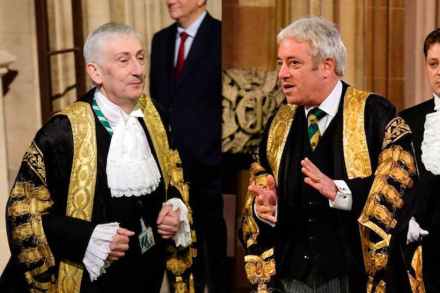
Lindsay Hoyle is a very different Speaker to John Bercow. He talks less, chairs in a kindly manner, and keeps the Commons running to time. Today he announced a new procedure designed to prevent a repeat of the excesses of the Bercow era. In a brief statement after PMQs, he said that from now on if the Clerk of the House disagreed with the Speaker’s decision on procedural grounds, the Clerk would have the ability to ask for a written direction equivalent to what civil servants can request from ministers who want to proceed with a course of action despite advice to the contrary from ministers. The Clerk’s objections would then be lodged in the Commons’ library. Hoyle’s proposals would not stop a Speaker from ignoring the advice of the clerks.

Boris risks backbench rebellion if he doesn’t get Huawei right

From our UK edition

Tory MPs are not happy with the Huawei decision. Normally loyal MPs are expressing their bafflement at the announcement. As one of them put it to me yesterday: if they're not safe to be at the core of the network, how are they safe to be in any of it? The crucial determinant of whether this row continues or not is what this 35 per cent cap on ‘high risk vendors’ means. The government has said that these 'high risk vendors' should be: 'Limited to a minority presence of no more than 35 per cent in the periphery of the network, known as the access network, which connect devices and equipment to mobile phone masts.'...'The recommended cap of 35 per cent will be kept under review to determine whether it should be further reduced as the market diversifies.

Will HS2 survive?

From our UK edition

‘No one disagrees with what the government is trying to do but what they do worry about, is the capacity of the state to deliver it’, one Tory grandee tells me. As I wrote in the Sun, the concern is that the government sees infrastructure as the way to boost Britain’s growth rate, but these projects tend to come in late and over budget in this country. The danger for the Tories is that at the next election in 2024, they may have little more than plans to show for their efforts. Downing Street is acutely aware of this risk, hence their focus on ‘delivery’ and change that people can feel in their daily lives. They know that getting those who voted Tory for the first time to stick with them will not be easy.

Labour must change if it is to win

From our UK edition

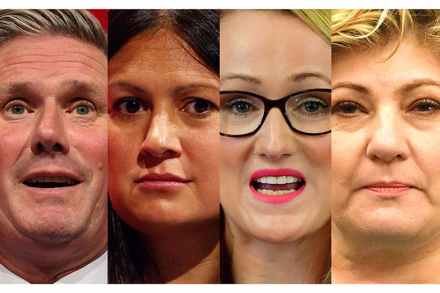
In the past 40 years, only two leaders of the opposition have gone on to become prime minister: Tony Blair and David Cameron. Both were elected on a platform of ‘change to win’ by parties keen enough for power to do just that. Looking at the current Labour leadership contest, it is painfully clear how far the party is from that position. The one candidate prepared to break decisively with the past four years has already dropped out. Jess Phillips has left the race because she can’t get the nominations from either constituency Labour parties or trade unions and other affiliated groups to make it on to the final ballot, which goes before party members next month.

PMQs: Corbyn just can’t counter Boris’s election trump card

From our UK edition

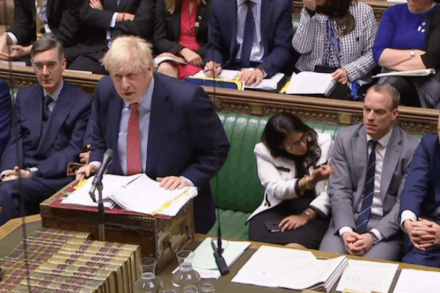
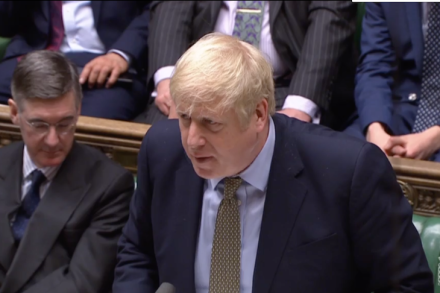
Until Labour gets a new leader, PMQs will be a rather predictable affair. Whatever topic Jeremy Corbyn goes on, Boris Johnson has an ace up his sleeve: Labour’s defeat in the election. In today’s session, Boris Johnson trumpeted, ‘I refer the honourable gentleman to the answer that the British people gave some moments ago’. It is very hard for Corbyn to come back from such an answer. Perhaps the most striking thing about today’s session was how keen Boris Johnson was to go after the SNP on domestic issues. When the Tory MP for Mansfield Ben Bradley asked a question about schools in his constituency, Boris Johnson pivoted from the question to attacking the poor record of schools in Scotland under the SNP.

Government suffers Lords defeat on Brexit bill

From our UK edition

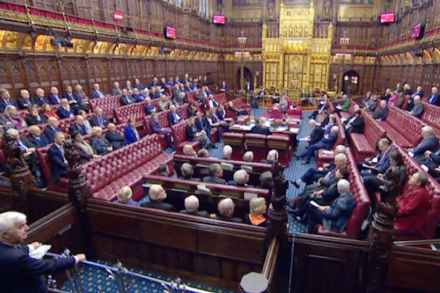
This government has just suffered its first defeat of the parliament in, unsurprisingly, the House of Lords. The Lords voted for the Oates amendment which entitles EU nationals to a physical document attesting to their right to stay in the UK after Brexit. In truth, the government and the Lords aren’t that far apart on this question. The government thinks that a digital database is sufficient while peers want a physical piece of paper. But it is the willingness of the Lords to defeat the government on this question that is most interesting. The word from the House of Lords is that peers will back down once the Commons strips this amendment out. But there was a desire to show that the Lords is still determined to carry out its scrutiny function.

The difference a majority is making

From our UK edition

Boris Johnson’s election victory has been the political equivalent of Dyno-Rod, unblocking the drains of Westminster, I say in the Sun this morning. The return of majority government has led to not only Brexit sailing through parliament but being vital to the restoration of power-sharing in Northern Ireland. Moving forward offers a chance to bring the country back together. As Boris Johnson’s great hero Winston Churchill used to say, ‘in victory, magnanimity’. At Prime Minister’s Questions this week, he took a much less confrontational style than usual. With everyone apart from the Labour and Scottish National Party leaders, he went out of his way to be generous and not to try and score party political points.

Why the cabinet reshuffle might not be so radical after all

From our UK edition

Prime ministers are never more powerful than just before a cabinet reshuffle. Ministers fall over themselves to be helpful, hoping to secure their position or move up the pecking order. Backbenchers start hailing the Prime Minister’s every decision as an act of firm and enlightened leadership. This spectacle is underway ahead of next month’s well-trailed reshuffle, which has already been dubbed the ‘Valentine’s Day Massacre’ by Whitehall wags. It is not just the reshuffle that is propelling Boris Johnson towards the peak of his political powers. He has an 80-seat majority at his back. And with all the talk of reform, government departments are similarly keen to demonstrate their worth to No. 10.

Boris’s new target – cut violent crime by 20 per cent

From our UK edition

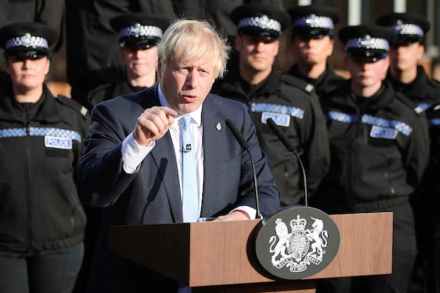
At Cabinet on Tuesday, Boris Johnson said that he was setting the government a target of cutting violent crime by 20 per cent. As I say in the magazine this week, this will be the focus of the new Cobra-style Cabinet committee on crime that he will chair with Priti Patel as his deputy. This target is revealing of how Boris Johnson plans to govern. He won’t be afraid to set ambitious targets to try and focus minds. He told Cabinet that he wanted the committee to look at everything from the influence of ‘lefty criminologists’, a phrase that shows the newspaper columnist in him is still alive and kicking, to whether elected Police and Crime Commissioners were working as intended.

Lisa Nandy survives the Andrew Neil treatment

From our UK edition

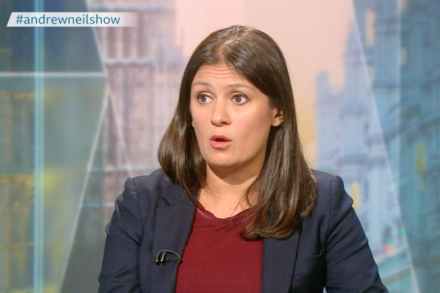
One of the moments that sunk Jeremy Corbyn in the election campaign was his interview with Andrew Neil. So, there is a particular interest in Andrew Neil’s interviews with the Labour leadership contenders. Lisa Nandy was this evening’s guest. At the beginning, she was visibly nervous as he questioned her on foreign affairs. Nandy went big on humility, saying that ‘no one person is good enough to be Prime Minister’. But as the interview went on, she became more confident. She was bold enough to say that the Tory plan to move party headquarters out of London and into the Midlands or the North will go down well with Red Wall voters. She reiterated her very valid criticism of Jeremy Corbyn’s handling of the Salisbury attack.

Boris Johnson’s conciliatory approach takes the sting out of PMQs

From our UK edition

Boris Johnson has been Prime Minister since July, but he has done PMQs relatively few times. This means that he is still developing his style. What was striking about his appearance today was just how conciliatory his tone was with everyone but Jeremy Corbyn and Ian Blackford. When Wera Hobhouse asked about the difficulties facing a Kurdish refugee in her constituency, Johnson replied that she should send the details of the case to him personally. Teesside Labour MP Alex Cunningham pushed him on a campaign to prevent nuclear waste being dumped in the region. The PM expressed sympathy and asked him to send the campaign to him. SNP MP Dave Doogan argued that the seasonal workers' scheme for agriculture was nowhere near generous enough, Boris Johnson didn’t disagree.

The Brexit drama to come

From our UK edition

This week has shown how much the election has changed. The withdrawal agreement has sailed through the Commons and in Northern Ireland, there has been an agreement to get the assembly and the executive back up and running. As I say in The Sun this morning, ministers were struck by how Brexit got only the briefest of mentions at Cabinet this week despite the legislation being before the House. Pre-election, the whole conversation would have been about whether the government had the votes and what it should do if it did not. Boris Johnson is very keen that this year isn’t dominated by Brexit. Sat Cabinet this week, he again emphasised that ministers should ‘banish Brexit’ from their lexicons after January 31st.

Revealed: Boris’s blueprint for Brexit

From our UK edition

For the first time since the referendum, the United Kingdom has a strong government that knows what it wants from Brexit. This will make the second round of the negotiations with the EU very different from the first. Theresa May famously declared, and repeated, that ‘Brexit means Brexit’. This was a soundbite designed to conceal fundamental differences within her cabinet about what it did actually mean. They were never resolved. Many in her cabinet, and especially the Brexiteers, thought that Brexit must mean fully leaving the customs union and the single market. But Philip Hammond, her Chancellor, and Greg Clark, the Business Secretary, thought that it was essential to avoid ‘friction’ at the border and so rallied other Remain colleagues against this approach.

PMQs: Boris Johnson toughens up his rhetoric on Iran

From our UK edition

PMQs was, by recent standards, a brief affair today. The new Speaker Lindsay Hoyle called the last question at 12.31 – in stark contrast to his predecessor John Bercow who liked to let the session drift on to almost 1pm. The main exchanges were, unsurprisingly, about Iran. Jeremy Corbyn’s questions, though, were less than forensic and didn’t cause Boris Johnson many problems. The most striking thing was how Johnson toughened up his rhetoric on Soleimani saying ‘that man has the blood of British troops on his hands.’ Johnson also said that the government believed there were no US or UK casualties in last night’s strikes. If that is the case, and the firing of those missiles marks the end of the matter, there will be relief in Whitehall.