James Forsyth

James Forsyth

James Forsyth is former political editor of The Spectator.

Prepare for a big Huawei U-turn

From our UK edition

The UK has made a strategic choice to get ‘off the trajectory of ever-increasing dependence’ on China, I reveal in the magazine this week. This is important as the UK was about to go over the precipice in terms of dependence on China with the decision to allow Huawei to construct a lasting part of the UK’s 5G network. That is now not going to happen. Downing Street describes its previous Huawei decision as a ‘legacy issue’, emphasising how no one was particularly comfortable with the compromise they came up with—Huawei’s role would be capped and it would be kept away from ‘the core’ of the network.

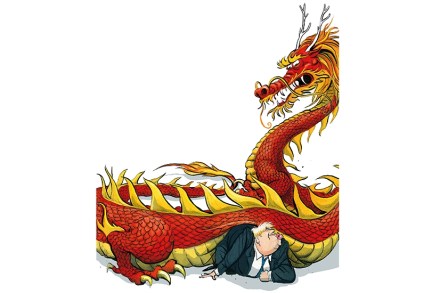
Escaping the dragon: the government’s new approach to China

From our UK edition

How will the world be different after coronavirus? Will everything return to the way it was or will there be lasting change? For this country, there is one thing that will clearly be different: the government’s approach to China. I understand that while Boris Johnson’s grand, integrated foreign policy review has been put on hold because of the pandemic, the work on Anglo-Sino relations has been brought forward as a matter of urgency. One of those heavily involved in the development of this new policy tells me that the aim is to get this country ‘off the trajectory of ever-increasing dependence’ on China. The issue is not that Covid-19 emerged from Wuhan but what the crisis has revealed about the Chinese state and the UK’s dependence on it.

What did Boris’s evidence to MPs reveal?

From our UK edition

17 min listen

The Prime Minister appeared for the first time in his premiership in front of the Liaison Committee today. The group, formed of select committee chairs, grilled him on a range of issues from Dominic Cummings to pandemic support, and more.

Could Boris’s evidence to MPs signal a coming U-turn?

From our UK edition

This morning, some allies of Boris Johnson were very worried about the Dominic Cummings section of the PM’s appearance before the liaison committee. They were concerned it’d produce some news line that would keep this story, which has been so damaging for the government, in lights for another day. But in the end, that section was not actually that bad for Boris Johnson.  Several of the select committee chairs chose to deliver speeches rather than asking sharp questions. The one exception to this was Meg Hillier who pressed Boris Johnson on whether he had seen the evidence Dominic Cummings referred to at his press conference on Monday. Johnson said he had, at which point Hillier asked him if he had shared it with the Cabinet Secretary. Johnson said he had not.

Has Cummings done enough to calm Tory MPs?

From our UK edition

12 min listen

In an unprecedented press conference today, Dominic Cummings explained the circumstances in which he took his family to Durham, and the exact timeline. He struck a sincere tone, but stopped short of apologising. Has he said enough to stem the backlash?

Boris Johnson’s political gamble over Cummings

From our UK edition

11 min listen

Boris Johnson gave an unambiguous defence of Dominic Cummings at today's press conference. In so doing, the government is gambling that this is a storm they can weather. On the podcast, Kate Andrews discusses their thinking with Katy Balls and James Forsyth.

Boris is convinced he’ll still get a Brexit deal

From our UK edition

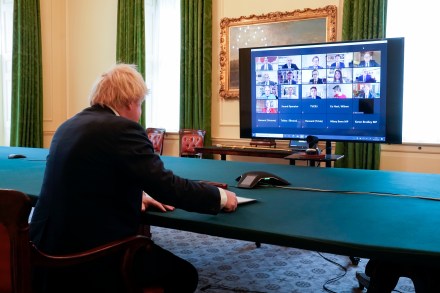
When coronavirus first struck, the assumption was that it would lead to an extension to the Brexit transition. After all, negotiating rounds had to be cancelled as it wasn’t feasible to have large numbers of people travelling back and forth between London and Brussels and crowding into meeting rooms. But the negotiations are now taking place by video conference and the UK government is determined not to extend the transition period beyond the end of the year. The UK’s view is that the differences between the two sides are so high level that they won’t just be solved by putting more time on the clock.

Back to Brexit: will the transition be extended?

From our UK edition

36 min listen

Brexit is back on the agenda, but this time, talks are even more difficult than the last phase (00:45). Plus, what do we understand about immunity, and how should that inform the lockdown policy (16:45)? And for a nation that bangs on about fish, do we eat enough of it (28:00)?

Boris Johnson appoints new No. 10 permanent secretary

From our UK edition

I understand that Simon Case, who was private secretary to Prince William, is now the No. 10 permanent secretary. This is a newly created role and Case will have specific responsibility for Covid. Case knows his way around Whitehall, he was Theresa May’s principal private secretary. The thinking behind the appointment is that Case will give No. 10 more of a grip on the cross-government response to Covid. There will now be someone who is clearly in charge the implementation and delivery of policy. The hope is that he will give Boris Johnson some of what Jeremy Heywood gave David Cameron when he was his No. 10 permanent secretary. One of the oddities of the British form of government has always been how small No. 10 is compared to some other parts of Whitehall. A No.

Brexit is back – and Covid has transformed negotiations

From our UK edition

We will know in the next few weeks if Britain is to leave the European Union without a trade deal. The ‘high-level’ meeting in June has been earmarked by the UK and the EU as the moment when they decide whether to take the negotiations to the next stage or not. If there is to be a deal, then the contours of it will need to start to become clearer at this meeting. If they don’t, then both sides will need to decide whether their time would be better spent preparing for trading on WTO terms than in unconstructive negotiations. The Covid pandemic, far from pausing the talks, has made it all the more urgent that an agreement is found quickly.

Boris Johnson is facing a rebellion over lockdown

From our UK edition

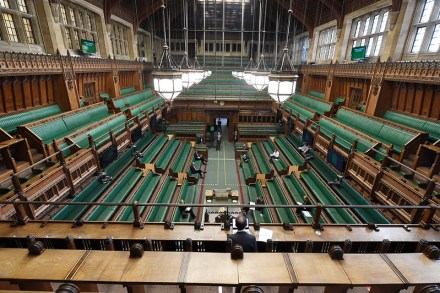
Today is the last day of the hybrid parliament. When MPs return after recess on 2 June, it will be to a traditional House of Commons – albeit with social distancing and limits on how many people can enter the Chamber. This is being seen as a victory for the Tory whips. But the whips should be careful what they wish for. Tory MPs are, at the moment, spread out across the country but I suspect bringing them all to Westminster will lead to more vocal demands for a greater easing of the lockdown. Tory MPs are becoming increasingly panicked about the economic consequences of the lockdown. One senior Tory MP calls me every morning from their commute to lament how few cars there are in the station car park; 2 in the 100 available spaces the last two days.

Three mistakes the UK made at the start of the corona crisis

From our UK edition

There are three areas where government policy now implicitly accepts that they made mistakes in their earlier handling of the pandemic. The first is the desire to increase testing to 200,000 tests a day. This suggests that the earlier decision to pull back from a test and trace strategy because the infection was being spread in the community was due to a lack of a testing capacity; something that could have been remedied if the government and Public Health England had adopted the collaborative approach to testing that they now have. The second is care homes.

Is Labour’s stance on reopening schools worsening the education gap?

From our UK edition

17 min listen

The government is aiming to reopen schools on June 1, but with teachers' unions putting up opposition to the move, this timeline is unlikely to be met. Latest research shows that, meanwhile, the education gap between the poorest children and the wealthier is widening all the time. So in its support for the teachers unions, is Labour doing enough to bear in mind the lifelong impact on the worst off kids during this pandemic?

Audio Reads: Fredrik Erixon, James Forsyth, and Leaf Arbuthnot

From our UK edition

25 min listen

On this week's Audio Reads, Swedish economist Fredrik Erixon reads his cover piece explaining how European nations are all flying blind in the pandemic. James Forsyth advocates a complete rewiring of the British state. And Leaf Arbuthnot, whose novel Looking For Eliza is released this week, extolls the joys of Zoom raves.