James Forsyth

James Forsyth

James Forsyth is former political editor of The Spectator.

PMQs: Starmer’s caution is getting the better of him

From our UK edition

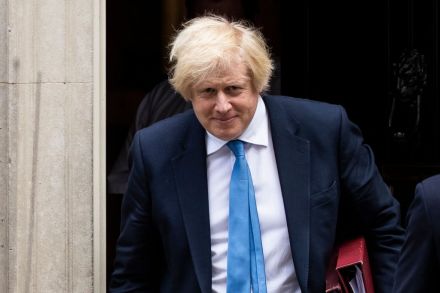
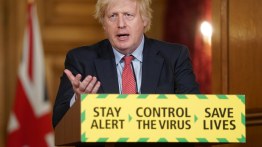
The clash of styles continued at PMQs today. Keir Starmer came with a set of detailed questions and Boris Johnson attempted to push him back with a sheer weight of rhetoric. Johnson’s approach isn’t particularly edifying but it does deny Starmer the opportunity to land many blows in these sessions. The Labour leader hasn’t quite worked out how to adapt to Johnson’s tactics. He finds himself vulnerable as the Tory leader changes the subject, as he did today effectively to ding Starmer on schools. Starmer used his last question to come back on an answer the Prime Minister gave last week on child poverty. Starmer accused Johnson of giving ‘dodgy answers’.

The new common sense phase of lockdown

From our UK edition

13 min listen

Boris Johnson has announced further measures to ease the lockdown, and from the 4th July, more venues will be open than not, including restaurants, pubs, and galleries. It also marks a new phase in the lockdown, when social distancing will be guidelines, not law. But does the public actually want the lockdown to be eased? Katy Balls talks to James Forsyth and Fraser Nelson.

What’s behind the brewing Sunday trading Tory rebellion?

From our UK edition

15 min listen

There's a rebellion brewing on the backbenches - MPs claim that there are over 50 backbenchers who oppose the government's proposal to loosen Sunday trading laws. On the podcast, Katy Balls talks to James Forsyth and Fraser Nelson about whether there might be more to this rebellion than initially meets the eye.

What the new alert level means for lockdown easing

From our UK edition

15 min listen

The government has downgraded the coronavirus alert level from 4 to 3, with the support of its scientific advisers. So is it about time to ease lockdown even further? Katy Balls talks to James Forsyth and Fraser Nelson about this and the discovery of the magic money tree, as debt is now worth more than British GDP.

School’s out: the true cost of classroom closures

From our UK edition

35 min listen

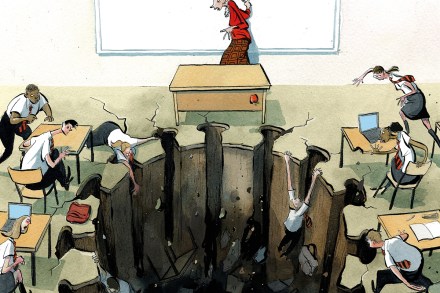
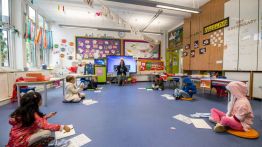
Schools have been closed for almost three months - what is the true cost of these closures on pupils (1:00)? Plus, have Brexit negotiations started looking up (13:15)? And last, are the statue-topplers of Rhodes Must Fall going about their mission the wrong way (22:45)?With teacher Lucy Kellaway; the IFS's Paul Johnson; the Spectator's political editor James Forsyth; the FT's public policy editor Peter Foster; journalists Tanjil Rashid and Nadine Batchelor-Hunt.Presented by Cindy Yu.

Is this the deal that could break the Brexit deadlock?

From our UK edition

Trade talks between the UK and the EU are in a better place than they have been at any point since they started back in March, I say in the magazine this week. The two sides’ decision to commit to an intensified set of negotiations between now and August, some of which will involve face-to-face meetings, suggests both the UK and the EU are serious about seeing if the deadlock can be broken. The question now is, how can that be done? Well, the biggest obstacle to a deal is the EU’s demands on the level playing field. The UK has repeatedly said that it simply cannot accept them. Michael Gove has already emphasised that the UK would be prepared to accept tariffs rather than agree to what the EU wants in this area.

Is a Brexit deal within reach?

From our UK edition

Trade talks between the UK and the EU are in a better place than they have been at any point since they started back in March. Now, in one way this is not impressive — the diplomatic equivalent of being the tallest mountain in Holland. For the first three months of these negotiation both sides were bullish, restating their maximalist positions, and coronavirus forced the negotiations online, making diplomacy and quiet compromise trickier. But now an intensive series of talks have been agreed, some of which will be face to face. Both sides appear to be in earnest about trying to break the deadlock. The British side is, privately, far more optimistic than it has been at any previous point in the negotiation.

Is Boris Johnson’s week starting to look up?

From our UK edition

21 min listen

At Prime Minister's Questions, Boris Johnson cornered Keir Starmer on the Labour party's ambivalent position on schools reopening. After a bumpy start to the week, is the Prime Minister's luck turning? Katy Balls talks to James Forsyth and Fraser Nelson about this, the 1922 committee meeting, and Westminster reopening.

Boris scores a first PMQs victory over Starmer

From our UK edition

For the first time since Keir Starmer became Labour leader, Boris Johnson clearly bested him at PMQs. Johnson, backed up by Tory MPs who were determined to make as much noise as possible in the socially distanced chamber, pushed Starmer to explicitly declare that it was safe to return to schools. Starmer was reluctant to do so, and Johnson kept hammering the point. This took the wind out of the Labour leader’s sails who failed to land any blows on Boris Johnson despite the government’s difficulties in recent days. The backbench questions didn’t produce any particularly awkward moments either. So after a difficult 48 hours, Boris Johnson came through PMQs unscathed.

Was the government’s free meals U-turn inevitable?

From our UK edition

15 min listen

After the highly publicised campaign by the footballer Marcus Rashford, the government has U-turned on the question of free school meals in the summer. Was it inevitable, and what does this move mean for public spending? Katy Balls talks to James Forsyth and Kate Andrews about this as well as the Foreign Office merger and the Oxford drug breakthrough.

The thinking behind the Foreign Office DfID takeover

From our UK edition

When Boris Johnson was Foreign Secretary he was constantly irritated by how small the department’s budget was, and how the Department for International Development had so much more money than the Foreign Office. After the 2017 election, he used Theresa May’s weakened position to get some joint Foreign Office-DfID ministers appointed. But even this didn’t fully address his concerns.  So, it was always likely that as Prime Minister he would want to bring DfID fully into the Foreign Office, all the DfID junior ministers are already double hatting. I suspect that the aid charities will not like this move at all. But bringing DfiD into the Foreign Office will make the 0.7 per cent aid target more politically sustainable.

The message behind Raab’s solo press conference

From our UK edition

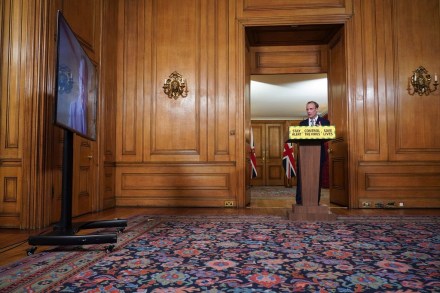
In a change of government approach, Dominic Raab appeared alone at Monday night's Downing Street press conference: he was not flanked by a medic or a scientist. This is only the second time a minister has appeared on their own, and the first time it happened government sources said it was because the chief nurse was stuck in traffic. In reply to a question from Jane Merrick of the i, Raab made clear that government ministers would now be flying solo more frequently. He said that scientists would still attend from time to time, but ministers would also appear with school leaders and the like as the country reopened. The move away from having the scientists present at every press conference will please Tory MPs.

When will the two-metre rule go?

From our UK edition

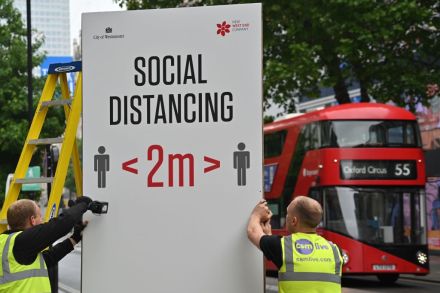
The Tory parliamentary party is in a febrile mood. As I say in the Times on Saturday, the two-metre rule has become a particular focus of MPs ire. It is now symbolic for them of a cautious approach to lockdown easing, which they fear could lead to the UK having one of the slowest economic recoveries, as well as one of the worst death tolls, in Europe. Optimists in government are confident that the two-metre rule will be gone by the time that pubs and restaurants reopen on the 4 July. Interestingly, the guidance to those establishments that will be given the go-ahead to resume then doesn’t emphasise the two-metre rule.

The Tory fightback against identity politics

From our UK edition

14 min listen

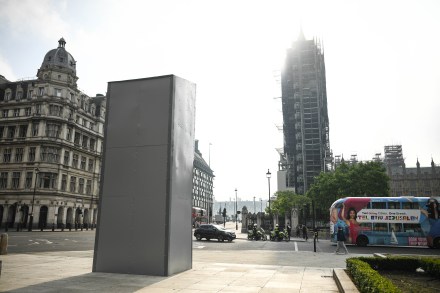
Late last night, the statue of Winston Churchill on Parliament Square was boarded up over fears the monument could again be targeted by Black Lives Matter protestors. This morning, Boris Johnson intervened saying that it is 'shameful that this national monument should today be at risk of attack'. Katy Balls talks to Fraser Nelson and James Forsyth about the looming Tory fightback against identity politics.

In defence of liberalism: resisting a new era of intolerance

From our UK edition

45 min listen

Are we witnessing the death of the liberal ideal? (01:02) Next, what's behind the government U-turn on primary schools and what effect could it have on the poorest students? (20:14) And finally, Britain's ash trees are facing a pandemic of their own, with so-called ash dieback sweeping the nation. Can Britain's ash trees be saved? (30:12)With Douglas Murray; The Spectator's economics editor Kate Andrews; Coffee House contributor Melanie McDonagh; political editor James Forsyth; associate editor of the Evening Standard Julian Glover; and professor at the Laboratory of Tree-Ring Research at the University of Arizona Valerie Trouet. Presented by Katy Balls.Produced by Gus Carter and Matthew Taylor.

How long can the two-metre rule last?

From our UK edition

12 min listen

Tory MPs are increasingly concerned about the impact of the two-metre rule, with No. 10 facing pressure to relax the policy to help save businesses. Gus Carter talks to James Forsyth and Katy Balls.

Why it’s vital that schools are fully open by September

From our UK edition

Chris Whitty, the chief medical officer, was explicit at Wednesday’s press conference about how concerned he was about a second Covid-19 spike in the winter months. This would coincide with the flu season, placing maximum pressure on the NHS. One consequence of this is that if something is not open by the beginning of October, it isn’t going to be open until the end of February next year. As one of those at the heart of coronavirus policy-making warns: ‘If Sage are this cautious going into summer, then they are not going to want to be playing fast and loose with the R number heading into winter.’ This shows why it is so imperative that all year groups return to school in September.

Normality won’t return until schools do

From our UK edition

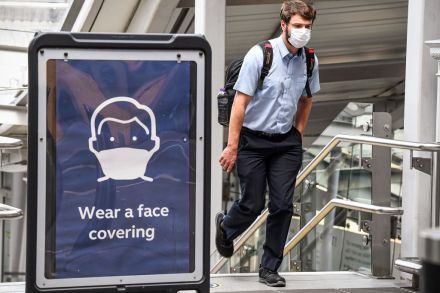
From Monday, you will be required by law to wear a face covering on public transport. Paradoxically, this is a sign that the government wants life to return to being as normal as possible. Ever since the start of the pandemic, there has been debate about whether the government should tell people to wear masks in public. The argument in favour was that it would help stop the spread of the virus by making it harder for people to pass on the disease. There were two main arguments against it. The first was that urging people to wear one could lead to a shortage of the medical-grade masks that health and social care professionals so desperately need.