James Forsyth

James Forsyth

James Forsyth is former political editor of The Spectator.

The new leviathan: the big state is back

From our UK edition

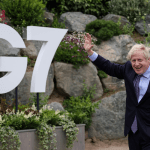
‘In this present crisis, government is not the solution to our problem; government is the problem,’ proclaimed Ronald Reagan in his inaugural speech as American president. Forty years on, the leaders of the G7 have reversed this mantra. In Cornwall last week they declared that the government, and more specifically its $12 trillion of economic support, had not only been the answer during the pandemic but would continue to be the answer during the recovery. They committed ‘to support our economies for as long as is necessary, shifting the focus of our support from crisis response to promoting growth into the future’. It would have been quite possible for leaders to have drawn a very different conclusion: bloated government bureaucracies have failed.

Is Matt Hancock hopeless?

From our UK edition

13 min listen

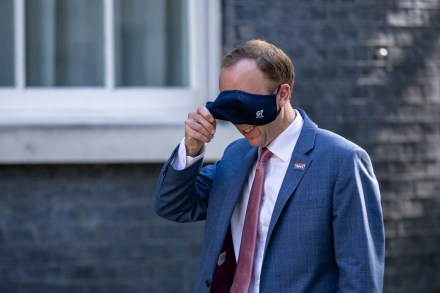
Another day, another Dom bomb. In Cummings's latest release, a number of WhatsApp messages reveal communications between himself and the Prime Minister, with the latter describing the health secretary Matt Hancock's performance as effing 'hopeless'.  Is this damaging to Hancock? Or is this the sentiment that you can expect from senior people who work at close quarters with each other during a crisis? To discuss the new revelations and its potential fallout Katy Balls is joined by James Forsyth, Isabel Hardman with a surprise appearance by Fraser Nelson.

Will the Australia trade deal really make a difference?

From our UK edition

17 min listen

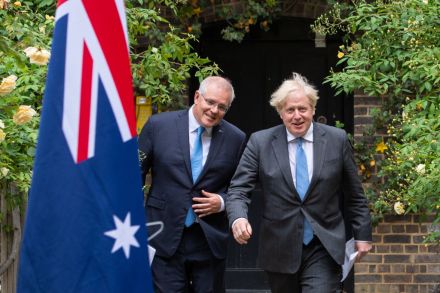
The government has agreed its first post-Brexit bespoke trade deal. But the agreement with Australia has already caused consternation among Conservative MPs about the potential competition from Australian farmers. Are these fears overstated? James Forsyth argues yes: 'Both its proponents and its critics exaggerate its importance. Meat prices in Asia are roughly twice what they are in the UK. I think that is where Australian farmers are going to continue to focus their export energy.' And the team discuss the fallout from the extension to July 19 of the lockdown easing day. Fraser Nelson points out that not only has freedom been delayed, but that even the thresholds for freedom are not clearly set out: 'It seems to be a complete mess of communications though.

How long will political and public patience last?

From our UK edition

11 min listen

It seems Freedom Day is no longer June 21st. The writing was clearly on the wall this morning, but now the Prime Minister has officially told the public, it is likely to be another four weeks of restrictions. 'Conservative MPs are getting really agitated by this moving of the goal posts' - Isabel HardmanBut after so many backtracks how much credibility does Boris have left?  'I think the real problem with him and the public though, will come if this July 19th date is not met' - James Forsyth Katy Balls is joined by James Forsyth and Isabel Hardman to discuss.

The lockdown delay has triggered a constitutional crisis

From our UK edition

It is not the Battle of Marston Moor, but it strikes me that we are now in something of a constitutional crisis following the Speaker’s dramatic outburst this afternoon. In response to points of order about the fact Boris Johnson is announcing lockdown changes in a press conference rather than to parliament, Hoyle said that he had been told no decisions had been taken only to find out that there was an embargoed document setting out what changes were coming. A visibly furious Hoyle declared from the chair that: ‘This House is being misled’. Considering that misleading the House is a resigning matter, this is a remarkably serious accusation for the Speaker to level against Downing Street.

How can Boris justify delay?

From our UK edition

18 min listen

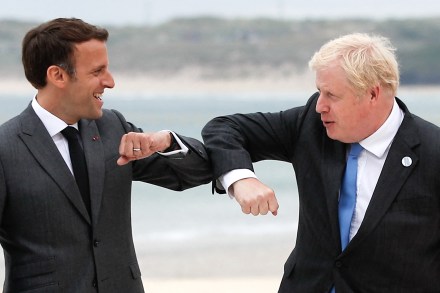
Boris Johnson is expected to announce a delay to reopening later today. How will the Prime Minister make his case, and will his backbenchers support him? Cindy Yu speaks to Katy Balls and James Forsyth.On the podcast, Katy says uneasy Conservatives may give him the benefit of the doubt this time: 'There are some Tory MPs who are happy to have a slightly more cautious approach, but are really growing very worried about this idea of never ending delays.'James says the government needs to be clear with the country about exactly why delay is necessary: 'This is one of the big questions: what is the point of this delay? If it is just to get people double vaccinated, then I think that is acceptable.'Separately, world leaders bumped elbows over the weekend at the G7 summit in Cornwall.

The key question Boris Johnson must answer tonight

From our UK edition

When Boris Johnson announces the delay to reopening tonight, he needs to set out what this pause is meant to achieve. If it is to enable more people in vaccination groups one to nine, who account for 99 per cent of all Covid deaths, to have their second jab and receive the full benefit of that then it is an understandable decision.  But if this is the case, Boris Johnson needs to answer the question that Sky's Beth Rigby asked him yesterday: what percentage of adults need to have had their second vaccine for the government to be convinced that a full reopening would be safe? If he can’t answer that, then people and businesses will begin to lose faith that there will be a full and sustained reopening this year.

Boris Johnson’s Northern Ireland problem

From our UK edition

In an at times grouchy press conference, Boris Johnson tried to calm the row over the Northern Ireland protocol. The Prime Minister declined to comment on what Emmanuel Macron is supposed to have said about Northern Ireland’s position in the UK. He said that the whole issue of the protocol had taken up a ‘vestigial’ amount of time at the summit. (Interestingly, Mujtaba Rahman of Eurasia Group, who is particularly well connected in EU capitals, says that he has been told it took up two-thirds of the conversations in the margins of the summit).  Instead, Johnson wanted to emphasise the vaccine commitments that the summit had made and how these would help ‘demonstrate the benefits of democracy and freedom and human rights’ to the rest of the world.

How to fix the protocol

From our UK edition

The blame game between London and Brussels over the Northern Ireland protocol obscures the fact that there are solutions waiting to be found. There are, as I say in the Times today, ways to reform the protocol and better protect the Good Friday Agreement while not threatening the integrity of the single market. Three changes would render the protocol far more acceptable Three changes would render the protocol far more acceptable and would better position it to withstand the undoubted pressures it will come under when the EU and UK start to diverge their regulations.  The first of these is a trusted trader scheme for food. This would allow registered suppliers to move goods — including, yes, sausages — from Great Britain to Northern Ireland without checks.

Can the G7 beat Russia and China’s vaccine diplomacy?

From our UK edition

8 min listen

As the G7 rolls on and the world leaders learn where their peers stand on certain issues post Covid...  'There's still a chance the Northern Ireland protocol could come up at the G7 and cause some problems...' - Katy Balls ...the wealthy western nations need to decide how best to help vaccinate the world's poorer countries without risking their own rollouts at home.  'It's a very unusual leader who's going to take risks sending vaccines abroad until they've done their own population...' - James ForsythCindy Yu talks to Katy Balls and James Forsyth.

Macron is wrong. Nato must stand up to China

From our UK edition

Joe Biden wants to use his visit to Europe for the G7 summit and the Nato meeting to rally democracies to take on the autocratic threat posed by Russia and China. But in a sign of how difficult that will be, Emmanuel Macron made clear last night that ‘the line I’m advocating for France, and I hope for Europe, is not to be made a vassal by China nor be aligned with the United States on this subject.’ He has also said that China should not be a Nato priority. If Nato is to stay relevant, it will have to become more involved in the effort to contain China This is a mistake. If Nato is to stay relevant, it will have to become more involved in the effort to contain China, as I say in the magazine this week.

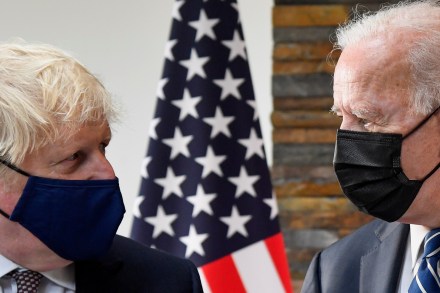
Is Biden coming around to Boris?

From our UK edition

Today’s US-UK diplomacy didn’t get off to the best start, with the Times breaking the remarkable news about a US demarche — or diplomatic rebuke — to the UK government to complain about its approach to the Northern Ireland protocol. But the day has ended in a better place for the UK government. The US-UK joint statement contains a section on Northern Ireland that is far more nuanced than the demarche. It talks about the ‘delicate balance’ of the Good Friday Agreement, which is something that the UK has been trying to stress in its discussions with the EU — arguing that unionists' objections to the protocol in its current form risk upsetting that. Downing Street, though, would not have wanted so much focus on the protocol today.

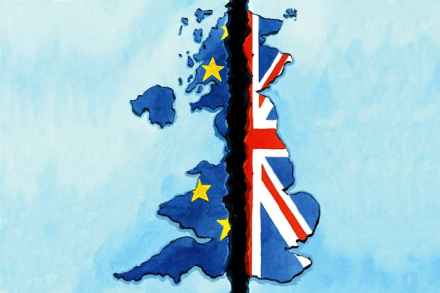
Could Brexit scupper the G7?

From our UK edition

14 min listen

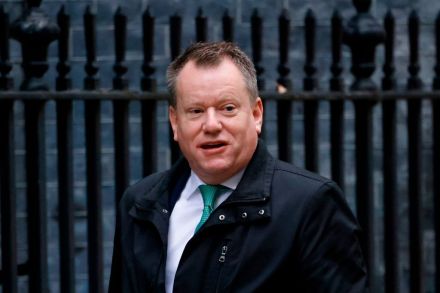
The long-anticipated G7 meeting in Cornwall has got off to a rocky start today, as it transpired that the US had lodged a 'demarché' - a diplomatic ultimatum - with David Frost, earlier in the week, over the UK's position on the Northern Ireland Protocol. Could tensions spill over? James Forsyth points out that the US side clearly did not want this to become public knowledge: 'In the reaction from the US side this morning, they are clearly trying to walk this to a more moderate position.' On the podcast, we also discuss Matt Hancock's evidence to MPs today, and the ramifications of the Dominic Cummings hearing from a few weeks ago.

Why this G7 summit matters more than most

From our UK edition

It’s risky planning a trip to the British seaside at any time of year. But if the weather forecast is to be believed, Boris Johnson will get away with this gamble at the weekend’s meeting of the G7 at Carbis Bay in Cornwall. Brexit’s critics were always going to seize on any evidence that Britain was being sidelined by the rest of the world after we left the EU. So it is fortunate for the government that the UK is the host of this year’s summit because it has placed this country at the centre of things. This G7 is unusually consequential. It is the first time that these leaders have met in person for well over a year. This will give the meeting momentum; it would be hard to think of a worse format for diplomacy than group video calls.

Are Brexit talks back to the bad old days?

From our UK edition

10 min listen

Today, talks between David Frost and the EU's negotiator Maroš Šefčovič ended with little agreement about how to move forward on the Northern Ireland Protocol. As James Forsyth says on the podcast: 'it didn't end with either man walking out of the meeting, but you probably can't say much more for it than that.' This is partly down to Lord Frost's negotiating style. Katy Balls points out that he's learning from the lessons of the Brexit talks of recent years: 'David Frost, who gets a lot of criticism for being very confrontational in his methods, looks back at the Brexit negotiations which he led on the UK side, and thinks that "Well it worked then, it might work now". And therefore, all these people saying his approach is wrong...

Is the foreign aid row a sign of things to come?

From our UK edition

13 min listen

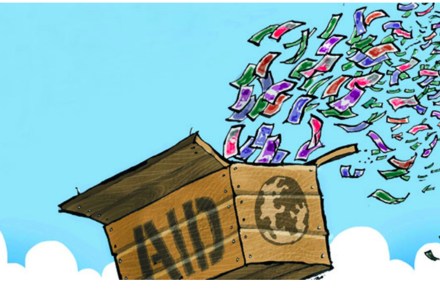
Though the amendment on foreign aid was not selected by the Speaker yesterday, the row over the budget cut is not over yet. Today MPs will have an emergency debate about the policy, and Lindsey Hoyle has advised that the government should bring the matter in front of the House in the future. This is just one of a number of things bothering Tory MPs at the moment - so what's going on?  James Forsyth sums it up as: 'There's a pattern about money, essentially.' With the worst of the pandemic over the Treasury is looking to tighten its pursestrings.

How much trouble is the government in over foreign aid?

From our UK edition

13 min listen

After the government cut the UK's foreign aid budget a group of rebellious tory MPs bound together to try and reverse the decision, will it come to a head this week?'This cut has caused some resentment amongst other nations' - Isabel HardmanAnd has the culture war spread to cricket after the suspension of Ollie Robinson for decade old racist remarks?'I think there is a broader question in society about how do we allow people to make up for youthful errors?' - James ForsythAnd with Portugal moving to the amber list, just how limited will the options be for our summer holidays? 'The government now, it's aim is to protect the domestic reopening on June 21st' - James Forsyth Cindy Yu talks with James Forsyth and Isabel Hardman.

Why the one-metre rule could stay beyond June 21

From our UK edition

Matt Hancock said this morning that the Indian variant was 40 per cent more transmissible than the Kentish one. Now, it should be noted that these numbers do tend to move around. But if come 14 June and the decision about the unlocking on 21 June this is still the figure, it would point to a less than full reopening. The view in Whitehall has long been that if it is only 30 per cent more transmissible then it would be safe to go ahead with a big bang unlocking. But if the figure was higher than that, then things would get complicated. This suggests that some forms of social distancing will remain post 21 June. Continued mask wearing seems a near certainty given how little economic impact that measure has.

What can the west do about China?

From our UK edition

14 min listen

As China changes its two child policy to a three child policy over fears of population decline, the west is also having to regularly change its approach towards the world's next superpower. John Connolly talks to James Forsyth and Cindy Yu about our precarious relationship with China.

Have we hit peak graduate?

From our UK edition

The Tory party has turned sharply against the idea of ever larger numbers going to university. The reasons for this are both economic and political, I say in the Times today. On the economic front, the taxpayer is bearing more of the cost of the expansion of higher education than expected — the government estimates that it will have to write off 53 per cent of the value of student loans issued last year — and there is a belief that the lack of funding for technical education is contributing to the UK’s skills and productivity problems. Politically, the issue is that graduates tend not to vote Tory Politically, the issue is that graduates tend not to vote Tory. At the last election, the Tories beat Labour by 44 per cent to 32 per cent.