James Forsyth

James Forsyth

James Forsyth is former political editor of The Spectator.

Hypocrisy watch

From our UK edition

There is something rather tragic about the spectacle of Mohammed al-Fayed sounding off in the High Court about the establishment’s supposed role in the death of Princess Diana. One doesn’t know whether to laugh or cry when one hears about statements like this from Fayed: “Prince Philip rules the country behind the scenes. I think Prince Philip is the actual head of the Royal Family. He is a racist. He was brought up by his aunt who married one of Hitler's generals. This is the man who is in charge who is manipulating and can do anything.  "Time to send him back to Germany from where he comes. You want to know his original name – it ends in Frankenstein.

How bad is it Darling?

From our UK edition

The Prime Minister and his puppet Chancellor are currently facing the press and engaging in furious damage limitation. After that, the Chancellor will have to make a statement to the House where he can expect to be mocked by George Osborne and dissected by Vince Cable, who is the only politician to come out of the Northern Rock affair with his reputation enhanced. This is not quite a Black Wednesday moment but it is a huge blow to the government’s record for economic competence. In many ways, nationalising Northern Rock was the easy bit. The government now has a whole bunch of problems on its hands; John Redwood has a list of questions that Darling needs to answer that is well worth looking at. Northern Rock will not go away quickly or quietly.

Sifting through the Northern Wreckage

From our UK edition

Perhaps, the greatest political danger for the government from yesterday’s nationalisation of Northern Rock is that it fits so neatly into the narrative of a government that is incapable of making a decision. On The Today Programme this morning, Alistair Darling was repeatedly pressed on the question of why this step was not taken earlier and had no adequate answer. Darling’s performance this morning revealed just how vulnerable the government is over Northern Rock. The Chancellor could not parry the charge that allowing then bank to continue doing business even now it is nationalised is unfair competition.

Are the Tories doing well enough?

From our UK edition

Even David Cameron’s most enthusiastic backers in the 2005 leadership contest might have thought it unrealistic to imagine that after a little over two years in the job he would have opened up a nine point lead over Labour. But despite having done this, Cameron is still plagued by the question of whether the Tories should be further ahead. Certainly, the Tories haven’t batted Labour out of the game and they are doing nowhere near as well as Tony Blair was in the mid-1990s. However, as Andrew Rawnsley reminds us in The Observer this morning, that was an exceptional time. Rawnsley, though, thinks that the Tories can not become the government in waiting until they give the electorate a firmer idea of what they would do once they are in power.

Sunny side up

From our UK edition

Imagine a world in which there was a constant supply of cheap and renewable energy and the world was no longer reliant on oil. Well such a situation may soon be at hand. The Guardian reports on a meeting of futurologists in Boston yesterday where the prospects of being able to harness the sun’s energy was one of the main points of discussion. Considering that the sun covers the earth with “more energy each hour than the planet's population consumes in a year" once you have worked out how to tap that resource you have solved the problem; as Ray Kurzweil, a futurist, told the meeting, "We only need to capture one part in 10,000 of the sunlight that falls on the Earth to meet 100% of our energy needs".

Is Labour not doing the business any more?

From our UK edition

New Labour’s relationship with business is at a low ebb. As George Parker argues in the FT this morning, the changes to capital gains tax and the whole non-dom business have alienated many—something the Tories are eagerly exploiting. But Labour’s problems go beyond policy here. Business had no fear that Tony Blair intended to make the pips squeak, he seemed entirely simpatico with their get rich agenda. Equally, Ed Balls fitted in well with City types who respected his intellect and proximity to power. Now, the City feels it doesn’t have a champion anymore.

Come off it, Ken

From our UK edition

At yesterday’s green hustings, Ken Livingstone said that by 2010 the Thames would be the cleanest river flowing through any capital city and that people would be swimming in it. I’m not qualified to say if he has any chance of meeting the first part of this pledge but I’ll go for a dip myself if the second part comes true.

Clegg’s dilemma

From our UK edition

Lib Dem frontbencher David Heath has confirmed that he will vote against the Lib Dem whip and for a referendum on the EU Constitution. Nick Clegg now faces a difficult choice. He can sack Heath and show that he will not back down from enforcing party discipline. However, this approach would highlight the Lib Dem’s breach of their manifesto promise to support a popular vote on the EU Constitution. Or, he can let Heath get away with defying the party line and create a precedent that will wreak havoc on party discipline. Two factors are likely to make up Clegg’s mind. First, whether the Lib Dems can succeed in getting their amendment on an in or out referendum down and second how many Lib Dem MPs look like following Heath’s lead.

One person we don’t need any moral lectures from

From our UK edition

There are few people less qualified to act as any kind of moral arbiter than Martin McGuinness. So it is deeply comic to see him pronouncing on how television celebrates the demon drink. He told the British Irish Council, “I am not a fan of East-Enders or Coronation Street but my wife and my children, particularly the girls, watch the programme. I am appalled at the drunkenness that is quite clear for everybody to see and all of that before the 9 o’clock watershed when children as young as 8, 9, 10 and 11 are watching. Now I regard that as irresponsible broadcasting and I think something should be done about it.

The Rushdie Fatwa

From our UK edition

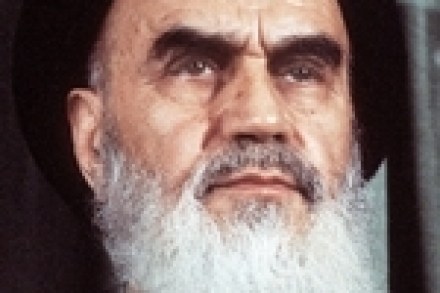
Today is the 18th anniversary of Ayatollah Ruhollah Khomeini declaring a Fatwa on Salman Rushdie for writing the Satanic Verses. It was a wake up call to the coming challenge to the freedoms of a liberal society but one that we failed to heed. The Rushdie affair demonstrated the spinelessness of the British political class in the face of Islamic extremism. The Crown Prosecution Service refused to prosecute those who openly called for Rushdie’s death. The Islamist Kalim Siddiqui amazingly got away with telling a public meeting, “I would like every Muslim to raise his hand in agreement with the death sentence on Salman Rushdie. Let the world see that every Muslim agrees that this man should be put away.

Lib Dem frontbenchers in open revolt

From our UK edition

Two Lib Dem frontbenchers are—in open defiance of their party line—supporting a referendum on the EU Reform Treaty, Sam Coates reveals this morning. This is a major challenge to Nick Clegg’s authority: if he lets David Heath and Nick Harvey get away with this then it will be hard for him to enforce party discipline on any other issue. Yet, if he sacks them he will draw attention to the fact that the Lib Dems have gone back on their manifesto promise to support a referendum on the treaty. Heath is in a particularly tricky position as he has a wafer-thin majority in a Euro-sceptic constituency and has been adamant that he will support a referendum come what may. How Clegg handles this coming crisis will tell us a lot about his leadership skills.

A declaration of intent

From our UK edition

The idea that MPs should have to declare in the Register of Member’s Interests any family members who work for them is a sensible response to the Conway crisis. However appropriate it may be in certain circumstances for family members to work for an MP it needs to be placed on the record if the suspicion is not to grow that the whole parliamentary allowances system is a giant racket. It is depressing, but predictable, that the Speaker is unenthusiastic about these changes. As Fraser wrote last week, Michael Martin has not grasped how urgently the Commons needs to reform itself if trust in politics is not to be lost for good.

Ashdown’s plan for Afghanistan

From our UK edition

Paddy Ashdown, who was going to be the much needed UN special envoy in Afghanistan, until Hamid Karzai vetoed him, has a piece in the FT today laying out how he thinks defeat can be avoided in Afghanistan. The whole piece is worth reading but one sentence stuck out to me: “We are putting into Afghanistan one 25th the troops and one 50th of the aid per head of population that we put into Kosovo and Bosnia.” If Nato members, with some honourable exceptions, are not prepared to put men and money into Afghanistan then one wonders whether there is any operation outside of Europe’s borders that they would support.

Miliband’s democratic case

From our UK edition

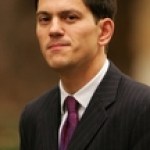
David Miliband’s speech on ‘the democratic imperative’ marks an important moment in post-Iraq foreign policy. It is the first time since Tony Blair’s departure that a Labour politician has delivered an intellectually coherent set of remarks on what strategic goals Britain should be pursuing in its foreign policy.   After the difficulties in Iraq and Hamas’s election victory, the question for many is why should Britain bother pushing for democracy at all. But as Miliband argues there is a practical as well as an idealistic case for democratic promotion: "In weak states, there are no military solutions to the insecurity and injustice that helps to breed terrorism, only political solutions.

O-mentum

From our UK edition

Americano has reaction to last night’s Democratic and Republican primaries which saw Barack Obama and John McCain both notch up another three victories. With Obama having won the last eight contests, Hillary finds herself on the back foot and fighting for her political life.

The case for Tory boldness

From our UK edition

Over at Three Line Whip, Iain Martin argues that the Tories need a plan B as Gordon Brown shifts tactics. This is all goes back to the hares versus tortoises debate, with the hares thinking that the Tories need to be bold if they are to win a majority at the next election while the tortoises think that the Tories shouldn’t make any dramatic moves that might alarm the public. Given Brown’s record in office so far, it is tempting to say that the Tories should just sit back and wait for the government to implode. But this would be a mistake for two reasons. First, there are signs that the Brown team are finally getting their act together and with reinforcements arriving at Number Ten the Tories won’t have it so easy in the future.

They really don’t want you to have a referendum

From our UK edition

Labour is clearly rattled by the row over it reneging on its promise of a referendum on the EU Constitution. Not content with threatening to withdraw the whip from Labour MPs who support honouring this manifesto commitment, Labour is engaged in a desperate attempt to discredit the cross-party ‘I want a referendum campaign’. Europe Minister Jim Murphy is reacting with panic to the planned ballot in his constituency of East Renfrewshire. His local Labour party has sent out a leaflet which is filled with—to put it politely—misleading statements. First, they claim that the ballot has been organised by the Conservative Party—which it hasn’t. Then, they claim that it is not a secret ballot—when it is, run by Electoral Reform Services.

Brown’s idea

From our UK edition

The Brown re-launch, or strategic readjustment as I expect the Prime Minister would prefer us to call it, is the subject of Steve Richards’s column today. Richards notes how Brown is trying to counter Cameron’s commitment to a fairer society and a smaller state by talking about the kind of enabling government that is needed to ensure that British people can compete in an age of globalisation. He points out that Brown has combined this clearer message with a more effective style of delivery; putting him in a decent political position for the first time since his honeymoon. It does seem that Brown feels that he has hit upon the idea that he thinks will carry him through to the next election.

Out of the mouths of babes | 11 February 2008

From our UK edition

There’s a great piece in New York Magazine about why children lie. In short, they do so because their parent do. The good news if you’re a parent, is that if your child is telling porkies from a young age it is a sign they are quite smart—the brightest start lying around age 2. The speed at which children lie is quite astonishing: researchers found that the average 4 year old lies every two hours and 6 year old every 90 minutes. One other interesting statistic is that teenage rebellion peaks at between14 and 15.

You’re only as old as the ideas you think

From our UK edition

John Mortimer had a piece in The Observer this weekend bemoaning ageism in our politics and contrasting the treatment of the 66 year old Ming Campbell with that of the 71 year old John McCain. But the issue is not one of age but attitude. In outlook, McCain is anything but old—indeed, he is actually the most modern candidate in the race on either side. No other candidate in this campaign cycle has thought more creatively or more deeply about the two great new political challenges of the 21st century: how to combat Islamic extremism and the need to find growth-promoting, technological solutions to our environmental challenges. By contrast, Ming Campbell didn’t seem to have had a new thought in years.