James Forsyth

James Forsyth

James Forsyth is former political editor of The Spectator.

Olympic outrage

From our UK edition

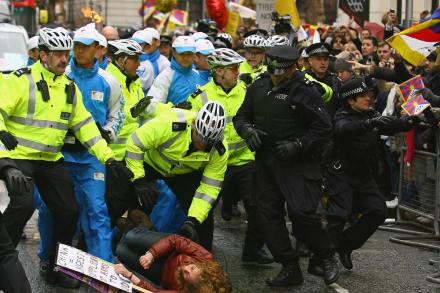
There has been understandable outrage about the role that those blue-tracksuited heavies played as the Olympic torch made its ignominious way round London. But now The Independent is reporting that these guards are members of the People’s Armed Police, a paramilitary force that has played a brutal role in putting down the recent protests in Tibet. The government need to urgently tell the public what powers these goons were given, what visas they were on and what background checks were made to ensure that those directly responsible for gross abuses of human rights were not allowed to run around London’s streets. Holding the Olympics in China is one thing, allowing the People’s Armed Police to operate in the British capital is quite another.
Petraeus and Crocker on Iraq

From our UK edition

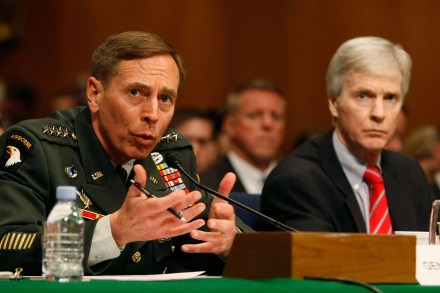
The message from General Petraeus and Ambassador Crocker’s opening statements to the Senate Armed Services Committee is that there has been significant progress in Iraq since September, but that his progress is fragile and that any rapid change in strategy would endanger it. The main news in Petraeus’s testimony was his commitment to a 45 day pause in troops withdrawals once US troop levels have been returned to a pre-surge level and his dismissal of the idea of a fixed timetable for withdrawal. Also worth noting from Petreaus’s evidence were his comments on the role of Iran and Hezbollah in training the extremist Shiite special groups and his contention that ‘Iraqi leaders now recognise the threat posed’ by Iran’s actions.

Parent power

From our UK edition

Steve Richards’s column in The Independent is, as ever, worth reading. Richards is surely right that education is fast becoming the main dividing line between the two parties. But I’m puzzled by this question that he poses about the Tory plans for independent, state-funded schools: “And if these schools are "independent" of political control, as Mr Gove envisages, to whom will they be accountable?”  The answer is that the schools will be answerable to the parents of its pupils. Once Gove’s supply-side reforms have been enacted, parents will be able to pick schools for their children rather than having the schools pick the pupils. Any school that isn’t up to scratch is simply going to see parents sending their children elsewhere.

More bad poll news for Brown

From our UK edition

Politics Home, which is becoming an indispensable resource, flags up tomorrow’s poll in The Times which shows the Tories ahead 39 to 33. The Tories will be disappointed not to be above the psychologically important 40 percent mark but the guts of the poll contain much encouragement for them. Seven in ten voters say that Britain is heading in the wrong direction, Gordon Brown’s leader rating is down to 4.50 among all voters and 6.26 among Labour voters—a drop among Labour voters of almost half a point, and the Tories now have a clear lead on which party is competent and capable.

Ming offers lukewarm support for Nick Clegg

From our UK edition

It is hard to imagine that this week could be as disastrous as last week for Nick Clegg, but Ming Campbell’s interview in the Independent this morning won’t have put a spring in Clegg’s step. Ming’s praise for his successor is hardly gushing. Take his response to this question:  Would an experienced parliamentarian like yourself have led his party out of the Commons? Cid Evans by email  I have been punctilious in not second guessing the new leader. It is for him to decide strategy and tactics. This is politician-speak for, ‘it was a really stupid thing to do but I’m not going to say that’. To add insult to injury, Ming also gives a rather forceful answer to the question about how many women have you slept with.

The wrong sort of snow at Terminal 5

From our UK edition

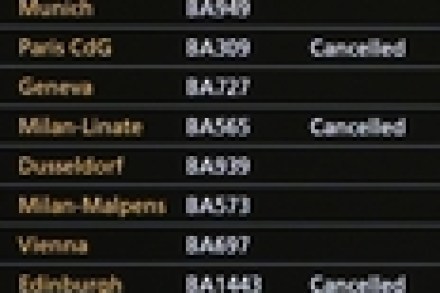
You really couldn’t make this up, the snow that fell today led to 100 flights being cancelled at Terminal 5. Now, I’ll grant you that you don’t expect snow in April but it was hardly a blizzard. One wonders what is left to go wrong at Terminal 5.

Taking care of business

From our UK edition

David Rothkopf’s Newsweek essay on the global super class is well worth reading if only for this anecdote:  “I once overheard a dinner conversation among the CEO of a leading aircraft manufacturer and a senior member of the U.S. House Armed Services Committee. "Here's the deal," said the CEO. "I want to sell a plane to Muammar Kaddafi and he wants to buy one. But we have sanctions in place that won't let me sell to him. The U.S. wants this guy dead. So, what I'm thinking is, if you help me get the OK to sell him the plane, I'll build with explosive bolts connecting the wings to the fuselage. Then, one day he's up flying over the Med and we push a button. He's gone. I make my sale. Everyone's happy." Fortunately, the conversation took place in the 1990s, a time before U.S.

Another calamity for Clegg

From our UK edition

The last thing that Nick Clegg needed this morning was the claim in The Independent on Sunday that if all the votes had been counted Chris Huhne would have been elected leader. Clegg won the leadership by 511 votes but the paper claims that if the 1,300 postal votes which arrived after the voting deadline had passed had been counted then Huhne would have won.  On Sunday AM, Clegg dismissed the story as having “no foundation or fact whatsoever.”  But by suggesting that he is not the legitimate leader it undermines his position at the end of a disastrous week for him.  Clegg’s GQ interview is continuing to cause problems for him.

The meaning of what happened in Basra

From our UK edition

The consequences of the fighting in Basra and the subsequent cease-fire are still unclear. Some see events as testifying to Sadr’s strength, others point out that it was him who was forced to sue for peace.   Kimberly and Fred Kagan, key advocates of the surge, have a piece in this week’s Weekly Standard which acknowledges the uncertainty over what happened in Basra—an uncertainty, which as they point out, largely exists because of the British decision to abandon the city—but argues that most coverage is missing the most crucial fact about what went on: “The most important fact about the recent operations has escaped most observers, however.

Can Clegg recover?

From our UK edition

Nick Clegg has had a disastrous week. His comments about the number of women he had slept with have made him into a laughing-stock while his party’s position on the Lisbon treaty becomes more incoherent by the day.  Clegg’s interview with The Times  this morning shows how difficult it is going to be for him to get past the Clegg-over business. Helen Rumbelow and Alice Miles press him repeatedly on the issue and you have to imagine that every other interviewer is going to do the same for the foreseeable future. Clegg does, though, say one interesting non Clegg-over related thing.

In honour of Martin Luther King

From our UK edition

Forty years ago today, Martin Luther King was assassinated. Here is the end of the last speech by this great man and Bobby Kennedy's moving words on King's death which are, as Joe Klein says, some of the finest ever spoken.

The Blair dividing line

From our UK edition

Most of the press attention on Tony Blair’s speech last night has concentrated on what he said about faith, and understandably so. But to my mind, the most interesting section was when Blair talked about what he sees as the new dividing line in politics today: “The world is interdependent today, economically, politically, even to a degree ideologically. The divide, then, is between those who see this as positive - the opening up offering opportunity; and those who see it as threatening and wish to close it back down. As you can see from the Presidential race in the U.S., there are new questions that cross traditional Party lines: free trade vs. protection; engagement in foreign policy or isolationism; supporting immigration or opposing it.

The Ken has five kids by three different women story isn’t going to determine the result of the mayoral election

From our UK edition

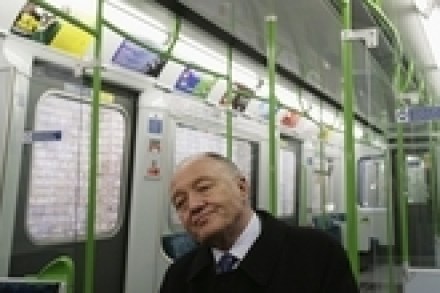
I have very little time for Ken Livingstone but I can’t think that tonight’s revelation about his private life is going to make much of a difference to his political fortunes. I expect the fuss will die down fairy fast as none of the usual ingredients required to keep this kind of story going are present. First of all, Ken can’t be accused of hypocrisy—he is hardly a family values politician. Second, none of the other major campaigns are going to want to go anywhere near this story.

More Balls

From our UK edition

Is it a bigger scandal that six state schools are asking parents for voluntary contributions or that 100,000 children do not get into their first choice school? Ed Balls clearly thinks it is the former as he has gone into full Laura Spence-outrage mode over it, naming and shaming the schools involved. One can’t help but wonder what Balls is up to in trying to turn this into a big story. As Conor Ryan, who used to advise Blair and Blunkett on education, writes, “The problem with turning the issue into a cause celebre is that it alienates many of the good school leaders that this government needs if it is to tackle failing schools and pioneer personalisation.

Labouring on

From our UK edition

Peter Riddell is not a man prone to hyperbole so when he writes that “The malaise is real and it is widespread. The Brown Government is in deep trouble” we should sit up and take notice. As Peter notes, much of the problem stems from the teething troubles surrounding the arrival of new people at Number Ten who have not meshed with the old team. One of the oddest things about Stephen Carter’s new hires is why they keep talking to PR Week, hardly a subtle venue for strategic leaking. Philip Webster reports one Minister irritably asking, “What is going on here? Do people think they can go running to a trade magazine and somehow not have their thoughts end up in the national press? It is crazy and destabilising”.

The insiders give the Tories the edge

From our UK edition

The Politics Home Index, a poll of 100 political insiders which has just launched, is going to provide a fascinating insight into what the Westminster Village is thinking. Earlier this week, the panel were surveyed on what they expected the result of the next election to be—the results, provided exclusively to Coffee House, make for encouraging reading for the Tories. 34 percent predict a Conservative majority while 32% expect the Conservatives to be the largest party in a hung parliament. By contrast, only 13 percent say the Labour party will have a majority and 22 percent think Labour will be the largest party but fall short of an overall majority.

Terminal Five, five days of chaos and counting

From our UK edition

It is quite incredible that the problems at Terminal Five have still not been resolved. It is expected that 50 flights will be cancelled today, bringing the total since Thursday to over 400, while 28,000 bags are somewhere in this mess. This is nothing short of a national disgrace and aside from the inconvenience being caused to passengers, huge damage is being done to the attractiveness of Britain as a place to do business. But no one at British Airways seems to think they should resign. At time like this, one really does wish that they had carried on with their rebranded tail fins and dropped the British bit of their name completely.

Obama’s web site is more popular in Britain than those of Britain’s political parties

From our UK edition

If anyone doubted that British political parties are doing a poor job of both using the internet to drive their message and exciting voters, then just consider this from Tom Watson’s blog: “Barackobama.com was the 11th most visited site for UK Internet users in February. In September last year it was 172nd. During the week of super Tuesday his website had more visits than any of the major UK political party websites. Obama was the most searched for political figure in the UK, receiving three times as many searches as Hilary Clinton. That’s reach.” To be fair, there are some British politicians who understand the potential impact of the internet—notably, George Osborne.

McCain on Basra

From our UK edition

Talking about the situation in Basra today, John McCain makes the point that the problems in the city reflect not on the current strategy in Iraq but on the mistaken initial strategy: “This goes back to when we didn’t have enough boots on the ground, after the initial military success,’’ he said. “Iranian clerics moved into the region, Iranian influence moved into southern Iraq, and we basically, and the British, did not do a great deal to prevent them. These are the penalties we continue to pay for the very bad mishandling of the war for nearly four years while they became solidly entrenched.

Has Mugabe actually come third?

From our UK edition

The Institute for War and Peace Reporting latest update on the Zimbabwe election quotes source with knowledge of the results saying that Mugabe actually came third. He is, however, set to claim victory. The key thing to watch for is how South Africa reacts to his announcement.