James Forsyth

James Forsyth

James Forsyth is former political editor of The Spectator.

Al Qaeda’s base

From our UK edition

The New York Times’ big splash today on the hunt for Osama bin Laden is well worth reading in full as it deals with the more important question of what Al Qaeda is capable of now.  Here are the two key paragraphs on this point: Just as it had on the day before 9/11, Al Qaeda now has a band of terrorist camps from which to plan and train for attacks against Western targets, including the United States. Officials say the new camps are smaller than the ones the group used prior to 2001. However, despite dozens of American missile strikes in Pakistan since 2002, one retired C.I.A. officer estimated that the makeshift training compounds now have as many as 2,000 local and foreign militants, up from several hundred three years ago.

Has the endgame already started?

From our UK edition

You won’t find many hacks better connected than Trevor Kavanagh so his column today is particularly noteworthy as it assumes that Gordon Brown being told to step down by some of those closest to him is inevitable: The party won’t have him humiliated by a Cabinet coup, a stalking horse challenge or a showdown with “men in suits”. But senior Labour figures want the issue sorted before the party conference in September. So . . . who? Both pals and plotters believe there are just two options. Either Gordon’s family — his wife, Sarah, or brother Andrew — will step in to save this proud man from further torture and urge him to fall on his sword. Or a group of Cabinet ministers led by Straw will deliver an ultimatum: You go, Gordon . . .

Ashley diagnoses Labour ministers with clinical depression

From our UK edition

If you want to get a feeling for the pain that Labour is currently going through read Jackie Ashley’s column in The Guardian which sums up the situation brilliantly. “Talking to ministers over the past few weeks, I have been struck by how fatalistic they have become. They do not seem, in the main, to be rebellious, angry or even despairing. Despair is too energetic a word. They seem clinically depressed, tired and flat. There has been talk of a posse of 15 junior ministers going to Brown to tell him the game is up but the consensus is that it won't happen - in effect because they cannot be bothered. There is no plot. There is no plan.” Ashley is surely right that Labour has to either dump Brown by the end of the year or get behind him and with enthusiasm.

You couldn’t make it up | 30 June 2008

From our UK edition

Like Stephen, I couldn’t quite believe it when I read that children now receive marks in English GCSE for writing ‘F*** off’. The explanation from Peter Buckroyd, chief examiner of English for the Assessment and Qualifications Alliance, that writing down this expletive ‘does show some very basic skills we are looking for’ does make one think that it must be April 1st. One imagines children up and down the land writing ‘F*** off’ on their homework and responding to any objection from their teachers with the line ‘you get a mark for it.’ PS For contrast, try answering some of the questions from the old 11-plus.

The positive component of Brown’s legacy

From our UK edition

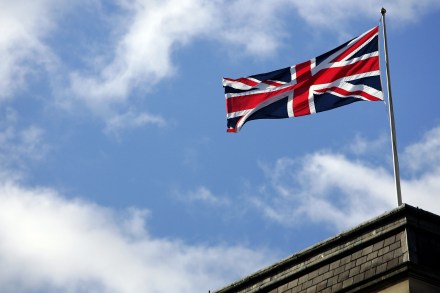
Walking down Whitehall the other day on a beautiful summer’s evening, it struck me what Gordon Brown’s positive legacy will be: the flags flying on top of public buildings. When Brown first suggested the idea last July I was rather sceptical, but looking up Whitehall and seeing the various Union Jacks fluttering in the breeze I was thoroughly won over. I doubt that any government will reverse this move—there’s too much risk of negative publicity—so it will be a permanent change.

A Coffee House challenge | 26 June 2008

From our UK edition

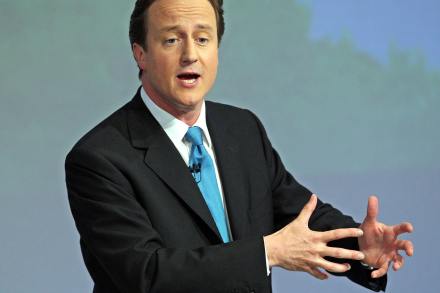
With the polls suggesting that there’s very little chance of a Brown comeback—according to ICM only 24 percent of people think that Labour can win the next election if Brown’s in charge—people in Westminster are beginning to think seriously about what the governing priorities of the Tories will be. As Pete outlined earlier, Fraser’s cover story this week details some of the measures on education and welfare that would be in Cameron's first Queen’s Speech.  But what I’d like to know from you is what would Coffee Housers like included in David Cameron’s first legislative programme?

Where it all went wrong for Brown: he’s never said sorry

From our UK edition

What is most remarkable about the descent of Gordon Brown is that the voters have never even hinted at giving him a second chance. Ever since the debacle of the election that never was Brown and Labour’s ratings have moved downwards at a pretty rapid clip. We are now at a point where 74 percent of voters think he is a change for the worse from Blair and the Labour party is in some danger of being overtaken by the Liberal Democrats in the polls. There is one very simple, overlooked reason why Prime Minister Brown hasn’t been given a second chance: he’s never asked for one.

Playing with toy soldiers

From our UK edition

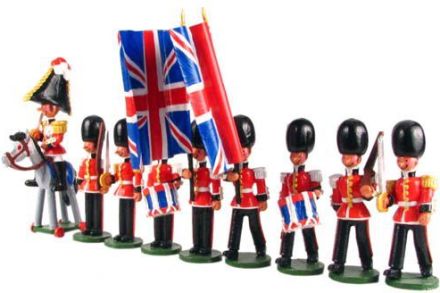
Danny Finkelstein has responded to my post suggesting that he is fighting the last war by saying, rather ingenuously, that this is generally a smart strategy. Now, at the risk of stretching this metaphor to breaking point, I’d counter that the last wars the Conservative party has fought have been all about minimising its loses or reclaiming ground lost to the enemy. The coming campaign offers it a very different opportunity, a chance not only to reverse the result of previous conflict but to advance into new territory. It is the opportunities on offer that mean that a new campaign strategy is required. The Tories would probably win if they fought the last war but they would not advance as far as they could and nor would their hold be as total on the territory they had taken.

Total launch

From our UK edition

I headed off to Milbank Tower last night for the launch of Total Politics, the brainchild of Iain Dale. The magazine looks great and has interviews with Gordon Brown and Lynton Crosby as well as articles by the great Mike Smithson, Paul Linford and The Spectator’s very own Clemency Burton-Hill. It is going to be a welcome and impressive addition to the reading lists of us political geeks. One has to take one hat’s off to Iain Dale, it is no mean achievement to launch a magazine in the present climate and to do so while getting married is doubly-impressive. If you want to check out the magazine’s website, it is here. It has a whole bunch of fun features including a political speeches database which is very handy.

Olympic pollution

From our UK edition

Last night I was having drinks with a China expert and he made a rather startling prediction: Beijing will be the first summer Olympics where no records are broken in track and field. His thinking was that the air quality in China is so poor that the athletes in every outdoor event are going to be severely hampered by it. Certainly, looking at Jim Fallows’s photographs (link via Clive) it is hard to imagine how anyone could comfortably run 100 metres in these conditions let alone 26.2 miles.

The first spouse problem

From our UK edition

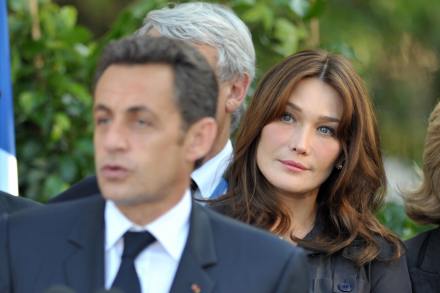
Clive flags up Maureen Dowd’s entertaining column on how the Americans would react to having Carla Bruni as First Lady. But on top of the comedy value there’s a serious issue to be grappled with. From now on, it is going to more common than not that a president or a prime minister’s spouse works. This means there’s an urgent need to work out some set of rules about what is OK for them to do and what is not. Otherwise, these spouses are going to constantly be accused, and often unfairly, of exploiting their position. The problem is compounded by the fact that a number of potential ‘First Ladies’ work in areas where there are obvious potential pitfalls.

Where it all went wrong for Brown

From our UK edition

This Friday marks the first anniversary of Gordon Brown becoming PM. To put it mildly, it hasn’t been a successful start. This week on Coffee House we’ll be putting forward our views on why and where it has all gone so wrong. The obvious answer is the whole debacle of the election that never was. But this is a necessary but not sufficient explanation for why Labour is now recording some of its lowest poll ratings since records began, and why 85 percent of voters think that Brown has done a worse job than they were expecting. On Friday, we’ll invite you to vote for what has been the biggest factor in it all being such a disaster. P.S. You can read Matt’s assessment for The Sunday Telegraph of Brown’s first year here.

Rip off Britain

From our UK edition

One would have thought that getting a bunch of passport photos done in London would be no great hassle—but you’d be wrong. For a while I’ve needed to get some taken for the Tory conference accreditation form so on Thursday I popped into Hampstead Post Office to use the photo machine there. It was out of order. I went back this morning thinking that it would have been fixed in the meantime. How foolish I was. This lunchtime I went to Victoria to use the machines there. I went into one and started plopping in the four pounds that I had to pay to get four photos. But when I got to three pounds eighty it told me the service was temporarily unavailable.

Chalk one up for the Davis campaign 

From our UK edition

The letter from Sir Simon Milton, head of the Local Government Association, to local councils telling them not to use the powers granted to them under the Regulation of Investigatory Powers Act to deal with “trivial offences” is a triumph for David Davis. (These powers were designed to assist in anti-terrorism investigations but are now being used by councils to check up on what people are putting in their bins and whether they are scooping up after their dogs.) Although, the letter might have been sent anyway there is no doubt that Davis has turned the spotlight onto these kind of abuses. Davis is going to have to battle to stay in the news these coming weeks and I still think that his resignation was ill thought-out.

Is a coup the best Zimbabwe can hope for?

From our UK edition

Paul Collier, the noted Oxford economist who used to be at the World Bank, has a thought-provoking piece in The Washington Post today arguing that the best, realistic solution to problems like Zimbabwe is a coup. Here’s the nub of his argument:  So how can the grossly excessive powers of the Mugabes and Shwes of the world be curtailed? After Iraq, there is no international appetite for using the threat of military force to pressure thugs. But only military pressure is likely to be effective; tyrants can almost always shield themselves from economic sanctions. So there is only one credible counter to dictatorial power: the country's own army. Realistically, Mugabe and Shwe can be toppled only by a military coup.

The balance sheet is deepest red

From our UK edition

Today’s Observer has an update on the state of the Labour party’s finances, as Peter Oborne reported back at the end of May there is a real chance that the Labour party might actually go bankrupt. Gaby Hinsliff reports that this worst case scenario appears to have been avoided thanks to a substantial donation from Sir Ronnie Cohen and Lord Sainsbury agreeing to guarantee the salaries of various future staffers. However, the party remains heavily in debt. Ray Collins, the new general secretary, has said that Labour cannot afford to recruit many new staff before the next set of European and local elections in 2009 or the general election. This is going to severely weaken Labour’s field operation, accentuating Gordon Brown’s political problems.

The MDC pulls out of Zimbabwe poll, leaving Mugabe to run unopposed

From our UK edition

The BBC is reporting that Morgan Tsvangirai will announce this afternoon that he is pulling out of the presidential run-off on Friday.  His decision is in response to the mounting violence against his supporters and systematic efforts to prevent him from campaigning. However, it will allow Mugabe to claim victory. The next few days will be a major test for Africa. European nations are committed to the idea that African nations must take the lead on Zimbabwe. Now that there will not be a contested election on Friday, African countries are going to have to decide what they will do to remove Mugabe from power and stop him spilling more blood and inflicting further misery on Zimbabwe.

Not much of an anniversary present

From our UK edition

The BPIX poll in The Mail on Sunday is unremittingly bad for Brown. Not only do the Tories lead 49 to 26 but the public return a brutal verdict on Brown personally. 44 percent, a plurality, say he should quit now. 47 percent, again a plurality, believe Labour would have a better chance at the next election if they got rid of Brown. 85 percent think Brown has performed worst than expected since becoming Prime Minister and 53 percent wish Tony Blair was still PM. BPIX, who as Political Betting notes are not registered with the British polling council, also asked a series of quirky questions. These find that Cameron has a commanding lead on everything from who best represents British values to who would you like to babysit your child.

What’s next in Iraq?

From our UK edition

I’d thoroughly recommend these articles from The New York Times and The Washington Post about Iraq. The Times piece looks at the progress made in Iraq since the surge started and the remaining obstacles to success. The Post examines the turnaround in Basra and what it says about the effectiveness of the Iraqi forces. From a British point of view, the criticisms made of the role that British troops played—or did not play—in the city are particularly noteworthy.

The European Commission’s dodgy numbers

From our UK edition

Open Europe has caught the European Commission out in some outrageous spinning. Before the recent summit, the Commission circulated a briefing note to journalists that stated that 40 percent of No voters in Ireland voted no because they didn’t understand or were not familiar with the Lisbon Treaty. However, the Commission’s Eurobarometer poll published yesterday shows that this isn’t true. It reports that only 22 percent of No voters said that they voted no for these reasons. This raises the question of where did the Commission’s 40 percent figure come from?