James Forsyth

James Forsyth

James Forsyth is former political editor of The Spectator.

Dollar diplomacy

From our UK edition

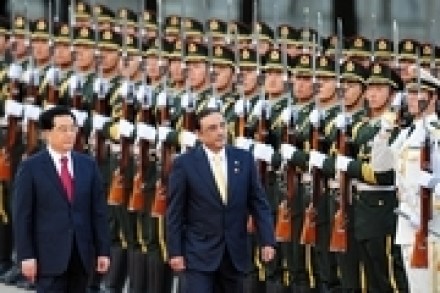
There is a fascinating story in the Washington Post today about how Pakistan is looking to China for $3 billion worth of emergency assistance. Pakistan, which is on the verge of bankruptcy, desperately needs funds but knows that in the current circumstances the United States is unlikely to come through. China with $1.9 trillion in foreign reserves, and with a long-standing relationship with Pakistan—it played a crucial role in assisting the Pakistani nuclear programme, is well placed to help. It will be well worth watching to see what other countries China assists over the coming months. However, in the long term the financial crisis could do far more harm to China than America.
Brown ignored the warning signals

From our UK edition

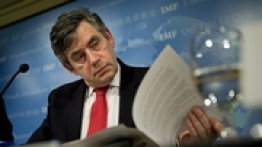
Some are saying that you can’t hold Brown in anyway responsible for the current situation because no one saw it coming. But as Martin Bright points out in the New Statesman this week, this simply isn’t true: “Brown's assiduous biographer, Simon Lee of Hull University, noticed the warning signals contained in the report. He wrote last year, in his book Best for Britain?: the Politics and Legacy of Gordon Brown, "as the IMF has noted, by encouraging the UK economy to become even more linked to global financial markets, the British model has increased the vulnerability of the UK economy to global risks and contagion".

Too little, too late?

From our UK edition

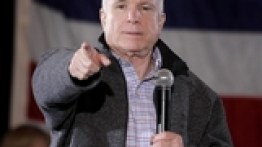
Last night, John McCain turned in his best performance of the debate season. He clearly distanced himself from President Bush, he drew contrasts with Obama on taxes and he appeared confident in his answers. In short, he did tonight what he needed to do in the first debate. (However, it should be noted that the instant opinion polling once more showed Obama winning the debate). The two questions are will McCain’s performance change things and does he have enough time to get back in the game. My sense is that last night will get the McCain campaign up off the floor, it should see McCain stabilise his position. But that isn’t really good enough when you are down by more than seven points in the polling averages with less than three weeks to go.

If Brown can’t learn to feel the electorate’s pain, it will be him who suffers

From our UK edition

Fraser in his politics column, available online tomorrow, argues that in the current climate Brown’s lack of emotional intelligence will be less of a problem for him. This is one of those rare instances where I disagree with Fraser. It is one of Brown’s great faults that he doesn’t do empathy or apologies. I think this is going to be a huge problem for him during a recession when politicians have to be able to do the ‘I feel your pain’ stuff if they don’t want to appear hideously out of touch. Take Brown’s comments earlier today. Andrew Porter, a journalist who gives Brown a fair shake, reports that Brown was asked about rising unemployment and replied that the government was creating jobs insulating lofts.

What should McCain do tonight?

From our UK edition

Tonight is the last McCain-Obama debate and McCain goes into it needing a game-changer; three polls out today have him down by 14, nine and 10 respectively. To compound McCain’s problem, the economic news is so bad that it is virtually impossible for a message on any subject other than the economy to cut through. The Obama campaign is keen to spin that McCain is panicking and that is how they’ll likely respond to any bold new initiatives McCain proposes or any attacks he unleashes on Obama. McCain’s best strategy might be, as was suggested on Meet the Press on Sunday, a bit of straight talk: telling the American people just how they got into this financial mess without sugaring the pill. This is, obviously, a risky strategy.

The Canadian experience 

From our UK edition

Tim Montgomerie, who spent a lot of time with the Canadian Conservatives during the campaign, has a good piece up on yesterday’s election in Canada which saw the Conservatives maintain their status as the largest party but fail to win an overall majority. The one issue I would take with Tim on is green taxes, which Tim is very down on. I’d argue that conservatives should support moving the tax burden from work to waste. Also, green taxes if properly applied can be used to lower—or scrap—the taxes which press down hardest on low and middle-income families. PS I can’t get through an article about Canada without telling my favourite Canadian joke which may well be apocryphal.

Will there be a manifesto commitment to privatise the banks?

From our UK edition

Events have moved so fast this week that there are a whole string of questions that we have not really thought about. For instance, when will the government sell off its stakes in Royal Bank of Scotland and the bank to be created by the TSB-Lloyds HBOS merger? Obviously, the government would be foolish to announce the schedule that it is working towards as the answer will depend on market conditions. But it doesn’t seem unreasonable to ask whether the parties’ manifestos at the next election will contain a commitment to place these shares on the market before the end of the next parliament, which will in all likelihood be in 2014. It will be an interesting ideologically canary in the coal mine to see whether any party is prepared to pledge to do this.

Will Brown be busted?

From our UK edition

Daniel Finkelstein lays out the most eloquent case I have seen yet for why the current financial crisis will ultimately do for Brown: “Our view of the Brown decade is like the turkey's view of mankind, utterly destroyed by what has now happened. The stability was a trick of the light, the lengthy period of growth was fuelled by house prices and debt, the low interest rates (of which Brown is still, amazingly, boasting) were an error. The length of the good years is being paid for by the severity of the crisis we now face. … What matters is not whether the bust was avoidable. It is that the preceding boom was illusory. The idea that boom and bust had been abolished was not a small claim among many. It was the central claim of this Government.

How Labour should behave

From our UK edition

Sunder Katwala at Next Left, the Fabian Society’s excellent blog, has laid down some rules for how Labour supporters should act  during the current crisis: “1. Behave sensibly. At all costs, avoid triumphalism about an economic crisis, however well the Prime Minister handles it. 2. In particular, could anybody banging on about the Falklands please stop it. It is in very poor taste all round. 3. And, particularly particularly, if any MP wants to say 'when the crisis is over, perhaps there might be an early election', perhaps arrangements could be made for them to be quickly taken out and shot.” This is wise advice. Considering the damage that the election that never was did to Brown, Labour would be nuts to start flirting with the idea of going early.

McCain has put country first by not raising Rev. Wright

From our UK edition

The civility cops have been giving John McCain a hard time for the tone of his campaign. But they are ignoring the fact that McCain has held back from using a political line of attack that could be highly effective because of what it could do to the country. Obama’s connection to Rev. Wright are, potentially, hugely damaging to his candidacy. It dredges up a whole set of emotive issues surrounding race and brings into question much of his political persona. The attack ad on the issue Tucker Carlson sketches out over at the Daily Beast shows the kind of punch that a spot on it could pack: “The spot opens with the familiar yet still shocking tape of Wright pounding the pulpit and looking crazy: Wright: “God damn America for treating our citizens as less than human.

Whither the euro

From our UK edition

The financial crisis has partially revived the euro debate. Eurosceptics think that it might bring the whole thing down while those who favour British entry believe that they have found a new argument for it. To date, it has been the usual suspects making the case on either side. But today Simon Tilford and Philip Whyte of the Centre for European Reform, a pro-European think-tank run by Charles Grant, have a piece in The Guardian which is surprisingly bearish on the euro’s prospect. Here’s the key section: “The credit crunch should test conclusively whether it is sustainable for countries to share a single currency outside a political union. The financial markets seem to be sceptical.

If the financial crisis came from America, one of its main instigators was Gordon’s friend and adviser

From our UK edition

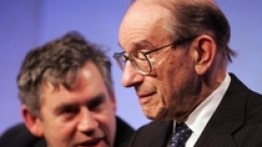
A crucial part of Gordon Brown’s plan for getting away from the financial crisis with his reputation enhanced is to treat it as something nasty that blew in off the Atlantic. Brown is desperately hoping that the public will be persuaded by this line and that this will allow him to dodge questions about his weakening of the regulatory structure, the huge levels of debt in the economy and the extent to which he let the City do whatever it wanted because it was covering up the economic failings of the rest of the country. But someone needs to ask Brown about role his friend Alan Greenspan, chairman of the Federal Reserve from 1987 to 2006, played in creating this crisis.

Sats for 14 year olds to be abolished

From our UK edition

Ed Balls is making a statement to the House at 3.30 today in which it is expected that he will announce the abolition of Key Stage Three tests, those that are sat by 14 year olds. This is actually quite a canny move even if it does come in response to the whole Sats debacle of this summer. Nation-wide testing at 11, 16 and 18 (for those who remain in education) should be quite sufficient.

How the Tories plan to respond

From our UK edition

Tim Montgomerie has an absolute must-read up on what the Tories are thinking about the current economic crisis and its impact on the political situation. Tim reports that the Tories believe that Brown’s weakness is that while he might have rescued the banks he has not rescued the real economy. The Tories are confident that they can present themselves as the party that can sort out the real economy.   Tim notes that the Tories are relatively relaxed about being out of the news. I think this is sensible of them. Gordon Brown wants the Tories to either be echoing him or rubbishing his plans.

A good day for Gordon but the reckoning is coming

From our UK edition

I suspect Gordon Brown let out a roar of delight on hearing that the US government has reversed course and is going to take an equity stake in nine of the banks that it is bailing out. This deviation from the Paulson plan brings the US response to the financial crisis more closely into line with what is being done in this country and allows Brown to claim that he is setting the policy agenda that the world is following. This is an exaggerated claim—as Fraser has noted—but to be fair, the British model is better than the appalling, original-version of the Paulson plan. The Prime Minister should enjoy this moment for things are going to start going wrong for him again soon.

42 days fails in the Lords, government to drop measure from counter-terrorism bill 

From our UK edition

It is a sign of the extent to which the financial crisis is dominating the news that the Lords voting down 42 days by a huge margin, 309 to 188, is not a headline-grabbing story. Jacqui Smith will, The Guardian reports, make a statement at 8.30pm in the Commons. It is expected that she will announce that the government will drop the 42 days clause from the bill but prepare separate legislation for if it is required in an emergency. The legislative language around 42 days was a dog’s dinner; one left-wing Labour MP even told his fellow backbenchers to vote for it because the bill was so badly drafted that the provision could never be used. So, it is a good thing that this botched effort is been withdrawn.