James Forsyth

James Forsyth

James Forsyth is former political editor of The Spectator.

Why the Tory poll lead is likely to grow during the general election campaign

From our UK edition

Conventional wisdom has it that the governing party recovers in the polls during an election campaign. The theory is that the incumbent party both gests to choose when the election is and benefits from the polls moving from being a referendum on the government to a choice between the parties. But—as Anthony Wells, Mike Smithson and Daniel Finkelstein argue—there is no evidence to support the idea that there is an automatic pendulum effect. So, those arguing that Labour’s poll numbers are definitely understating what the party will get in the general election are wrong. Looking ahead to the next election, I’d expect the Tories to actually have the better of the campaign and increase their vote share during it.
Going back to where we were will just lead to an even bigger crash

From our UK edition

The Washington Post has an interesting interview with Nassim Nicholas Taleb, the author of the black swan thesis. In it, he’s very dismissive of economists and makes some sensible comments about bonuses. But what struck me as most interesting was his final answer: “My rosy scenario is that a better economic environment will develop, a low-debt, robust growth world, in which whatever is fragile will be allowed to break early and not late. My nightmare scenario is that the government saves Citibank once again, as well as the other banks, and business resumes as usual. Then, the next time the system breaks, it breaks much, much bigger.

Another G20 disappointment for Brown

From our UK edition

Today’s Observer reports: “Gordon Brown's hopes of uniting the world's most powerful economies behind a massive new package of tax cuts and public spending increases suffered a serious blow yesterday when he failed to persuade France and Germany to back his plan to revive the world economy. After talks at Chequers to prepare the way for next month's G20 summit in London, Angela Merkel, the German chancellor, ruled out ordering another "fiscal stimulus" in the short term, and made it clear that if more action were to prove necessary in Germany it would be for Berlin to decide, not the G20. Her comments were echoed by the French finance minister, Christine Lagarde, who was attending a meeting of G20 finance ministers in Horsham, West Sussex.

Petraeus planning 2010 visit to Iowa

From our UK edition

Update: Michael Goldfarb now says he meant the Iowa item as a joke. So, this post is no longer operative. Apologies, I thought Goldfarb was being serious. “THE WEEKLY STANDARD has learned that General Petraeus is planning on delivering the commencement address at the University of Iowa in 2010.” So reports Michael Goldfarb, late of the McCain campaign, on the magazine’s blog. Petraeus going to Iowa, a state he doesn’t have previous ties to, is going to create a huge amount of buzz about his presidential ambitions because the Iowa Caucuses kick off the whole presidential nomination process. If he does, deliver the address—and Petraeus must know this—it will be seen as a sign that he is thinking about running in 2012.

The more we hear about tax havens, the less the G20 will have achieved

From our UK edition

James Kirkup has a very astute post up at Three Line Whip about how to gauge the success of the G20 summit in April. Kirkup writes, “The more you hear Mr Brown, Mr Obama and the rest talk about tax havens, the more they have failed to agree on more important things.   No one likes tax havens. They're the low-hanging fruit of the G20 process - saying rude things about the Swiss and the rest is pretty easy and uncontroversial. But it's also missing the point. This crisis didn't begin in Guernsey or the Caymans, it began in New York and London. Remember that on April 2.  If tax havens and offshore finance are anything but a minor part of the "global new deal" struck in London then Gordon Brown has failed.

Utter Balls

From our UK edition

Sometime a politician says something that is so at odds with reality that one almost hopes that it is spin rather than what they really think. Yesterday, Ed Balls said that it was “nonsense” to claim that IGCSEs are more demanding than GCSEs. This is patent rubbish. Pretty much any teacher, or pupil, will tell you that IGCSe are far harder than GCSEs. The GCSE IGCSE split, the number of pupils from independent schools taking IGCSE exams trebled last years, threatens to further heighten the divide between the state and independent sectors. But rather than dealing with the problem that GCSEs have become debased, Balls is just claiming that nothing is wrong and taking pot shots at independent schools.

Failure in Afghanistan would have terrible consequences

From our UK edition

Max Boot and Fred and Kimberly Kagan’s report on Afghanistan in The Weekly Standard is well worth reading in full. The three authors played key roles in making the case for the surge that has helped to transform Iraq and their comparisons of the two countries are instructive and suggest that the situation is less dire in Afghanistan than is often portrayed. One thing that is hampering the effort in Afghanistan is coordinating the various members of the coalition. Aside from the caveats issue, there are simple problems that could—and should—be resolved.

Transparency in public spending

From our UK edition

Steve Richards argues with his typical eloquence for higher public spending today. Unsurprisingly, I disagree with him. But, intriguingly, he endorses an idea that in the medium term would, I think, be incredibly effective in cutting down the size of the state. Steve writes: “The shadow Chancellor, George Osborne has proposed the equivalent of America's Federal Spending Transparency Act that enables US taxpayers to scrutinise online every item of federal government spending of more than $50,000. He has promised that anyone in the UK will be able to find out online, 'where their taxes are being spent and use this information to hold the government to account'. This is a good idea.

The urgent need for school reform

From our UK edition

Every day seems to bring forward new statistics which illustrate the urgent need for radical education reform. Take this from Camilla Cavendish’s column:  “150,000 pupils start secondary school innumerate every year” The state of state education in this country is a national scandal. Its failings are destroying both social mobility in Britain and this country’s chances of competing economically on the world stage. Then, there’s this from today’s Times:   “Half of children moving to secondary school failed to get into the one they wanted in some areas, according to official figures … One in eight of families in some areas were turned down by all of their selected schools.

Preventing further tragedy

From our UK edition

Camilla Cavendish, who writes with such passion and authority on this issue, sets out why the Serious Case Review into Baby P’s death should be published in The Times today: “I had hoped that he might challenge the refusal of Ed Balls to publish serious case reviews (SCR) in instances where children have died. The refusal to publish the SCR into Baby P meant that the reasons for catastrophic failure were known only to the authority that failed, and the local MP was impotent. I think that secrecy assists incompetence. But Lord Laming does not agree. Sadly, it looks as though he has been captured by the very bureaucracy he criticises so powerfully.

Harman’s biggest weakness

From our UK edition

There’s a smart piece in this week’s Economist on what might be the biggest obstacle to Harriet Harman becoming Labour leader after the next election, the narrowness of her range:  “Ms Harman also personifies a rather narrow sect of Labour thought. Unkindly nicknamed “Hattie Harperson” for her political correctness, she has often championed a cultural rather than economic leftism associated with the bolshier London boroughs in the 1980s. The Equality Bill she is shepherding through Parliament, with its new rights for women and minorities, is a kind of manifesto for Harmanism. Critics of her preoccupation with sexism often make her point for her with their ugly tone (“treachery in high heels” was one columnist’s verdict).

Balls should publish the Baby P Serious Case Review

From our UK edition

The Lord Laming review of the progress that has been made in child protection since his report following the death of Victoria Climbie is all well and good. But, surely publishing the Serious Case Review into Baby P—which Ed Balls refuses to do—would do more good? It shows precisely how the bureaucracy made such a dreadful string of mistakes and with that knowledge in the public domain it would be possible to have an informed debate about what reforms could present such dreadful errors happening again. Michael Gove, who has read the SCR, has repeatedly said that the tale of incompetence it reveals is far worse than what the public has been told.

The SEC was tipped off that Madoff was a fraud in 2000 but did nothing

From our UK edition

An article in Mother Jones highlights out one of the most scandalous aspects of the Madoff case, the SEC's refusal to act on information it was given about Madoff:  “Among those that did learn of Madoff's money management business was Boston-based Rampart Investment Management Company, Inc. In late 1999, Frank Casey, then a senior vice president at the firm, had surreptitiously obtained the Madoff fund's financials. He directed Markopolos and Chelo, who worked under him at Rampart, to reverse engineer Madoff's results with an eye toward creating a similar fund for Rampart's investors.

The cost of Brown’s meddling

From our UK edition

Gordon Brown claims not to know what he should say sorry for. Well, he could start with apologising for his role in Lloyds’ takeover of HBOS. Iain Martin puts it perfectly in today’s Telegraph: "The catastrophe at Lloyds-HBOS is the ultimate New Labour scandal. It has the lot: cronyism, back-scratching, destructive micromanaging by Gordon Brown and an unimaginably large loss of public money. Consider what has just happened. At the height of the financial crisis in September, Sir Victor Blank, the chairman of a perfectly healthy Lloyds, connived in buying a stricken rival bank with the help of a desperate Prime Minister. The weight of toxic assets on HBOS's books then sank Lloyds. As a result, the merged institution has effectively been nationalised.

A Chamber full of millionaires votes to dash the life-chances of 1,800 poor children

From our UK edition

Washington DC’s public schools are some of the worst in America despite having the third highest per pupil spending levels, $14,400 per pupil, in the Union. A small, experimental voucher programme has been running since 2004 which gives around 1,800 pupils from low-income families up to $7,500 a year to go to private schools. The pupils on the scholarship scheme out perform their peers and there are four applications for every place. But Senate Democrats, out of fealty to the teaching unions—the enemies of meaningful education reform in America, have voted down funding for the programme. President Obama has talked a good game on education reform.

Going down the Tube again

From our UK edition

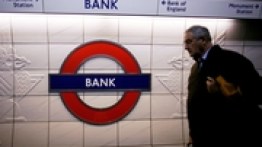
From today's Standard: "Transport chiefs shut Bank's Central line platforms for 90 minutes last night after complaints that decibel levels from screeching rails were too high. The closure left thousands of commuters facing severe delays just after 5.30pm. They described the decision as "madness". Transport for London admitted the problem, caused by a lack of lubrication on the tracks, could have been prevented but could not say how loud the screeching was. A noticeboard at the station told passengers Central line trains would not be stopping because of "technical difficulties". Transport sources told the Evening Standard that London Underground staff had refused to work on the platforms because of the noise but TFL claimed the closure was prompted by passenger complaints.

The Luton protest

From our UK edition

It is hard not to feel rage when one sees soldiers returning home from serving their country being abused by protestors as they were in Luton yesterday. There are those who are making a free speech argument in defence of the police allowing these Islamists to picket the homecoming parade. But the problem is that there appears to be a double-standard when it comes to free speech. These protests are allowed to go ahead but Geert Wilders, who is a bore but also a member of the legislature of one of our closest allies, is banned from the UK for the fear of the offence he might cause. The protests also raise another point: there are, as Con Coughlin says, people in this country who are on the other side in the wars that we fight.

The odds are loaded in the terrorists’ favour

From our UK edition

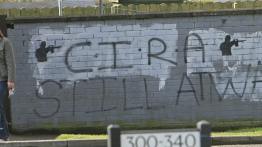
Media coverage of the dissident Republican groups has focused on the question of how much support they have. But, as Martyn Frampton pointed out on The Today Programme this morning, a terrorist organisation doesn’t actually need that many people to cause serious disruption because the odds are loaded in their favour. As the IRA, who did not have that much support in the 1980s, said after the Brighton bomb, “Today we were unlucky, but we remember we only have to be lucky once. You will have to be lucky always.” The dissidents might be in small number but there have carried out a hundred plus incidents—bombs, foiled attacks and shootings—since the Belfast agreement.

Obama administration: Only 5 percent of the Taliban is incorrigible

From our UK edition

Chuck Todd at First Read flags up some fascinating comments from Vice-President Biden on his visit to Nato: “5 percent of the Taliban is incorrigible, not susceptible to anything other than being defeated.  Another 25 percent or so are not quite sure, in my view, the intensity of their commitment to the insurgency.  And roughly 70 percent are involved because of the money, because of them being -- getting paid.” Biden goes onto say that the “idea of what concessions would be made is well beyond the scope of my being able to answer, except to say that whatever is initiated will have to be ultimately initiated by the Afghan government, and will have to be such that it would not undermine a legitimate Afghan government.