Breaking: Ian Tomlinson died of an abdominal haemorrhage not a heart attack
From our UK edition
This judgement is provisional but if it is accurate it, obviously, changes the debate.

James Forsyth is former political editor of The Spectator.
From our UK edition
This judgement is provisional but if it is accurate it, obviously, changes the debate.

From our UK edition
The New York Times carries a really important piece today on how the Taliban are exploiting social grievances in Pakistan. I would urge all Coffee Housers to read it. Here are the two key sections: “In Swat, accounts from those who have fled now make clear that the Taliban seized control by pushing out about four dozen landlords who held the most power. To do so, the militants organized peasants into armed gangs that became their shock troops, the residents, government officials and analysts said. The approach allowed the Taliban to offer economic spoils to people frustrated with lax and corrupt government even as the militants imposed a strict form of Islam through terror and intimidation.

From our UK edition
Charlie Whelan’s column in his local paper is an attempt to divert attention from the actual scandals. He wants us to think that the Tories also indulge in dirty tricks and that the big issue is email hacking. But one line in it is disgraceful and as disgusting as McBride’s original emails: “the gossip contained in them was well known to every Westminster hack.” Judging from the various conversations I’ve had with fellow hacks in the last fortnight, I’d say this is simply not accurate. These were not rumours that were doing the rounds, although there is now a rumour that these smears had their origin in stories that a journalist had tried and failed to stand up. The most awful thing about smears is that they work.
From our UK edition
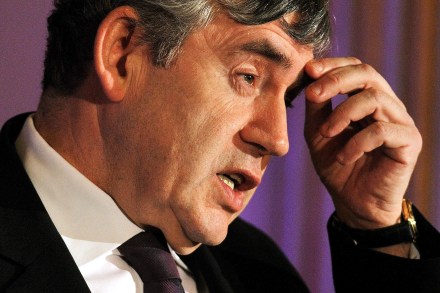
From Kevin Maguire’s blog: “I can't help thinking that if the Prime Minister was going to issue an apology, he should have done so in the "regret" letters to David Cameron et al a few days ago instead of during a visit in Scotland. Either the PM's reinforced the Government's problems, created a double-whammy, or it's a good day to bury bad news” The right thing for Brown to do, both politically and morally, was to apologise straight away to those who had been smeared. The fact that Brown didn’t—or wouldn’t—realise this shows his flaws as a politician. Indeed, I think his apology today was still too limited to enable the government to move on. P.S. From what I’m hearing, there are still a few more shoes to drop.

From our UK edition
The statement from the CPS explaining why Damian Green and Chris Galley will not be prosecuted shows just what a scandal it was that Green was arrested in the first place and that his Parliamentary office was searched. Here's the key section: “I have concluded that the information leaked was not secret information or information affecting national security: It did not relate to military, policing or intelligence matters. It did not expose anyone to a risk of injury or death. Nor, in many respects, was it highly confidential. Much of it was known to others outside the civil service, for example, in the security industry or the Labour Party or Parliament.
From our UK edition
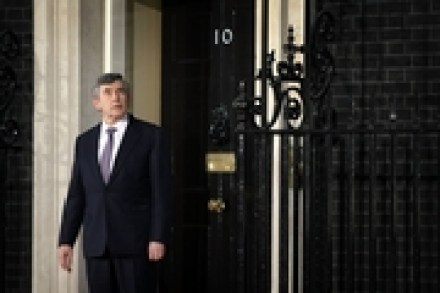
There are few things that Brown puts before political advantage but his pride is clearly one of them. How else to explain his refusal to apologise for Damian McBride’s behaviour? As Jonathan Isaby blogged the other day, a sorry from Brown is a pre-requisite for Labour being able to begin to move on from this whole affair. Bagehot puts it well on his blog: “the fixation with apologies is more than just a bit of puerile Brown-baiting. The game only works because Mr Brown never plays. He obviously thinks that an apology is an admission of weakness.
From our UK edition
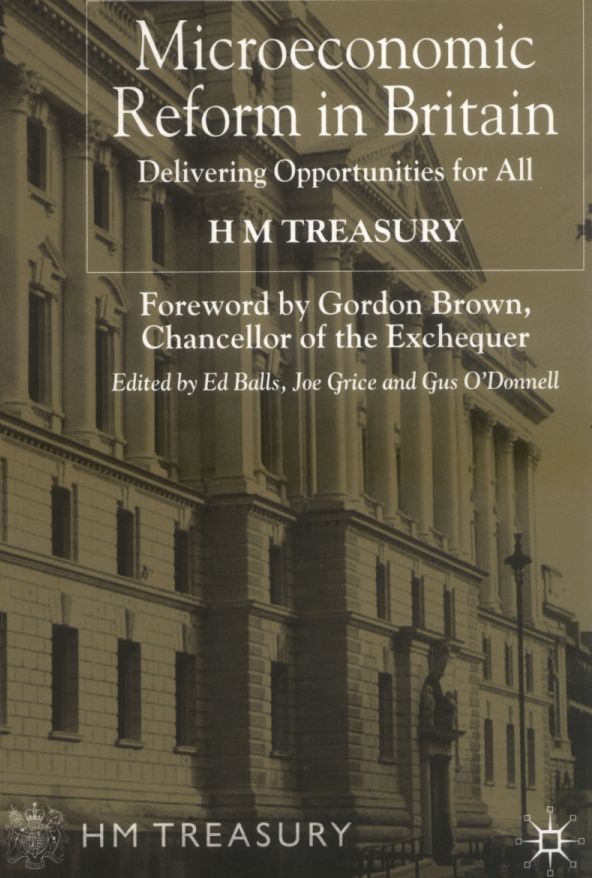
The civil service must be impartial and seen to be impartial. So, there should surely be a rule that stops permanent secretaries co-authoring books with SpAds. Sir Gus O’Donnell’s decision to write Microeconomic Reform in Britain: Delivering Opportunities for All (note the highly political title) with Balls and another civil servant, the book has an introduction from Brown, makes it hard for the public to look upon him as an impartial arbiter. Like my fellow reformist radical Fraser, I think there is a role for SPADs—indeed, I’d actually like more of them. But career civil servants must be impartial and be seen to be impartial.
From our UK edition
The Evening Standard reports this morning that: “Cabinet Secretary Sir Gus O'Donnell appeared unlikely to launch a probe after one of the ministers linked to the affair, Tom Watson, made a statement through solicitors stating categorically he knew nothing about it. Whitehall experts suggested to the Evening Standard that Mr Watson's denial meant Sir Gus would reject a Conservative call for a formal investigation into who knew what about plans hatched by No10 aide Damian McBride to smear senior Tories via anonymous internet attacks.
From our UK edition
Alice Miles, who has been a consistent critic of the Brownite way of doing politics has an excellent column in The Times on smeargate. (Although, it is slightly ironic that a column that is so critical of the culture of anonymous briefings has so many blind quotes in it.) One quote in it is the perfect rejoined to Brown’s letter to the Cabinet Secretary: “This was not just an error of judgment, these e-mails,” another former Cabinet minister put it. “It’s a total error of character. These changes to the rules about special advisers are completely and totally irrelevant. It’s not about rules, it’s about the moral compass of those involved.

From our UK edition
This story from Steve Richards’ column takes the breath away: ‘On one occasion shortly before a presenter was about to interview a cabinet minister McBride texted him with the message: “Ask him about his drinking problem.” Again even if the attempted assassination of a minister was clever politics – and it was not – for the fingerprints to be all over the source was dangerously inept.’ I’m sure this anecdote will have Coffee Housers screaming, understandably, about collusion between the media and the Brown machine. If the presenter had held the phone up to the camera, McBride would have been finished. But journalists have to protect their sources.
From our UK edition
Rachel Sylvester’s column in The Times tomorrow is a damning indictment of the way that Brown central does politics. This section gives you a flavour of the piece: “Rumours have been spread that James Purnell is gay - something that is totally untrue. Alistair Darling has been reshuffled countless times by unnamed advisers. When the going gets tough, the Brownites even turn on each other. Douglas Alexander was hung out to dry over the election that never was. Stephen Carter, brought in to shake up No 10, was quickly seen off by Mr McBride, who briefed journalists that he was politically naive. The Prime Minister is never personally involved in the dirty tricks, of course - as with all covert operations, there is plausible deniability.
From our UK edition
Another interesting post from Tony Blair’s spin man about what Gordon Brown should do about his cocking up so badly: “So, on doing the right thing, there is the question of Cameron's call for an apology. There may be politics attached to it, but it is worth asking the question - if a Tory spin doctor had been found to be planning smears against the families of Labour politicians, would we have asked for, and expected, an apology? I think the answer is yes. ... the public has to see that when GB says he condemns this type of politics, he really means it.” Also, note the implicit condemnation of the way the Brownites operate in Campbell’s description of the affair as an “unwanted if not entirely unexpected event.

From our UK edition
Alan Johnson is busy claiming that "Gordon Brown had nothing to do with this. You apologise for the things you are responsible for". But the Prime Minister should apologise because McBride was his adviser and the smears arose out of a culture that Brown had either fostered or allowed to develop. As Trevor Kavanagh says in The Sun this morning: “The PM likes to be seen as a bookish intellectual, a Son of the Manse devoted to “the right thing”. In fact he spends more of his remorseless energy plotting against perceived enemies — Labour and Tory — than on making Britain great again.
From our UK edition
In her Guardian column, Jackie Ashley writes: “[McBride] was regarded as the heart of a Brownite shadow operation, based around a Wednesday afternoon meeting of just five or six people, which spent far too much energy plotting against ministers.” I would hazard a guess that this might be the same meeting that Kevin Maguire described as follows in the New Statesman back in December: “The great guessing game over the date of the election has overlooked a regular gathering in No 10 on Wednesday afternoons.
From our UK edition
It is immensely cheering news that the US ship’s captain who was being held by pirates off the coast of Somalia has been rescued by the US Navy. When one considers the resources and firepower the US was prepared to send to the area to free this citizen one can’t help but be reminded of the peroration of Palmerston’s speech during the Don Pacifico debate: “whether, as the Roman, in days of old, held himself free from indignity, when he could say Civis Romanus sum; so also a British subject, in whatever land he may be, shall feel confident that the watchful eye and the strong arm of England, will protect him against injustice and wrong.

From our UK edition
In a post on LabourList, Derek Draper writes: “So I am sorry. I am particularly sorry to the individuals mentioned in those juvenile emails, and especially sorry to Nadine Dorries, George and Frances Osborne and David and Samantha Cameron. I can understand why they – and others – may be sceptical but all I can do is absolutely promise that these stories were just daft ideas that never – and would never have - got off the drawing board.” Draper’s response to McBride’s email—‘ These are absolutely totally brilliant Damian. I'll think about timing and sort out the technology with Andrew this week so we can go asap.'—calls the second half of his statement into question to put it mildly.
From our UK edition
No one can publish the full contents of McBride’s emails because they contain potentially libellous statements. Any newspaper or blog who did would open themselves up to being sued. This, ironically, is working to McBride’s advantage. Having been told what was in the emails, I can tell you that the damage to McBride’s reputation would be on a different scale if they had been printed in full. PS You couldn’t make up Kevin Maguire’s latest post which contains these lines: 'And just what is the truth of Cameron's alleged embarrassing complaint of a highly personal nature? I, like the drinkers in the Steamboat, Alum and Riverside, would like to know.
From our UK edition
From Campbell's blog this morning: 'It is not through any attempt at distancing, merely a statement of fact, to say that I barely know Mr McBride. I was vaguely aware of him being around the Treasury when I was in Number 10, and vaguely aware that he was closer to the Charlie Whelan school of strategic communications than my own. (I'm aware we tend to get lumped together in some sections, but I know the differences, even if they don't.) In more recent times, I have been in meetings where Mr McBride has beeen present, but never heard him speak. I have heard his colleagues both defend him vigorously, and attack him equally forecefully.

From our UK edition
On top of the whole McBride business, this story in the Mail On Sunday's diary suggests there is yet more damage to come on the expenses front for the government: The prospect of ministerial mayhem when full details of MPs’ expenses receipts are published in the summer may force Gordon Brown to delay the Cabinet reshuffle due after the June Euro elections. 'We are braced for a rash of ministerial resignations when they come out in July,’ said a Labour Whip. ‘There is no point having a reshuffle in June if we have to do it all over again a month later.’ Things just keep getting worse for Brown.

From our UK edition
Everyone interested in the McBride story should read the Sunday Times’ account. It offers a revealing look into the mindset of the Brown bunker. One thing the emails show is just how obsessed with George Osborne Labour are. Here’s how McBride thought Osborne could be smeared: ‘McBride goes on to suggest that the website should spread rumours that pictures exist of Osborne “posing in a bra, knickers and suspenders” and “with his face ‘blacked up’ ”. “He wouldn’t be the first student to do some cross-dressing at university. But . . . why would a student in the late 1980s black up his face for the amusement of friends in their private college rooms?