James Forsyth

James Forsyth

James Forsyth is former political editor of The Spectator.

It’s ending in America

From our UK edition

As the whole expenses scandal rumbles on, the economic crisis has been knocked off the front pages. But it hasn’t gone away. Today there’s an interesting article in the Washington Post saying that while the worst is over in America, the recession in Europe will be longer and deeper. (The numbers the Post mentions about Britain are particularly grim). Here are the key paragraphs of the article: “Nine months into the worst economic downturn since the Great Depression, the free fall in the United States appears to be giving way to a more measured decline, but economists are struggling to find a steady pulse in European and other industrialized nations, such as Japan, where the world's second-largest economy is also slowing the global recovery.


What ungrateful ducks

From our UK edition

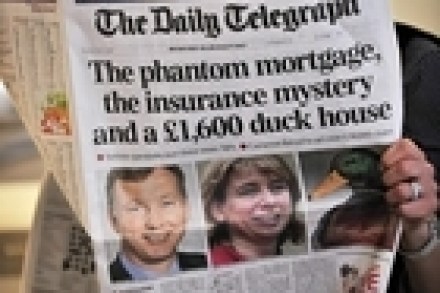
From Sir Peter Viggers’s statement on his failed attempt to put a floating duck island on expenses: “it was never liked by the ducks and is now in storage.

Flint tells Brown, don’t sack Blears

From our UK edition

Hazel Blears flipping her second home several times is one of the worst cases uncovered by the Telegraph. But her actions are really no worse than those of Geoff Hoon. Yet, it is Blears who has copped most of the flak from the media. Gordon Brown hasn’t helped her case by describing her actions as ‘totally unacceptable behaviour’ while defending Hoon. There is a view that Blears, who remember criticised the PM in a newspaper article just days before this story broke, is being set up to the be the symbolic Cabinet sacking over the whole expenses business. So it is interesting to see her close friend Caroline Flint say explicitly that Blears shouldn’t be moved in the reshuffle. After the June 4th elections, Brown’s authority will probably hit a new low.

Navigation errors

From our UK edition

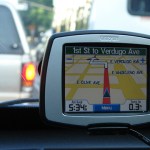
Oh come on! Paul Waugh, whose blog is normally excellent, is fuming about the Tory MP for Clwyd West claiming for a sat-nav. He asks: “...does any self-respecting MP really need a satnav to find their way around their constituency? Isn't it an admission that they are a bit disconnected from their voters?” This is just silly. I’m sure Paul Waugh knows London very well, but I’d be shocked if he knew where every street was. More reasonably, Waugh asks whether it is reasonable to charge the cost of the sat-nav to the taxpayer. I think it is on the grounds that if any company required one of its employees to do a lot of driving to varied locations it would not be considered unreasonable for them to claim for a sat-nav.

This disdain is a result of far more than expenses

From our UK edition

One thing that the new Speaker must remember is that the expenses scandal has hardened—not created—the public’s contempt for Parliament. As Camilla Cavendish writes today, “one of the reasons public anger goes a lot deeper than Sir Peter Viggers's duck pond is because we feel we can no longer change our laws by voting out politicians. The EU machine marches on, constraining everything from the future of the Post Office to what vitamins we can take. The promised referendum on the Lisbon treaty has been ditched. The quango nanny state has acquired a momentum of its own. Politicians have given away powers that they held in trust for the people. They cannot be altogether surprised if people now lump them all together in impotent fury.

Three down today, more to come tomorrow

From our UK edition

The expenses saga shows no sign of coming to an end. Today saw three departures from political life. The Tory Sir Peter Viggers is leaving Parliament at the next election to spend more time with his duck pond. Ben Chapman, a Labour MP, who over claimed on his mortgage is stepping down. And the Lib Dem campaign guru Lord Rennard is quitting as the party’s chief executive. Though, he claims this is not related to revelations about his expenses. Word is that tomorrow’s Telegraph will bring another set of embarrassing revelations. There are several backbench Tories in the frame apparently. As this story goes on, public anger grows.

Same time, same place but so very different

From our UK edition

From Bret Stephens’ review of Edmund Morgan’s latest book: in Philadelphia in 1787, Mr. Morgan uncovers one more instance of witch hunting, this one barely remembered, concerning an old woman named Korbmacher who died soon after being brutalized by a mob. Not much else is known about the incident, but Mr. Morgan is struck that this outbreak should occur in the same place where the Founders were gathering for the Constitutional Convention, the very summit of Enlightenment thought and action. There is no record that the founders took note of poor old Korbmacher. But the event was widely noted in the Philadelphia press, and Mr. Morgan suspects an influence on the thinking of the convention, specifically its distrust of popular rule.

Talent needs a seat

From our UK edition

The expenses scandal has already created three vacancies in extremely safe Tory seats, and the word is that there could a dozen or so more before this is all over. The temptation for the Tories will be to opt for the safety first approach and fill these seats with solid but unexceptional local candidates. But that would be a mistake. Instead, the Tories should be aiming to substantially improve the talent pool from which their ministers will come from. There are already a host of people advising the Tory leadership who have more influence than the average backbencher. However, until these people become MPs there is, for obvious and proper reasons, a limit to how much they can do.

Will Cable be able to resist?

From our UK edition

There is still something magnificent about a Times editorial. Few other forms of British journalism carry with them the same weight, the same gravity, as a leader from the Thunderer. So, I wonder if Vince Cable hesitated this morning as he read today’s calling for him to be the next Speaker. Cable is not a man without vanity and he must know that, being a Liberal Democrat, the Speakership is the highest office realistically available to him. The history books will not likely remember the shadow shadow Chancellor, but might well celebrate the Speaker who restored the Commons’ dignity. Personally, I think Frank Field would probably be the best choice.

Mandy on the move?

From our UK edition

Sue Cameron’s notebook in the FT is a treasure trove of mini-scoops; few journalists are anywhere near as well connected in Whitehall—as opposed to Westminster—as she is. Today’s is no exception. Cameron reports that ‘Lord Mandelson, the business secretary, has let it be known he wants to jump ship to the Foreign Office’. Moving Mandelson to the Foreign Office is really the only obvious way out of the Royal Mail mess for Brown. But who will replace Mandelson at Business? I had heard that Alan Johnson was favoured, he is ideally suited to dealing with the Mail issue and it would put one of the government’s best media performers in a recession-connected brief, but Cameron says it might well be Balls.

So much for the idea that Mohammed Siddique Khan was radicalised by Afghanistan or Iraq

From our UK edition

From the Intelligence and Security Committee's review of the Intelligence on the London Terrorist Attacks of 7 July 2005: This photograph was taken from CCTV footage from a surveillance operation of an “outward bound” expedition in January 2001 attended by 40 individuals. The police and MI5 showed pictures of the attendees to their sources and were able to identify nine of the people who had attended. The man in this image, along with 30 other individuals, was not identified at the time. 281. It was only several weeks after 7/7, when Mohammed Siddique KHAN was already known to have been one of the bombers, that a West Yorkshire Police Officer was looking through their files of old operations and recognised that this was Mohammed Siddique KHAN.

Cameron must speak up on the Speaker

From our UK edition

To date, David Cameron has played the expenses crisis skilfully. The polls show that the public have seen Cameron as being decisive and Brown as dithering. But this morning on the Today programme, Cameron tied himself in knots talking about the Speaker’s position. Cameron, obviously, doesn’t feel that it is constitutionally right for him to comment on the subject—but why then did he do the 8.10am interview when the future of the Speaker is Topic A? Cameron wouldn’t even back the compromise position of saying that the motion of no confidence in the Speaker needs to be debated. The public are crying out for some straight talk from their politicians. They perceive the whole system as rotten.

A guide to happiness

From our UK edition

This month’s Atlantic has a fascinating piece on a longitudinal study of Harvard graduates that began in the late 1930s. It followed 268 ‘well-adjusted’ male students and was meant to discover what made people live long and prosper. The idea behind it was to act as a corrective to the fact that medicine spends its time looking at the sick. To understand the study do read the whole piece, but here are the key conclusions: “What allows people to work, and love, as they grow old? By the time the Grant Study men had entered retirement, Vaillant, who had then been following them for a quarter century, had identified seven major factors that predict healthy aging, both physically and psychologically. Employing mature adaptations was one.

Speaker’s statement live blog

From our UK edition

Martin starts off with an apology to the British public.  Within 48 hours, Martin will sum the party leaders together with the Commons Committee to thrash out a deal on the second home allowance and other matters. Martin wants a moratorium on expenses claim. Martin refuses to engage when asked if Carswell’s motion of no confidence will be tabled and debated. This is going badly for him, he's lost control of the House. Winnick asks Martin to retire early for the good of the House, Martin again refuses to engage. This is painful. Even by Martin’s own standards, this is a halting and garbled performance.

May Test series have to end

From our UK edition

While we wait for the Speaker’s statement at 3.30, maybe Coffee Housers will indulge me in a rant about how the ECB are harming Test cricket. The May Test matches the ECB keep scheduling just have to stop. They are devaluing Test cricket. Normally, England comprehensively winning a series having lost the previous one between the two sides would be a matter of celebration. But it is hard to get excited about England winning May Test matches as they are not a fair contest.   The conditions are too extreme; having the West Indies come here in May is rather like England having to tour India in April. On top of this, the touring sides don’t have adequate time to prepare: the West Indies were distinctly undercooked at Lords.

A combustive mix

From our UK edition

With the expenses scandal so dominating the news, it is easy to forget that there are other stories going on. Today’s New York Times fronts with a piece on how Pakistan is even now increasing its nuclear arsenal; proof that the Pakistani state still hasn’t switched its priorities from an arms race with India to dealing with its own insurgency. There is also an obvious risk that the more nuclear weapons Pakistan has, the more likely it is—given that we know that Pakistan’s nuclear programme has been penetrated in the past—that a nuclear weapon will fall into the wrong hands.