James Forsyth

James Forsyth

James Forsyth is former political editor of The Spectator.

If Britain hasn’t returned to growth by the end of the year, will it still be ‘no time for a novice’?

From our UK edition

Looking at the OECD’s latest economic forecast it seems that the UK—unlike the US and the Euro-Zone--will not return to growth by the end of this year. (Although, one can’t help but wonder if Brown will start heralding zero percent growth in the fourth growth). Indeed, the OECD projects that the UK economy will shrink by 4.7 percent over this year as a whole—although the worst appears to be behind us with the rate of shrinkage slowing since the last quarter of 2008 and the first quarter of this year.   As Kevin Maguire suggests today, Labour’s election strategy is likely to be that Britain is not out of the woods yet and so it is still no time for a novice.

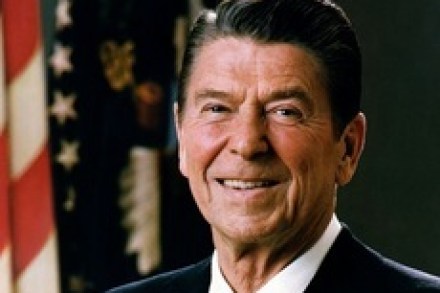
Reagan’s consummate circumlocution

From our UK edition

This tale from Ted Kennedy’s autobiography, to be posthumously published later this month, is classic Reagan and an illustration of what made him such an able politician: 'The senator said it had been difficult to get Reagan to focus on policy matters. He described a meeting with him that he and other senators had sought to press for shoe and textile import limits. The senators were told that they would have just 30 minutes with the president. Reagan began the meeting, the book said, commenting on Mr. Kennedy’s shoes — asking if they were Bostonians — and then talking for 20 minutes about shoes and his experience selling shoes for his father. “Several of us began conspicuously to glance at our watches.” But to no avail. “And it was over!

The FT is still the Brown ‘un

From our UK edition

Most of Fleet Street might have abandoned Gordon Brown but judging by today’s editorial the FT, along with the Mirror, will be with Brown to the end. In its editorial today it praises Brown’s “prudent suggestions” for the G20 meeting. It goes onto say that “the G20’s aim should be to provide political cover so that governments – including the UK’s – have the room to continue running large deficits, if sustainable growth should prove to be further away than hoped.” Then, bizarrely, it goes onto say that the “prime minister faces both ways on bankers’ bonuses” as if this is a good thing.

The government’s handling of the al-Megrahi affair has been colossally incompetent

From our UK edition

Once one gets beyond one’s revulsion at the British government using the prospect of the release of a convicted mass murderer to grease the diplomatic skids, one is struck by the government’s incompetence during the Megrahi affair. Megrahi is the only man convicted of a bombing that killed 180 Americans—how did Whitehall think that Washington was going to react to his release? The United States is this county’s most important strategic ally and it seems bizarre to strain relations with it in the hope of improving relations with Libya. The correspondence between the Scottish Executive and the British government strongly suggests that if London had been prepared to offer this advice to Edinburgh, Megrahi would not have been freed.

The Sky debate could be a lifeline for Brown

From our UK edition

As the Megrahi case grows more serious by the day, one thing should be cheering up those in the Brown bunker: Sky’s plan to host a debate among the party leaders. Now, Brown might be the only party leader yet to have agreed to the debate but he is the one with the most to gain from it. If Brown is to have any hope of stopping David Cameron from winning the next election outright, he needs a game changing moment—and a debate might just produce one. The first televised leaders’ debate will be a hugely hyped event. One has to imagine that it would draw a huge TV audience and a ton of media coverage. It would provide the clunking fist with the perfect platform to land a blow on David Cameron.

Following a strike, would Iran close the Straits of Hormuz?

From our UK edition

In most discussions about what would happen following a strike on Iran it is taken as a given that the Iranians would close the Straits of Hormuz, through which 90 percent of Persian Gulf oil exports pass. The thinking goes that this would lead to a huge spike in world oil prices. But an interesting article in the new issue of Foreign Policy argues that it would be far harder for Iran to close the Straits than is commonly assumed. It points out that oil tankers can travel through 20 miles of the Straits rather than just the 4 mile official channel, that oil tankers are actually not that vulnerable to mines and that tankers’ large bow waves would make it impossible for most small boats to get close enough to launch an attack.

Brown’s new dividing lines are merely muddled hypotheticals

From our UK edition

Reading the transcript of Gordon Brown’s interview with the FT one is struck by how little of a domestic policy message Brown has. Say what you like about Labour’s mantra in 2001 and 2005 of Labour investment versus Tory cuts but it was clear. By contrast, Brown’s attempt to explain his new dividing lines to the FT is distinctly muddled. Brown’s main line is that things could have been a lot worse without the government’s action. But that is, of course, a hypothetical. It also seems doubtful that the public will share this view or forget who was Chancellor in the decade before the crisis. Brown then moves on to what he thinks will be the battleground for the next election.

If the Tories are to take full advantage of this moment, they must cut out the unforced errors

From our UK edition

The last week has been one of the worst the Tories have had in a while. As Pete said on Friday, a bad week in August is unlikely to do lasting damage. But the Tories should learn from the events of then past few days: they have been thrown onto the defensive not by clever Labour attacks but by their own unforced errors. Alan Duncan was a fool to say things to a prankster who he had never met before that he did not want made public and Dan Hannan should have realised that a Tory politician criticising the NHS in the context of the US healthcare debate was going to be grist to the left’s mill. You can say that in an ideal world both Duncan and Hannan should have been able to do what they did.

Cartoon cowardice

From our UK edition

Yale University Press is publishing a book on the Muhammad Cartoons but — and against the author’s wishes - the book won’t include the cartoons themselves. This seems a wrong-headed decision. How are future scholars meant to judge what the whole episode was about if they can’t see the images at the heart of it? It is also worrying that Yale University Press’s reason for not including the cartoons is because it fears that they would spark violence. As Wendy Kaminer writes in The Atlantic: 'This policy of appeasement may serve to encourage threats of violence against other authors or publishers of  allegedly blasphemous or presumptively hateful books.  Its chilling effect seems obvious.

The candidate from Kabul

From our UK edition

Rory Stewart’s career to date reads like something from the heyday of the empire. Rory Stewart’s career to date reads like something from the heyday of the empire. Eton and Oxford- educated, he has been a tutor to royalty, an officer in the Black Watch, the deputy governor of an Iraqi province, has founded a charity in Afghanistan and has written two critically acclaimed books as well as walking across Pakistan, Iran, Afghanistan, India and Nepal. Now he wants to be a Tory MP. With Brad Pitt having already bought the movie rights to Stewart’s life story, one would have thought that the Tories would be revelling in their new catch. Style and substance combined: what the modern Tory party so desperately wants.

Far-reaching economic reform has not materialised

From our UK edition

At the risk of starting the weekend on the wrong note, I’d urge Coffee Housers to read Ken Rogoff’s piece on what’s next for the global economy. Rogoff, a Harvard professor and former chief economist of the IMF who has been advising the Tories, accuses western leaders of lazily concluding that the system that crashed was better than any alternative. He worries that this will have disastrous consequences: “Within a few years, western governments will have to sharply raise taxes, inflate, partially default, or some combination of all three.  As painful as it may seem, it would be far better to start bringing fundamentals in line now.

Can we have a constructive debate about the nearest thing we have to a national religion?

From our UK edition

I must admit that I find this whole NHS controversy profoundly depressing. First of all, Dan Hannan by criticising the NHS in the context of the US healthcare debate has perpetuated the idea that there are only two options, the NHS or a US-style system. But the response to Hannan has been more emotional than rational. As Liam Murray has written, many of the Twittered defences of the NHS are at the same intellectual level as the more extreme American attacks on it. Finally, Hannan, by setting off this controversy, has hardened the Tory leadership’s resolve not to say anything remotely controversial about the NHS or think about reforming it in any way. One wonders whether we will ever be able to have a rational debate about the merits of the NHS in this country.

The NHS isn’t free

From our UK edition

If we are going to have a sensible debate about the NHS in this country, we need to deal with the myth that the NHS is free. Yes, the NHS is free at the point of use, but we all pay for it through taxation. I suspect that slightly fewer people would still ‘love the NHS’ if they knew precisely how much they were contributing towards its costs through all the taxes that they pay. I say this as someone who has no desire to import the US system. Before I went to live in the States, I was quite a fan of the US healthcare system. But having lived there for four years, I became more sceptical of it. I was lucky enough to work for a company that offered incredibly generous health insurance, but the system was incredibly bureaucratic.

The real origins of the Mandelson Osborne feud and why Mandelson wants to keep it going

From our UK edition

One of the great misapprehensions about the Mandelson-Osborne feud is that Osborne was the instigator of it. The Independent in its piece on the relationship between the two says: “When, a couple of months later in October, Peter Mandelson was offered a peerage and brought back into the Cabinet as Business Secretary, Osborne began briefing journalists to the effect that Lord Mandelson, then a European commissioner, had spent his holiday dripping "pure poison" about Gordon Brown.” But my understanding is that Osborne gave the briefing in the summer. Osborne called Daniel Finkelstein, a former colleague of his from Tory central office who was at the time comment editor of The Times, straight after dinner to pass on what Mandelson had said.

Alan Duncan is a very lucky man

From our UK edition

Guido has just blogged that he was offered the video of Alan Duncan complaining that MPs live on rations and are treated like sh-ts back in June. If Guido had run it then, Duncan would have been in far bigger trouble and might well have ended up being sacked. The expenses story was still much rawer then, the whole press corps would have been in full pursuit and Cameron would have had to answer questions about whether Duncan could stay or not in every interview he did. Duncan’s comments, though, again call into question his judgement.

Does Mandelson remember that Blair thought cross-dressing was a good idea?<br />

From our UK edition

Peter Mandelson has been getting very cross, and rather personal, about George Osborne’s ‘political cross dressing”. But during the Blair era, it was New Labour politicians who were keen on cross dressing. Indeed, on his farewell tour Tony Blair went out of his way to declare it as something that was here to stay: "Most confusingly for modern politicians, many of the policy prescriptions cross traditional left-right lines. Basic values, attitudes to the positive role of government, social objectives - these still divide among familiar party lines, but on policy cross-dressing is rampant and a feature of modern politics that will stay. "The era of tribal political leadership is over.

The press’ obsession with the Tories, Rachel Whetstone and Google is immature 

From our UK edition

Nearly all the papers have run articles on Rachel Whetstone today. These pieces concentrate on the fact that she’s the partner of Steve Hilton, Cameron’s chief strategist, and that the Tories mention Google quite often. Frankly, this strikes me as a nothing story. The Tories are mentioning Google so much because it is the kind of modern, successful brand that they want to be associated with, not because Whetsone, who was Michael Howard’s political secretary and who used to be close for Cameron, works there. Also, considering how Google has become shorthand for so much of the technological change going on around us, it would be rather hard for a politician to talk about how the internet can change the way public services are delivered without ever mentioning the company.

Another example of why the US needs more troops in Afghanistan

From our UK edition

The Wall Street Journal’s write up of its interview with the new US commander in Afghanistan, General McChrystal, demonstrates why more troops are needed in Afghanistan. The Journal concentrates on the suspicion among some in military circles that the Taliban are using the American emphasis on Helmand to strengthen their grip on Kandahar, the capital of the South and the Taliban’s traditional stronghold. The paper reports that the Taliban are setting up shadow government and court system there. However, McChrystal can’t move troops there until the planned reinforcements arrive as those deployed in Helmand ‘have already set up forward operating bases and recruited help from local tribal leaders, who have been promised American backing.

If the Tories are serious about being ready to govern from day one, they should be examining whether or not Vat needs to be raised

From our UK edition

The Tory response to the story that they plan to raise Vat to 20 percent after the next election, worried me. The Tory line is that there are no plans to do this and that there have been no high-level discussions about it. But, frankly, there should have been. Not because increasing Vat is necessarily the right thing to do, but because the Tories should be exploring what can be done to get this country out of the huge fiscal hole that Brown has dug it into. I find it less than encouraging that less than a year out from an election, the opposition hasn’t even — or so it claims — discussed whether pushing Vat up to 20 percent might be necessary: if you haven’t examined something, you can’t know whether or not it is a sensible thing to do.

Mandelson’s lines to take for the press

From our UK edition

Peter Mandelson’s spat with Starbucks is clearly over. In February he went on a tirade after seeing the chairman of Starbucks talking the UK economy down on US TV: “Why should I have this guy running down the country? Who the fuck is he? How the hell are they [Starbucks] doing?" But today he is pictured on the front of G2 drinking out of a Starbucks cup. The most interesting thing, though, about the G2 interview is how Mandelson seems determined to almost write it himself, producing quotable line after quotable line. When Mandelson describes himself as a “kindly pussycat” or details how Carole Caplin converted him to green tea back in 1994 and that his “diet chiefly involves me being hungry” he knows that this stuff is too good not to use.