James Forsyth

James Forsyth

James Forsyth is former political editor of The Spectator.

The Cameron project is more intellectually interesting than we appreciate

From our UK edition

David Brooks is the most influential American newspaper columnist and his column today is a paean of praise for George Osborne. He praises Osborne for offering not just pain but a “different economic vision — different from Labour and different from the Thatcherism that was designed to meet the problems of the 1980s.” He goes on to argue that Cameron and Osborne’s responsibility agenda is something that the Republicans should copy. This isn’t the first time that Brooks, who Tim Montgomerie identified as a guru for Cameron back in 2007, has applauded the Tories.
The Afghan question

From our UK edition

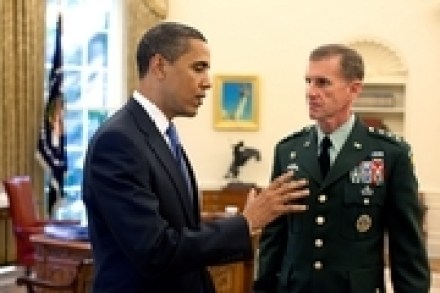
We are into least-worst options territory in Afghanistan as the New York Times Magazine’s brilliant profile of General McChrystal, the US and Nato Commander there, makes clear.  As McChrystal says, “if we fail here, Pakistan will not be able to solve their problems — it would be like burning leaves on a windy day next door.” But how do you succeed in a country where the government is increasingly illegitimate, only one in four adults are literate and whose terrain and size offers succour to any insurgency? The legitimacy question is a very hard one to answer. When pressed on this, McChrystal tells the Times that the US and Nato will “have to avoid looking like we are part of the illegitimacy”. But that is far easier said than done.

Russia pockets Obama’s concession and moves on

From our UK edition

The strategic logic behind President Obama’s decision to alter US plans for a missile defence shield based in Eastern Europe was that this would persuade the Russians, who didn’t like the shield, to agree to the US’s push for tougher sanctions on Iran. But it appears that Moscow isn’t going to play ball.   The Russian Foreign Minister Sergei Lavrov declared after a meeting with Hillary Clinton yesterday that, “Threats, sanctions and threats of pressure in the current situation, we are convinced, would be counterproductive.” So, all that Obama’s concession has done is anger the Czechs and the Poles who weren’t told about the move until the last minute. Iran is an issue that hasn’t gone away.

Rejoice, rejoice, rejoice

From our UK edition

The Guardian is reporting that, “Within the last hour, Trafigura's lawyers Carter-Ruck, abandoned an attempt to prevent the Guardian from reporting proceedings in parliament which revealed its existence.” This is welcome news. It is not hyperbole to say that the injunction threatened British democracy; the people must be able to know what their representatives are doing. It was, to my mind, quite incredible that a newspaper could be prevented from publishing a parliamentary question. One hopes that the injunction will focus attention on whether the right balance is being struck in our libel laws. MPs now have a chance to stand up for the dignity of Parliament which has been so tarnished by the expenses scandal.

Repairing the broken society

From our UK edition

One line from the Sunday papers is still haunting me today. In the Mail on Sunday, Phillip Blond wrote that, “one million children have alcohol-addicted parents”. Think about that for a minute. What hope can these children have growing up in these kind of households? How can we as a society ensure that these children have a decent chance in life despite such a challenging start? There are no easy answers to these questions. Considering the state’s appalling record with children in care, taking these children away from their parents is not the answer. But then what is? It seems that the only answer is to deal with the problem at source, to ensure that there are fewer alcoholic adults and that people take the responsibility of being a parent more seriously.

Why are the Pakistani Taliban being given another opening?

From our UK edition

There is a depressingly predictable story in The New York Times today about reconstruction in the Swat Valley. Here’s the key section: “the real test of Pakistan’s fight against the Taliban in Swat will take place here, in the impoverished villages where the militant movement began. But more than two months after the end of active combat, with winter fast approaching, reconstruction has yet to begin, and little has been accomplished on the ground to win back people’s trust, villagers and local officials say. The lag, they argue, is risky: It was a sense of near-total abandonment by the government that opened people to the Taliban to begin with, they say, and the longer people are left to fend for themselves, the greater the chance of a relapse.

Brown has two minor retinal tears

From our UK edition

That Downing Street felt obliged to disclose that Gordon Brown has visited Moorfields eye hospital and has two minor tears in his right retina is revealing of the current demands for transparency from politicians. I suspect we are moving towards a situation in which British Prime Ministers, like US Presidents, will open up their medical records to inspection and make public the details of their medicals while on the job. But my first reaction on hearing the news about Brown was to be reminded of how impressive it is that he has reached the very top of politics despite such problems with his eyes.

Brown and the voters

From our UK edition

Gordon Brown's interview with the Telegraph contains this revealing exchange: Is he still missing an emotional link to voters? "Look I’ve talked about the treatment the health service gave me and my family (he means the operations to save his sight and the care of his daughter, Jennifer, who died in infancy). I’ve talked about how I was brought up, in a pretty ordinary town. "People know what happened to me. I don’t try to make any secret of it, but I’m trying to get on with the job." The answer is almost an admission that he doesn't have that emotional link despite having talked about his life in personal terms. It was said that Stephen Carter used to fret about the lack of an emotional contract between Brown and the voters when he was at No.

What George Osborne didn’t tell you about the Tories’ radical economic agenda

From our UK edition

James Forsyth reviews the week in politics It was as if the banks were taunting the Conservatives when they arrived into Manchester Piccadilly on Sunday: the cash machines at the station had run out of money. The queues were snaking around the escalators, and Tory activists could do little. This, of course, is excellent preparation for government in the age of austerity. What to do when money is in such short supply? It’s a question that the Conservatives are developing a convincing answer to — but very little of their thinking was revealed in Manchester this week. This was the iceberg conference: only a small part of Tory policy was allowed to peek above the surface.

A prize that will cost Obama

From our UK edition

New Majority points out another reason why Obama should have politely told the Nobel Peace prize committee that he would rather they didn’t award him the prize: “The Nobel Committee has created a pretty little problem for White House counsel Greg Craig this morning. The value of the gift is $1.4 million. Technically, it’s a “Foreign Official Gift,” so it has to be retained by the U.S. government. Donating the money to charity will be very difficult, because first the gift will have to pass through the president’s hands -and the law requires that he must spend $1.4 million of his own money to buy the $1.4 million from the U.S. government.

Peace in our time

From our UK edition

When I first saw the headline Obama wins Nobel Peace Prize, I thought I must have read it wrong. After all, what has Obama actually accomplished in his first nine months in office? (Obviously, that’s not to say he won’t accomplish foreign policy successes in his time in office but he certainly hasn’t yet).   On the foreign policy front, Obama is not actually having much success. Having announced Afghan strategy months into his presidency, he is now reviewing it and seems intent on second-guessing the new commander he appointed. Also for all the goodwill towards him in Europe, he has not got the Europeans to commit substantially more resources to the conflict.

Modernisation for a purpose

From our UK edition

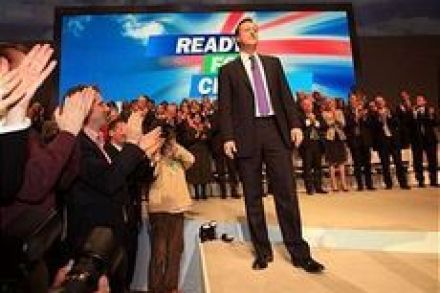
Just before David Cameron came on stage they played a video looking back at his four years in charge of the party. It concentrated on the modernising moments — the huskie hugging, the efforts to get more women into Parliament and the rest. When Cameron did these things, some critics mocked them, claimed that they showed he was all style and no substance. But today we saw what those moments have made possible. Cameron devoted his pre-election conference speech to a classic conservative message, that the big state is the problem. Crucially, this message is getting a hearing. It is not being dismissed as those ideological Tories banging on again. Modernisation has achieved one of its principal purposes.

Who has the time to watch a weekday conference speech?

From our UK edition

The activists here are already queuing up for David Cameron’s speech. But very few people outside of this conference centre are going to watch the whole speech: how many people have an hour free at 2.15pm on a weekday?   If we want conferences speeches to be watched by more than conference delegates, then they need to be on in the evenings or on the weekend. Just imagine how many more people would watch Cameron, or would have watched Brown last week, if the speech started at 8pm. US conventions take place mostly in prime time, with the networks being strong-armed into covering them for at least an hour a night. In 2008, more than 40 million people — about 20 percent of the US electorate — watched Obama and McCain’s acceptance speeches.

The demise of the speed camera

From our UK edition

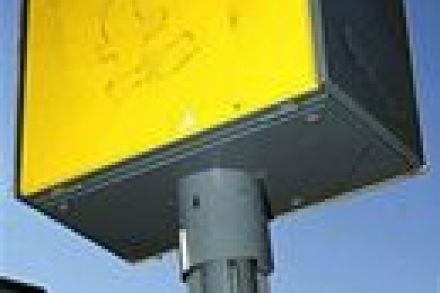
One of the more interesting influences on the Conservatives is behavioural economics. The book ‘Nudge’ informs quite a lot of their thinking and one of its author Richard Thaler is now an official advisor to the party; his co-author is heading up regulatory policy for Obama. One of the major British evangelists for behavioural economics and its insight is The Spectator’s own Wiki Man, Rory Sutherland. He drew this magazine’s attention to Thaler and Nudge long before people in the Westminster Village had cottoned onto it.

The Tories provide the only route away from educational inequality

From our UK edition

The level of educational inequality in this country is appalling. I have heard the numbers that Michael Gove listed off in his speech several times before but they never fail to shock. One wonders what future there can be for the half of the children who left comprehensives last year without five good GCSEs. The worst schools in the country are in the poorest areas. The Tory plan, to put parents in charge of the £5,000 per year that the state spends on a child’s education, with pupils from deprived backgrounds receiving additional funding, would end the monopoly on state education provision that has failed the poorest. In its place it would put a system that offers choice to all parents, not just the few who can afford to go private, through the emergence of new schools.

The next step for pensions

From our UK edition

George Osborne’s decision to bring forward raising the retirement age strikes me as thoroughly sensible. Indeed, both his proposal on the retirement age and the one year public sector pay freeze have the merit of being such reasonable measures given the severity of the crisis that it is quite hard to oppose them without appearing to not grasp how bad a state the public finances are in. I suspect that if the Public and Commercial Services Union did carry out its threat to strike over the pay freeze for those earning more than 18,000 it would have little public sympathy. But one further idea the Tories should consider in government is following Denmark’s lead and index-linking the pension to life expectancy.

We have a tax cut

From our UK edition

George Osborne has just announced a tax cut. Any new business started in the first two years of a Tory government will pay no employers’ national insurance contributions on the first ten people it hires. This means these first ten employees will cost new businesses 12 percent less. This is a move that makes sense in both economic and political terms. Economically reducing the tax on jobs is a good move, getting more people into work will eventually result in more money coming into the Exchequer. Politically it is smart as it gives the Tories something they can point to on the doorstep to show they really are serious about boosting job creation.

The Europe question won’t dominate conference but it hasn’t gone away

From our UK edition

There is a reluctant acceptance here that Lisbon will have been ratified by next May and that the Tories won’t hold a post-ratification referendum. But it is important to understand why the leadership is getting away with a position that is so unpopular with the grassroots. Partly it is a reflection of the fact that the party has rediscovered its discipline, it wants to win again and is prepared to swallow quite a lot on the way. But more important is that the party believes the leadership is Euro-sceptic; that Cameron is--to use Bruce Anderson’s phrase—not tainted by ‘federasty’. The view here is that if Cameron doesn’t have the time to fight over Lisbon, he’ll still block any further moves to ‘ever closer union.

Who won’t make it into Cameron’s Cabinet?

From our UK edition

There are 29 members of the Commons and the Lords speaking from the podium at conference. Four shadow cabinet members are not — Lord Strathcylde, Lady Anelay, Patrick McLoughlin and Mark Francois. We shouldn’t read too much into who is not speaking. The Leader of the Lords and the Chief Whips in the Lords and the Commons are not regular conference turns and there is an obvious reason why the Tories don’t walk to talk about Europe. What might be more significant is that one person who is on the front bench but not in the Shadow Cabinet has got a slot, Maria Miller — suggesting that the party hierarchy rate her communication skills. But the 29 speakers beg the question of who won’t make it into Cabinet.

Someone didn’t tell the printers

From our UK edition

The official conference guide announces that at 2pm tomorrow “Alan Duncan, Shadow Leader of the House of Commons” will be speaking in a session entitled “Reforming politics: Transparency”. Of course, he won’t be. He is no longer shadow leader of the House. Ironically, it was this appointment that sealed his fate. It was thought that it would be a PR disaster to have someone who had complained that MPs were living on rations speaking on this topic and so Duncan was demoted to be shadow Prisons Minister and Sir George Young moved into his job and speaking slot. I suspect that a proof reader somewhere will be getting an earful about this mistake.