James Forsyth

James Forsyth

James Forsyth is former political editor of The Spectator.

There is a massively important principle at stake in Northern Ireland

From our UK edition

The Times continues its attack on the Tory policy of trying to field candidates in Northern Ireland today. In its leader on the subject, it declares that the Tories should abandon their efforts and that this is relatively easily done as ‘there is no great ideological cause at issue.’ This is wrong. There is a massively important principle at stake here, a party that aspires to govern the United Kingdom should run candidates in all parts of it. To put it another way, the people of Northern Ireland deserve a chance to vote for the Tories. David raises some valid points about the problems the alliance between the Tories and the Ulster Unionists is having.
Mandelson: Public sector will face cuts this year

From our UK edition

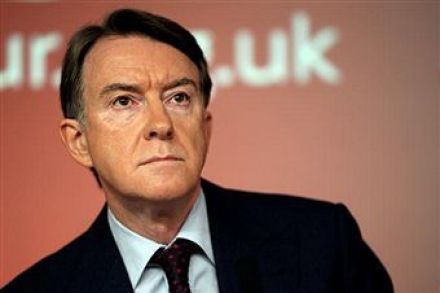
Peter Mandelson gave the Dearing memorial lecture last night and in a section responding to the criticisms of the budget cuts for higher education said:   "Much of the rest of the public sector will receive similar constraints in the course of this year or soon after." Mandleson has implied this before, most notably on Newsnight the day of the Hoon Hewitt plot. But it is a very different from the message Brown is putting out. We in the press should demand details from Mandelson about what these cuts in financial year 2010-11 might be with the same intensity that we did when the Tories said they would make in year cuts if elected. Who knows Mandelson's plans might be more ambitious than the £1.5 billion that the Tories have been able to find.

The separation of powers

From our UK edition

If you want to understand what the Cameroon's are thinking, Danny Finkelstein is essential reading. He used to work with them and he thinks like them, there is almost a mind meld between him and them.  His column today is all about why it would make more sense to actually separate out parliament and the executive and elect the head of state. I'm rather sympathetic to this point of view, but I don't think the Tories will do anything this radical even if they talk about it in private.   One thing they might well do, though, is have ministers who aren't members of either the Commons or the Lords. The argument goes that the current arrangements aren't good for either the executive or the legislature.

The death tax ads are the sort of hardball politics the Tories should play

From our UK edition

I must admit to rather liking the Tory death tax ads. They are the kind of hardball aggressive politics that the Tories need to master if they are going to win this election. Are they dishonest? Well, I think in the grand political scheme of things they qualify as fair: Brown won't rule this out and it is definitely an option Labour is considering so it is fair game. If this attack is out of bounds, then so is most of the dossier Labour produced on Tory spending plans at the beginning of the year. The other thing that really infuriates me about this whole debate is the idea that the responsible thing to have done would have been for the three main parties to hammer out some compromise deal and then just present it to the public.

A comic tale with serious undertones

From our UK edition

The Joanne Cash affair is the kind of story you couldn't make up. But once you get beyond the comic details there are a few things worth taking seriously. First, CCHQ has not covered itself in glory during this episode. It was aware of the problem but rather than dealing with it, it attempted to massage the situation. If CCHQ had acted decisively, this problem could have been resolved a fortnight ago without all this publicity and damage to the party. CCHQ's performance hardly fills one with confidence about whether or not it has done the appropriate due diligence on its candidates all around the country.   Second, it is striking how much resentment there is to the Cameron circle even in an association so close to Westminster and Notting Hill.

The problem with that David Cameron ad

From our UK edition

Labour’s new ad with David Cameron facing both ways highlights what was wrong with the Tories’ opening ad of the year, that one dominated by Cameron’s face. The Tory strategy for the election campaign has to be to try and make it into a referendum on this failed government. But that ad, which emphasised Cameron so strongly, gave Labour an opening to try and turn the election not just into a choice between two parties but into a referendum on David Cameron and Tory policy. Labour’s success in doing this is largely responsible for the Tory wobble. The contrast between Cameron and Brown does work to the Tories’ advantage. But it works because it is a contrast.

The Tories think Brown is their most potent weapon

From our UK edition

‘We just need to ram Gordon Brown down the electorate’s throat’ one Tory staffer said to me today when talking about how the party could get back on the front foot. The unspoken thought was that the prospect of five more years of Gordon Brown would be enough to send voters into the welcoming arms of David Cameron.    The Tories are frustrated that in the last few weeks this election has gone from being the referendum on the government to almost being a referendum on them and their plans for government. They are determined to turn the focus back onto Brown, hence Cameron’s aggressive attack on Brown this morning.   PS The Populus poll for The Times tomorrow has the Tories on 40 and Labour on 30, a narrowing of the Tory lead from their last poll.

A note of caution over Cameron’s welcome attack on lobbyists

From our UK edition

The Tories will be happy with their start to the week. David Cameron’s speech this morning has succeeded in highlighting how Labour had not suspended the whip from the three MPs charged by the CPS and drawn one of the Tories’ favourite contrasts, decisive Cameron versus dithering Brown. It was also refreshing to hear Cameron take a tough line on lobbying, proposing to double the waiting period before ministers leaving office and taking private sector jobs to two years. Lobbyists already have far too much influence on our politics. But there are risks to Cameron in this Obama-style play. As one Tory insider said to me just before party conference, ‘we’ve very vulnerable on the lobbying front.

The tradecraft of Brown’s Morgan interview is bizarre

From our UK edition

If an event is going to have dramatic impact we can’t know it is coming. So the emotional moments in Gordon Brown’s interview with Piers Morgan have lost much of their potency through being pre-briefed to today’s papers. It also strikes me as rather bad tradecraft to have let it be known that Alastair Campbell was prepping Brown for this appearance; a detail that was bound to lead to cynicism about whether or not the public is being spun. The write-up of the interview in the papers also left me wondering how the electorate will react to Brown saying there was a deal between him and Blair to hand the premiership over to him after Blair had served his stint.

Young in favour of elected committee chairmen

From our UK edition

It is interesting that Sir George Young took the opportunity of his interview with The Times this week to reaffirm the Tory leadership’s support for electing select committee chairmen. In the last fortnight, two Tory MPs who would like to be select committee chairmen in the next parliament have complained to me that the leadership is quietly conspiring against the idea. But Sir George’s words suggest that this is not the case. Select committee chairmen election should mean that we get a chairmen who is determined to hold the executive to account wherever that may lead. But it will be intriguing to see how MPs vote.

The Tories cannot continue to fight the election on the vague promise of ‘change’

From our UK edition

James Forsyth reviews the week in politics Even the Tories accept that they can’t go like this. For a while, David Cameron thought he could maintain his safety-first strategy and leave Labour to tear itself apart. But with the polls returning to hung parliament territory, the high command now accepts that there is a need for a course correction. This is welcome news. Recognising there is a problem is the first step to recovery. The problem is that the Tories are barely hitting 40 per cent in the polls despite the fact that they are running against a tired and discredited government led by a man whom most of the Cabinet, let alone the public, can’t abide. The root cause of this problem is that they have no central message.

John Terry and politics<br />

From our UK edition

John Terry’s sacking as England captain tells us something interesting about what is considered a sackable offence in today's world and what is not. When the story was just about Terry allegedly cuckolding a team mate his position as captain seemed safe. As Danny Finkelstein argued on the Today Programme, modern society is reluctant to have people lose their jobs because of sexual indiscretions—politicians don't have to resign as soon as they are caught having affairs these days. But as soon as there started to be stories alleging financial impropriety—the claim that an associate of his was hawking out the Wembley box that Terry was entitled to through his position as England captain--then his position became far more vulnerable.

More fuel for the anti-politics fire

From our UK edition

Obviously, after the news that three Labour MPs and a Tory lord have been charged with various criminal offences over their expenses, there is a limit to what can be said for legal reasons. But it can be noted that because the four charged are from the two main parties, the politcal impact will be more anti-politics than anything else. I suspect the attempt of the the three Labour MPs to claim Parliamentary privilege will exacerbate these feelings. P.S. In case any CoffeeHousers missed the news, Lord Hanningfield has resigned from the Tory front bench and had the party whip suspended.

The Old Lady is becoming more pessimistic

From our UK edition

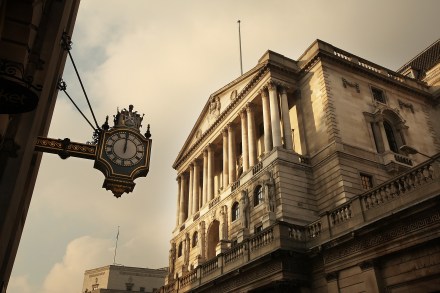
Faisal Islam, Channel 4’s economic correspondent,  is one of the journalists who best understands what the Bank of England’s institutional view is. So it is interesting to see him writing this today: “I’m convinced that at Threadneedle Street, they were shocked by the limpness of Britain’s exit from recession. They have been running their big computer model in the past weeks. When it reveals new economic forecasts next Wednesday, we are likely to see a marked downgrade to Britain’s economic prospects.” Politically this could have an impact as Labour’s, to put it charitably, extremely optimistic growth forecasts are what allow it to claim that it will cut the deficit in half in four years.

Was today a turning point?

From our UK edition

I suspect that when we look back at this year, we might conclude that today's PMQs was a turning point. David Cameron has had a poor January but today he was back on form, winning - as Lloyd Evans says - PMQs for the first time this year. Perhaps more significantly, there was real noise from the Tory backbenches, which have been noticeably quiet in recent weeks. It was as if the party was pulling back together after a relatively trying period. It was also significant that Cameron stayed on the offensive throughout; he didn't get drawn into conducting the debate on Labour's terms despite Brown's best efforts. Gone was the defensiveness that got him into trouble over recognising marriage in the tax system and the extent of the cuts 2010-11.

How to set up a school

From our UK edition

When the Tories talk about enabling any group that wants to, to set up a school and be paid by the state for every pupil they educate, it is sometimes difficult to imagine how this would work in practice. We have got used to such a top-down education system, where the state provides the schools and determines how many there are in any place, it is hard to imagine how a more organic system would work. But today the New Schools Network, a cross-party charity set up to promote the establishment of new schools, has published a proposed application form for those who want to set up a school.  The form is refreshingly straightforward and free of jargon, the Tories would be well advised to keep it this simple. The next step is to publish model applications to show groups how best to proceed.

The next parliamentary scandal

From our UK edition

On Thursday, the Legg report will be published along with Sir Ian Kennedy’s judgements on those MPs who have appealed against Sir Thomas Legg’s judgement of how much they should repay. The Commons will also be publishing a record of all lunches, dinners and receptions MPs held for outside groups in the Palace of Westminster in the last five years. This is going to be an intriguing document and one that I suspect could set off another series of scandals. First of all, people will cross check this list against the list of electoral donations and there are sure to be some ‘cash for access’ controversies. There will also be an attempt to suggest that MPs share the views of every group that they have booked a room for.

Mandelson is spinning to his heart’s content

From our UK edition

Peter Mandelson was doing his full Alan Rickman impression at Labour’s press conference this morning. His aim was to imply that every time Labour put the Tories under pressure they wobble. As so often since his return to British politics, Mandelson delivered lines that were so memorable that they were bound to make it into copy. He said that the Tories “would strangle the recovery at birth”, that David Cameron was “bobbing around like a cork in water”, and that George Osborne was the Tories’ “weakest link”. As I type, Mandleson’s sound bites are being replayed yet again on News 24. Now, these lines aren’t going to cut through to the British public.

Tories making contingency plans for a second election in 2010

From our UK edition

With another poll showing the Tories ahead but not by enough to secure an overall majority, The News of the World reports that the party is making contingency plans for a second election: The idea would be to take action on immigration, householders’ rights and business taxes and then go to the country again seeking a stronger mandate. To boost the Tories’ prospects, the paper says that Cameron plans to hold a boundary review beforehand. I’d be surprised if it was possible to do that quickly enough for new seats to be in place for a second election this year. There’s also a risk that this effort to remove Labour’s in-built advantage could appear to be gerrymandering if it is followed straight away by an election.

Rawnsley revelations put Brown’s temper on the agenda

From our UK edition

Stories of Gordon Brown’s temper are commonplace in Westminster. But they rarely make it into print. This, though, is about to change. The Mail on Sunday reports that Andrew Rawnsley’s follow-up to Servants of the People contains a string of revelations about Brown’s behaviour. The paper reports that Rawnsley has investigated whether the Prime Minister has hit a senior adviser, pulled a secretary out of her chair because she wasn’t typing fast enough and sworn at aides over the Obama snub. Downing Street is rubbishing these allegations. However, Rawnsley’s record is so good that these stories cannot easily be dismissed, also many journalists have come close to standing them up previously and so will not be inclined to dismiss them out of hand.