James Forsyth

James Forsyth

James Forsyth is former political editor of The Spectator.

A twin-track approach can drive the Tories to victory

From our UK edition

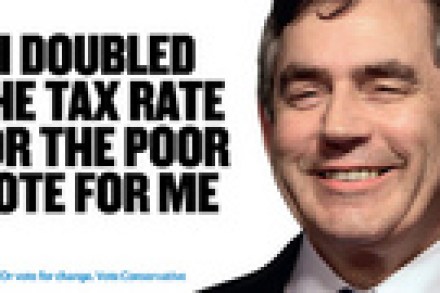
The debate in Tory circles about strategy earlier in the year was overly polarised. Some argued that the party should run a purely positive campaign, that going negative at all would just make voters see the Tories as the ‘nasty party’ again. Others thought that all the Tories needed to do to win, was to rip into Gordon Brown. In reality, the Tories needed both a negative and a positive message. They needed to show people why ‘five more years of Gordo Brown’ would be a disaster and why a Tory government would be better. The Tories’ latest ad campaigns suggest that the Tories are now pursuing such an approach. The M&C Saatchi ads go after Brown, emphasizing just how much of a failure he has been as both Chancellor and Prime Minister.
‘Of course’ Darling will stay as Chancellor if we win, says Brown

From our UK edition

The prospect of Ed Balls as Chancellor is politically toxic. James Purnell resigned last summer because he was sounded out about taking the schools’ job that Balls held, which Purnell took as a sign that Brown was planning to make Balls Chancellor. Mandelson saved Brown’s skin that night only by reassuring the rest of the Cabinet that Darling would remain as Chancellor. In recent weeks, the Tories have tried to make the idea of Balls being Chancellor after the election into an election issue. Their thinking is that the public would find this idea as unappealing as Balls’ Cabinet colleagues did. But in his Guardian interview today, Brown says that he “of course” wants to keep Darling as Chancellor should he win re-election.

The battle for Labour’s soul

From our UK edition

Bloody civil war lies in store for the Labour party if it loses the election, says James Forsyth. Brown’s henchmen are hoping to keep power, with Ed Balls as the next leader. The Blairite resolve to play nice will be tested The public gallery of the House of Commons was unusually full on Monday afternoon. For the visitors kept behind the glass wall, the proceedings will have been particularly perplexing. A scandal had erupted: that of Stephen Byers and other Labour MPs caught offering their services to lobbyists. There was plenty of anger. Yet little of it was coming from the Tories, who restricted themselves to rather dull pro forma points. The venom was all coming from the Labour benches, who were turning on their own with a vengeance.

Trying to make sense of the polls

From our UK edition

Never before has there been an election campaign in Britain with quite so many polls. The differences in the polls, which are quite considerable at the moment, also make it difficult to get a clear picture of what is going on. To further complicate things, the view from the ground seems slightly different from the sense that one gets from most of the polling. For instance, Tory candidates I talk to in bellwether constituencies tell me that things aren’t as good as they were before Christmas but they still expect to win. I also hear that the Tory target seats operation is still confident of an overall majority and say that judging by the canvas returns and polling they see, the party has only ‘lost’ about ten seats since the beginning of the year.

Labour’s plans require non-ringfenced Budgets to be cut by 25 percent in the next parliament

From our UK edition

At lunchtime, the press headed off to hear the referee's verdict on the Budget. The Institute for Fiscal Studies is now so respected that its view of the Budget largely determines the news agenda. Its briefings are now so popular that they can no longer be held in their basement. So, journalists, economists and accountants piled into a room at the University of London Union which is normally used for battle of the bands contests rather than Budget analysis. The most striking number the IFS presented was that if Labour ringfences the already protected areas of spending for the whole parliament, other departmental budgets will have to be cut by more than 25 percent. One dreads to think what the consequences of slicing a quarter off the defence Budget would be.

YouGov has Tory lead down to two points

From our UK edition

A YouGov poll tonight has the Tory lead down to two points. The Tories are on 36, Labour 34 and the Lib Dems 17. Before we all get too excited about this narrowing of the Tory lead, we should note that the poll’s fieldwork was nearly all done before people were fully aware of what was in the Budget. This poll is grim news for the Tories. If in a week where we have seen a former Labour cabinet minister prostituting himself on TV and learned that Samantha Cameron is pregnant, the Tory lead is down then one is tempted to ask when will it grow. But I strongly suspect that when we see tomorrow’s YouGov poll we’ll see that this poll is a blip.

Darling’s nothing budget puts the ball in the Tories’ court

From our UK edition

This year’s Budget was never going to win the election for Labour but it could have lost it. If the markets had reacted really badly to it, warnings about how Britain is in danger of going Greek would have suddenly gained traction. But Darling avoided that fate with a Budget that did little. Listening to it, it was clear that those inside Labour who argued that the strategic imperatives for this Budget had to be appearing credible and not risking an adverse market reaction had prevailed. The mood music was very different from the PBR, with its emphasis on investment versus cuts.

Fiscal drag

From our UK edition

It is good to see the Tories calling fiscal drag what it is, a tax rise by another name. Fiscal drag is a result of holding income tax thresholds steady while both prices and earnings are increasing. This means that more people have to pay more of their income in tax. Gordon Brown indulging in this ploy so often as Chancellor was one of the main reasons that the number of people paying the 40p rate pretty much doubled between 1997 and 2008. One other good thing about the Tory line on fiscal drag today, is that it will put pressure on them to raise personal allowances and income tax thresholds in line with inflation every year. If they don’t, they will be—by their own definition—raising taxes.

Another dangerous Quango in the offing

From our UK edition

This government’s love of quangos reached new heights in today’s Budget when Darling announced the creation of a ‘credit adjudicator service’. This will allow companies who feel they have been unfairly denied credit by their bank to appeal the decision to the credit adjudicator service which will have the legal power to order the bank to lend the money.    The Treasury is quick to stress that businesses will have to have claims referred to the credit adjudicator service by their regional business body. But this quango, which will cost five million pounds a year to run, strikes me as a quite absurd attempt to second guess commercial lending decisions. It is also unaccountable.

Cameron denounces Labour’s “lies”

From our UK edition

David Cameron’s press conference this morning was ticking along rather uneventfully until James Landale asked Cameron a question that set the Tory leader off on one about, what he called, "Labour’s complete and utter lies." Cameron had started off by talking about how pleased he was that we going to be a father again, letting slip that he and Samantha had been trying for another baby for a while, and with some remarks on the lobbying scandal and the Budget. There had been questions on Ashcroft and cuts but nothing had really got going. Then, James asked Cameron about a Lib Dem plan to scrap the winter fuel allowance for pensioners under 65. At this point, Cameron’s whole demeanour changed.

Byers, Hoon and Hewitt suspended from the parliamentary Labour party

From our UK edition

The BBC is reporting that the chief whip and the chief executive of the party took the decision after seeing the full Channel 4 programme tonight. There's also a BBC story tonight about MPs breaching the rule surrounding foreign trips. PS The YouGov tracker tonight has the Tory lead down to four. The Tories are down two at thirty six, Labour are up one to 32 and the Lib Dems have ticked up one to twenty.

Another shaming day for Westminster

From our UK edition

There was something particularly depressing about Harriet Harman’s statement to the House today on this lobbying scandal. The MPs involved have damned themselves more effectively than anybody else could and so the anger of the Commons lacked bite. Though, it was noticeable that the personal attacks on those involved tended to come from their own side not the opposition benches; proof that for many this is another episode in the long running battle for the soul of the Labour party. David Heath, the Lib Dem shadow leader of the House, made probably the best speech. He wanted to know why the House was always reacting to these problems rather than pre-empting them.

Obama will get his healthcare bill but it comes at a cost

From our UK edition

It looks almost certain now that Barack Obama will get a healthcare bill to sign. The House appears set to vote in favour tonight and then the Democrats will only need 51 votes in the Senate to send it to the president’s desk. There are a couple of things that jump out at me about the process. First, Obama has expended huge amounts of political capital on the bill. A president who came to office promising to do many things has had to drop that approach and concentrate pretty much solely on healthcare. He even postponed an overseas trip to lobby in favour of it. Obama also looks far more vulnerable in terms of the 2012 presidential race than most people expected he would in January 2009.

Cameron’s theory of change

From our UK edition

At Tory conference last year, I asked a senior Tory adviser where the party would deliver substantive change and he replied 'where we take on the vested interests.' This analysis is correct. You can't change things if you aren't prepared to take on the status quo. So, it is encouraging to hear David Cameron defining himself today as a man who will take on the vested interests wherever they may be. Part of the reason for the Tory wobble at the start of the year was, to my mind, their desire to be seen as the government in waiting. This was the wrong approach because what the country needs is not a managerial government but one prepared to shake things up radically, something that many of those in the new establishment are going to oppose.

Brown has stolen the next four Tory budgets. We’ll be paying off his debt for a generation

From our UK edition

James Forsyth reviews the week in politics Alistair Darling will stand at the Dispatch box on Wednesday and say that there is a plan to halve the Budget deficit in the next four years. His quiet delivery and demeanour of an Edinburgh lawyer will make this sound like a reassuring return to fiscal sanity. It is anything but. In reality, it means that the government intends to borrow another £500 billion — more than what the government spent in the whole of 2005 — over the next four years. Halving the deficit doesn’t mean making government expenditure match government revenue. It just means that the government will borrow less each year than it does now. Labour are capitalising on the confusion between the word ‘deficit’ (i.e.

These strikes are a gift to the Tories

From our UK edition

It is rare that a political party is handed an issue that enables it to rally its base, appeal to swing voters and put the other side on the back foot. But that is how much of a gift to the Tories these strikes are. There has been a bit of an enthusiasm deficit amongst Tory activists and traditional Tories more generally ever since David Cameron recalibrated the party's European policy following the ratification of the Lisbon Treaty. But the strikes issue, and Cameron's strong position on it, is, I'm told by those out in the country, rallying these voters to the cause.

The Tories’ growing mood of quiet confidence

From our UK edition

It is worth pointing out, because it is so different from what was happening a few weeks back, that the Tories are having another good day today. Gordon Brown has been forced to admit at PMQs that he had got his defence statistics wrong when addressing both the Commons and the Chilcot inquiry, the Unite story is rumbling on and there are various rows breaking out over Labour’s process for selecting candidates. All of this has led to a distinct improvement in Tory morale. A few weeks ago, Tory MPs were irritated and despondent. Some had even started ruminating on the leadership challenge that would occur if the Tories were not returned as the largest party. But there is now a mood of quiet confidence among Tory MPs that the party will win a small but workable majority.

The Chancellor’s debate is an opportunity for Osborne

From our UK edition

So, we have a date for the Chancellor’s debate. Channel 4 News will host Darling, Cable and Osborne on Monday the 29th of March at 8pm.   I have a suspicion that George Osborne will come out of this debate rather well. He doesn’t have an expectations problem, unlike Cable, and is quick on his feet. Most importantly, the facts are on his side. It is also worth remembering, as one Tory MP reminded me earlier this week, that since becoming shadow Chancellor Osborne has never failed on a set-piece occasion.   One thing that Osborne must do in the debates is make sure he takes on Cable as well as Darling. Cable’s reputation is over-inflated and Osborne has an opportunity to score some points by highlighting the contradictions in Cable’s record.

The Tory campaign is getting back on track

From our UK edition

Whisper it quietly, but there is a sense that the Tory campaign is getting back on track. The Tories have had three good days in a row, have Labour on the back foot over Unite and the polls appear to be moving in their favour. Certainly, Tory morale is better than at any point since the start of the year. One thing raising Tory spirits is Cameron’s own performance. As Iain Martin points out, on Sunday Brown met the voters and was incapable of finding the right tone. Cameron, by contrast, is at his best among ‘real’ people as Monday’s event demonstrated. Another thing bolstering Tory morale is their campaign against Unite’s influence. After taking a kicking over Ashcroft for more than a week, CCHQ staff are delighted to be the ones on the offensive.

Cameron kicks off his campaign

From our UK edition

David Cameron held, what he called, his ‘first election rally’ this evening. In a trendy venue in Shoreditch—lots of exposed brick and video screens, Cameron—tieless and noteless—debuted his stump speech. It is a speech that strikes the right balance between attacking Labour’s record and promoting the Conservatives’ own policies. The economic message still needs to be related more to peoples’ lives, though. It is too much at the national level at the moment. However, I have never heard Cameron talk as well or as passionately about his education policy as he did today. He gave a real sense of what the Tory plans to let parents, teachers and other group set up independent state schools would actually mean.