James Forsyth

James Forsyth

James Forsyth is former political editor of The Spectator.

The Tories are above forty and have a ten point lead in YouGov’s final pre-campaign poll

From our UK edition

The final pre-campaign YouGov poll has just been released and it shows the Tories over forty percent and ahead by ten percent, numbers that I suspect the party would have taken back in January and would be delighted to have repeated on election day. Even on a uniform national swing these results--Tories 41, Labour 31, Lib Dems 18--would produce a Tory majority, albeit a small one. This poll is an Easter one and so should be treated with a certain amount of caution. But it does rather suggest that ICM’s numbers—which showed the Tory lead down to four points—are out of sync with the trend in the polls. There will be a slew of polls in the next few days and so we’ll soon have a clearer idea of whether YouGov or ICM is closer to the mood of the moment.
Declaration day minus one

From our UK edition

YouGov’s first poll of the year had the Tories on 40 and nine points ahead of Labour. Its latest one has the Tories on 39 and Labour on 29. So despite the two Tory wobbles, in terms of the battle between the big two, little has changed over the past 90 odd days. The Tories, though, are the party with the momentum after the success of their move on National Insurance. They are also benefitting from some mistakes by their opponents. First, Peter Mandelson doing just what George Osborne wanted him to do and going after the business leaders who had signed the letter in support of the Tory position. This gave the NI story legs and meant that it stayed at the top of the news agenda for far longer than it otherwise would have.

Peter Mandelson is over-exposed at the moment

From our UK edition

There was a time when Peter Mandelson would let out a few notes and the media would dance to his tune. But this weekend there’s been a Mandelson interview in The Times, a Mandelson interview in The Sunday Times, a Mandelson appearance on Sky News and an Obama campaign-style memo from Mandelson and none have cut-through. Part of this is because it is Easter weekend and not much is moving politically. But it is also because Mandelson is doing too much: his appearances have lost their impact. Mandelson’s ability to shape the news agenda is one of the things that has been keeping Labour in with a chance of preventing a Tory majority. But if he is deployed too much, then Mandelson’s comments risk becoming campaign noise.

Mandelson and Whelan and the battle for Labour’s soul

From our UK edition

The Sunday Times has a story today that gives you a sense of the personal animosities bubbling just below the surface of Labour’s election campaign: “The Sunday Times has learnt that Charlie Whelan, the political director of Unite, the super-union, has been barred from entering Labour headquarters during the campaign. Mandelson is understood to have been furious after he discovered that Whelan, whose union is behind the British Airways cabin crew strikes, had been having secret pre-dawn meetings with Ray Collins, Labour’s general secretary.” Mandelson and Whelan, of course, have history. The Blairities blamed Whelan for the events that led to Mandelson's first resignation.

YouGov’s latest poll shows biggest Tory lead since early January

From our UK edition

The sense that things are moving the Tories way will be further bolstered by YouGov for the Sunday Times which has the Tories ahead by ten points, 39 to 29. As Conservative Home points out, this is the first time this year that Labour have been below 30 with YouGov. It is also the biggest Tory lead with YouGov since their poll of the 7th of January. On a uniform national swing, this result would leave the Tories five short of an overall majority. But given the Tory advantage in the marginals this result would most likely produce a quite comfortable Tory majority.

The big mo is with the Tories

From our UK edition

In a campaign, momentum matters. It is, for good or ill, the prism through which the media report things. Reading the papers and listening to the news this weekend, it is evident that it is the Tories who have it. Just contrast, the way in which the Osborne and Mandelson interviews are written up in The Guardian and The Times respectively. The National Insurance cut has got the Tory campaign going. Adding to the sense that it is Labour who is stumbling is their latest poster. As Pete points out, the poster hasn’t been thought through—one of Cameron’s weaknesses is that he isn’t seen as tough enough by some people so portraying him as the rough and ready Gene Hunt is hardly damaging to him. But it hurts Labour in a more fundamental way.

Without Osborne, there’d be no Cameron project — that’s why both sides hate him

From our UK edition

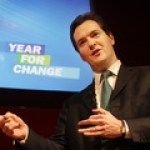
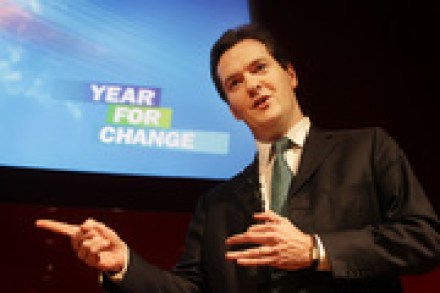
James Forsyth reviews the week in politics When all the Tory staff moved into the soulless Millbank complex for the election campaign, they were addressed by George Osborne in his role as campaign director. They were told that the next 60 days were the most important period of their professional lives. For no one in the room was this truer than for Mr Osborne. If the Tories triumph, he will be chancellor and (if he is lucky) hailed as the mastermind behind a winning campaign. If it ends in disaster, he’ll be held responsible. His dual role — campaign director and shadow chancellor — has been deeply controversial and has exposed him to criticism from those who say he does neither job well.

The Tories still want to repeal the hunting ban

From our UK edition

It might be Good Friday, but with the election only a little more than a month away politics is continuing pretty much as normal. This morning, we’ve already had more business leaders coming out in support of the Tory position on National Insurance, a combative Bob Crow demanding that John Humphrys apologise for using the word rigged in connection with the RMT strike ballot and later on David and Samantha Cameron are making a joint appearance at a social action project in Hackney. One thing that surprised me in the papers this morning was a quote in the Indy from the head of the League of Cruel Sports suggesting that Cameron is backing away from his position on hunting. This doesn’t tally with everything that I’ve heard.

Labour falls below 30 with ICM

From our UK edition

A new ICM poll for the Guardian has the Tory lead at nine points, 38 to 29. However, both main parties have fallen back since the last ICM poll which had the Tories on 39 and Labour on 31. This new ICM poll has the Lib Dems on 23, up four since the last ICM poll and three since last month’s Guardian / ICM poll. On a uniform national swing, this poll would leave the Tories 20 seats short of an overall majority. But given the Tory advantage in the marginals and the unwinding of anti-Tory tactical voting, a nine point Tory lead should actually produce a decent Tory majority. As always, we should remember that this is only one poll. But it is worth watching to see if the good Lib Dem polling we have seen recently continues in the next few polls.

Gordon Brown claims his inheritance tax policy recognises marriage

From our UK edition

Despite what the headline might make you think, this item is not an April Fool. In a web chat with Saga magazine, Brown said: “We made it possible for people to transfer their allowances so…between husband and wife…and that means widows for example can have the full benefit of the husband’s previous allowance, and that meant for a large number of people the effective point at which they started paying inheritance tax was above £600,000.

The Tories’ campaign is sharpening up

From our UK edition

As declaration day (the rather pompus name that news organisations have come up with for the moment when Gordon Brown actually calls the election) draws nearer, the Tory campaign is sharpening up. This morning’s operation on National Insurance was impressive, enabling the party to get a second set of headlines out of its plan to stop Labour’s National Insurance rise. The letter from 23 business leaders supporting the Tory position worked on several levels. First, it got the Tories’ tax cut back on the top of the news agenda along with its clear message: seven out of ten workers will be better off under the Conservatives. Second, it strengthened the Tory case that the risk to the economy is to increase the tax on jobs not cutting government waste.

Curbing the state

From our UK edition

This morning, David Cameron and a large chunk of the Shadow Cabinet were talking in some detail about how the Conservatives will enable a Big Society. To do that, they are going to have to stop state-run organisation crushing community initiatives.   Take the case of MyPolice. This website was set up to let people offer tips on how policing in there area could be improved. Earlier this month, they were contacted by Her Majesty’s Inspector of Constabulary (HMIC) who told them that they were launching a site called MyPolice. The original MyPolice objected.But HMIC went ahead anyway, using the url mypolice.org.uk. This better funded website now comes top when you Google MyPolice.

Money down the toilet

From our UK edition

I have heard two examples of government waste this morning which make you realise just how much money there is to be saved. The first was of a £1000 photocopier that cost £35000. The second was of a toilet worth £10000 bought for £50000. Both  of these examples of waste come from the education budget. Just imagine what the £34000 saved on a photocopier could have done in that school. No government can cut out waste entirely. But by moving away from central ordering and restoring discretion you can save money. If you doubt this just look at how much a tin of instant coffee costs in catalogues of office supplies compared to the supermarket.

How more strikes could work for the Tories

From our UK edition

During the last Tube strike, a couple of lines kept going. As I made my way home by a rather circuitous route, I was intrigued that all the anger on the platforms was directed not at Transport for London or the new mayor but the unions. The general sentiment was that all the strikers should be fired, that back-up drivers should be trained up and that the trains should be automated. If the RMT do want to call more strikes, I suspect that they will make it a lot easier for an incoming Tory government to change the law to require minimun turnout for strike ballots — a change that Boris Johnson’s office wants to deal with the RMT strike problem. In other strike news, Network Rail is taking legal action to try and stop the planned rail strike.

Letwin gets to the point

From our UK edition

Oliver Letwin is often mocked for putting things in over-complicated language, for talking about ‘a shift in the theory of the State from a provision-based paradigm to a framework-based paradigm’. But in his interview with the Wall Street Journal Europe, Letwin sums up the Cameron vision for public services with admirable clarity: 'Hospitals compete for patients, schools compete for pupils, welfare providers compete for results in getting people out of welfare and into work. So we get to the point where it [the public sector] is efficient because it is answering to the people it is serving and not to bureaucracy.

The Lib Dems attack Labservatism

From our UK edition

In this post-expenses election, there is going to be a considerable vote going for the none of the above party. The Lib Dems are clearly determined to try and tap into this vote. At PMQs in recent weeks, Nick Clegg has constantly sought to attack Labour and the Tories as different sides of the same coin. Last night in his closing statement, Vince Cable accused Labour of being ‘in hock’ to militant unions and the Tories to millionaires with their snouts in the trough. The message their trying to get across is clear: they’re both as bad as each other. Now, the Lib Dems have launched quite an effective site attacking the Labour Tory duopoly on power in Britain since the war.

A major test for the Charity Commission<br />

From our UK edition

There are few more damaging allegations against the trustee of a charity than that they forged the signature of a fellow trustee on a document. But that is what Khalid Mahmood, the MP for Birmingham Perry Bar, is alleging has happened to him. Mahmood told the Sunday Times that his signature had been forged on the declaration of trust sent by the North London Mosque to the Charity Commission. Mahmood's accusation is incredibly serious and he has referred it to the Charity Commission. When I contacted the Charity Commission today, I received this statement from them:  "The Charity Commission is aware of the allegations made relating to the North London Central Mosque (registered charity no.299884) and we are considering what, if any, regulatory concerns there are for the Commission.

Brown and Cameron’s Commons clash serves as the warm-up for tonight’s debate

From our UK edition

Gordon Brown and David Cameron have just been facing each other in the Commons chamber. Brown was notionally reporting back on the European summit meeting, but in relaity Brown and Cameron were setting the stage for the Chancellor’s debate tonight. Cameron claimed that there was a new dividing line in British politics, the Tories for ‘efficency and aspiration’ and Labour for ‘waste and taxes.’ Brown claimed that the Tories were indulging in panic measures and that their plans announced today would ‘withdraw the support that is necessary for the economy to have a sustained recovery.’ Brown might have some Keynesian economists on his side when he says this.

The Tories have a clear message on taxation

From our UK edition

The Tories now have a clear message on personal taxation, ‘you’ll pay less under the Conservatives.’ Their announcement today that they will reverse, for seven in ten workers, Labour’s increase in the tax on jobs is welcome news. As I said in the Mail on Sunday, turning the spotlight on the National Insurance hike shows that Labour’s tax rises aren’t just going to hit people who earn more than £150,000 a year who are going to buy a house costing more than a million but anyone who earns more than £20,000 a year. Some are questioning whether National Insurance is the most effective tax to cut since  it is a hidden tax; most people have no idea how much NI they and their employers pay.

The Chancellor’s debate is an opportunity for Osborne | 28 March 2010

From our UK edition

Tomorrow’s Chancellor’s debate is going to be one of the key set pieces of the campaign. Labour are convinced that George Osborne is the weak link in the Tory campaign and their attempt to target him will be turned up another notch if he turns in a disappointing performance. Vince Cable will see this as a chance to show that he’s the best potential Chancellor, although I hear that Cable’s keenness to get his hands on a Red Box is causing tensions within the Lib Dems.  Osbrone might be the man with the most to lose but he is also the man with the most to gain. Osborne’s stock is undervalued at the moment, people are ignoring that he has won the argument on debt and that he was the man who forced Brown to call off the election that never was.