James Forsyth

James Forsyth

James Forsyth is former political editor of The Spectator.

Just another politician

From our UK edition

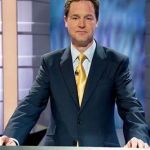
Nick Clegg’s response to Andrew Neil’s question about his expenses at the Lib Dem press conference this morning, highlighted Clegg’s greatest vulnerability: he’s just another politician. As the question pointed out, Clegg’s own expenses were by no means perfect. The danger for Clegg is that many of his new supporters see him as totally different from Brown and Cameron. When they find out that he’s a lobbyist turned Eurocrat turned MEP turned MP who has had problems with his expenses they might not be so keen on him.
Tories back ahead with YouGov

From our UK edition

Earlier in the camapign, a two point lead in the YouGov tracker poll caused panic in Tory ranks. But tonight, there’s a certain sense of relief that the Tories are back ahead by this margin with You Gov. The numbers are Tories up one to 33, Lib Dems down two to 31 and Labour up one to 27. Now this is, of course, only one poll and others show the Lib Dems still surging. But there’ll be a certain relief at CCHQ that the haemoragging of Tory support seems to have stopped.

Clegg the politician

From our UK edition

Every time a Conservative is asked by the media about Nick Clegg they should reply, ‘Nick Clegg’s a clever politician, a formidable opponent.’ This formulation won’t make the voters think that the Toires are being nasty about their opponent but it will remind them that Clegg is a politician which is a problem for him because so much of his popularity stems from being seen as not just another politician. This, obviously, isn’t the whole answer to stopping and then reversing the surge in Lib Dem support. But it would be of use and, to borrow a phrase, in the current situation every little helps.

The growing sense that the worst is behind the Tories

From our UK edition

These have been a grim few days for the Conservative party. But there is a sense, just a sense mind, that the worst might be behind them. Today’s ICM poll shows the Lib Dems still surging, up 3 to 30, but Tory support is only down one from Sunday’s ICM poll to 33. Labour is in third on 28, down one. Obviously, these polls numbers would have been considered pretty darn awful a week ago and no one would pretend that they are what the Tories would like to see right now. But they are not as bad as some feared they might be and as Julian Glover writes, “the Lib Dems have gained twice as much support from Labour as from the Conservatives. Meanwhile, Labour is losing support in all directions, including to the Conservatives and other smaller parties.

Boris is the man to burst the Clegg bubble

From our UK edition

Tonight's YouGov poll is another reminder, if oner were needed, that the Tories have to burst the Nick Clegg bubble. But any direct attacks on Clegg are dangerous as they present him with an opportunity to attack the same old politics. What the Tories need to do is to deflate it with humour. They should point out the absurdity of a lobbyist turned Eurocrat turned MP presenting himself as the alternative to the old politics. Is there anyone better to do this than Boris Johnson? He’s quotable and has just the kind of gently mocking humour that could puncture this bubble. Boris has, to my mind, being under used in this campaign. The Tories need to get him out there far more.

How Cameron can stem the Lib Dem tide

From our UK edition

If the Tories are to beat back this Lib Dem surge, there are three things they need to do. First, they need to establish Cameron as the insurgent, anti-establishment candidate. It might seem odd to urge the leader of the Conservative party to be the anti-establishment cadidate, but the establishment in this country is now essentially soft-left. Just look at how senior police chiefs are threatenting to resign over Cameron's plans for elected police commissioners who would be accountable to the public and set the priorities of the local force (another transformative Tory policy that Cameron didn't mention during the debate) Cameron needs to run against these people. He should be the tribune of the people pledging to return power to them from the unaccoountable and the unelectable.

Brown’s mindset on full display

From our UK edition

Labour high command will be very satisfied with Brown’s performance on Marr this morning. There was far less of the tetchiness that we usually see from Brown in interviews and by being invited to talk about the ash cloud and the government’s response to it at the beginning, Brown was able to assume some of the aura of his office as Prime Minister. The interview saw the debut of Brown’s latest rewriting of history. Apparently he has always been for bringing in the liberals (exact quote to follow when the BBC release the transcript) and a ‘progressive consensus’. This will come as a shock to anyone who has read Paddy Ashdown’s diaries or talked to those involved in the discussions between the two parties in the mid to late nineties.

Lib Dems in the lead

From our UK edition

A BPIX poll for the Mail on Sunday has the Lib Dems in the lead. The poll, which uses a similar methodology to YouGov, puts the Lib Dems up 12 on 32, the Tories down 7 to 31 and Labour down three to 28. Time will tell if this is a bubble that will burst but the first ever TV debate has certainly shaken the kaleidoscope of British politics.

More evidence of a Lib Dem poll surge

From our UK edition

There's another poll putting the Lib Dems in second place now, Com Res has them up eight to 29, the Tories down four to 31 and Labour down two to 27. An ICM poll for the Sunday Telegraph has the Lib Dems up 7 to 27. The Tories are on 34, down 3,  and Labour are down two to 29. Interestingly, the paper is reporting that most of the polling was carried out before the debate--so ICM's numbers may well under-estimate the Lib Dem's current strength.   Again, we will have to wait a few more days to see whether this Lib Dem surge is solid. But there's no doubt that something interesting is going on.

Cameron needs to go big on the big society

From our UK edition

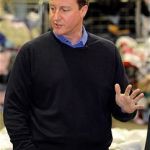
The more I think about David Cameron’s debate performance the more I think that the problem with it was that it was too one-note. He said little that would make voters think of him as a different kind of Conservative. As with his 2008 conference speech, there was too much health and safety and not enough hope. Cameron actually started the debate strongly, I thought his answers on immigration and crime were solid. But an example of what he didn’t do came when education came up. Cameron talked about excessive bureaucracy, discipline and government waste.

Even those sympathetic to the ideas in the Tory manifesto see they are not pub-ready

From our UK edition

James Forsyth reviews the week in politics ‘But has it cut through?’ This is the concern that nags at the Tories after every announcement. They know that they are winning the day-to-day battle in the media but they worry about whether this is making any difference in the country. They fret that the campaign, so far, is a piece of political drama for the political class and that the electorate are tuning it out. Those who return from the election frontlines to Conservative Campaign Head-quarters bring back the message that the voters are disillusioned. In the words of one shadow Cabinet member, they are ‘swimming against an incredibly strong current of anti-politics feeling’.

Lib Dems second in post-debate poll, Tory lead down to three

From our UK edition

The results of tonight’s YouGov daily tracker poll are going to put the cat amongst the pigeons. The Lib Dems are second on 30, the Tories are on 33 and Labour 28. Now, this is just one poll. We don’t know whether those who have shifted to the Lib Dems will shift back as the memory of yesterday’s debate fades or if Clegg is less impressive in the next two debates. Looking at yesterday’s numbers—when the Tories were on 37, Labour 31 and the Lib Dems 22—it seems that Lib Dems have taken votes from both the main parties. Tonight’s results are spectacular for the Lib Dems. The Lib Dems have always claimed that more people would support them if people thought they could win. In the next few days, we are going to find out how true that is.

Clegg and British democracy the big winners from tonight’s debate

From our UK edition

Tonight’s debate was a good thing for British democracy. In terms of which party gained, there can be no doubt that the Lib Dems were the big winners. Nick Clegg took full advantage of the opportunity that the debate presented him with. In what will have been the first time that many voters have seen him deliver more than a sound-bite or two, he effectively rammed home his message that the other two parties were the same and that his party was the only one offering real change. This poses a problem for the Tories. Clegg and Cameron are fishing in the same pool, voters who want change but aren’t decided which party offers that change. They need a counter to Clegg’s line that the other two parties are the same and only his party offers real change.

Advantage Cameron | 15 April 2010

From our UK edition

I’ve just been watching the feed coming out of the studio where the debate is taking place and what struck me was how much of an advantage his central position will give David Cameron. In all the shots of the studio, the middle lectern is where your eye is drawn first. The leaders, I’m told, have all had half an hour in there to familiarise themselves with the surroundings. They now appear to be white-washing parts of the studio.

A night to remember?

From our UK edition

I’ve just arrived in the press room in Manchester where the media will be watching the debate; the hotel lobby is full of hacks and spin doctors. The question being asked is whether this is the moment that the electorate begins to engage with the election. Although I know that some in CCHQ worry that tonight’s debate could be so he said, she said that it deepens the public's cynicism about politics. Today’s extreme weather has added an intriguing angle to tonight’s proceedings. Douglas Alexander, who along with Peter Mandelson will be working the spin room after the debate, has already claimed that Brown is concentrating more on the lines at the airports than lines for tonight’s debate.

No sweat

From our UK edition

The leaders will be allowed to use their own make-up artists tonight. This might sound like a trivial detail but how the leaders look is, sadly, going to be an important factor in who gets the most benefit from the debate. I expect that the big beneficiary from being allowed to use his own make-up team will be Cameron. As his Newsnight interview during the 2005 leadership contest - when Cameron used his own not Newsnight's make-up artists and as a result looked far better than David Davis had the week before - showed, the Cameron Team appreciate the importance of these details.

The eve of the debate

From our UK edition

Tomorrow’s debate between Brown, Cameron and Clegg is going to be the most important event of the campaign so far. All the parties are playing the expectations game at the moment—I wouldn’t be surprised if a party claimed that their opponent is the best debater since Cicero—but I suspect that the expectations game will be less important than we expect. There is an instant poll following the debate and that is going to mean that the result of the poll, not the verdicts of the pundits, is going to determine the tone of the coverage over the next few days. Given the state of the polls and that this is the first of three debates I doubt that anyone will take too many risks tomorrow night. There will be a lot of defensive play.

Follow the money | 14 April 2010

From our UK edition

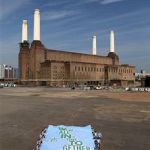
Looking at the papers this morning and watching the news last night, you realise what a benefit in the image stakes the Tory cash advantage gives them. The Tories can afford to hire out better venues than the other two parties. So while Labour launched their manifesto in hospital and the Lib Dems theirs at Bloomberg, the Tories used Battersea Power Station which provided them with much better visuals. We saw the same dynamic on the day the election was called: Labour’s event was in Downing Street, the Lib Dem one in an office and the Tory one on the terrace of County Hall looking over to Parliament The Mirror’s front page today accuses Cameron of using his photo-ops to benefit the firms that are backing his position on National Insurance.

What is ring-fencing in LibDem land?

From our UK edition

On Sunday, on the Politics Show Vince Cable said that David Laws had been wrong to say on Newsnight that the health and international developments budgets were ringfenced. But the Lib Dem manifesto says the Libs Dems will, ‘Increase the UK’s aid budget to reach the UN target of 0.7 percent of GNI by 2013.’ This seemed contradictory to me so I called the Lib Dem press office who told me that you can ‘not ringfence a Budget but still increase it' which left me even more confused about what the Lib Dem position on the DFID budget actually is: will it go up or down?