James Forsyth

James Forsyth

James Forsyth is former political editor of The Spectator.

What the GDP figures mean politically

From our UK edition

The coalition can breathe a little easier today. The economy returned to growth in the first quarter of this year, avoiding a double-dip recession. It expanded by 0.5 percent which is in the middle of City economists’ forecasts but below the OBR’s prediction of 0.8 percent. Recoveries are generally choppy and particularly so when coming out of a debt-induced recession.  Labour, though, will see these numbers as a further chance to claim that cuts have sucked the confidence out of the economy and that Britain is just bumping along the bottom. This, obviously, isn’t the whole picture. The deficit reduction plan has, crucially, kept the cost of borrowing low and enabled a continuing monetary stimulus.

Why I’m sceptical of all the early election talk 

From our UK edition

Something has undoubtedly changed in the coalition in the past fortnight. Even those at the centre, who have been most loyal to the concept of coalition, are now happy to complain about the other side and its behaviour. But I’m still sceptical of all the early election speculation which has been sparked by Jackie Ashley’s very clever Guardian column. The main reason why I don’t think it will happen is the Cameron brand. Ever since David Cameron became leader of the Conservative party, the top of the party has believed that the protection of the Cameron brand is essential to electoral success. Cameron has too much personally invested in showing that the coalition can work to let it fail. The coalition is now key to Cameron’s whole political persona.

The Assads send the tanks in, in effort to crush the rebellion against them

From our UK edition

The storming of the town of Da’ra by the Syrian regime is a further escalation of its attempt to put down protests against it. The details of what have happened are sketchy, the regime cut the town’s communications links before moving in, but the use of full military force does suggest, as the New York Times reports, that the Assad dynasty have chosen to put these revolts down through purely military means. It is not Hama 1982 yet, but it—worryingly—appears to be heading that way. It has long been hoped by many in the West that Bashar Assad was a moderniser and could be peeled away from Iran and to the peace table with Israel.

The coalition is shaken to its foundations as the Liberal Democrats rage at Cameron, Osborne and the Conservative party

From our UK edition

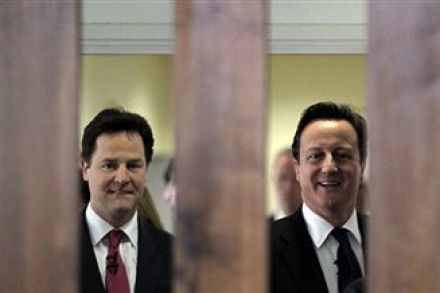
The Liberal Democrats are mad as hell at their coalition partners—and don’t seem to care who knows it. Their fury has been caused by what they see as the roughhouse tactics of the No campaign and the Tories’ complicity in them. Chris Huhne’s letter to George Osborne has been written to make clear just how betrayed the Liberal Democrats’ feel by the actions of their coalition partners. Huhne writes, “I explicitly warned you that the manner of the AV campaign would be as important as the result, in terms of the effect on the coalition.

Clegg bites back

From our UK edition

Judging from the front page of tomorrow’s Independent on Sunday, the coalition’s relationship troubles are escalating. The paper’s front page blares, “Clegg rages against Cameron ‘lies’”. Even accounting for the license headline writers takes, this shows just how fraught things are inside the coalition at the moment. The Liberal Democrats feel that the Tories have let the No campaign go too far in its’ attack on Clegg and so feel they are no longer bound to be respectful about their coalition partners. Vince Cable’s message in today’s Guardian sums up the sense of many Lib Dems that they’d rather be in coalition with Labour than the Tories.

Politics: This referendum will destroy a party leader. But which one?

From our UK edition

The next general election may seem a long way away. The next general election may seem a long way away. But for all three parties, the run-up to the local elections this month offers a chance to test their campaign strategies for 2015. The Conservatives and the Liberal Democrats are using this period to remind voters of their achievements in office and reassure supporters that they remain distinct parties. But it is Labour that has by far the simplest and most effective message for 5 May: if you don’t like what the coalition is doing, vote for us. After 13 years in government, Labour is relishing opposition. MPs who once dreaded having to knock on doors and defend Gordon Brown’s record are now eager to go out and canvass.

A question of leadership

From our UK edition

This morning’s speech on AV by Nick Clegg has prompted another round of Lib-Lab backbiting over whom is to blame for the troubles of the Yes campaign. In its leader column today, The Times (£) joins in on the Lib-Dem side, criticising Miliband for not having done more for AV. It even suggests that he’d be prepared to vote down a Yes vote in the Commons, something he specifically rules out in his interview with the paper today (£).   Unlike Clegg, Miliband can be relaxed about the result of the AV referendum. If AV is defeated, few in the Labour party will mind and the blame won’t attach to him. If the polls are right, David Cameron will be the only leader strengthened by the result of the referendum.

Ed Miliband will hire tails for the Royal Wedding

From our UK edition

If you’re fed up with stories about what politicians will wear to the Royal nuptials, look away now — for I can confirm that Ed Miliband will wear a morning suit on the 29th of April. Miliband takes the view that a Royal Wedding is no time for gesture politics.   A Labour spokesman told me this morning that, "This wedding should be all about William and Kate. This is their big day. It is now clear that the appropriate thing is to wear a morning suit and that is what Ed will do."   But Miliband doesn’t actually own a morning suit. He will now be heading down to Moss Bros to rent one.    I hear that we’ll find out that Nick Clegg is deciding what he’ll be wearing today.

How the Finns might rock the European boat

From our UK edition

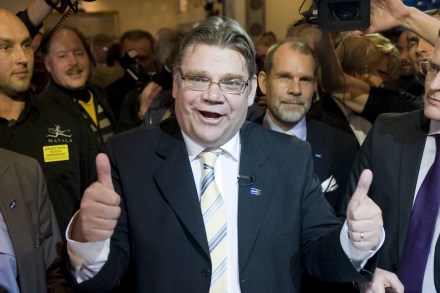
Normally, the results of the Finnish elections don’t merit much discussion. But the success of the True Finns, the only party to put on seats in the elections there last week, could have a major impact on this country.   The True Finns ran almost as a single issue party during the final week of the campaign. Their message: we’ll say no to bailing out other Eurozone countries. Seeing as they are almost certainly going to be part of the next Finnish government, this rather throws a spanner in the works of Brussels’ plan to bail out Portugal.

The PM turns for his tailcoat

From our UK edition

The Prime Minister will now wear a morning suit to the Royal Wedding, Ben Brogan reports. Since I first revealed in the Mail on Sunday that he was planning to wear a lounge suit there has been a slew of complaints that this was not appropriate. Even Bruce Anderson — the columnist most sympathetic to Cameron — joined in the criticism today and used it to tell a broader story about the coalition’s problems.  Downing Street has now clearly listened and realised that the job of a Prime Minister on these occasions is not to make news. I think the issue acquired such salience because it became a question of authenticity.

There are more attacks on Clegg to come

From our UK edition

As the chances of AV passing diminish, the Lib Dems are complaining with increasing volume about just how directly Nick Clegg is being targeted. Up to now, they have kept their concerns about what, they are calling, the swift boating of Nick Clegg relatively private. Last night, Chris Huhne said that he was “shocked that coalition partners can stoop to a level of campaign that we have not seen in this country before”. This morning, Paddy Ashdown has follow up on his phone call to Nick Robinson with a demand that David Cameron disassociate himself from the No campaign’s attacks on Clegg. This isn’t going to happen.

Cameron quells the storm

From our UK edition

David Cameron turned in an emollient performance on the Today Programme this morning. He declined to stoke the coalition row over immigration, heaped praise on Vince Cable and stressed that the Liberal Democrats have been good coalition partners. Even when pressed on the question of whether Britain would block Gordon Brown from becoming director of the International Monetary Fund, Cameron spoke softly. The only line of questioning in the interview that discomforted the Prime Minister was when Evan Davis pressed him on why a localist government was placing restrictions on what local government could charge residents for recycling or rubbish collection.

How the coalition plans to recover

From our UK edition

This morning’s battle of the political odd couples shows the dangerous direction in which the AV referendum is going for the coalition. The Yes campaign are becoming ever closer to making explicit the argument that a yes vote is the best way to keep the Tories out. For their part, the No side are continuing to hammer the compromises of coalition and the unfairness of the party in third place determining the result. In other words, no more Lib Dems in government. These campaign strategies mean that the result of the referendum will be seen as a decisive rejection of one side or other of the coalition.

Why Vince Cable can’t keep his peace on immigration

From our UK edition

The row sparked by Vince Cable’s attack on David Cameron’s speech on immigration is still rumbling on. The Sunday Times reports that Cable’s opposition to the coalition’s immigration policies has even extended to advising a college to take out an injunction against the government’s policies limiting non-EU student numbers. Cable’s actions are undoubtedly straining the coalition; Nick Clegg was visibly uncomfortable on the politics show as he attempted to square Cable’s actions with Cabinet collective responsibility. So, why is Cable doing this? I don’t think the reasons are particularly Machiavellian.

Will the coalition go nuclear on the enemies of enterprise?

From our UK edition

Iain Martin has a great story in his column today about how the coalition is so frustrated with the civil service that it is considering sacking a bunch of permanent secretaries and replacing them with outsiders. This move would take the coalition’s battles with the civil service onto a whole new plane. Talking to ministers both in this government and the last one and many civil servants, there’s no doubt that large chunks of the civil service are no longer fit for purpose.  But I’d be surprised, and impressed, if the coalition did follow through with this plan. Open warfare with the people who know where all the secrets are hid is not an appealing prospect for any government.

Politics: Just tiffs – or is the coalition headed for divorce?

From our UK edition

When one half of a couple threatens to walk out if he doesn’t get his way and the other responds by threatening to call in the lawyers, it’s obvious that all is not well. When one half of a couple threatens to walk out if he doesn’t get his way and the other responds by threatening to call in the lawyers, it’s obvious that all is not well. But this is the state of the coalition at the moment. The row between the two parties over Andrew Lansley’s proposed reforms to the National Health Service is in danger of turning into an argument that neither side ever forgets — or forgives. It was Sunday lunchtime when this row went fully public.

Balls in fiscal isolation

From our UK edition

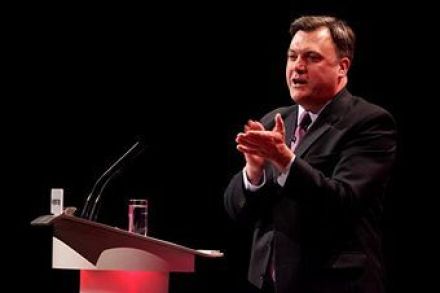
Ed Balls has long said that America is the right comparison for Britain when it comes to how to deal with the deficit, contrasting the Obama administration’s fiscally loose policies with Osborne’s plan for fiscal tightening. This comparison has always been flawed; the dollar is the world’s reverse currency which gives Washington far more fiscal flexibility than HMG. But, even leaving that aside, the Obama administration is now — albeit under Congressional pressure — about to start cutting.   By 2015, Obama’s plan will have reduced the US deficit by 8 percent of GDP. Osborne’s plan sees Britain reduces its deficit by 8.4 percent by 2015. Indeed, from next year the US will be tightening at a faster annual rate than Britain.

The government should recall parliament

From our UK edition

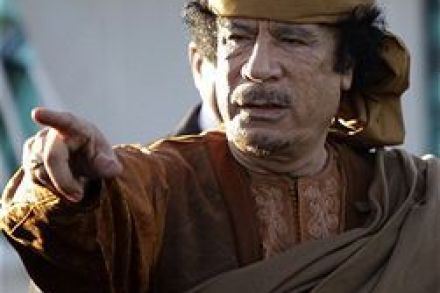
Today’s declaration (£) by Barack Obama, David Cameron and Nicolas Sarkozy that Nato’s operation in Libya will continue until Gaddafi leaves power marks a shift in their rhetoric and makes explicit that regime change is the war aim. This has led to calls to recall parliament, most notably from David Davis on the World at One, to debate this change. Parliament merely voted to enforce the UN resolution which was not a mandate for regime change. The government would be well advised to heed these requests. It would be the best way of maintaining the necessary political support for the mission. Now that regime change is the explicit war aim, the allies must will the means. To do otherwise, would simply guarantee a humiliating and debilitating stalemate.

The coalition can’t go on together with suspicious minds

From our UK edition

Vince Cable’s attack on the PM’s speech today is just the latest elbow to be thrown in what has been a fractious few weeks for the coalition. The immediate cause of these rows has been the need for the Lib Dems to assert their distinctiveness before the May elections and tensions over the AV referendum. The Lib Dems, who feel that their leader is being ‘swiftboated’ by the Tory-funded No campaign, have been increasingly assertive in the last month or so. But there are dangers to this strategy. For one thing, it has eroded trust within the coalition. Ministers are now not being frank with each other because they don't want what they say in private, turning up in the papers.

Pickles takes it to the Lib Dems

From our UK edition

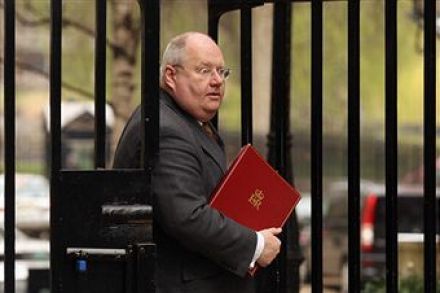
Vince Cable’s remarkable criticisms of David Cameron’s speech on immigration are dominating the news. But in the papers today there’s a development in another intra-coalition dispute, Eric Pickles hitting back at all the Lib Dem talk of higher property taxes. The Telegraph reports on figures released by Eric Pickles’ department which show that prosperous areas pay far more in council tax than they receive back in services. His point is that the council tax burden already falls disproportionately on the well off and so layering another band on top or doing a revaluation that would push houses into higher band would be unfair. Pickles’ reading of the politics of this is acute.