James Forsyth

James Forsyth

James Forsyth is former political editor of The Spectator.

Three points from a remarkable night

From our UK edition

This has been a remarkable election night. To my mind, there are three big stories out of the polls. First, the George Osborne masterminded campaign for a new Conservative majority is on track. AV, barring some shock, has been defeated and the Conservative vote has held up remarkably well in the English local elections. Indeed, right now the Tories have actually gained councilors in England. Add to this that the next election, if the coalition lasts to 2013, will be fought on new constituency boundaries that are more favourable to the Tories and things are looking promising for the party.    The coalition looks secure. Even after last night's drubbing, the Lib Dem leadership is not considering leaving government.

It’s all over bar the counting

From our UK edition

The polls have now closed tonight. But there’s no exit poll and no results are expected for a few hours yet. Indeed, I’m almost tempted to say we could do with some of those much talked about electronic counting machines. We are, though, already seeing recriminations over the AV vote. Paddy Ashdown, who is in very fiery form on Question Time, has already told The Guardian that ‘So far the coalition has been lubricrated by a large element of goodwill and trust. It is not any longer.’ In an attempt to bring the temperature down, a no gloating order has come down from Tory high command. Expect to hear an awful lot in the next few days about what the Lib Dems bring to the coalition.

Calamity may lead to concessions for Clegg

From our UK edition

If the expected happens today, the political debate will rapidly move to whether Cameron should offer some concessions to Clegg to bolster his position. I hear there are two camps in Downing Street on this question with Steve Hilton a particularly ardent advocate of the no more concessions line.   Hilton’s position may surprise some but makes sense when you consider how his public service reform programme has, as Ben Brogan writes today, already been diluted for political reasons.    My current expectation is that there won’t be many concessions to Clegg. One well placed Tory told me last night that "Clegg picked the question and the date. He can have no complaints.

New ICM poll has No 36 — thirty six — points ahead

From our UK edition

Tonight’s ICM poll is even worse for the Yes campaign than last night’s ComRes poll. The poll, in tomorrow’s Guardian, has Yes heading for defeat by a margin of more than two-to-one and in every single region of the country. The turnout adjusted numbers are No 68, Yes 32. If these last two polls are accurate, and it is difficult to estimate what the turnout will be tomorrow, it will be a monumental humiliation for Nick Clegg and the Liberal Democrats. Defeat on this scale would take Lib Dem nervousness about what the coalition is doing to the party’s brand to a whole new level. Indeed, its effect would be so destabilising that it would be hard to predict how this punch-drunk party would react.

A very quiet exchange

From our UK edition

PMQs today was dominated by the parties trying to get their lines out ahead of the voting on Thursday. David Cameron accused "Labour local authorities of playing politics with people's jobs" and urged voters "not to let Labour do to your council, what they did to our country." He received plenty of chances to make his local election case as Tory backbenchers served up one patsy question on councils after another. Ed Miliband jibed that the coalition was no longer two parties working together in the national interest but "two parties threatening to sue each other in their own interest," a reference to Huhne’s hyperbolic threat to sue over the No campaign’s claims. The Lib Dems were oddly quiet today.

Whatever the Lib Dems claim, Michael Gove will be voting No tomorrow

From our UK edition

A senior Liberal Democrat is putting it about this morning that Michael Gove, the education secretary, will be voting for AV tomorrow. But a very close friend of Gove tells me that ‘this is categorically untrue. Michael will be voting to keep first past the post.’ This Lib Dem’s briefing strikes me as rather ham-fisted. One might even call it disorganised wickedness. UPDATE: Michael Gove is not only voting No tomorrow, he's getting out the vote for No. The education secretary, who has up to now stayed out of the referendum campaign, will be making phone calls to remind Conservatives to go out and vote No tomorrow from CCHQ this afternoon.

The significance of today’s Cabinet bust-up

From our UK edition

On the Today Programme this morning, David Cameron stressed that for all the tensions about the AV referendum, ministers were still capable of sitting round a table and working together. But within a couple of hours of saying this, Chris Huhne had destroyed this argument by using Cabinet to continue his attack about the tactics of the No campaign.   When the Energy Secretary is demanding that the Prime Minister and the Chancellor justify their behaviour to him it is impossible to pretend that it is business as usual. It is now indisputable that the fallout from the AV referendum campaign is having an impact on the functioning of the government.   What is also noteworthy is that Osborne didn’t try and defuse the conversation with a joke or anything like that.

What Osborne said to Huhne

From our UK edition

"This is the Cabinet, not some sub-Jeremy Paxman interview." I hear that Osborne went on to stress that Cabinet should be discussing the Cabinet agenda, not party political issues.

Clegg’s implicit attack on the Tories

From our UK edition

Up until a few months ago, David Cameron and Nick Clegg tried to avoid doing big set piece broadcast interviews on the same day. This was driven by a desire to both maximise the coalition’s dominance of the media agenda and to avoid having to give a running commentary on what the other had said. But this rule has gone out of the window as the AV referendum has got rougher and rougher. So, following on from their both doing separate interviews on Andrew Marr on Sunday, they both were on the Today Programme this morning. Clegg even told Justin Webb to ask Cameron about the split between the two of them on internships when he was on in forty minutes time.   Clegg isn’t, unlike Cable and Huhne, openly attacking the Tories. But he is doing so implicitly.

Huhne lays into Cameron and Osborne at Cabinet

From our UK edition

At Cabinet this morning, I am told that Chris Huhne directly challenged David Cameron and George Osborne about the claims that the No campaign have been making. He asked them both in turn, if they were going to — or could — defend them. Osborne responded by telling Huhne that his behaviour was inappropriate and that Cabinet wasn’t the place for such disputes. The fact that this row broke out in Cabinet shows just how badly relations within the coalition have been damaged bv the AV campaign. That Huhne is leading the anti-Tory charge even within Cabinet will also stoke the rumours about what the Energy Secretary is planning to do after Thursday’s referendum.

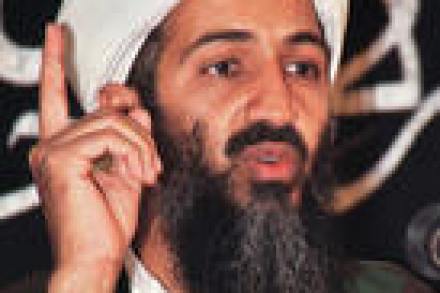
Why Bin Laden’s death matters

From our UK edition

The more we hear about the operation that killed Bin Laden, the more impressive it becomes. US Navy Seals held dummy-runs of the raid on April 7th and 13th part of the extensive, leak-free planning that appears to have been going on for months. I think there are two things that come out of this raid that the West need to talk about. First, Pakistan and its role: did no one in the Pakistani state have any idea that Bin Laden was in Abbottabad, a town dominated by the Pakistani military? As Steve Coll writes at the New Yorker, ‘Who owned the land on which the house was constructed? How was the land acquired, and from whom? Who designed the house, which seems to have been purpose-built to secure bin Laden? Who was the general contractor? Who installed the security systems?

What the death of Bin Laden means for Af-Pak policy

From our UK edition

The political and strategic implications of Osama Bin Laden’s death are legion. One of the biggest impacts of this operation could well be that it speeds up the US withdrawal from Afghanistan. Obama has long been keen to start bringing US troops home in large numbers. But a withdrawal from Afghanistan with Bin Laden not dealt with could have been portrayed as humiliating by Obama’s political opponents. Now, that Bin Laden is dead, it is much easier for Obama to scale down the US operation there, arguing that the central base of al Qaeda’s operations have now moved out of the country. The embarrassment for Pakistan of where Bin Laden was found is growing by the hour.

How the US pulled it off

From our UK edition

The veil is being pulled back on how the United States tracked down and killed Osama Bin Laden. The New York Times reveals that the intelligence trail started with information obtained from a Guantanamo Bay detainee about the courier that Bin Laden used to pass and receive messages to the outside world. This is proof that the public debate about the utility of Guantanamo is far too glib. This courier was then tracked down last August to the compound, in Abbottabad which was so secure and grand that the Americans realised that it could well be Bin Laden’s hide-out. These suspicions were reinforced when it became clear that this million dollar compound, built in 2005, had no telephone or internet connection and that its inhabitants incinerated their own rubbish.

A triumph for America that raises questions about Pakistan

From our UK edition

The killing of Osama Bin Laden is one of the clearest victories in the war on terror since the fall of the Taliban government in Afghanistan in 2001. It is a major triumph for American intelligence. Bin Laden’s death does not mark the end of the war on terror. But it does close a chapter and demonstrate that the United States has the willingness and the determination to keep up a manhunt for a decade. Perhaps, the biggest question it raises is about Pakistan. Bin Laden was found not in the lawless, border regions of Pakistan but living in a mansion right in the heart of the country in Abbottabad.

The Gaddafi family should be regarded as legitimate targets

From our UK edition

David Cameron became most animated on the Andrew Marr show this morning when the subject of Libya came up. It was clear that he remains passionately convinced that the course he has taken is the right thing to have done. The Prime Minister refused to comment on the Gaddafi regime’s claim that one of Gaddafi’s children had been killed in a Nato airstrike and wouldn’t be drawn on the question of whether the government considers the Gaddafi family legitimate targets. But given that, as Cameron himself noted, the Gaddafi family is running the military operation and ordering moves against civilians then they surely are legitimate targets.

How the recriminations over AV’s defeat will change the debate over Lords reform

From our UK edition

It is odd to think that only the second national referendum in our history is only five days away. The combination of the Royal Wedding and the failure of the campaign to grip the public imagination has condemned it to being ‘In Other News’, on this the final weekend before the vote. At the moment, No appears to be cruising to victory. The Yes campaign lacks both message and momentum. I also suspect that, asPaul Goodman says, the rest of the week will see debate about why it has all gone so wrong for Yes. One thing I expect we will hear a lot of in the coming days is electoral reformers bemoaning that they went for a referendum on AV rather than a proportional system.

Obama’s military reshuffle

From our UK edition

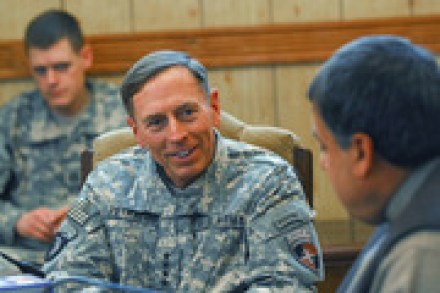
President Obamna’s nomination of  General Petraeus to run the CIA will have a huge knock on effect on the US military. Petraeus will have to resign his commission to take on the post which means that his work trying to transform the US army into a force comfortable trying to deal with counter-insurgency will have to come to an end. One also can’t help but suspect that the Obama administration will be glad to avoid a public tussle with Petraeus over the schedule for withdrawal by moving him out of theatre. Of the other moves in Obama’s shake up of his national security team, one worth paying particular attention to is Ryan Croker—the former ambassador to Iraq—moving to Kabul as US ambassador.

The recriminations begin

From our UK edition

The Royal wedding and gossip about super injunctions is rather dominating conversation at Westminster today. But there is still some politics going on. Patrick Wintour in The Guardian has the beginnings of the recriminations that will follow a No vote in the referendum. Relations between the Lib Dems and the Yes campaign are pretty bad at the moment. Clegg’s camp is happy to tell journalists about what they see as the myriad failings of the Yes campaign. They complain that the Yes campaign has been too slow on the draw, let the No side define the debate and failed to get any message across. The Yes campaign’s response to this has been to whisper in peoples’ ears that whenever Nick Clegg appears for Yes their numbers go down.

Temper, temper

From our UK edition

I have rarely heard the House as loud as it was after David Cameron’s ‘calm down, dear’ put down to Angela Eagle. The Labour benches roared at the Prime Minister and Cameron turned puce, while the Liberal Democrats looked distinctly uncomfortable. There is already a rather over-blown debate going on about whether the remark was sexist or not. But whether or not it was, it was certainly ill-judged. It was a tad too patronising and directing it at one of the more junior members of the shadow made it seem bullying. The Labour benches were heckling Cameron more than usual today, a result of him losing his rag with Ed Balls at PMQs last month. After today, they’ll turn the volume up another notch.