James Forsyth

James Forsyth

James Forsyth is former political editor of The Spectator.

The sort of influence we can live without

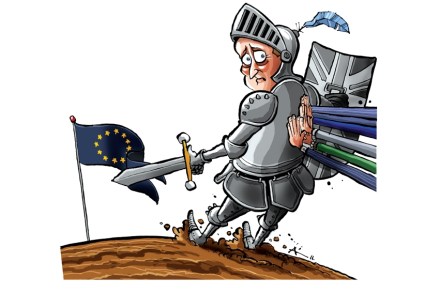
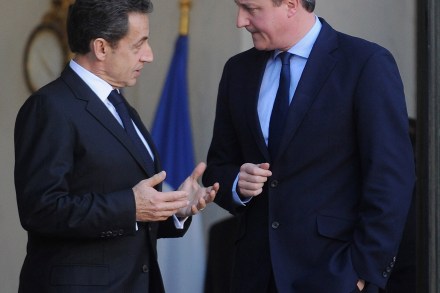
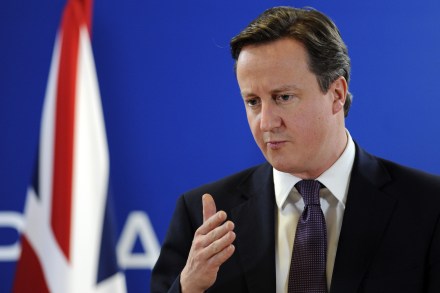
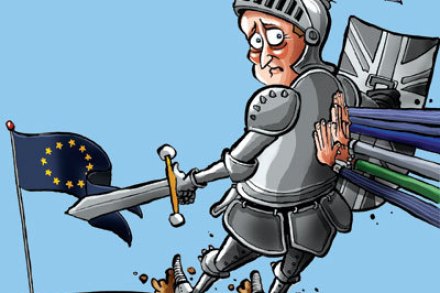
David Cameron’s decision, in the wee hours of Friday morning, to make clear that he would veto the proposed treaty change will have many far-reaching effects. One is that other European leaders know that Cameron is prepared to follow through on a threat to veto. As Charles Moore says in The Telegraph today, the dynamic

A new deal for Britain

It is becoming increasingly clear what the Conservative party expects of its Prime Minister. If he is going to agree to 17 eurozone countries pushing ahead with the Franco-German plan for fiscal union, he needs to secure a new deal for Britain in exchange. Just what this new deal should look like is a matter

Cameron on top — for now

Looking at the British political scene today, David Cameron is in a very strong position. His own party has rarely been happier with him. His coalition partners, despite being the most pro-European party in British politics, are standing by his decision to use the veto. What Liberal Democrats keep stressing is that the British government

A defining moment

David Cameron’s use of the veto in the early hours of this morning changes the British political landscape. The first thing to stress is that if the euro collapses it will not be because of the British veto. The deal agreed between the 17 eurozone countries and six of those nations who still want to

Extended version: Our interview with Owen Paterson

As promised by Fraser earlier, here is an extended version of James’s interview with Owen Paterson that we posted yesterday: It is becoming increasingly clear what the Conservative party expects of its Prime Minister. If he is going to agree to 17 eurozone countries pushing ahead with the Franco-German plan for fiscal union, he needs to secure a

Europe is the story again

Today was one of those days when we saw just how divisive the European issue can be to the Conservative party. The sight of Malcolm Rifkind and Nadine Dorries treating each other with barely disguised contempt on Newsnight was a sign of just how poisonous relations in the parliamentary party could become. Intriguingly, the Daily

Owen Paterson: A referendum on the EU is inevitable

It is becoming increasingly clear what the Conservative party expects of its Prime Minister. If he is going to agree to 17 eurozone countries pushing ahead with the Franco-German plan for fiscal union, he needs to secure a new deal for Britain in exchange.   Just what this new deal should look like is a

Fiscal union would hit eurozone credit ratings

There is predictable euro-rage today at Standard and Poor’s warning that there’s a 50/50 chance that the six AAA eurozone countries could see their credit rating downgraded. But if the eurozone does push ahead with fiscal integration, it will — obviously — have an impact on the credit worthiness of the stronger eurozone economies. One

Baseline advantage

One of the advantages the governing party has during an election campaign is the ability to set the baseline. It is your plans which every other parties’ are measured against. So, if they plan extra spending you can accuse them of a ‘tax bombshell’ or if they want to spend less than you, then you

The significance of the Iron Lady

Charles Moore’s essay on the Iron Lady in today’s Telegraph is required reading. Here’s how he starts: ‘The best way to understand why a feature film about Margaret Thatcher might work is to imagine trying to make one about other 20th-century British prime ministers. How about Safety First (Stanley Baldwin), A Period of Silence (Clement

Politics: Osborne’s Autumn Statement was about creating more Tories

It was political jujitsu. The coalition turned the public sector unions’ strike back against them. When the unions first decided to stage a walk-out the day after the government’s Autumn Statement, they wanted to show that reforms wouldn’t go through without a fight. But the coalition has chosen to embrace this conflict. Senior Cabinet ministers

Merkel's fiscal union won't solve the euro's problems

Few people have been as vindicated about the failings of the euro as Marty Feldstein, who was chairman of the Council of Economic Advisers under Reagan. In 1997 he wrote a piece for Foreign Affairs called ‘The EMU and International Conflict’. In it, he argued that far from furthering peace and stability in Europe, the

Osborne's Autumn Statement was about creating more Tories

In this week’s Spectator – which hits newsstands today – James Forsyth reveals the political calculations behind the Chancellor’s announcements on Tuesday. Here, for CoffeeHousers, is a taster of James’ column: The government wants to be seen as on the side of necessary but fair reform; facing down opponents who believe in ‘something for nothing economics’.

Dave and Ed strike each other

It was a real blood and thunder PMQs today. This was the politics of the viscera; whose side are you on stuff.   Ed Miliband chose to start on the strikes. David Cameron ripped into him from the off, calling him ‘irresponsible, left-wing and weak.’ Miliband came back with an attack about how he wasn’t

Osborne plays a tough hand well

Today was always going to be a difficult day for the Chancellor. The figures from the OBR were always going to dominate the headlines and the restrictions of coalition meant that there couldn’t be as much as the Tories would have liked on the supply side. It was striking that the loudest Tory cheer of

Osborne has a few cards up his sleeve, but no aces

In some ways, George Osborne will always be haunted by his 2007 Tory conference speech. That speech and the reaction to his commitment to raise all estates worth less than £1 million out of inheritance tax contributed to Gordon Brown not calling an early election. It has a claim to be one of the most

Preparing for the strike

Wednesday’s strike is going to be big — unlike the one in June, which I suspect most people didn’t really notice. You’re not going to be able to miss this one as 90 per cent plus of schools shut — compared to a third in June — and it takes half a day for anyone

The Tories' latest frustration with the Lib Dems

Nick Clegg’s interview in The Observer today highlights what is fast becoming one of the biggest tensions in the coalition: the Lib Dem desire to show that they are the governing party who cares. Allies of Iain Duncan Smith have been infuriated by Lib Dem suggestions that the government would be doing little about youth