James Forsyth

James Forsyth

James Forsyth is former political editor of The Spectator.

A Cameron-friendly backbench group

From our UK edition

The 301 Group is the nearest that David Cameron has to a loyalist backbench support group; it is named after the number of seats the Tories will need at the next election to win a majority. The Times today reports the group's concerns that the Tories are in danger of forgetting the importance of a broad agenda that goes beyond the party’s staple issues. I suspect that several people in Downing Street will nod along at these concerns. The group has certainly been encouraged by Number 10, which has difficult relations with the 1922 Committee. Its early speakers have included the chief whip Patrick McLoughlin and the vice-chairman of the party Michael Fallon.
Gove: It’ll take ten years to turn around the education system

From our UK edition

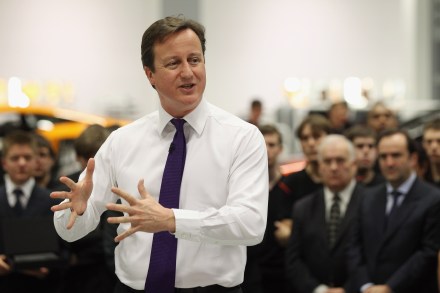
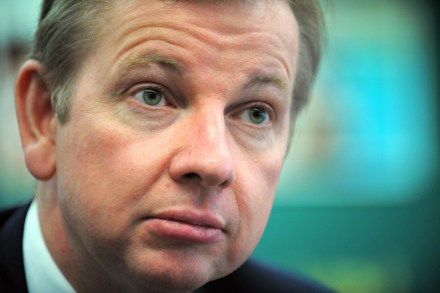
Speaking on the new Sunday Politics Show, Michael Gove said that it would take a decade for his reforms to change education in this country. Pressed by Andrew Neil on whether he would be able to reverse England’s fall in the PISA rankings, Gove remarked that it would take ten years before we can see whether his reforms have worked in reversing England’s educational decline in comparison to other OECD economies. Interestingly, Gove suggested that one of the measures of the success of his reforms was whether private schools started entering the state sector. He also defended his decision to force some schools to become academies.

Miliband, dented but defiant

From our UK edition

In the news bulletin after Ed Miliband’s interview on the Andrew Marr show, the headline was about Miliband saying he does listen to criticism of his leadership. It rather summed up Miliband’s problem at the moment: he can’t get beyond all the chatter about his leadership. In terms of the substance, Miliband’s explanation of Labour’s new economic position showed just how difficult it is going to be to explain it to the public. Miliband argued, as Balls did on Saturday, that the cuts are currently going ‘too far, too fast’ but that he can’t promise to reverse them. As one Tory said to me yesterday, Labour is saying that the cuts are the problem but we might have to adopt them.

Simon Hughes speaks out against the benefit cap

From our UK edition

In the Cameroon effort to redefine the politics of fairness, the benefit cap of £26,000 a year is key. When George Osborne announced it in his 2010 conference speech, he explained it – rightly – as a matter of fairness that ‘no family on out-of-work benefits will get more than the average family gets by going out to work’.   The Tories were also aware of just how potent a wedge issue it would be. If Labour opposed the cap, they would be in favour of some households in which no one is working receiving more from the state than the average salary people achieve by working. This is, to put it mildly, not a position that would go down well on the doorsteps.   But the cap has hit a snag: Simon Hughes.

Politics: Alex Salmond’s three-card trick

From our UK edition

Not since 1745 has the union been in such danger. It now seems certain that there’ll either be a referendum on Scotland leaving the union in 2014 or that Westminster will have to resort to using the Supreme Court to stop Holyrood holding the vote, handing the Nationalists a huge propaganda victory. Support for independence in Scotland may stand at about a third, having not moved much over the years. But the campaign for it will be led by the most able politician in Scotland, the tactical equal of any politician in Britain, who runs the best campaign machine in the British Isles. No one should underestimate Alex Salmond and the Scottish National Party. David Cameron decided to act, I understand, after learning that Salmond was on manoeuvres.

S&P to downgrade France and Austria

From our UK edition

The word is that France will be downgraded by Standard and Poor’s tonight. AFP is reporting that French officials expect France to drop to a AA+ rating, losing its treasured AAA status and increasing how much it will have to pay to borrow money. 2012 has, so far, been relatively quiet on the euro front. But expect the issue to return to centre stage over the coming weeks. There are the downgrades coming tonight – France is apparently not the only eurozone country that S&P will mark down with Austria set to lose its AAA rating too – and a coercive and chaotic Greek default seems increasingly likely.

Cameron hints at child benefit taper

From our UK edition

David Cameron’s comments to The House magazine on child benefit are causing quite a stir this morning. The Telegraph splashes on the PM’s line that ‘Some people say that’s the unfairness of it, that you lose the child benefit if you have a higher rate taxpayer in the family,’ he said. ‘Two people below the level keep the benefit. So, there’s a threshold, a cliff-edge issue.’ ‘We always said we would look at the way it’s implemented and that remains the case, but I don’t want to impinge on the Chancellor’s Budget.’ I suspect that what Cameron means by this is that they are looking at a taper.

Would Spain stop Scotland from joining the EU?

From our UK edition

Alex Salmond’s case for independence relies on Scotland joining the European Union. If an independent Scotland was a member of the EU, then Scotland would be part of the single market and free movement of labour across the border could continue (an independent Scotland would also have to join the euro, but that’s something Salmond is less keen to talk about). But, as one Whitehall source points out to me, it is far from certain that Scotland would be able to join the EU.   The Spanish are currently blocking Kosovo’s accession to the EU. Why? Because the Spanish, who don’t even recognise Kosovo as a state, fear the implications of a region becoming independent and then joining the EU. They worry that it would encourage Basque separatism.

A fairly bland PMQs

From our UK edition

Today's PMQs was rather a bland affair. Ed Miliband started with three questions on train fares that David Cameron batted away, but there is a little row brewing over whether Cameron's claim that he is simply continuing the policy of the last government is correct. Later, Miliband moved onto the safe territory of the Union and consensus broke out with only the half dozen SNP MPs dissenting from it. Angus Robertson, the SNP's Westminster leader, then asked the PM a question that, in a preview of the SNP's campaign tactics, was designed purely to get the words Cameron, Thatcher and Scotland into the same sentence. There were two other things worth noting from the session.

Will Miliband use his lifeline in PMQs?

From our UK edition

At the weekend, Tories were anticipating giving Ed Miliband an almighty kicking at PMQs. Lord Glasman’s description of Labour’s economic record as ‘all crap’ had given them a killer line. As one member of the Cameron circle joked to me, ‘we’ve never had more material to work with.’    But Ed Miliband now has a get out of jail free card. If he asks six questions about the Union and the referendum, it will be impossible for Cameron to have a pop at him without looking distinctly unstatesmanlike. On Scotland, the two leaders need each other. The Unionist side cannot win without the Labour party and the Labour party will find it very hard to win general elections without Scotland.

The battle lines that are being drawn over Scotland

From our UK edition

In the wrangling between Westminster and Holyrood over the referendum there are two big issues at stake, the date of the vote and —more importantly — the number of options on the ballot paper. Salmond, as he made clear on the Today Programme this morning, wants to have the referendum in autumn 2014 and have three options — the status quo, independence and ‘devo-max’ — on offer.   The reason Salmond wants ‘devo-max’ to be there is that he’s not confident he can get independence through this time round.

Miliband tries to get his message heard

From our UK edition

Ed Miliband is trying to do something interesting today. He is attempting to answer the question, ‘what’s the point of Labour when there’s no money left to spend?’ This is the problem that Miliband has been grappling with since winning the leadership and there’s no easy answer to it. It seems that today Miliband will give us more of a sense of the ‘new economy’ which he wants to see in this country. The test of the speech will be whether it gets beyond generalities about a long-term vision for an economy that is ‘fairer’. The challenge for Miliband will be to make his subtle message heard above the chatter about his leadership which so dominated his Today Programme interview.

Osborne the Unionist

From our UK edition

There’s much chatter in Westminster today about the fact that George Osborne is chairing the Cabinet committee on Scotland. Osborne is, of course, the Conservatives’ chief electoral strategist as well as the Chancellor of Exchequer. This has led to some suggestions that he wouldn’t be too upset by a referendum defeat that would make it an awful lot easier for the Tories to win a majority at Westminster. This is unfair: Osborne is a Unionist. What those around Osborne have long been interested in is the option that the coalition seems to be ruling out: fiscal autonomy. The circle around Osborne have long believed that it is only when Scottish politics is about how to raise money as well as how to spend it that the Tories will revive north of the border.

Obama enjoys the high life

From our UK edition

Amidst all the talk of Tony Blair’s post-office earnings, it is interesting to read in The Times of Barack Obama’s post-presidency ambitions. In Jodi Kantor’s new book on the Obamas, the president is quoted telling old friends of the couple that: ‘When I leave office there are only two things I want. I want a plane and I want a valet.’ Now, I am sure Obama made the remark half in jest. But it does show how quickly politicians become accustomed to the conveniences of office. Though in Blair’s case, his money-making seems to be motivated more by a desire to match the lifestyle of the global elite that he met in office and now spends so much time with.

Why the battle over Downhills Primary School matters

From our UK edition

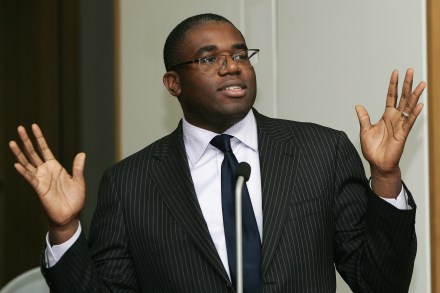
Downhills Primary School in Haringey is fast becoming a political battleground. Before Christmas, David Lammy, the local MP, a bunch of union leaders, left-wing opponents of education reform and Labour councilors wrote to The Guardian complaining about Michael Gove’s plans to convert primary school with poor academic records into academies. In the New Year, Michael Gove responded with a speech in which he attacked those opposing to dealing with these sub-standards schools. He accused them of being subscribers to the “bigoted backward bankrupt ideology of a left wing establishment that perpetuates division and denies opportunity.” (Pete blogged about the significance of the speech at the time.

Cameron’s fairness agenda

From our UK edition

The politics of the ‘undeserving rich’ is again dominating the news this morning. David Cameron tells the Sunday Telegraph that ‘The market for top people isn’t working, it needs to be sorted out’. While the Mail on Sunday reports that George Osborne is planning to create a new criminal offence of ‘criminal negligence’ that could be used against those bankers who endanger the financial system. Perhaps the most significant aspect of Cameron’s Sunday Telegraph interview, though, is his attempt to redefine ‘fairness’. Cameron has tried to do this before, arguing that it isn’t just about redistribution but about people getting out what they put in.

Will high-speed rail mean a new Welsh Secretary?

From our UK edition

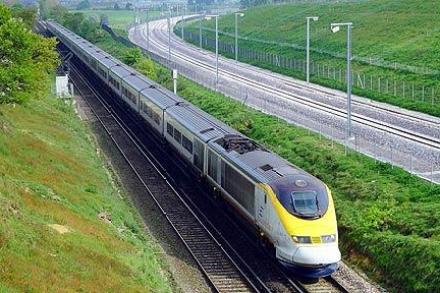
The decision on whether or not to proceed with the HS2 rail link is expected on Tuesday. Given all the legal issues involved, the government is not making any public comment on the matter. But all the signs are that it will get the go-ahead. There will be quite considerable opposition to the projects from parts of the Tory party. It is highly likely that Cheryl Gillan, the Welsh Secretary who represents one of the seats that will have the line running through it, will resign over the matter. If she does, expect Maria Miller to replace her. Number 10 are keen not to see the number of women in the Cabinet fall and Miller is regarded as a safe pair of hands and Welsh enough to do the job.

Politics: Who will speak for the middle 98 per cent?

From our UK edition

The year has begun with the British political class obsessing about the government’s new housing benefit cap. The cap is a sensible move to make sure that no one can claim more than £20,000 a year in housing benefit. It will save money. But, politically speaking, it is a ‘wedge issue’ of the sort usually deployed by American politicians. Its purpose is to force Labour to choose between an uncomfortable position and an unpopular one. Are you on the side of taxpayers, the Tories will ask, or of those being subsidised to live in places that most workers could not afford? Labour has, predictably, failed to avoid the trap.

Romney on course for the nomination

From our UK edition

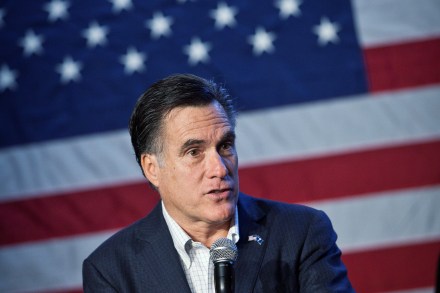
Mitt Romney’s status as the overwhelming favourite to be the Republican nominee for president is confirmed by a new poll out of South Carolina. It has Romney on 37 per cent, 18 points ahead of his nearest rival Rick Santorum. South Carolina is the next primary contest after New Hampshire, which takes place on Tuesday and which Romney is expected to win comfortably.   The significance of these new numbers is that South Carolina, the first primary in the south, has long been considered inhospitable territory for Romney. (In the 2008 primary there, he finished a disappointing fourth with 15 percent of the vote). If Romney is to be denied the nomination, his opponents will have to inflict a defeat on him there and that currently looks unlikely.

Unions hit government on pension changes

From our UK edition

The coalition’s plan to leave the Public and Commercial Services Union isolated in its opposition to the proposed changes to public sector pensions has had several setbacks today. The Unite union, which is a major Labour donor, has declared that the government’s offer on NHS pensions is inadequate. This suggests that Unite members in the health service, of whom there are 100,000, could go out on strike again soon. Another worry for the government is that the British Medical Association, the doctors’ trade union, is indicating that it might hold a strike ballot once it has canvassed the views of its members. Ultimately, I think the government can win the argument over public sector pensions.